
If you've recently changed jobs and received a relocation bonus, you might be wondering whether that extra income can help you refinance your adjustable-rate mortgage (ARM) into something more predictable. The good news is that it's entirely possible — though the process does come with a few important nuances worth understanding. Exploring the best options for refinancing ARM mortgage with recent relocation bonus income requires a clear look at how lenders evaluate non-traditional income, what loan programs may be available to you, and how to position yourself for the strongest possible application. This guide walks you through each step so you can move forward with confidence.
Understanding Adjustable-Rate Mortgages and Why Homeowners Consider Refinancing
An adjustable-rate mortgage starts with a fixed interest rate for an initial period — often five, seven, or ten years — before it begins adjusting periodically based on a financial index. While ARMs can offer lower initial monthly payments, they introduce a level of uncertainty once the adjustment period begins. If market rates rise, your monthly payment could increase significantly, putting pressure on your household budget.
For homeowners who took out an ARM during a period of favorable rates, the prospect of their loan adjusting upward can feel unsettling. Refinancing into a fixed-rate mortgage is one of the most common strategies used to lock in a stable payment over the life of the loan. A fixed-rate mortgage eliminates the guesswork, making it easier to plan long-term household finances.
Beyond payment stability, refinancing may also offer the opportunity to adjust your loan term, tap into built-up home equity, or potentially lower your overall interest cost depending on where rates stand at the time of refinancing. Each of these goals is worth evaluating carefully based on your current financial situation and how long you plan to stay in the home.
How Lenders Evaluate Relocation Bonus Income During the Refinance Process
One of the most common questions homeowners face when they've recently relocated for work is whether their relocation bonus counts as qualifying income for a mortgage refinance. The honest answer is: it depends on how the lender categorizes that income and what documentation you can provide.
Lenders typically distinguish between recurring income and one-time income. Relocation bonuses are often considered one-time payments because they're tied to a specific employment event rather than your ongoing earnings. In many cases, lenders may not include a relocation bonus in your qualifying income unless there's a documented history of receiving similar bonuses and a reasonable expectation that such payments will continue.
However, some lenders — particularly those offering non-QM (non-qualified mortgage) products — may take a more flexible approach to income documentation. If your employer's offer letter, employment contract, or HR documentation indicates that your relocation assistance is part of a structured compensation package rather than a one-time windfall, a lender might view it more favorably.
It's also worth noting that even if the relocation bonus itself doesn't count toward qualifying income, it can still serve an important purpose: strengthening your financial position by reducing debt, increasing cash reserves, or covering closing costs on the refinance. Lenders look favorably on borrowers who have healthy savings and low debt-to-income ratios, both of which a relocation bonus could help you achieve.
Loan Programs Worth Considering When You Refinance ARM Relocation Bonus Situations
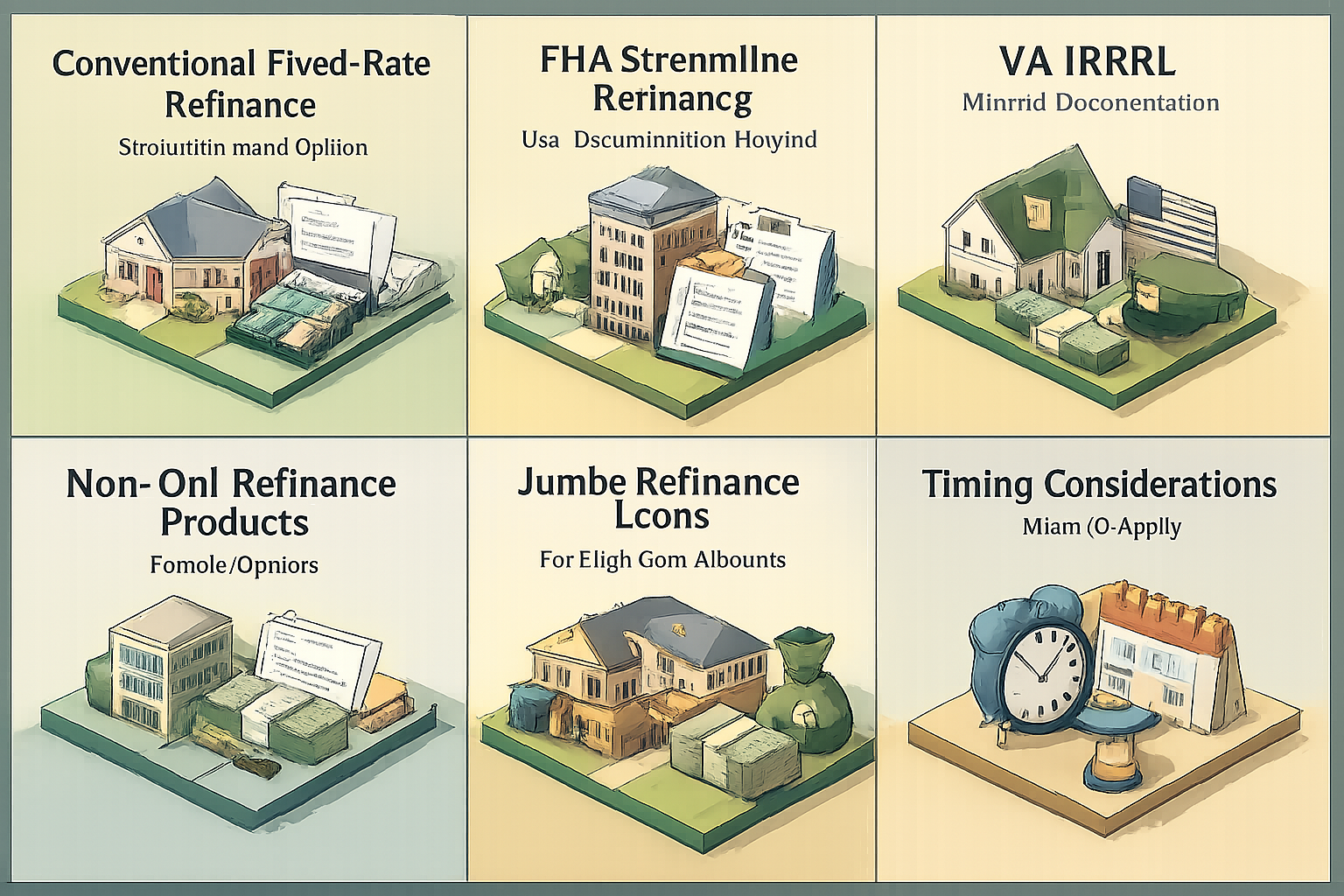
When evaluating your refinance options, the loan program you choose will have a significant impact on the documentation required, the interest rate you receive, and the flexibility available to you as a recently relocated borrower. Here are several programs that may be worth discussing with a mortgage professional:
- Conventional Fixed-Rate Refinance: This is the most straightforward option for borrowers with strong credit scores, stable employment history, and adequate income documentation. Conventional loans backed by Fannie Mae or Freddie Mac follow specific guidelines about how bonus income is calculated, typically requiring a two-year history of receiving similar bonuses averaged over that period.
- FHA Streamline Refinance: If your current ARM is an FHA loan, you might qualify for an FHA streamline refinance, which generally requires less documentation and no new appraisal. This could be a practical path if your relocation has made full income verification more complicated.
- VA Interest Rate Reduction Refinance Loan (IRRRL): Eligible veterans and service members with an existing VA ARM may qualify for the VA IRRRL, which is designed to lower your rate or convert to a fixed-rate loan with minimal documentation requirements.
- Non-QM Refinance Products: For borrowers whose income situation doesn't fit neatly into conventional guidelines — such as those whose relocation bonus is a significant portion of recent earnings — non-QM loans may offer alternative documentation options. These loans carry more flexibility but often come with higher interest rates.
- Jumbo Refinance Loans: If your home loan exceeds conforming loan limits, a jumbo refinance program may apply. Jumbo lenders sometimes have their own underwriting standards, which could provide more room to account for non-traditional income sources.
Choosing between these programs depends on your specific credit profile, employment situation, and the nature of your relocation income. Consulting with a knowledgeable mortgage professional is the best way to identify which path makes the most financial sense for your circumstances.
Documenting Your Relocation Income the Right Way to Support Your Application
Proper documentation is often what separates a smooth refinance approval from an unnecessarily frustrating process. When your income picture includes a relocation bonus, being organized and thorough with your paperwork can make a meaningful difference.
Here are the types of documents that lenders may request when reviewing income that includes relocation assistance:
- Offer letter or employment contract: A signed offer letter from your new employer that clearly outlines your base salary, any guaranteed bonuses, and the nature of your relocation assistance helps lenders understand the full picture of your compensation.
- Recent pay stubs: Pay stubs from your new position demonstrate that employment has started and that your base income aligns with what's stated in your offer letter.
- Two years of federal tax returns: Most conventional lenders will request two years of personal tax returns to verify income history. If you've only recently started a new job following relocation, your lender may need to account for gaps or changes in employment.
- Bank statements: Showing that your relocation bonus has been deposited into a verifiable account can help establish that funds are accessible and available for use in the refinance transaction.
- Written verification from employer: A letter from your employer's HR department confirming the terms of your relocation package, including any ongoing benefits, may help lenders better evaluate your overall financial stability.
Being upfront with your lender about the source of all income and funds during the application process is always the recommended approach. Attempting to characterize income in a way that doesn't align with your documentation can create problems during underwriting.
Credit Score and Debt-to-Income Ratio Considerations After Relocating
Two of the most influential factors in any refinance application are your credit score and your debt-to-income (DTI) ratio. Relocation can sometimes affect both, which is why it's worth taking stock of where you stand before submitting an application.
Job changes — even positive ones — can temporarily affect how lenders view your income stability. If you've moved from one industry to an entirely different one, some lenders may view the transition as a risk factor, even if your new salary is higher. On the other hand, moving to a higher-paying position within the same field is typically viewed more favorably.
Your DTI ratio compares your monthly debt obligations to your gross monthly income. If the relocation bonus allowed you to pay off credit card balances or other debts, your DTI could improve meaningfully — which strengthens your refinance application. Lenders generally prefer to see a DTI ratio below 43% for conventional loans, though some programs may allow higher ratios under certain conditions.
As for your credit score, relocation itself doesn't directly affect it, but related activity might. Opening new utility accounts, setting up new credit for household needs, or making large purchases during a move could temporarily influence your credit utilization or introduce new inquiries. It may be wise to minimize new credit activity in the months leading up to your refinance application.
Timing Your Refinance Application After a Recent Job Change or Relocation
Timing matters when it comes to refinancing after a relocation. Lenders generally like to see stability, and a very recent job change may raise questions during underwriting — even if your financial picture is strong overall.
For conventional loans, many underwriting guidelines require that you be employed at your current job at the time of closing. If you've recently started a new position, your lender may request a verification of employment shortly before closing to confirm you're still active with the employer. Starting a new job in the same field and at a similar or higher income level is generally viewed more positively than a career change that involves reduced or less predictable earnings.
If you can, waiting three to six months after beginning your new role before applying to refinance could give your income history a chance to develop on paper. It also gives you time to establish banking patterns at your new location and reduce any financial disruption caused by the move itself. That said, if interest rates are moving in a direction that could cost you significantly over time, waiting may not always be the best choice. A mortgage professional can help you weigh these trade-offs based on current market conditions.
Keep in mind that the best options for refinancing ARM mortgage with recent relocation bonus income often depend on how quickly you act relative to your ARM's adjustment date. If your rate is scheduled to reset within the next twelve months, getting the refinancing ARM mortgage process started sooner rather than later could save you from an unexpected payment increase.
Working With the Right Mortgage Lender for Your Unique Refinance Situation
Not all lenders approach non-traditional income or recent employment changes in the same way. Some lenders work strictly within conventional guidelines, while others — particularly portfolio lenders and non-QM specialists — may have more flexibility when evaluating your overall financial profile.
When shopping for a lender, it helps to be transparent about your situation from the start. Explain that you've recently relocated, share the nature of your relocation bonus, and ask how the lender handles income documentation for borrowers in similar situations. A lender who is experienced with employee relocation scenarios will know how to structure your file in a way that presents your strengths most clearly to underwriting.
It's also worth comparing multiple loan estimates before committing to a refinance. Interest rates, origination fees, closing costs, and loan terms can vary from one lender to another, and even a modest difference in rate can add up to thousands of dollars over the life of a loan. Taking the time to shop around and ask questions is one of the most effective ways to make sure you're getting a deal that genuinely works in your favor.
Consider asking potential lenders the following before moving forward:
- How do you treat one-time relocation bonuses in the income calculation?
- What documentation will I need to provide for my new employment?
- Do you offer any loan programs with flexible income verification?
- What are the total closing costs, and can they be rolled into the new loan?
- How long will the refinance process take from application to closing?
Getting clear, direct answers to these questions helps you avoid surprises and choose a lending partner who truly understands your goals.
●Conclusion
Refinancing an ARM after relocating for work is absolutely achievable, especially when you understand how lenders evaluate income, what documentation to prepare, and which loan programs may suit your situation. Your relocation bonus — while it may not always count as qualifying income — can still play a powerful role in strengthening your overall financial profile by reducing debts, boosting reserves, and covering refinance costs. The best options for refinancing ARM mortgage with recent relocation bonus income are within reach when you work with the right lender and approach the process with thorough preparation. At LoanWise, we're here to help you navigate your refinance journey with clarity, whether you've just relocated across the country or simply want to move from an unpredictable ARM to the stability of a fixed-rate mortgage. Reach out today to explore your options and take the next step toward smarter, more confident home financing.