
When you're ready to buy a home, understanding your debt-to-income ratio (DTI) becomes crucial for mortgage approval. This financial metric represents one of the most important factors lenders evaluate when determining your loan eligibility. Your DTI essentially shows how much of your monthly income goes toward paying debts, helping lenders assess whether you can comfortably handle additional mortgage payments. Let's explore what DTI means for your mortgage journey and how you can position yourself for approval success.
What Is Debt-to-Income Ratio and Why It Matters
Your debt-to-income ratio represents the percentage of your gross monthly income that goes toward paying debts. Mortgage lenders use this calculation to evaluate your ability to manage monthly payments and repay borrowed money. The DTI calculation includes all recurring monthly debt obligations, such as credit card payments, student loans, auto loans, and other installment debts.
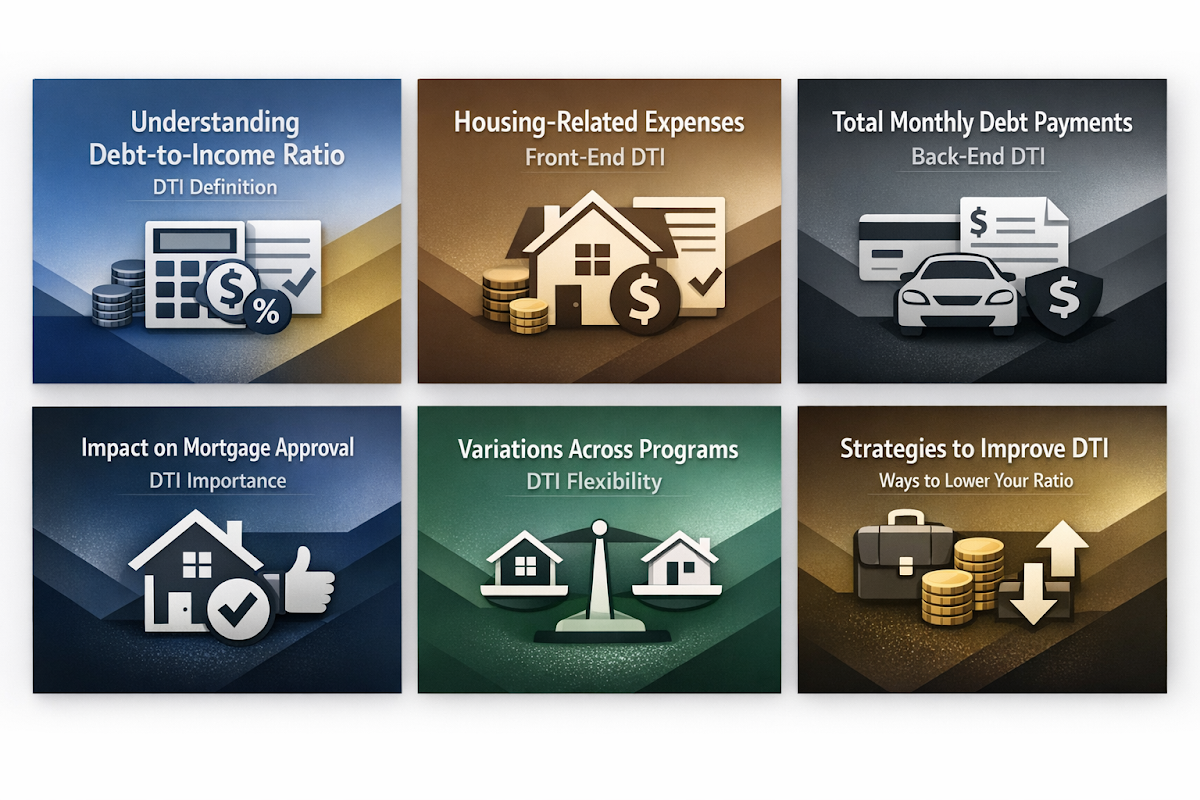
There are typically two types of DTI ratios that matter for mortgage approval. The front-end ratio focuses solely on housing-related expenses, including your proposed mortgage payment, property taxes, homeowners insurance, and HOA fees. The back-end ratio includes all monthly debt payments plus your housing expenses, providing a comprehensive view of your financial obligations.
Lenders consider DTI crucial because it directly correlates with your ability to make consistent mortgage payments. A lower DTI suggests you have more financial breathing room, while a higher ratio might indicate potential payment difficulties. Understanding this metric helps you prepare for the mortgage qualification process and identify areas for improvement.
Standard DTI Requirements Across Loan Programs
Different mortgage programs typically have varying DTI requirements, though most conventional loans prefer a back-end DTI of 36% or lower. However, many lenders may approve borrowers with DTI ratios up to 43% or even 50% in certain circumstances, depending on other compensating factors like high credit scores or substantial cash reserves.
Government-backed loan programs often offer more flexibility with DTI requirements. FHA loans might accept DTI ratios up to 57% for borrowers with strong credit profiles, while VA loans generally don't have strict DTI limits but still evaluate affordability. USDA loans typically prefer DTI ratios under 41%, though exceptions may apply for well-qualified borrowers.
It's important to note that DTI requirements can vary significantly between lenders and loan products. Some financial institutions might have stricter internal guidelines, while others may offer more lenient standards. Additionally, compensating factors such as significant down payments, high credit scores, or substantial savings can sometimes offset higher debt-to-income ratios during the underwriting process.
How to Calculate Your Debt-to-Income Ratio
Calculating your DTI involves a straightforward process that begins with identifying your gross monthly income. This includes your salary before taxes, along with any additional income sources like bonuses, commissions, rental income, or alimony payments that you can document and expect to continue.
Next, you'll need to total all your monthly debt obligations. Include minimum payments for credit cards, student loans, auto loans, personal loans, and any other recurring debt payments. Don't include monthly expenses like groceries, utilities, or insurance premiums unless they're part of an installment debt.
To find your DTI percentage, divide your total monthly debt payments by your gross monthly income, then multiply by 100. For example, if your monthly debts total $2,000 and your gross monthly income is $6,000, your DTI would be 33.3%. When applying for a mortgage, lenders will also calculate your projected DTI including the proposed mortgage payment to ensure it falls within acceptable guidelines.
Strategies to Lower Your DTI Before Applying
If your current DTI exceeds lender guidelines, several strategies can help improve your ratio before applying for a mortgage. The most direct approach involves paying down existing debt, particularly high-balance credit cards or loans with manageable payoff amounts. Even small reductions in monthly obligations can meaningfully impact your DTI calculation.
Increasing your income represents another effective strategy, though this approach requires documented and stable income sources. Consider pursuing promotions, taking on additional work hours, or developing side income streams that you can verify through tax returns or pay statements. Remember that lenders typically require at least two years of consistent income history for self-employment or variable income sources.
Avoid taking on new debt during the mortgage application process, as this can increase your DTI and potentially jeopardize your approval. Additionally, consider whether paying off certain debts entirely makes sense versus making larger payments to reduce monthly obligations. Sometimes, eliminating smaller debts with low balances can provide immediate DTI benefits while maintaining cash reserves for your home purchase.
When High DTI Might Still Work
While staying within standard DTI guidelines offers the best approval chances, certain circumstances might allow for higher ratios. Lenders often consider compensating factors that demonstrate your ability to handle mortgage payments despite elevated debt levels. These factors might include excellent credit scores, substantial down payments, or significant cash reserves.
Strong employment history and income stability can also help offset higher DTI ratios. Borrowers with long-term employment in stable industries or those with professional credentials might receive more favorable consideration. Additionally, if your DTI is high due to student loans but you have a degree in a high-earning field, lenders might view this more favorably.
Some loan programs specifically accommodate higher DTI ratios for qualified borrowers. Certain lenders offer portfolio loans with more flexible guidelines, while some government programs provide additional DTI flexibility for borrowers meeting specific criteria. Working with experienced mortgage professionals can help identify opportunities when standard guidelines might not apply to your unique situation.
Working with Lenders on DTI Requirements
Open communication with mortgage lenders about your DTI situation can often lead to creative solutions and program options you might not have considered. Many lenders offer multiple loan products with varying guidelines, and experienced loan officers can help match your financial profile with appropriate programs.
When discussing DTI with potential lenders, be prepared to provide comprehensive financial documentation and explanations for any unique circumstances. If your DTI is borderline, presenting a strong overall financial picture through credit reports, bank statements, and employment verification can strengthen your application significantly.
Consider getting pre-qualified with multiple lenders to understand your options and compare DTI requirements across different institutions. Some lenders might have more flexible internal guidelines or access to investor programs that accommodate higher DTI ratios. This shopping process can help you identify the most favorable terms and conditions for your specific situation while ensuring you understand all available opportunities for mortgage qualification.
●Conclusion
Understanding DTI requirements represents a fundamental step in preparing for mortgage approval and successful homeownership. While each lender and loan program has specific guidelines, focusing on maintaining or achieving a DTI ratio within acceptable ranges significantly improves your chances of securing favorable financing terms. Remember that DTI is just one factor in the approval process, and working with knowledgeable mortgage professionals can help you navigate requirements while exploring all available options. Take time to calculate your current DTI, implement improvement strategies if needed, and approach the mortgage application process with confidence in your financial preparation.