
Purchasing a duplex, triplex, or four-unit property using government-backed financing can be one of the smartest moves a real estate investor or first-time homebuyer makes. But before you sign on the dotted line, it's essential to have a clear picture of what you'll owe at the closing table. Understanding closing costs for FHA loan on a multi-family property is a critical step in budgeting accurately and avoiding unwelcome financial surprises. These costs go beyond just the down payment and can vary based on the property type, loan amount, lender fees, and location. Let's walk through everything you need to know so you can move forward with confidence.
What Makes Multi-Family FHA Financing Unique
FHA loans are backed by the Federal Housing Administration and are well known for their flexible credit requirements and low down payment options. While most people associate FHA loans with single-family homes, these loans are also available for properties with up to four units — as long as the borrower intends to live in one of the units as their primary residence. This owner-occupancy requirement is what sets FHA multi-family financing apart from purely investment-focused loan products.
Because the property has more units, the loan amounts are typically higher than those for a single-family home. FHA loan limits for multi-family properties are set at the county level and increase with each additional unit. A two-unit property carries a higher limit than a single-family home, and a four-unit property carries the highest limit in the residential FHA program. These larger loan balances directly affect several of the closing costs you'll encounter.
It's also worth noting that lenders may apply slightly stricter underwriting standards for multi-family properties, even within FHA guidelines. They want to be sure the borrower can manage the property responsibly, and they may factor in projected rental income from the non-owner-occupied units when evaluating your debt-to-income ratio. Understanding these nuances upfront will help you navigate the process much more smoothly.
Breaking Down the Core FHA Loan Closing Costs Multi-Family Buyers Face
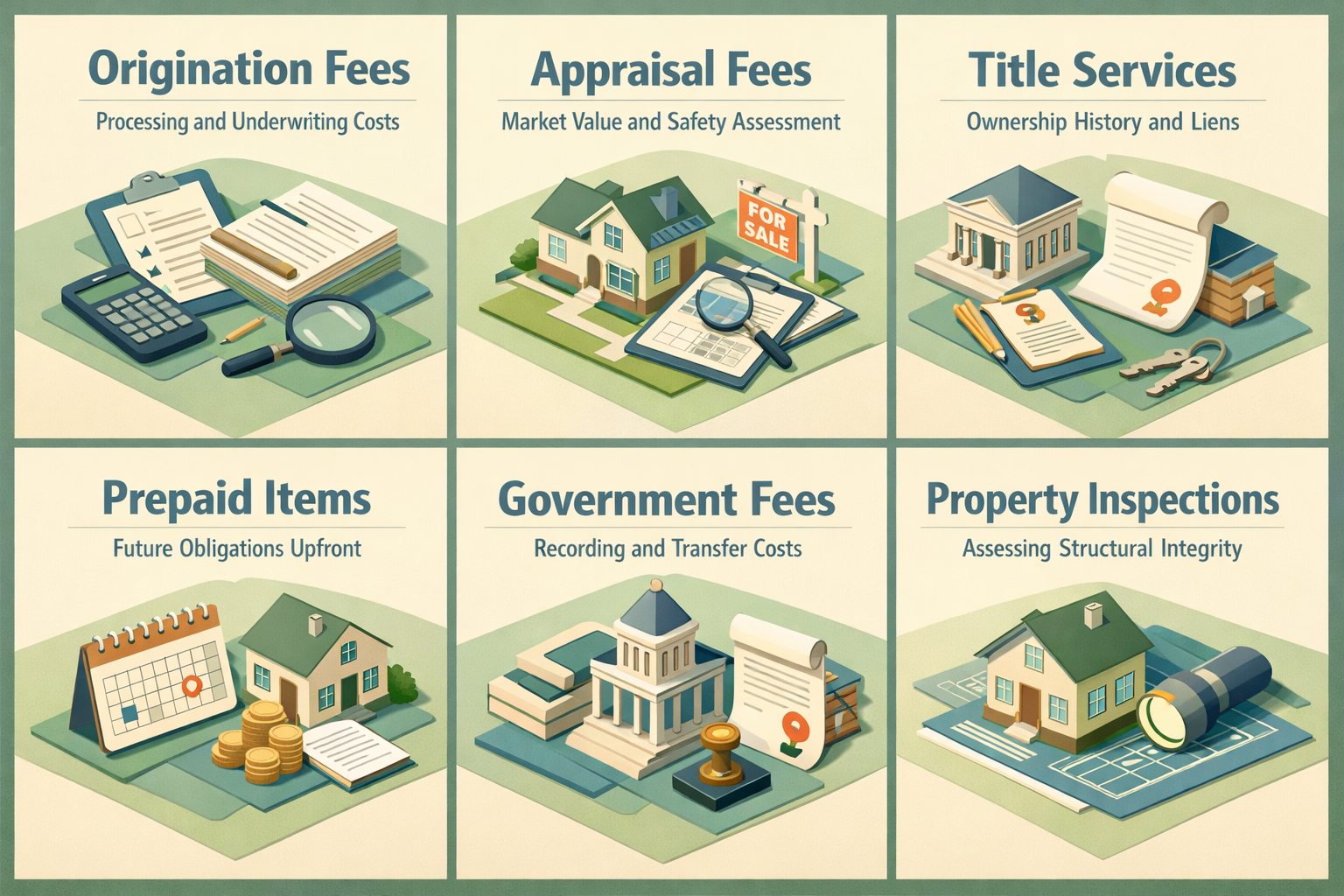
When reviewing your Loan Estimate and Closing Disclosure, you'll notice that closing costs fall into several distinct categories. For multi-family buyers using an FHA loan, these costs can feel more complex than a standard purchase, but they follow a logical structure once you know what to look for.
Origination and Lender Fees
Lenders typically charge an origination fee for processing and underwriting your loan. This fee may be expressed as a flat dollar amount or as a percentage of the loan amount. Because multi-family FHA loans often carry higher balances, origination fees can be larger in absolute terms. You may also see itemized charges for underwriting, processing, or administrative services. It's a good idea to compare these fees across multiple lenders before committing.
Appraisal Fees
FHA loans require an FHA-approved appraisal, which evaluates both the market value and the safety and livability of the property. For multi-family properties, appraisers must assess each unit individually as well as the overall structure. This additional complexity often means appraisal fees for multi-unit properties are higher than those for single-family homes. The appraiser will also note any health or safety concerns that must be addressed before the loan can close.
Title Services and Insurance
Title fees cover the cost of researching the property's ownership history and ensuring there are no outstanding liens or legal disputes. For a multi-family property, this process may be slightly more involved. You'll likely pay for a title search, title examination, and lender's title insurance. Purchasing an owner's title insurance policy is optional but often recommended to protect your long-term ownership rights.
Prepaid Items and Escrow Deposits
Prepaids are not technically fees — they're costs you pay upfront to cover future obligations. These typically include prepaid homeowner's insurance, prepaid property taxes, and prepaid mortgage interest for the days remaining in the month of closing. For a multi-family property, insurance premiums may be higher given the property's size and rental exposure, which means your prepaid amounts could be more substantial than expected.
The Role of Mortgage Insurance Premiums in Your Total Costs
One of the most significant cost components unique to FHA loans is the mortgage insurance premium, commonly referred to as MIP. Unlike conventional loans where private mortgage insurance can sometimes be waived with a sufficient down payment, FHA loans require both an upfront MIP and an annual MIP regardless of down payment size in most cases.
The upfront mortgage insurance premium is typically calculated as a percentage of the base loan amount and is due at closing. Borrowers often choose to roll this cost into the loan balance rather than paying it out of pocket, which increases the total loan amount slightly but preserves cash at closing. For a larger multi-family loan, even a modest percentage can translate into a meaningful dollar figure, so it's worth factoring this in when comparing FHA financing to other options.
The annual MIP is divided into monthly payments and added to your mortgage payment throughout the life of the loan. The rate can vary based on factors such as your loan term, loan-to-value ratio, and loan amount. For buyers using an FHA loan on a multi-family property, annual MIP costs may be higher because the loan balances tend to be greater. Understanding how these premiums affect your monthly cash flow is just as important as understanding your upfront closing costs.
Government Fees, Inspections, and Other Required Expenses
Beyond lender and insurance costs, there are several third-party and government-related fees that buyers should anticipate. These are sometimes overlooked during early budgeting but can add up quickly.
Recording Fees and Transfer Taxes
When your loan closes, the transaction must be officially recorded with the county or local government. Recording fees cover this administrative process. Depending on the state or municipality, you may also owe transfer taxes or deed stamps when property ownership changes hands. These amounts vary significantly by location and may be more pronounced in states with higher tax rates.
Property Inspections
While a home inspection is not always required by the FHA, it is strongly recommended — especially for multi-family properties with multiple systems, units, and potential maintenance concerns. A thorough inspection can reveal issues with roofing, plumbing, electrical systems, or structural integrity. If problems are found, you may need to negotiate repairs with the seller or budget for fixes before closing. Some lenders may also require pest inspections depending on the region.
Survey and Flood Determination
Some lenders require a property survey to confirm boundaries and identify any encroachments. Additionally, a flood zone determination is typically required to assess whether the property sits in a designated flood zone, which could trigger a requirement for flood insurance. For multi-family properties, especially those in urban or coastal areas, these determinations can have meaningful cost implications.
How Much Should You Expect to Pay at Closing
Closing costs on any mortgage loan can vary widely, but most buyers tend to pay somewhere between two and five percent of the loan amount in total closing costs. For a multi-family FHA loan, where loan balances are higher than single-family averages, even a modest percentage can represent a significant sum. It's important to request a detailed Loan Estimate from your lender early in the process so you can plan your purchase accordingly.
Keep in mind that some costs are negotiable and others are fixed. Lender fees, for example, are often more flexible than government recording fees or FHA-mandated appraisal costs. Shopping around for title services in states where this is permitted can also lead to meaningful savings. Don't be afraid to ask your lender for a breakdown of every fee involved and to explain which costs are required versus optional.
It may also be worth discussing seller concessions with your real estate agent. FHA guidelines allow sellers to contribute toward a buyer's closing costs up to a certain percentage of the purchase price. On a multi-family purchase, this strategy can be a practical way to reduce the cash you need to bring to the table, particularly if you're preserving reserves for property maintenance and management after closing.
Strategies to Reduce Your Out-of-Pocket Expenses
Managing FHA loan closing costs multi-family transactions doesn't have to be overwhelming. There are several practical strategies you might explore to lower what you owe at closing without sacrificing your financing position.
- Request a lender credit: Some lenders offer to cover a portion of your closing costs in exchange for a slightly higher interest rate. This trade-off can make sense if you're short on cash at closing but can handle a modestly higher monthly payment long term.
- Roll the upfront MIP into the loan: As mentioned earlier, financing the upfront mortgage insurance premium into your loan balance reduces your immediate out-of-pocket burden. Just be aware that this increases your loan total and, therefore, your monthly payment slightly.
- Negotiate with the seller: In markets where sellers are motivated, asking for a concession toward closing costs can be an effective strategy. Your agent can guide you on what's reasonable given current market conditions.
- Compare title and settlement providers: In many states, borrowers have the right to shop for certain third-party services such as title insurance and settlement agents. Getting multiple quotes may help you find a lower-cost option.
- Apply for down payment and closing cost assistance: Some local and state housing agencies offer assistance programs that can be used in conjunction with FHA financing. Eligibility varies, so it's worth researching what's available in your area.
Planning ahead and working with an experienced mortgage professional who understands multi-family FHA transactions can make a meaningful difference in how much you ultimately pay at the closing table.
●Conclusion
Fully understanding closing costs for FHA loan on a multi-family property is one of the most valuable steps you can take before starting the homebuying or investment process. From lender origination fees and FHA appraisals to mortgage insurance premiums and government recording charges, each cost has a purpose — and knowing what to expect puts you in a much stronger position to negotiate, plan, and succeed. Multi-family properties offer tremendous potential, whether you're living in one unit while renting out the others or building toward a larger real estate portfolio. With the right preparation and guidance, the closing process doesn't have to be a source of stress. Connect with a knowledgeable mortgage advisor at LoanWise today to get a personalized estimate and take the next step toward owning your multi-family property.