
Purchasing a condominium with an FHA loan can be a smart path to homeownership, especially for first-time buyers who may have limited savings or less-than-perfect credit. However, the process comes with its own set of financial layers that can catch unprepared buyers off guard. One of the most nuanced aspects involves understanding closing costs for FHA loan on a condo with special assessments. Between government-mandated fees, lender charges, and the potential for outstanding HOA special assessments, the total amount due at closing can be higher than many buyers anticipate. This guide walks you through what to expect, how to plan ahead, and what questions to ask before you sign on the dotted line.
What Makes FHA Condo Loans Different From Standard FHA Mortgages
FHA loans are insured by the Federal Housing Administration and are designed to help buyers with lower down payments and more flexible credit requirements. While FHA loans work well for single-family homes, applying one to a condominium comes with additional layers of eligibility. The condo project itself must be on the FHA-approved condominium list, which is maintained by HUD.
This approval process considers several factors about the building and its homeowners association, including the percentage of owner-occupied units, the financial health of the HOA, and the level of commercial space within the complex. If the building hasn't been approved, buyers may need to go through a process known as single-unit approval, which allows an individual condo unit to qualify even if the entire project isn't on the approved list.
These extra steps can affect timelines and may add to the cost of the transaction. Buyers should be aware that lender due diligence on condo projects may result in additional documentation fees or extended processing times compared to a standard FHA home purchase.
Breaking Down Standard FHA Closing Costs for Condo Buyers
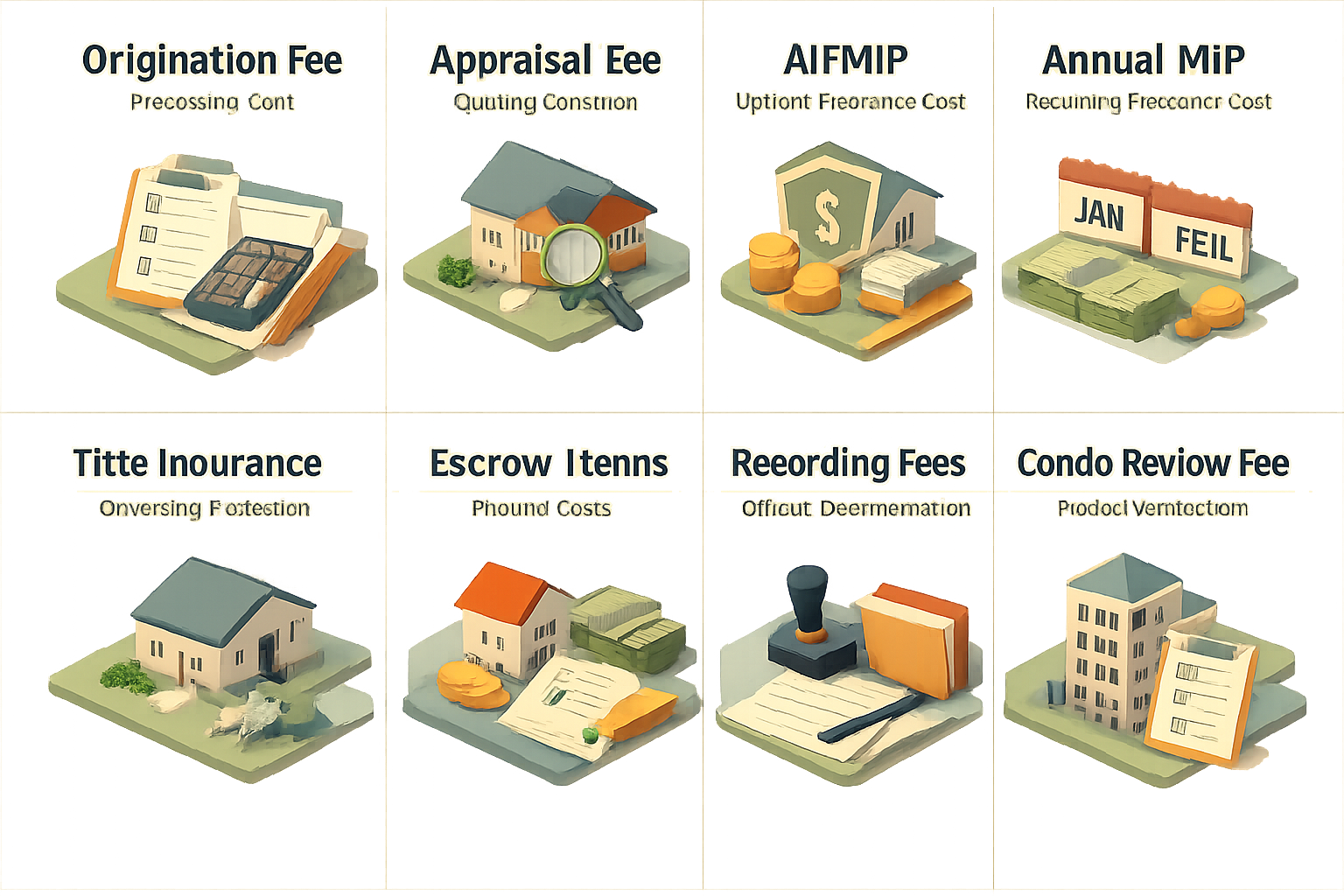
Regardless of whether you're buying a house or a condo, FHA loans carry a consistent set of base closing costs. Understanding these fees is the first step in budgeting accurately for your purchase.
- Origination Fee: Charged by the lender for processing your loan. This is typically a percentage of the loan amount and may vary by lender.
- Appraisal Fee: FHA requires a specific type of appraisal conducted by an FHA-approved appraiser. For condos, this may involve additional scrutiny of the building's condition and the HOA's financial standing.
- Upfront Mortgage Insurance Premium (UFMIP): FHA loans require an upfront mortgage insurance premium, which is currently set at a defined percentage of the base loan amount. This is typically rolled into the loan but can also be paid at closing.
- Annual Mortgage Insurance Premium (MIP): While not a closing cost per se, monthly MIP payments are a recurring cost that buyers must factor into their long-term budget.
- Title Insurance and Search: Protects both the lender and optionally the buyer against title defects or legal disputes over ownership.
- Escrow and Prepaid Items: These include prepaid homeowner's insurance, property taxes, and interest that accrues between closing and your first mortgage payment.
- Recording Fees: Charged by the local government to officially record the transaction in public records.
For condo purchases specifically, some lenders may also charge a condo project review fee to cover the cost of verifying HUD approval status or conducting a single-unit approval review. While not universal, this is worth asking about upfront.
How Special Assessments Affect FHA Condo Closing Costs
This is where FHA condo closing costs special assessments become particularly important to understand. A special assessment is a charge levied by the homeowners association above and beyond regular monthly dues. These are typically issued when the HOA needs to fund a large, unexpected expense — such as roof replacement, elevator repairs, plumbing upgrades, or structural fixes — and the reserve fund doesn't have enough money to cover it.
Special assessments can complicate an FHA condo purchase in several meaningful ways:
- Impact on FHA Approval: FHA guidelines require that the condo's HOA be financially stable. A large, unresolved special assessment could signal poor reserve funding, potentially disqualifying the project or triggering additional scrutiny from the lender.
- Seller vs. Buyer Responsibility: Whether the buyer or seller is responsible for paying the special assessment at closing depends on the purchase contract and local real estate customs. In many cases, it becomes a negotiated item during the offer process.
- Cash-to-Close Increase: If the buyer agrees to assume the special assessment — or if part of it is due at closing — this can significantly increase the total cash needed to close. Unlike standard closing costs, special assessments are not always financed into the loan.
- Reserve Fund Analysis: FHA lenders typically review HOA financial documents, including reserve fund studies. A thin reserve fund combined with an active special assessment may raise red flags during underwriting.
Buyers who are serious about a condo should request the HOA's financial statements, meeting minutes, and any pending or recently approved special assessments before submitting an offer. This information can be critical in assessing the true cost of ownership.
Negotiating Special Assessments During the Purchase Process
The good news is that special assessments don't have to be a deal-breaker. With the right approach, buyers can negotiate how these charges are handled as part of the overall transaction.
One common approach is to ask the seller to pay off the special assessment in full before closing. This removes the obligation from the buyer entirely and may simplify the FHA approval process. Another option is to negotiate a reduction in the purchase price equal to the outstanding assessment amount, effectively shifting the financial burden in a different way.
Buyers may also encounter situations where the special assessment is payable in installments over time. In these cases, the monthly installment becomes an additional recurring cost alongside HOA dues, which lenders will factor into your debt-to-income ratio. A higher debt-to-income ratio can reduce your borrowing power or affect your loan approval, so it's important to be transparent with your lender about any ongoing assessments.
Working with a knowledgeable real estate agent who has experience with condo transactions can make a significant difference here. They can help you review HOA documents, flag potential concerns, and structure an offer that accounts for outstanding financial obligations.
Tips for Managing Your Budget When Facing Higher FHA Condo Closing Costs
For many homebuyers, the biggest challenge isn't qualifying for the loan — it's arriving at closing with enough cash to cover everything. Here are several strategies that may help you manage the financial demands of an FHA condo purchase that involves special assessments.
- Request a Loan Estimate Early: Within three business days of receiving your application, lenders are required to provide a Loan Estimate detailing all anticipated closing costs. Use this document to plan and ask questions about any line items that are unclear.
- Ask for Seller Concessions: FHA guidelines allow sellers to contribute up to a certain percentage of the purchase price toward the buyer's closing costs. Negotiating seller concessions can reduce your out-of-pocket expenses significantly.
- Explore Down Payment Assistance Programs: Some state and local programs offer grants or second loans to help cover down payment and closing costs. Eligibility requirements vary, but many programs cater specifically to first-time buyers purchasing condos.
- Shop Multiple Lenders: Lender fees can vary meaningfully from one institution to another. Comparing Loan Estimates from at least two or three lenders could help you identify more competitive fee structures.
- Build a Closing Cost Reserve: If you're still in the saving stage, aim for a closing cost buffer of roughly two to five percent of the purchase price on top of your down payment. This is a general guideline and your actual costs may differ.
Understanding the Full Picture Before You Commit
Truly understanding closing costs for FHA loan on a condo with special assessments means looking at more than just a single line on a closing disclosure. It means evaluating the long-term financial health of the building you're buying into, the HOA's reserve fund adequacy, and any pending or upcoming assessments that could surface after you move in.
One helpful step is to review the HOA's reserve fund study if one is available. This document typically outlines the estimated remaining useful life of major building components and how much money the association has set aside to cover future repairs. A well-funded reserve suggests that large special assessments may be less likely in the near term, while an underfunded reserve could signal potential costs ahead.
You might also want to attend an HOA meeting or review recent meeting minutes to understand what issues are being discussed among current owners. Topics like deferred maintenance, insurance disputes, or planned capital improvements can give you a clearer picture of the financial landscape you're walking into.
Your FHA lender will also conduct their own due diligence on the condo project. Be prepared to provide or obtain documentation about the HOA's budget, insurance coverage, litigation status, and the percentage of units that are owner-occupied. The more organized and proactive you are in gathering this information, the smoother the approval process is likely to be.
●Conclusion
Buying a condo with an FHA loan can be a rewarding path to homeownership, but it requires a clear-eyed understanding of the costs involved. From government-required mortgage insurance to lender fees and the often-overlooked impact of HOA special assessments, there's a lot to account for. The key is to do your homework early, ask the right questions, and work with experienced professionals who understand the nuances of condo financing. At LoanWise, we're here to help you navigate every step of the process — so you can close with confidence and enjoy your new home without financial surprises. Reach out to our team today to explore your FHA condo loan options.