
Divorce is one of life's most challenging transitions, and when a shared home with an adjustable-rate mortgage is part of the equation, the financial decisions can feel especially complicated. If you and your former spouse co-own a property and both names are tied to an ARM loan, you'll likely need to make some important moves — and soon. Understanding the best options for refinancing ARM mortgage with recent divorce and shared equity can help you protect your financial future, gain full ownership of the home, and replace an unpredictable adjustable rate with something more stable. This article walks you through what you need to know.
Why an ARM Mortgage Becomes a Bigger Risk After Divorce
An adjustable-rate mortgage (ARM) starts with a fixed interest rate for an initial period — often three, five, or seven years — and then adjusts periodically based on a market index. For many couples, an ARM made sense when they bought the home because the initial rate is typically lower than a fixed-rate mortgage. But circumstances change, and a divorce changes everything.
Once a marriage ends, the financial arrangement that made the ARM manageable — two incomes, shared responsibility — may no longer exist. If rates adjust upward while you're still navigating a divorce settlement, the monthly payment could increase significantly. Meanwhile, both parties remain legally liable for the debt as long as both names are on the loan. That means missed payments or financial instability on either side could damage both credit scores.
Beyond the rate risk, there's the matter of shared equity. During a marriage, couples build equity together. After a divorce, that equity typically needs to be divided — either through a buyout, a sale of the property, or another court-approved arrangement. Refinancing is often the most effective way to accomplish both goals at once: removing one spouse from the mortgage and converting the ARM into a more predictable loan product.
Understanding Shared Equity and What It Means for Your Refinance
Shared equity refers to the ownership stake both spouses have built in the home. It's calculated by subtracting what's owed on the mortgage from the current market value of the property. For example, if your home is worth $400,000 and you owe $280,000, the shared equity is roughly $120,000 — which would typically be split according to the divorce agreement.
When one spouse wants to keep the home, a cash-out refinance or an equity buyout refinance is often used to pay the departing spouse their share of that equity. This approach allows the remaining spouse to access the built-up equity in the property, pay off the other party, and take sole ownership of the mortgage — all through one refinancing transaction.
It's important to note that the spouse keeping the home must qualify for the new loan on their own. Lenders will evaluate income, credit score, debt-to-income ratio, and employment history as if the applicant were a first-time solo borrower. This can be a hurdle for some homeowners, particularly if they were not the primary earner during the marriage. Working with a knowledgeable mortgage advisor early in the process may help you understand where you stand and what steps you might need to take before applying.
Refinance Options Worth Exploring After a Divorce Settlement
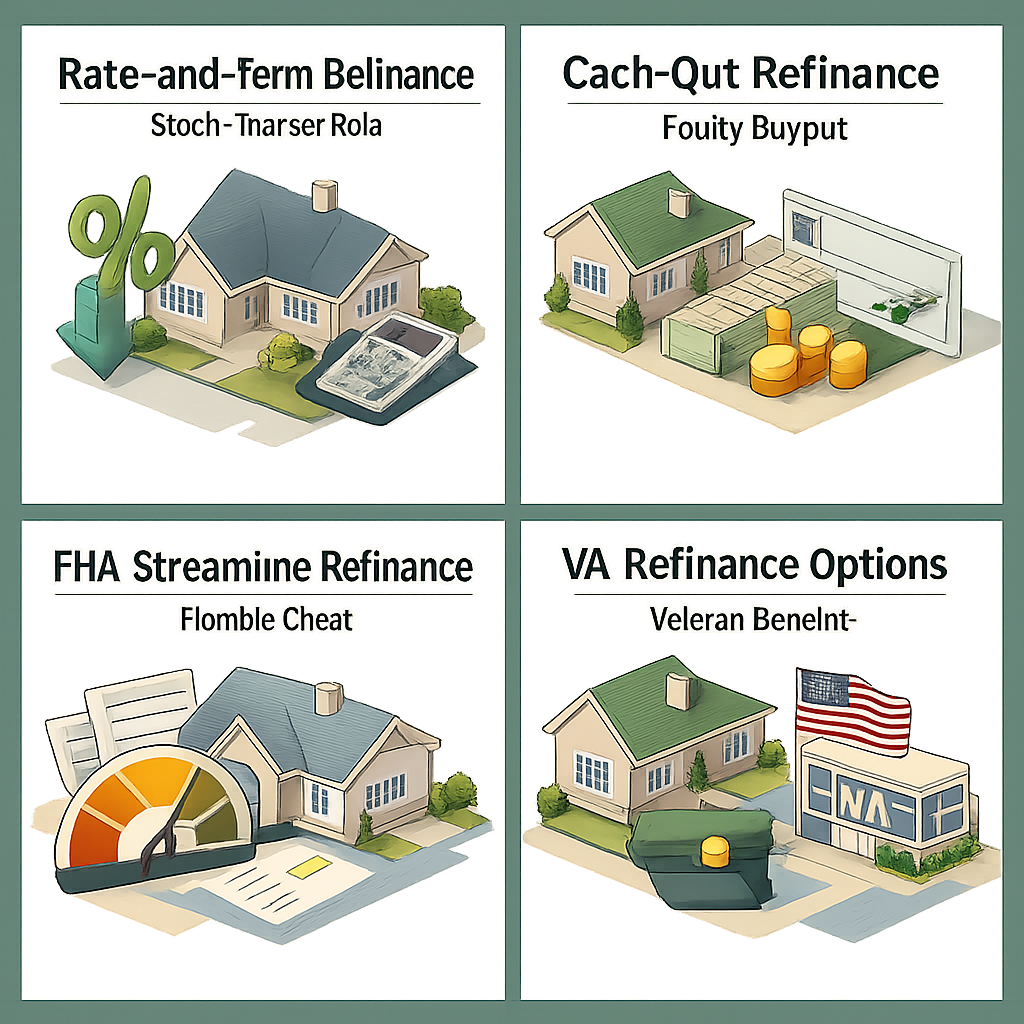
There's no single refinance path that works for every divorcing homeowner. The right choice depends on your financial profile, how much equity you've built, and what the divorce decree requires. Here are some of the most common refinancing options that may apply to your situation.
Rate-and-Term Refinance
A rate-and-term refinance replaces your current ARM with a new loan — ideally a fixed-rate mortgage — without pulling out additional equity. This option might suit you if your ex-spouse doesn't require a cash buyout and you simply want to remove their name from the loan while locking in a stable interest rate. It's generally considered a simpler transaction and may come with lower closing costs than a cash-out refinance.
Cash-Out Refinance for Equity Buyout
If your divorce agreement requires you to compensate your former spouse for their share of the home's equity, a cash-out refinance could be the right tool. You'd borrow more than what you currently owe on the ARM, use the extra funds to pay your ex their equity share, and take over the mortgage solo. Keep in mind that borrowing more means a larger loan balance, which affects your monthly payment and long-term interest costs.
FHA Streamline or Conventional Refinance
Depending on your current loan type and credit profile, you may qualify for an FHA or conventional refinance product. FHA loans tend to have more flexible credit requirements, which could be helpful if your credit score has taken any hits during the divorce process. Conventional refinances, on the other hand, may offer better terms if your credit is strong and you have significant equity in the home.
USDA or VA Refinance Options
If your original mortgage was a VA or USDA loan, specific refinance programs may be available to you. VA Interest Rate Reduction Refinance Loans (IRRRLs), for instance, are designed for veterans and may offer a streamlined path to a new loan. Eligibility rules and lender requirements will apply, so it's worth speaking with a specialist familiar with government-backed programs.
Qualifying on Your Own: Credit, Income, and Debt Considerations
One of the biggest challenges divorcing homeowners face when pursuing the best options for refinancing ARM mortgage with recent divorce and shared equity is qualifying for a new loan without their spouse's income. Lenders treat a divorce refinancing ARM mortgage just like any other mortgage application — they want to see that you can comfortably afford the new loan on your own.
Credit Score Requirements
Your credit score plays a significant role in determining your interest rate and whether you'll be approved at all. Conventional loans typically require a minimum score of around 620, while FHA loans may allow scores as low as 580 with a sufficient down payment equivalent. If your credit has been affected by the divorce — perhaps due to joint accounts, missed payments, or increased debt — it may be worth taking a few months to repair it before applying.
Debt-to-Income Ratio
Lenders generally prefer a debt-to-income (DTI) ratio of 43% or lower, though some programs may allow higher ratios depending on compensating factors. After a divorce, your financial picture changes. Alimony and child support payments — whether you're paying or receiving them — can affect how lenders view your DTI. Alimony you receive may be counted as income if it's documented and expected to continue for a certain period, which could strengthen your application.
Income Verification and Employment Stability
Lenders will want to verify your income through pay stubs, tax returns, and other documentation. If your income has changed significantly since the divorce — for example, if you transitioned from part-time to full-time work or started a new job — this could affect your application timeline. Some lenders may require at least two years of employment history in the same field to count that income fully.
Legal Documents You'll Likely Need During the Refinancing Process
A divorce-related refinance involves more paperwork than a standard refinance because lenders need to understand the legal context of the ownership transfer. Being organized and prepared can help speed up the process.
- Divorce decree or separation agreement: This court-approved document outlines how property and debts are to be divided. Lenders will typically require a copy to understand the terms of the buyout or name removal.
- Quitclaim deed: If your ex-spouse is relinquishing ownership of the home, a quitclaim deed formally transfers their interest to you. This is usually required before or during the refinance closing.
- Settlement agreement: If alimony or child support is involved and you plan to count it as income, you'll need documentation showing the amount and expected duration of those payments.
- Current mortgage statement: Lenders will want to see the details of your existing ARM, including the remaining balance, interest rate, and adjustment schedule.
- Proof of identity and income: Standard documentation such as government-issued ID, recent pay stubs, W-2s, and tax returns will also be required.
Working with a mortgage professional who has experience with divorce-related refinances can help ensure you gather the right documents from the start and avoid unnecessary delays.
Timing Your Refinance Strategically After a Divorce
Timing matters when it comes to refinancing after a divorce. Ideally, you'd want to finalize the refinance as close to the divorce settlement as possible — particularly if your ARM is approaching an adjustment date. If the loan's fixed-rate period is about to expire, rates could rise and your monthly payment could increase before you've had a chance to lock in a new fixed rate.
However, some homeowners may benefit from waiting a short period if their credit needs improvement or if they're in the process of establishing independent income. Rushing into a refinance with a weak financial profile could result in a higher interest rate or even a denial, which might complicate the situation further.
It's also worth keeping an eye on broader mortgage rate trends. While no one can predict where rates will go, refinancing when rates are relatively favorable could save you a meaningful amount over the life of the loan. A mortgage calculator can help you estimate how different rates and loan terms would affect your monthly payment and total interest costs.
If the divorce decree gives you a specific deadline to refinance and remove your ex-spouse from the loan, make sure you start the process well in advance. Refinances can take 30 to 60 days or longer to close, and unexpected complications — such as an appraisal coming in lower than expected — can extend that timeline.
●Conclusion
Navigating the best options for refinancing ARM mortgage with recent divorce and shared equity is rarely simple, but it's absolutely manageable with the right guidance and preparation. The key steps involve understanding your equity position, identifying which refinance product fits your situation, and ensuring you can qualify on your own financial merits. Whether you pursue a rate-and-term refinance, a cash-out equity buyout, or a government-backed loan program, the goal is the same: gain financial independence, protect your credit, and move forward with stability. At LoanWise, our mortgage specialists understand the unique challenges that come with life transitions like divorce. We're here to help you evaluate your options, gather the right documentation, and find a loan solution that supports your next chapter. Reach out today to speak with an advisor who can walk you through the process step by step.