
Receiving an inheritance can open doors that once felt out of reach — including homeownership. If you've recently inherited money and you're wondering whether you can use it to buy a home, the good news is that conventional loans do allow inherited funds as a source for your down payment. However, understanding the requirements for conventional loan with 10% down from inheritance is essential before you start shopping for a home. Lenders follow specific guidelines around how inherited money is sourced, documented, and verified. Knowing what to expect can help you move through the mortgage process with confidence and fewer surprises.
What Is a Conventional Loan and How Does 10% Down Work
A conventional loan is a mortgage that isn't backed by a government agency like the FHA, VA, or USDA. Instead, it typically follows guidelines set by Fannie Mae or Freddie Mac, the two government-sponsored enterprises that purchase most conventional mortgages from lenders. These loans are widely available and come with competitive interest rates for borrowers who meet standard credit and income requirements.
When it comes to down payments, conventional loans offer some flexibility. While a 20% down payment avoids private mortgage insurance (PMI), many borrowers choose to put down less. A conventional loan 10 percent down option is one of the most popular choices, as it balances a manageable upfront cost with relatively strong loan terms. With a 10% down payment, you'd be borrowing 90% of the home's purchase price, which lenders call a 90% loan-to-value (LTV) ratio.
It's worth noting that with less than 20% down, most lenders will require PMI. This is an added monthly cost that protects the lender if you default on the loan. However, PMI can typically be removed once your equity reaches 20%, making the 10% down path a practical route for many buyers who don't want to wait years to save more.
Can Inherited Money Be Used as a Down Payment on a Conventional Loan
Yes — inherited funds are generally an acceptable source for a conventional loan down payment, but the key word is documented. Lenders need to verify where your money came from to protect against fraud and to comply with underwriting standards. Inherited funds fall under what the mortgage industry calls "gift funds" or "large deposits," and both Fannie Mae and Freddie Mac have established guidelines for how these funds should be handled.
Unlike a gift from a living relative, inheritance comes from a deceased person's estate. This distinction matters because lenders may request slightly different documentation compared to a standard gift letter. The funds still need to be verified as legitimately yours, properly transferred, and sitting in your bank account long enough to be considered "seasoned" — a term used to describe funds that have been in your account for at least 60 days.
If the inherited money has already been in your account for two or more full bank statement cycles, lenders may not require any additional documentation explaining its source. This is the advantage of letting inherited funds settle before applying for a mortgage. On the other hand, if the deposit is recent or still being processed through an estate, you'll need to provide supporting paperwork.
Key Documentation Lenders Typically Require for Inherited Down Payment Funds
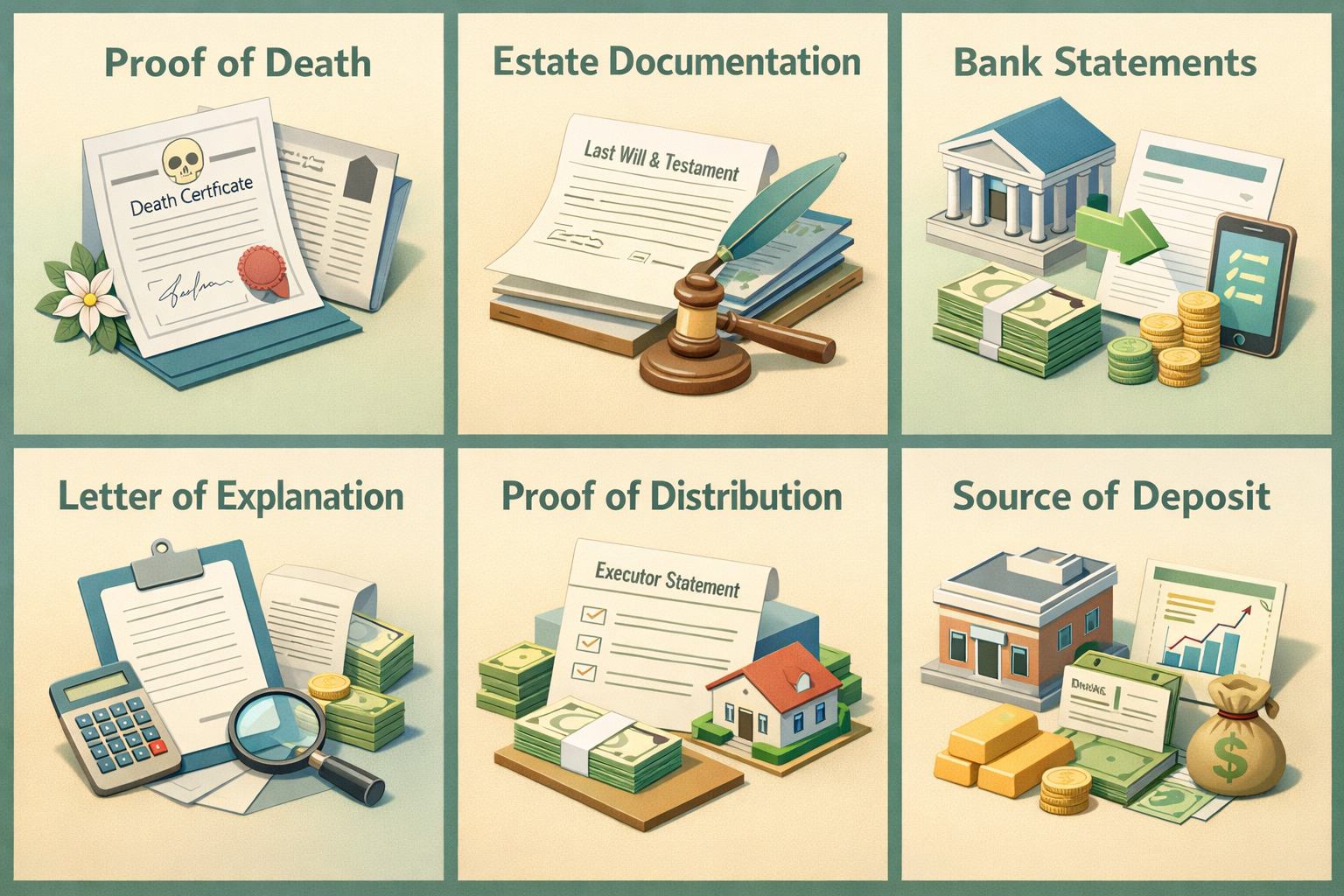
Meeting the requirements for conventional loan with 10% down from inheritance starts with gathering the right paperwork. Lenders want a clear paper trail that traces the inherited money from the estate to your bank account. Here's what you may be asked to provide:
- Proof of the decedent's death: A death certificate or notice from an attorney may be requested to confirm the estate source.
- Estate documentation: This could include a copy of the will, a letter from the estate attorney, or a probate court document showing you are a named beneficiary.
- Bank statements showing the deposit: Lenders will want to see the transfer of funds into your account, typically from an estate or trust account.
- Letter of explanation: You may need to write a brief letter explaining the source of the large deposit if it hasn't been in your account for 60 or more days.
- Proof of estate distribution: A statement or letter from the executor of the estate confirming the amount you received may also be required.
The documentation and eligibility requirements can vary between lenders, so it's a good idea to ask your loan officer early in the process exactly what they'll need. Being proactive with paperwork can prevent delays during underwriting.
Credit Score and Income Standards You Still Need to Meet
Inherited funds can cover your down payment, but they don't replace the other qualifying criteria for a conventional loan. Lenders will still evaluate your overall financial profile to determine whether you're a creditworthy borrower. Here are the core areas they'll examine:
Credit Score Requirements
For a conventional loan with 10% down, most lenders typically require a minimum credit score of 620. However, borrowers with scores in the mid-to-upper 700s or higher will generally receive better interest rates and terms. A lower score may still qualify, but it could result in a higher rate or additional lender conditions. If your credit score needs work, it may be worth spending a few months paying down debt and correcting any errors on your credit report before applying.
Debt-to-Income Ratio
Your debt-to-income (DTI) ratio compares your monthly debt obligations to your gross monthly income. Conventional loan guidelines generally prefer a DTI of 45% or lower, though some lenders may allow up to 50% with compensating factors like strong reserves or a higher credit score. Your housing payment, car loans, student loans, and credit card minimums all factor into this calculation.
Employment and Income Verification
Lenders want to see stable, consistent income. You'll typically need to provide two years of W-2s, recent pay stubs, and possibly tax returns if you're self-employed or have variable income. The inheritance itself doesn't count as qualifying income for the loan — lenders need to see ongoing earnings that support your ability to make monthly mortgage payments.
Understanding Seasoned Funds and Why Timing Matters
One of the most practical tips for anyone planning to use inherited money for a home purchase is to be mindful of timing. In the mortgage world, "seasoned funds" refer to money that has been sitting in your bank account for at least 60 days — roughly two months of bank statements. When funds are seasoned, lenders often won't ask where they came from, because the money has effectively become part of your regular financial picture.
If your inheritance hits your account in February and you apply for a mortgage in May, there's a good chance the underwriter won't require an explanation for that deposit at all. This simplifies the process considerably. However, if you receive the funds in March and apply in April, the large deposit will likely appear on your most recent bank statement and trigger questions.
This doesn't mean you have to wait if the timing isn't ideal — it simply means you should be prepared with documentation. Estates can sometimes take months or even longer to settle, so many buyers naturally end up with seasoned funds by the time they're ready to apply. If you're expecting an inheritance but haven't received it yet, it may be worth consulting a loan officer about the best time to begin your mortgage application.
Private Mortgage Insurance and Reserve Requirements to Consider
Putting 10% down on a conventional loan means you'll likely be required to carry private mortgage insurance until your loan balance falls below 80% of the home's value. PMI costs can vary, but they typically range somewhere between 0.2% and 2% of the loan amount annually, depending on your credit score, loan size, and lender. This cost is usually added to your monthly mortgage payment.
The silver lining is that PMI isn't permanent. Under federal law, lenders are required to cancel PMI automatically once your loan balance reaches 78% of the original purchase price, assuming you're current on payments. You may also be able to request cancellation earlier once you reach 80% equity, either through payments or an increase in the home's appraised value.
Beyond the down payment, lenders may also look at your financial reserves — money left in savings after closing. Some conventional loan programs, especially for borrowers with lower credit scores or higher DTI ratios, may require two to six months of mortgage payments held in reserve. If you used a large portion of your inheritance for the down payment, make sure you still have enough left over to satisfy any reserve requirements your lender sets.
Steps to Take Before Applying for a Conventional Loan with Inherited Funds
Preparing properly can make the difference between a smooth approval and a frustrating delay. Here are some practical steps to take before you apply:
- Open a dedicated bank account for the inheritance: Keeping inherited funds separate from your everyday spending account makes it easier to trace and document the money for your lender.
- Gather estate paperwork now: Even if you don't plan to buy immediately, collect the will, death certificate, and any probate or distribution letters while they're accessible.
- Check your credit report: Review your credit reports from all three bureaus and address any errors or outstanding debts that could lower your score.
- Calculate your full budget: Remember that the 10% down payment isn't your only upfront cost. Closing costs can add another 2% to 5% of the purchase price, so factor those into how much of your inheritance you'll need.
- Speak with a mortgage professional early: A loan officer familiar with conventional loan guidelines can review your specific situation, help you understand exactly what documentation is needed, and give you a realistic sense of what you can qualify for.
Taking these steps before you start house hunting puts you in a much stronger position and helps you avoid common pitfalls that can delay or derail a purchase.
●Conclusion
Using inherited funds to meet the requirements for conventional loan with 10% down from inheritance is a realistic and achievable path to homeownership. While lenders do have documentation standards around where your down payment money comes from, inherited funds are a recognized and accepted source under conventional loan guidelines. The key is being organized, transparent, and proactive with your paperwork. When you understand the credit, income, and documentation requirements ahead of time, the process becomes far less intimidating. If you're ready to take the next step, consider speaking with a LoanWise mortgage professional who can walk you through your options and help you make the most of your inheritance on the path to buying a home.