
Starting a custom drone mapping service is an exciting venture. Whether you're planning to serve agriculture, construction, real estate, or surveying industries, the demand for precision aerial data is growing fast. But like most technology-driven startups, getting off the ground requires real capital — and lots of it. Drones, sensors, software licenses, insurance, and FAA certifications all come with significant costs before you earn your first dollar. That's why understanding your startup loan options for a custom drone mapping service is one of the most important steps you can take as a new entrepreneur. This guide walks you through the most practical financing paths available, what lenders typically look for, and how to position yourself for approval.
Why Drone Mapping Startups Have Unique Funding Challenges
A custom drone mapping service sits at the intersection of technology, professional services, and specialized equipment — and that combination creates some distinct hurdles when seeking financing. Traditional lenders often feel more comfortable with brick-and-mortar businesses or established revenue streams. A drone mapping startup, by contrast, may have limited operating history, high upfront equipment costs, and revenue that takes time to stabilize as contracts are built.
Equipment alone can be a major barrier. Professional-grade mapping drones with LiDAR or multispectral sensors can cost anywhere from several thousand to tens of thousands of dollars per unit. Add in ground control equipment, photogrammetry software subscriptions, liability insurance, and FAA Part 107 certification fees, and it's easy to see how startup costs can escalate quickly.
Despite these challenges, lenders do fund this type of business — especially when the borrower presents a solid business plan, realistic financial projections, and a clear target market. The key is knowing which loan products are best suited for your situation and how to present your business in the strongest possible light.
SBA Loans: A Strong Foundation for New Drone Businesses
For many small business owners and entrepreneurs launching specialized service companies, SBA loans are among the most accessible and favorable financing options available. The U.S. Small Business Administration doesn't lend money directly — instead, it guarantees a portion of loans made by approved lenders, which reduces the lender's risk and often results in better terms for borrowers.
SBA 7(a) Loans
The SBA 7(a) loan program is the most widely used and may be a strong fit for a drone mapping startup. These loans can typically be used for working capital, equipment purchases, and business startup costs. Loan amounts can go up to $5 million, and repayment terms may extend up to 10 years for working capital or up to 25 years for real estate. Interest rates are generally competitive, and the SBA sets maximum rate caps, which helps keep borrowing costs manageable.
One consideration: SBA 7(a) loans can be harder to qualify for without some business history or strong personal credit. Lenders will often evaluate your personal credit score, business plan, collateral, and projected cash flow. If you're a first-time entrepreneur, having a detailed drone mapping business plan with realistic revenue projections could significantly strengthen your application.
SBA Microloans
If you're looking for smaller amounts to cover initial equipment or operational costs, the SBA Microloan program might be worth exploring. These loans offer up to $50,000 and are administered through nonprofit intermediary lenders. Beyond funding, many microloan providers offer business mentorship and technical assistance, which can be especially valuable for entrepreneurs just entering the drone services market.
SBA 504 Loans
If your drone mapping business eventually needs to purchase commercial real estate — such as a hangar, office, or equipment storage facility — the SBA 504 loan program could be relevant. It's primarily designed for major fixed assets and long-term growth investments rather than early-stage startup costs, so it may be more applicable as your business scales.
Equipment Financing: Fund Your Fleet Without Draining Cash Reserves
Because drones and mapping hardware are the core assets of your business, equipment financing is one of the most natural lending solutions for a custom drone mapping startup. With equipment loans or leases, the equipment itself often serves as collateral — which may make it easier to qualify compared to unsecured loan products.
Equipment loans typically allow you to finance a significant portion of the purchase price, sometimes up to 100%, and repay over the expected useful life of the equipment. For drones and tech peripherals, lenders may offer terms ranging from two to seven years, depending on the asset type.
Equipment leasing is another option that could help you preserve working capital in the early months. With a lease, you make regular payments to use the equipment without owning it outright — and at the end of the lease term, you may have options to buy, upgrade, or return the equipment. This flexibility can be helpful in the drone industry, where technology evolves quickly and upgrading to newer sensors or platforms may become necessary to stay competitive.
When evaluating equipment financing, it's worth comparing the total cost of ownership between a loan and a lease structure. Factors like tax treatment, depreciation benefits, and interest costs can all influence which option makes more financial sense for your specific situation.
Business Term Loans and Lines of Credit for Operational Flexibility
Beyond SBA programs and equipment-specific products, conventional business term loans and lines of credit offer additional flexibility for drone mapping startups managing day-to-day costs.
A business term loan provides a lump sum that you repay over a fixed schedule with interest. This type of financing works well for covering predictable startup expenses like software licenses, marketing, employee salaries, or initial inventory of supplies. Terms and rates will vary based on your creditworthiness and the lender's risk appetite, so it pays to shop around.
A business line of credit functions more like a credit card — you draw from it as needed and only pay interest on what you use. This product can be particularly useful for a drone mapping service that experiences seasonal fluctuations or project-based income cycles. If you land a large contract and need to purchase additional equipment or hire temporary staff, a line of credit provides fast, flexible access to capital.
Keep in mind that unsecured lines of credit may be harder to obtain for brand-new businesses with no revenue history. Some lenders may require at least six months to one year of operating history before approving a credit line. If you're in pre-launch mode, exploring secured alternatives or SBA-backed options may be a more realistic starting point.
Alternative Lenders and Revenue-Based Financing Options
When traditional bank financing isn't accessible right away, alternative lenders can fill the gap. Online lenders and fintech platforms have expanded access to capital for early-stage businesses, often with faster approval timelines and more flexible qualification criteria than traditional banks.
Revenue-based financing — sometimes called merchant cash advances — allows lenders to provide upfront capital in exchange for a percentage of future revenue. While this model offers speed and accessibility, the effective cost of capital can be higher than traditional loan products, so it's important to carefully evaluate the total repayment amount before committing.
Some lenders also offer startup-specific loan programs that place heavier weight on your business plan, industry experience, and personal credit profile rather than business revenue history. If you have a strong background in surveying, GIS, engineering, or aerial photography, showcasing that expertise can meaningfully strengthen your application with alternative lenders who take a more holistic view of risk.
Crowdfunding platforms and angel investors are additional avenues worth considering for tech-forward businesses like drone mapping services, though these fall outside traditional lending and carry their own considerations around equity dilution and investor expectations.
What Lenders Look for When Evaluating a Drone Mapping Startup Loan
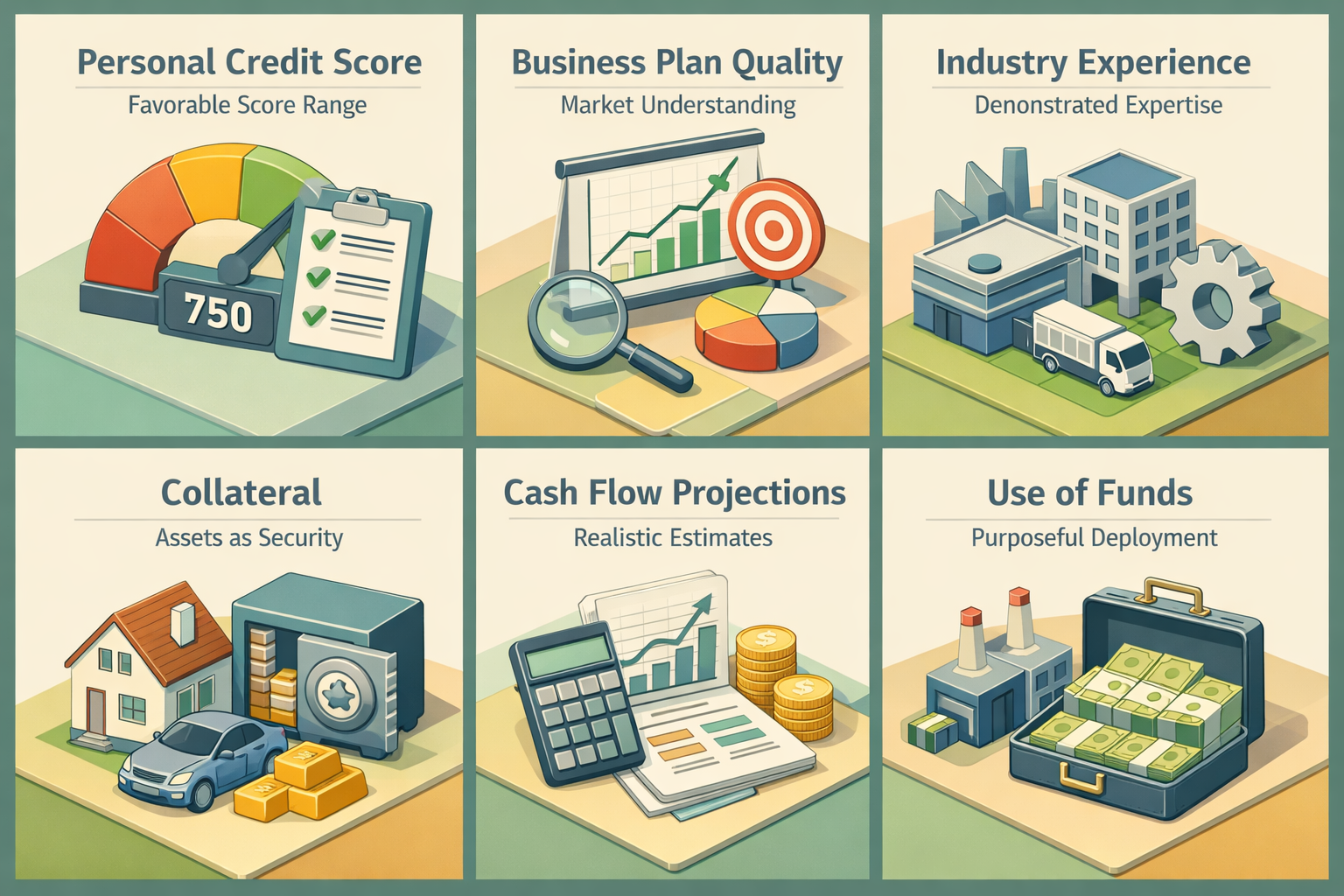
Regardless of which loan product you pursue, most lenders will evaluate several core factors when reviewing your drone mapping startup loan application. Understanding these criteria ahead of time can help you prepare a stronger submission and improve your odds of approval.
- Personal credit score: For startups without established business credit, your personal credit history often carries significant weight. A score in the mid-600s or higher is generally considered favorable, though higher scores may unlock better rates and terms.
- Business plan quality: A detailed, well-researched business plan demonstrates that you understand your market, your costs, and your path to profitability. Include information on your target industries, pricing model, service area, competitive advantages, and financial projections.
- Industry experience: Lenders may feel more confident when borrowers have demonstrated expertise in drone operations, geospatial technology, or a related field. Certifications, previous contracts, or professional credentials can all bolster your credibility.
- Collateral: Some loan products — particularly larger ones — may require collateral. Equipment, personal assets, or business assets can sometimes serve this purpose. Be prepared to discuss what you can offer as security.
- Cash flow projections: Realistic, well-supported projections showing how your business will generate revenue and cover loan payments are essential. Conservative estimates tend to be more credible than overly optimistic forecasts.
- Use of funds: Be specific about how you plan to use borrowed capital. Lenders want to see that funds will be deployed purposefully to grow the business — not simply to cover vague or unplanned expenses.
Tips for Strengthening Your Financing Application
Securing startup loan options for a custom drone mapping service may take some preparation, but there are practical steps you can take to improve your position before applying.
- Register your business formally: Establish your LLC or corporation, obtain an EIN, and open a dedicated business bank account. These steps signal professionalism and help separate personal and business finances.
- Obtain your FAA Part 107 certification: Demonstrating regulatory compliance can reassure lenders that your business is operating within legal frameworks — and it's a prerequisite for commercial drone operations in the U.S.
- Build your portfolio early: Even small pilot projects, volunteer mapping work, or demonstrations for potential clients can serve as proof of concept and strengthen your credibility.
- Consult a SCORE mentor or SBDC advisor: Small Business Development Centers and SCORE mentors offer free guidance to entrepreneurs and can help you refine your business plan and loan application strategy.
- Compare multiple lenders: Don't settle for the first offer you receive. Comparing terms from SBA-approved lenders, community banks, credit unions, and online lenders can help you find the most favorable combination of rate, term, and flexibility.
- Address credit issues proactively: If your personal credit has blemishes, work on resolving them before applying. Even small improvements to your credit score could open doors to better loan products and lower interest costs.
Preparation and persistence are the hallmarks of successful startup borrowers. The more thoroughly you present your business — its vision, its viability, and your personal commitment to it — the stronger your case becomes in the eyes of a lender.
●Conclusion
Launching a custom drone mapping service is a bold and promising entrepreneurial move in a field that's only continuing to grow. While funding a tech-driven startup may feel daunting at first, there are more financing pathways available than many new business owners realize. From SBA loans and equipment financing to alternative lenders and business lines of credit, the right combination of products can help you acquire the tools, talent, and runway you need to build a sustainable aerial mapping operation. Take the time to understand each option, prepare your application materials thoroughly, and work with experienced lending professionals who understand the needs of small business borrowers. At LoanWise, we're here to help entrepreneurs like you explore smart, strategic financing solutions — so you can focus on what you do best: delivering precision from above.