
Strategic Mortgage Down Payment Options for Real Estate Investors
Real estate investors face unique challenges when it comes to financing properties. Unlike traditional homebuyers, investors need mortgage down payment options that maximize leverage while maintaining healthy cash flow for their rental properties and fix-and-flip projects. With loan limits increasing and new financing programs emerging, understanding your down payment alternatives could significantly impact your investment returns and portfolio growth potential.
The landscape of investor financing continues to evolve, with lenders offering more flexible qualification rules and reduced barriers to entry. These changes create opportunities for savvy investors to optimize their capital allocation and enhance their acquisition strategies through strategic down payment planning.
Low Down Payment Investment Loan Programs
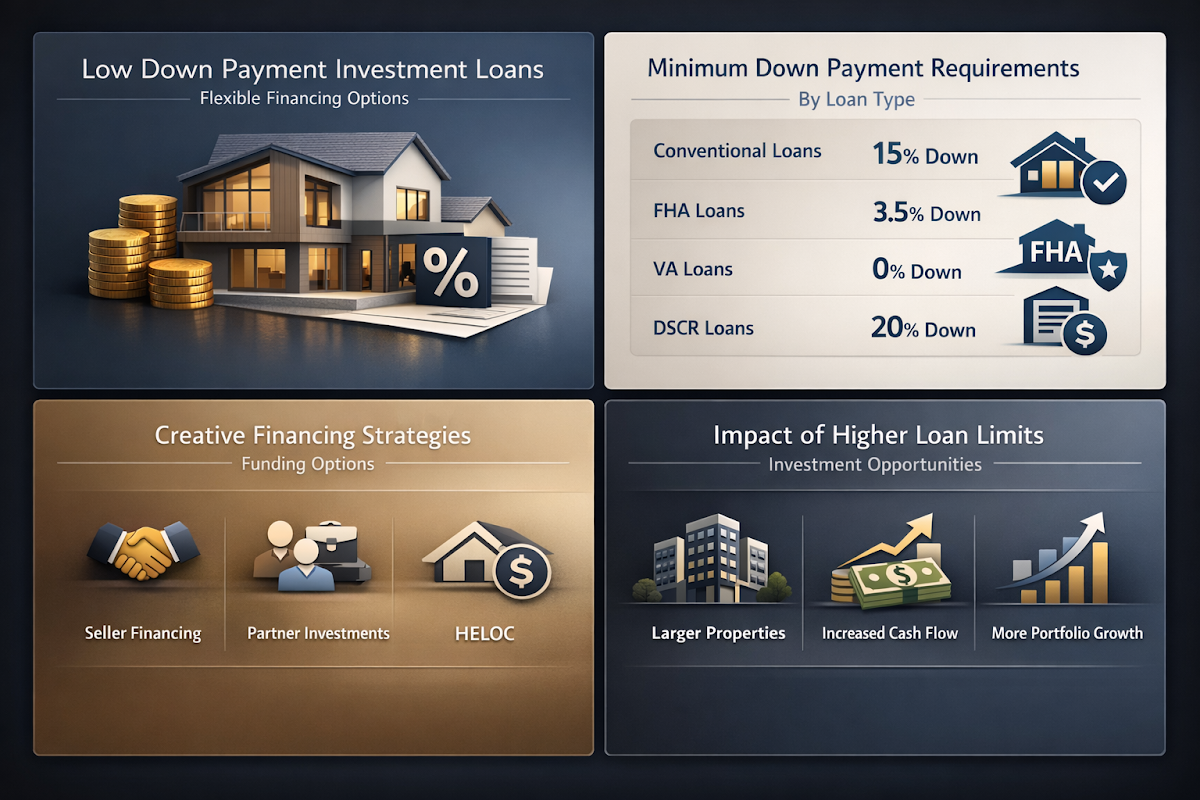
Low down payment investment loan programs offer real estate investors the ability to preserve capital while building their portfolios. These financing options typically require less cash upfront compared to traditional investment property loans.
- DSCR loans with reduced down payments: Some lenders may offer DSCR loans with down payments as low as 20-25%, allowing investors to qualify based on rental income rather than personal income verification.
- Portfolio lender programs: Certain financial institutions might provide investor-focused loans with flexible down payment requirements, often ranging from 15-25% depending on the property type and investor experience.
- Bridge loan options: Short-term financing for fix-and-flip projects could require down payments between 10-25%, enabling investors to move quickly on opportunities while minimizing initial capital requirements.
- Blanket loan structures: Experienced investors may access portfolio financing that allows lower individual property down payments when securing multiple properties under one loan facility.
Minimum Down Payment Requirements by Loan Type
Understanding minimum down payment requirements helps investors plan their financing strategy and allocate capital efficiently across different property types and loan products.
- Conventional investment loans: Traditional lenders typically require 20-25% down for rental properties, with some programs potentially offering lower requirements for experienced investors or properties in specific markets.
- Non-QM investor loans: These specialized programs might allow down payments as low as 10-20% for certain property types, particularly appealing to self-employed investors or those with complex income structures.
- Commercial property loans: Larger investment properties often require 25-30% down payments, though this can vary significantly based on property cash flow, location, and borrower qualifications.
- Fix-and-flip financing: Hard money and private lenders may require 15-30% down, depending on the project scope, investor experience, and expected profit margins.
Creative Financing Strategies for Down Payments
Real estate investors can employ various creative strategies to fund their down payment requirements while maintaining liquidity for future opportunities and property improvements.
- Cross-collateralization options: Using existing property equity as collateral might allow investors to reduce cash down payment requirements on new acquisitions, effectively leveraging their portfolio growth.
- Seller financing arrangements: Negotiating seller carry-back financing could reduce the immediate cash needed for down payments, particularly useful in competitive markets or unique property situations.
- Partnership structures: Joint ventures with other investors may allow for shared down payment responsibilities while maintaining individual ownership stakes and profit distributions.
- Business credit lines: Established real estate investors might access business lines of credit to fund down payments, though this approach requires careful cash flow management and exit planning.
Impact of Higher Loan Limits on Investment Strategy
Recent increases to loan limits create new opportunities for real estate investors to adjust their acquisition strategies and potentially improve their financing terms on higher-value properties.
- Expanded borrowing capacity: Higher loan limits allow investors to finance larger projects without stepping into jumbo loan territory, potentially accessing better rates and terms on properties previously requiring specialized financing.
- Portfolio optimization opportunities: Investors can now target higher-value rental properties that may offer better cash flow per dollar invested, improving overall portfolio performance and diversification.
- Leverage enhancement potential: The increased limits might enable investors to maintain their preferred down payment percentages on more expensive properties, preserving capital for additional acquisitions or improvements.
- Market expansion possibilities: Access to higher loan amounts could allow investors to explore previously unaffordable markets with better appreciation potential or stronger rental demand.
Optimizing Cash Flow with Down Payment Planning
Strategic down payment planning helps real estate investors balance immediate cash flow needs with long-term portfolio growth objectives, ensuring sustainable expansion and profitability.
- Cash-on-cash return calculations: Investors should evaluate how different down payment amounts affect their annual cash flow returns, considering both rental income and financing costs to optimize profitability.
- Reserve fund management: Maintaining adequate cash reserves after down payment deployment ensures investors can handle unexpected repairs, vacancies, or additional investment opportunities without compromising existing properties.
- Tax consideration strategies: Different down payment structures may impact depreciation benefits and interest deductions, requiring careful coordination with tax professionals to maximize after-tax returns.
- Exit strategy alignment: Down payment choices should align with planned hold periods and exit strategies, whether focusing on long-term rental income or shorter-term appreciation and disposition.
●Conclusion
Strategic mortgage down payment planning represents a critical component of successful real estate investment. By understanding the various financing options available and aligning down payment choices with overall investment objectives, investors can maximize their leverage potential while maintaining healthy cash flow and growth opportunities.
The evolving landscape of investor financing, including increased loan limits and flexible qualification programs, creates new possibilities for portfolio expansion and optimization. Working with experienced mortgage professionals who understand investor needs can help identify the most suitable down payment strategies for individual circumstances and market conditions.
Success in real estate investment often depends on efficient capital deployment and maintaining financial flexibility for future opportunities. Through careful down payment planning and strategic use of available financing programs, investors can build sustainable portfolios that generate consistent returns while preserving growth potential.