
Understanding Mortgage Loan Affordability in Today's Investment Landscape
Mortgage loan affordability has evolved significantly for real estate investors, with new requirements and opportunities emerging in 2026. Understanding how much house you can afford as an investor requires a different approach than traditional homebuyers, focusing on cash flow potential rather than personal income alone.
Today's investment property financing landscape offers expanded opportunities through increased loan limits and refined DSCR requirements. Smart investors are leveraging these changes to maximize their purchasing power while maintaining healthy debt-to-income ratios that support long-term portfolio growth.
Essential DSCR Requirements Checklist
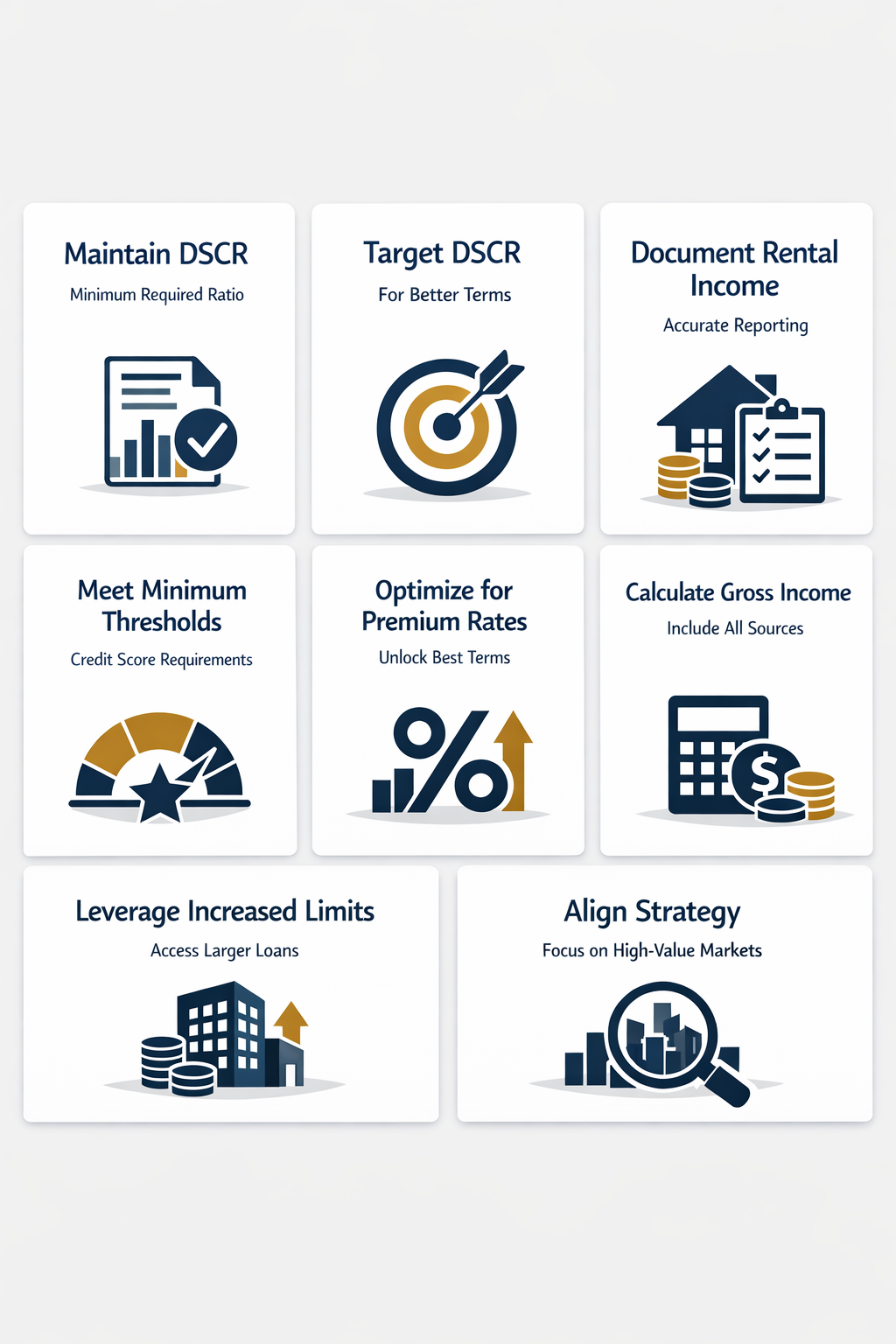
Essential DSCR requirements form the foundation of mortgage loan affordability for investment properties. Meeting these criteria can significantly impact your borrowing capacity and investment returns.
- Maintain DSCR of 1.00 or higher: Most lenders require a minimum debt service coverage ratio of at least 1.00, meaning your rental income covers debt payments
- Target DSCR of 1.25 for better terms: Achieving a DSCR of 1.25 or higher typically unlocks better interest rates and higher leverage options
- Document rental income accurately: Provide comprehensive lease agreements and rent rolls to demonstrate consistent cash flow from investment properties
- Calculate gross rental income properly: Include all rental income sources but account for vacancy rates and property management costs in your calculations
Credit Score Impact Assessment
The impact of credit score on affordability extends beyond simple approval decisions, directly affecting loan terms and available financing amounts for investment properties.
- Meet minimum thresholds: Most DSCR lenders require credit scores between 640-660 as a baseline for investment property financing
- Optimize for premium rates: Credit scores above 660 typically unlock the best DSCR loan terms and lower interest rates
- Monitor credit utilization: Keep credit card balances low and maintain diverse credit accounts to support strong scores
- Address credit issues early: Resolve any outstanding collections or disputes before applying for investment property loans
Loan Limit Optimization Strategies
Loan limit optimization strategies help investors maximize their borrowing capacity while taking advantage of recent increases in conforming loan limits and FHA backing.
- Leverage increased conforming limits: The 3.26% increase in loan limits for 2026 provides access to larger loans with favorable terms
- Consider multifamily FHA options: Higher FHA loan limits facilitate larger-scale investments in multifamily rental properties
- Avoid jumbo loan restrictions: Stay within conforming limits when possible to benefit from better underwriting criteria and lower rates
- Align strategy with market values: Focus on high-value markets where increased limits provide the greatest financing advantage
Calculating Investment Property Affordability
Calculating mortgage affordability for investment properties requires a systematic approach that accounts for rental income, expenses, and debt service obligations.
- Determine gross rental income potential: Research comparable rentals in your target area and calculate monthly rental income based on market rates and occupancy assumptions
- Calculate net operating income: Subtract property taxes, insurance, maintenance reserves, and vacancy allowances from gross rental income to determine actual cash flow
- Apply DSCR formula: Divide net operating income by total debt service to ensure your ratio meets or exceeds lender requirements of 1.00 to 1.25
- Factor in personal debt obligations: Consider how existing debt payments affect your overall debt-to-income ratio and borrowing capacity across your portfolio
Market Selection for Maximum Returns
Market selection for maximum returns involves identifying locations where mortgage loan affordability aligns with strong rental demand and appreciation potential.
- Analyze price-to-rent ratios: Focus on markets where purchase prices relative to rental rates support positive cash flow and meet DSCR requirements
- Research rent growth trends: Target areas with consistent rental rate increases that improve long-term affordability and return potential
- Evaluate economic fundamentals: Consider job growth, population increases, and infrastructure development that support sustained rental demand
- Assess financing availability: Confirm that local lenders are active in your target markets and familiar with investment property requirements
Debt-to-Income Optimization Methods
Debt-to-income ratio optimization methods help investors maintain healthy financial ratios while expanding their real estate portfolios.
- Include rental income in DTI calculations: Work with lenders who count 75% of rental income toward your qualifying income for improved debt-to-income ratios
- Pay down high-interest consumer debt: Reduce credit card balances and personal loans to improve your overall debt profile before applying for investment property financing
- Consider portfolio lending approaches: Explore lenders who evaluate your entire real estate portfolio rather than individual property debt-to-income calculations
- Structure financing strategically: Use longer loan terms or interest-only periods when appropriate to optimize monthly debt service payments
Strategic Investment Takeaways
Strategic investment takeaways for mortgage loan affordability center on leveraging current market conditions and regulatory changes to maximize your investment potential. The combination of increased loan limits, refined DSCR requirements, and expanded lending options creates opportunities for qualified investors to scale their portfolios more effectively.
Success in today's market requires maintaining strong credit profiles, understanding cash flow calculations, and selecting markets with favorable fundamentals. Investors who focus on properties with solid rental income potential and maintain DSCR ratios above 1.25 are positioning themselves for both immediate cash flow and long-term appreciation benefits.
●Conclusion
Mortgage loan affordability for real estate investors continues to evolve with new opportunities and requirements shaping the landscape. By focusing on DSCR optimization, credit score improvement, and strategic market selection, investors can maximize their purchasing power while building sustainable portfolios.
The key to success lies in understanding how rental income affects your overall affordability calculations and working with lenders who specialize in investment property financing. As loan limits increase and lending criteria adapt to market conditions, prepared investors can capitalize on these changes to expand their real estate investments effectively.