
Smart Investment Property Refinancing Guide
Refinancing for investment property represents one of the most powerful tools in a real estate investor's arsenal. With the right approach, you can unlock substantial equity, reduce monthly payments, and free up capital for additional acquisitions. Unlike traditional homeowner refinancing, investment property refinancing requires a more strategic mindset and deeper understanding of investor-focused loan products.
The landscape for refinancing rental property has evolved significantly, with lenders now offering more sophisticated options tailored to serious investors. Whether you're looking at a cash-out refinance investment property scenario or simply seeking better rates, understanding the current market dynamics can mean the difference between a mediocre deal and exceptional returns on your portfolio.
Essential Do's for Investment Property Refinancing Success
Following proven best practices for investment property refinancing success can significantly impact your portfolio's profitability and growth potential. These strategic approaches help investors maximize their refinancing outcomes while minimizing risks and complications.
- Compare Multiple Lenders: Different financial institutions may offer varying terms, rates, and loan-to-value ratios. Some lenders might provide up to 75% of your property's appraised value for cash-out refinancing, while others could offer more competitive investment property refinance rates for your specific situation.
- Time Your Refinance Strategically: Monitor interest rate trends and consider refinancing when rates drop or when your property value has increased substantially. Market forecasts suggest potential opportunities in the coming years for strategic rate positioning.
- Maintain Strong Financial Documentation: Keep detailed records of rental income, property expenses, and cash flow statements. Investment property loans typically require higher credit scores and specific debt-to-income ratios compared to primary residence financing.
- Leverage Equity Wisely: Use cash-out refinancing to fund additional property acquisitions or major improvements that increase rental income. This strategy can compound your portfolio growth when executed properly.
Critical Don'ts That Could Derail Your Refinancing
Avoiding common refinancing pitfalls for rental property investments protects your financial position and prevents costly mistakes that could impact your entire portfolio's performance.
- Don't Ignore Cash Flow Impact: Refinancing might lower your interest rate but could extend your loan term, potentially affecting your monthly cash flow calculations. Always analyze the total cost and monthly payment changes before proceeding.
- Don't Rush Without Market Analysis: Failing to properly assess current property values and rental market conditions could lead to suboptimal refinancing decisions. Market timing and property valuation directly influence your available options and terms.
- Don't Overlook Closing Costs: Investment property refinancing typically involves higher closing costs than primary residences. These expenses can significantly impact your break-even timeline and overall return on investment.
- Don't Neglect Future Rate Projections: Consider potential interest rate movements and how they might affect your refinancing strategy. Fixed-rate options might be preferable in certain market conditions, while adjustable rates could benefit in others.
5 Steps to Optimize Your Cash-Out Refinance Strategy
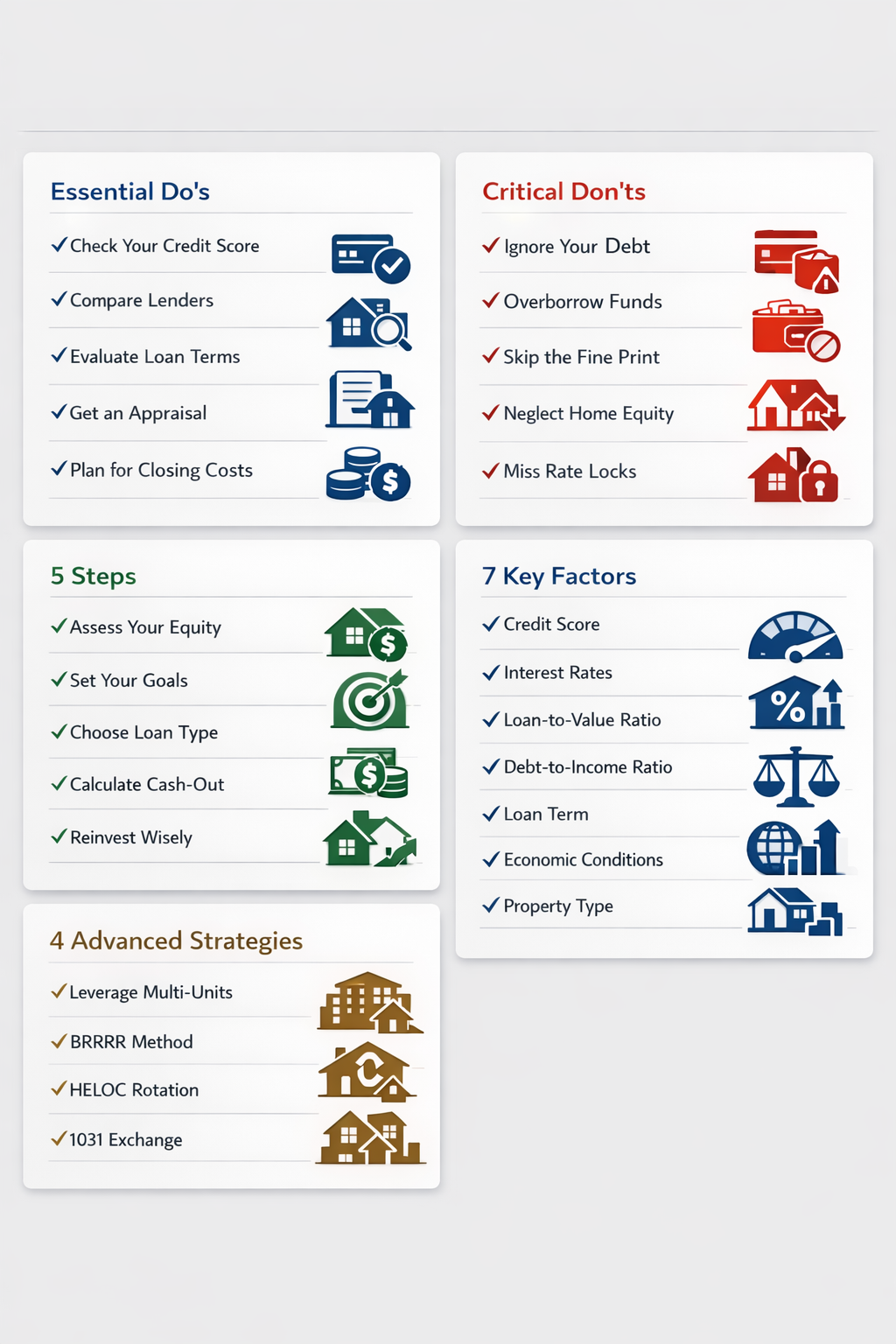
Implementing a systematic approach to cash-out refinance investment property transactions helps maximize the capital you can extract while maintaining favorable loan terms and sustainable cash flow.
- Calculate Maximum Loan-to-Value Potential: Determine how much equity you can access based on current lending guidelines, which may allow up to 75% of your property's appraised value for investment properties.
- Assess Rental Income Stability: Document consistent rental income streams and occupancy rates to strengthen your application. Lenders typically require evidence of stable cash flow when evaluating investment property refinancing applications.
- Prepare for Higher Credit Requirements: Investment property loans often demand higher credit scores and lower debt-to-income ratios compared to primary residence financing. Address any credit issues before beginning the application process.
- Evaluate Multiple Use Cases for Extracted Capital: Consider various investment opportunities for your cash-out funds, such as acquiring additional rental properties, funding major renovations, or diversifying into other real estate investment strategies.
- Structure the New Loan Terms Strategically: Balance monthly payment amounts with total interest costs over the loan term. Sometimes a slightly higher rate with better cash flow characteristics serves investor goals better than the lowest possible rate.
7 Key Factors Affecting Investment Property Refinance Rates
Understanding the variables that influence investment property refinance rates helps investors position themselves for the most favorable terms and identify opportunities to improve their loan conditions.
- Property Type and Location: Single-family rentals typically receive better rates than multi-unit properties, while location affects both rates and available loan programs. Properties in stable rental markets often qualify for more competitive pricing.
- Loan-to-Value Ratio: Lower LTV ratios generally result in better interest rates. Investors with significant equity positions may access premium pricing tiers not available to highly leveraged borrowers.
- Debt Service Coverage Ratio: Properties with strong cash flow relative to debt payments demonstrate lower risk to lenders. Higher DSCR ratios often translate into better rate offerings and loan terms.
- Credit Profile and Experience: Experienced real estate investors with strong credit histories may qualify for preferred pricing. Some lenders offer portfolio-based pricing for investors with multiple properties.
- Market Interest Rate Environment: Broader economic conditions and Federal Reserve policies significantly impact available rates. Strategic timing based on rate forecasts could result in substantial long-term savings.
- Loan Amount and Term: Larger loan amounts might qualify for better pricing, while loan term selection affects both rate and total interest costs over the life of the loan.
- Lender Specialization: Some financial institutions specialize in investor lending and may offer more competitive rates and terms than traditional mortgage companies focused primarily on homeowner financing.
4 Advanced Strategies for Portfolio Growth Through Refinancing
Sophisticated refinancing strategies can accelerate portfolio expansion and optimize overall investment returns through strategic capital deployment and loan structuring techniques.
- Sequential Cash-Out Strategy: Systematically refinance properties in your portfolio to extract equity for additional acquisitions. This approach creates a self-funding expansion mechanism that compounds your purchasing power over time.
- Rate and Term Optimization Timing: Monitor interest rate cycles and refinance properties when favorable conditions align with your individual property performance. Some properties might benefit from immediate refinancing while others should wait for better market conditions.
- Cross-Collateralization Opportunities: Some lenders offer portfolio-based financing that uses multiple properties as collateral. This approach might provide access to better terms or higher loan amounts than individual property financing.
- Strategic Debt Restructuring: Consolidate multiple property loans or restructure existing debt to improve cash flow characteristics. This strategy might involve longer terms on stable properties to free up capital for more aggressive investments in emerging markets.
●Conclusion
Refinancing for investment property continues to evolve as a sophisticated strategy for serious real estate investors. Success requires understanding the nuanced requirements, timing market conditions effectively, and maintaining a long-term perspective on portfolio growth. The potential to leverage up to 75% of property values through cash-out refinancing provides substantial opportunities for capital deployment and portfolio expansion.
As market conditions shift and new opportunities emerge, investors who master these refinancing strategies position themselves to capitalize on favorable lending environments while building sustainable, profitable real estate portfolios. Whether you're optimizing existing properties or funding new acquisitions, strategic refinancing remains one of the most powerful tools for accelerating investment returns and achieving long-term financial goals.