
Smart PMI Elimination Through Strategic Refinancing
Private Mortgage Insurance (PMI) can significantly impact your investment property's profitability, often adding hundreds of dollars to monthly payments. For real estate investors managing multiple properties, understanding how to eliminate PMI through mortgage refinance to remove PMI strategies becomes crucial for maximizing cash flow and overall returns. While PMI typically protects lenders when borrowers put down less than 20%, it represents an ongoing expense that directly reduces your bottom line.
The good news is that investors have several proven methods to eliminate this cost, ranging from strategic refinancing to leveraging property appreciation. By understanding these approaches and timing them correctly, you can potentially save thousands annually while improving your property's investment performance.
Understanding PMI and Its Impact on Investment Returns
Understanding PMI and its impact on investment returns is essential for any serious real estate investors. PMI costs typically range from 0.3% to 1.5% of the original loan amount annually, which can translate to substantial monthly expenses across your portfolio.
- Cash flow reduction: PMI payments directly reduce monthly rental income, affecting your property's debt service coverage ratio and overall profitability
- Portfolio scaling limitations: Higher monthly payments can limit your ability to qualify for additional investment property loans
- Tax implications: While PMI may be tax-deductible in some circumstances, elimination removes this expense entirely
- Refinancing opportunities: Properties with PMI may benefit from refinancing when market conditions improve or equity increases
Most investors discover that PMI removal can improve their property's cash-on-cash return by 1-3%, depending on the loan amount and PMI rate. This improvement becomes more significant when managing multiple properties, as the cumulative savings can fund additional investments or property improvements.
Automatic PMI Termination Through Loan-to-Value Management
Automatic PMI termination through loan-to-value management offers investors a passive approach to eliminating this expense. Federal law requires lenders to automatically cancel PMI when your loan balance reaches 78% of the original property value, provided you're current on payments.
- 78% LTV threshold: PMI automatically terminates when you reach this loan-to-value ratio through regular payments
- 80% LTV request option: Many lenders allow PMI removal requests once you reach 80% LTV
- Original value basis: Automatic termination typically uses the original purchase price, not current market value
- Payment history requirements: Lenders typically require current payment status and no recent late payments
This approach works particularly well for fix and flip investors who purchase properties below market value or in rapidly appreciating markets. However, investors should note that automatic termination might take longer than proactive removal strategies, especially if property values have increased significantly since purchase.
Strategic Refinancing for PMI Elimination
Strategic mortgage refinancing for PMI elimination can provide immediate relief while potentially securing better loan terms. A mortgage refinance to remove PMI makes sense when property values have increased enough to achieve 20% equity or when interest rates have dropped significantly.
- Market timing considerations: Refinancing works best when interest rates are favorable and property values have appreciated
- Appraisal-based equity: New appraisals may reveal increased property values that support PMI removal
- Cost-benefit analysis: Compare refinancing costs against long-term PMI savings to ensure profitability
- Loan program options: DSCR loans and other investor-focused products may offer better terms without PMI requirements
Investors often find that refinancing provides additional benefits beyond PMI removal, including access to cash for additional investments or property improvements. The key is ensuring that closing costs don't outweigh the long-term savings from PMI elimination.
Alternative Methods for Eliminating PMI Costs
Alternative methods for eliminating PMI costs provide flexibility when traditional approaches aren't optimal. These strategies can be particularly valuable for investors with unique circumstances or specific portfolio goals.
- Principal payments: Making additional principal payments can accelerate reaching the 20% equity threshold
- Property improvements: Renovations that increase property value may support appraisal-based PMI removal
- Market appreciation leverage: In appreciating markets, ordering new appraisals might demonstrate sufficient equity growth
- Loan modification requests: Some lenders may consider PMI removal based on current market conditions and payment history
These methods require careful analysis of costs versus benefits. For instance, making large principal payments might reduce liquidity needed for other investment opportunities. Similarly, property improvements should generate returns beyond just PMI elimination to justify the investment.
Step-by-Step PMI Removal Process for Investors
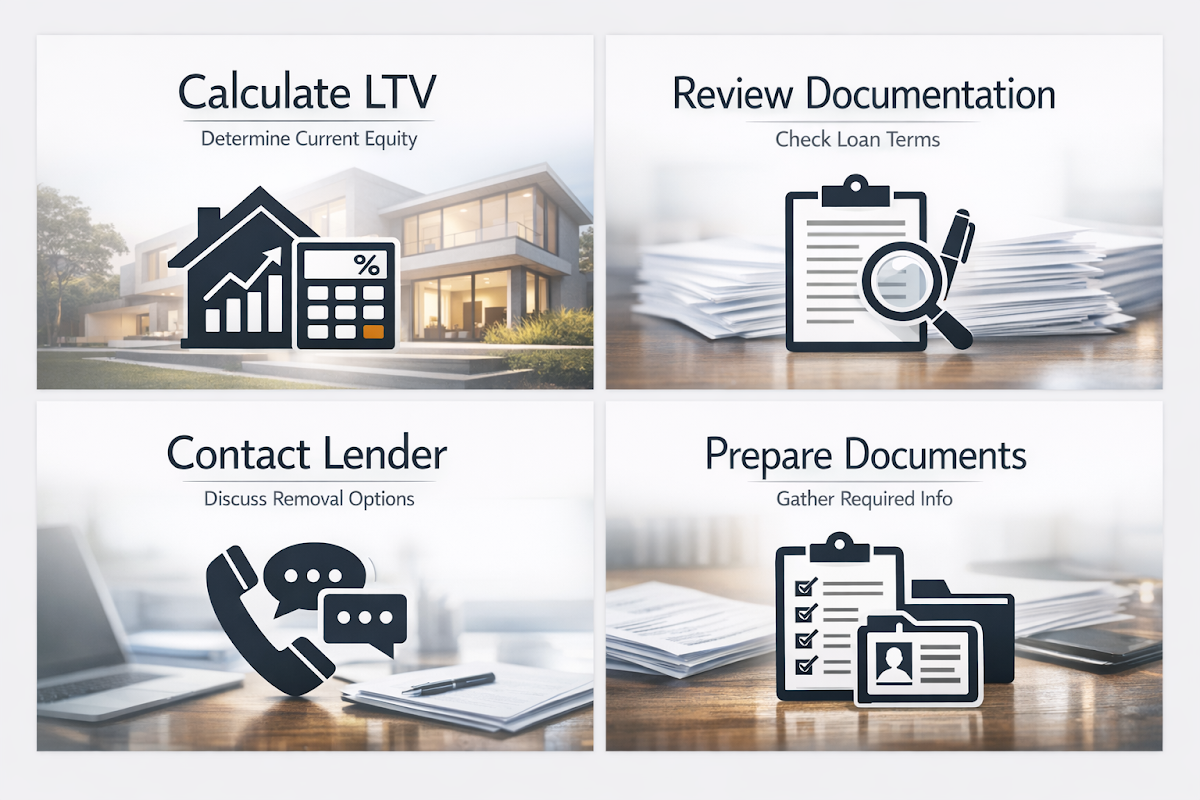
The step-by-step PMI removal process for investors requires systematic planning and execution. Following these steps can streamline the process and improve your chances of successful PMI elimination.
- Calculate current loan-to-value ratio: Determine your current equity position using recent comparable sales or property tax assessments to estimate current market value
- Review loan documentation: Check your original loan terms for specific PMI removal requirements and any waiting periods that might apply
- Contact your lender: Discuss PMI removal options and requirements, including whether they accept automated valuation models or require full appraisals
- Prepare required documentation: Gather payment history, property maintenance records, and any improvement documentation that might support higher valuations
- Submit formal request: Follow your lender's specific process for PMI removal, which may include paying for appraisals or meeting specific seasoning requirements
Success typically depends on maintaining good payment history and demonstrating that property values support the required equity position. Many investors find that preparation and documentation significantly speed up the approval process.
Calculating PMI Savings and Investment Impact
Calculating PMI savings and investment impact helps investors make informed decisions about removal strategies. Understanding the financial implications guides timing and method selection for maximum benefit.
- Monthly savings calculation: Multiply your current PMI rate by the loan balance and divide by 12 to determine monthly savings potential
- Annual impact assessment: Calculate yearly savings and compare against any costs required for PMI removal, such as appraisal fees or refinancing costs
- Cash flow improvement analysis: Determine how PMI elimination affects your debt service coverage ratio and overall property performance metrics
- Portfolio-wide evaluation: Consider the cumulative impact across multiple properties and how savings might fund additional investments
- Tax implication review: Assess how PMI removal affects your tax situation, particularly if you were claiming PMI deductions
Most investors find that PMI elimination pays for itself within 12-24 months, even when factoring in removal costs. The improvement in cash flow and investment metrics often justifies the effort and expense involved in the removal process.
●Conclusion
Eliminating PMI through strategic refinancing or other removal methods represents a powerful tool for improving investment property performance. Whether you pursue automatic termination, refinancing, or alternative approaches, the key lies in understanding your options and timing your actions appropriately.
For real estate investors, PMI removal can significantly impact cash flow, debt service coverage ratios, and overall portfolio performance. The monthly savings often compound over time, providing additional capital for property improvements, maintenance reserves, or new investment opportunities.
Success requires careful analysis of your specific situation, including current market conditions, property values, and loan terms. By taking a systematic approach to PMI elimination, investors can reduce operating expenses while improving their properties' financial performance and long-term investment returns.