
Real estate investors often juggle multiple financing sources across their portfolios, from fix and flip loans to rental property mortgages. When debt payments become overwhelming or interest rates vary significantly, a Business Loan for Debt Consolidation might offer a strategic solution. This approach can potentially streamline your financial obligations while reducing overall borrowing costs.
However, consolidating business debt requires careful planning and understanding of available options. The right consolidation strategy could improve your cash flow and simplify your investment operations, but the wrong approach might create new challenges. Let's explore the key strategies that savvy real estate investors use to optimize their debt structure.
Evaluate Your Current Debt Portfolio
Evaluate Your Current Debt Portfolio represents the foundation of any successful consolidation strategy. Before considering consolidation options, investors need a comprehensive understanding of their existing obligations.
- Catalog all existing debts: List every loan, credit line, and financing obligation across your real estate portfolio. Include principal balances, interest rates, monthly payments, and remaining terms for each debt.
- Calculate total monthly obligations: Add up all current payments to understand your total debt service. This baseline helps you evaluate whether consolidation could reduce your monthly cash outflow.
- Identify high-cost debt: Highlight loans with interest rates above market averages or those with unfavorable terms. These typically become prime candidates for consolidation.
- Review loan covenants and prepayment penalties: Some existing loans may have restrictions or fees that affect consolidation timing. Understanding these terms helps you plan the most cost-effective consolidation approach.
Choose the Right Consolidation Loan Type
Choose the Right Consolidation Loan Type determines the success of your debt consolidation strategy. Different loan products serve various investor needs and property types.
- Consider commercial term loans: These traditional loans often provide fixed rates and predictable payments. They work well for consolidating multiple property loans when you need stability and long-term planning.
- Explore business lines of credit: A credit line offers flexibility for investors who need varying amounts of capital. You can pay down high-interest debt and only pay interest on the amount you use.
- Evaluate portfolio loans: Some lenders offer loans specifically designed to consolidate multiple real estate investments. These might provide better terms than individual property loans.
- Research SBA loan options: Certain SBA programs might offer favorable terms for real estate investors, though eligibility requirements can be strict and processing times longer.
Time Your Consolidation Strategy
Time Your Consolidation Strategy can significantly impact the financial benefits you achieve. Market conditions and your business situation both influence optimal timing.
- Monitor interest rate trends: Consolidate when rates are favorable compared to your existing debt. Rising rate environments might make consolidation less attractive unless your current debt carries very high rates.
- Align with cash flow cycles: Plan consolidation during periods when your properties generate strong cash flow. This demonstrates financial strength to lenders and might secure better terms.
- Consider seasonal factors: Real estate markets often have seasonal patterns. Time your consolidation when your portfolio values are strong and rental income is stable.
- Plan around major investments: If you're planning significant acquisitions or renovations, consolidate debt beforehand to improve cash flow for new opportunities.
Benefits of Debt Consolidation for Business
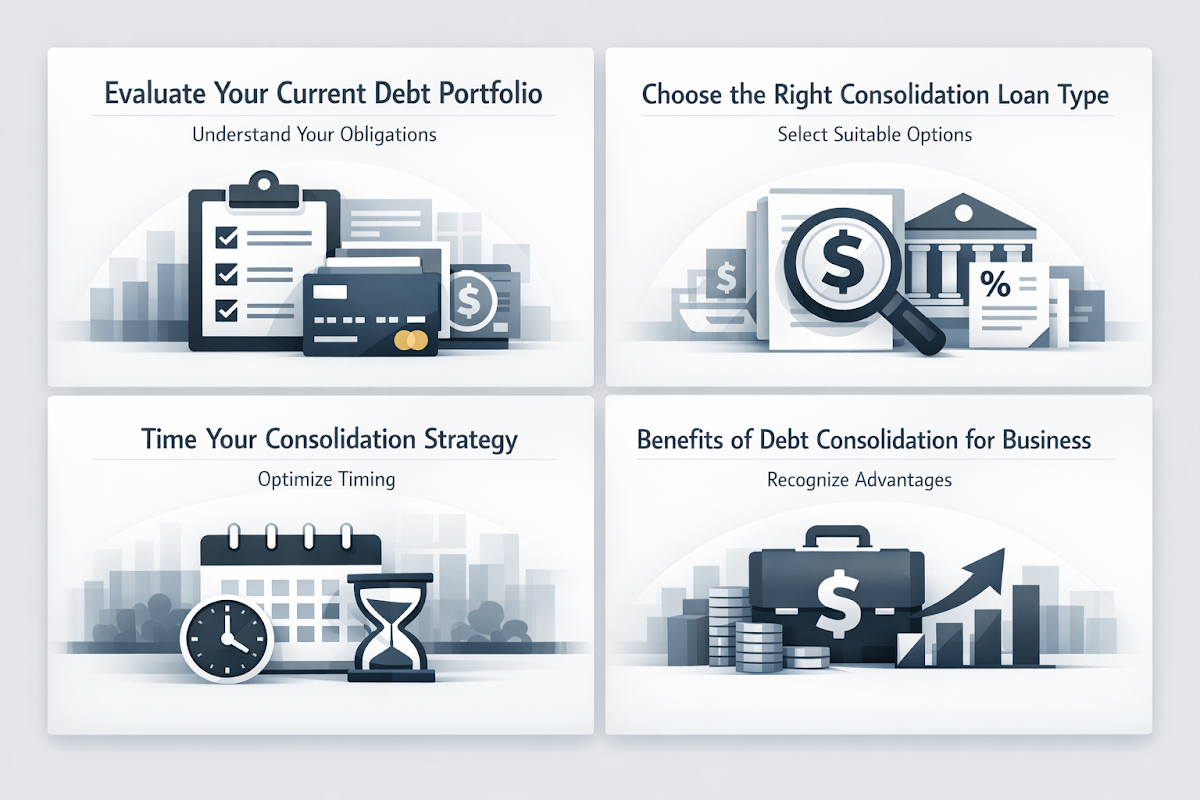
Benefits of Debt Consolidation for Business extend beyond simple payment reduction. Smart investors recognize multiple advantages that improve their overall financial position.
- Simplified financial management: Instead of tracking multiple payments, due dates, and loan terms, you manage a single consolidated payment. This reduces administrative burden and the risk of missed payments that could damage your credit profile.
- Improved cash flow predictability: Consolidation typically results in a single, fixed monthly payment that's easier to budget around. This predictability helps with long-term financial planning and property acquisition strategies.
- Enhanced borrowing capacity: By reducing your debt-to-income ratio and simplifying your financial picture, consolidation might improve your ability to secure financing for new investments or property improvements.
- Potential tax advantages: Consolidation might create opportunities to optimize the tax treatment of your interest payments, though you should consult with a tax professional about your specific situation.
Debt Consolidation Loan Options for Small Businesses
Debt Consolidation Loan Options for Small Businesses vary significantly in terms, requirements, and suitability for real estate investors. Understanding your choices helps you select the most appropriate solution.
- Traditional bank term loans: Established banks often offer competitive rates for borrowers with strong credit and cash flow. These loans typically require extensive documentation but may provide the best rates for qualified applicants.
- Alternative lending platforms: Non-bank lenders might offer faster approvals and more flexible qualification criteria. While rates might be higher, the speed and convenience could outweigh the additional cost for time-sensitive situations.
- Real estate-focused lenders: Some lenders specialize in real estate investor financing and understand the unique aspects of property-based businesses. They might offer more favorable terms or flexible underwriting for experienced investors.
- Portfolio refinancing programs: Certain lenders offer programs specifically designed to refinance multiple properties simultaneously, which can be more efficient than individual business loan consolidation.
●Conclusion
A well-executed Business Loan for Debt Consolidation strategy can transform your real estate investment operations by reducing costs, simplifying management, and improving cash flow. However, success depends on careful evaluation of your current debt structure, choosing appropriate loan products, and timing the consolidation strategically.
The benefits of consolidating business debt extend beyond immediate payment reduction. Investors often find that streamlined debt management frees up time and mental resources to focus on growth opportunities rather than juggling multiple payment schedules.
As you consider consolidation options, remember that each investor's situation is unique. What works for one portfolio might not be optimal for another. Take time to analyze your specific circumstances, compare multiple lenders, and consider both short-term relief and long-term strategic implications before making your decision.