
Buying a local bakery can be one of the most rewarding moves an entrepreneur makes. You're stepping into an established customer base, a known brand, and a business with real cash flow history. But like any acquisition, it takes capital — and that's where SBA loan options for acquiring a local bakery business come into play. The U.S. Small Business Administration backs several loan programs that may make it significantly easier for qualified buyers to finance a bakery purchase. Whether you're a first-time business owner or a seasoned entrepreneur looking to expand, understanding how these programs work could be the key to turning your bakery dream into a reality.
Why Bakery Acquisitions Are a Strong Fit for SBA Financing
Bakeries are considered eligible small businesses under most SBA program guidelines, which makes them a natural fit for government-backed financing. When you're acquiring an existing bakery rather than starting one from scratch, lenders tend to view the transaction more favorably. There's already a proven business model, existing equipment, trained staff, and — ideally — several years of financial records to review.
From a lender's perspective, this reduces risk. An established bakery with consistent revenue is often easier to underwrite than a startup concept with no operating history. SBA-backed lenders may be more willing to extend credit for acquisitions when the target business shows strong profitability, loyal clientele, and reasonable debt levels.
It's also worth noting that bakeries involve tangible assets — commercial ovens, mixers, display cases, refrigeration units — that can serve as collateral. This may help strengthen your loan application, since lenders often look for assets to secure the debt in addition to business cash flow.
The SBA 7(a) Loan: The Most Common Path for Business Buyers
When most small business owners think about a bakery acquisition loan SBA option, the SBA 7(a) program is typically the first place to look. It's the most widely used SBA loan program, and it's designed to support a broad range of business financing needs — including the purchase of an existing business.
The SBA 7(a) loan may cover the full acquisition cost, including the business purchase price, working capital, and even some closing costs, depending on how your lender structures the deal. Loan amounts can go up to $5 million, which is generally more than sufficient for acquiring most local bakery operations.
Some of the features that make the 7(a) program attractive include:
- Lower down payments: Borrowers may only need to put down around 10% of the total project cost, though this can vary based on lender requirements and deal structure.
- Longer repayment terms: Business acquisition loans under the 7(a) program may carry repayment terms of up to 10 years, which helps keep monthly payments manageable.
- Competitive interest rates: Because the SBA guarantees a portion of the loan, lenders can often offer rates that are more favorable terms than conventional commercial loans.
- Flexible use of funds: Proceeds can typically cover the purchase price, inventory, working capital, and equipment upgrades.
It's important to work with an SBA-approved lender who has experience with business acquisitions. Not all lenders process 7(a) loans the same way, and an experienced lender can help you navigate the paperwork and structure the deal properly.
How the SBA 504 Program Might Support Your Bakery Purchase
While the SBA 7(a) is the more versatile option, the SBA 504 loan program deserves attention too — particularly if the bakery you're acquiring includes real estate, such as the building where the business operates.
The 504 program is specifically designed to finance fixed assets like real property and major equipment. If your bakery acquisition includes the purchase of the commercial space, a 504 loan could potentially be used alongside a conventional lender loan to finance the deal for the real estate portion of the deal. This structure typically involves three parties: a Certified Development Company (CDC), a conventional lender, and the borrower contributing equity.
For bakery buyers, this could be particularly useful if the seller owns the building and is including it in the sale. Securing the real estate as part of your acquisition may reduce long-term occupancy costs and give you greater stability as a business owner. However, the 504 program has specific eligibility requirements, and not every acquisition will qualify. Speaking with a lender experienced in SBA programs is the best way to determine whether this route fits your transaction.
What Lenders Look for When Reviewing a Bakery Acquisition Loan
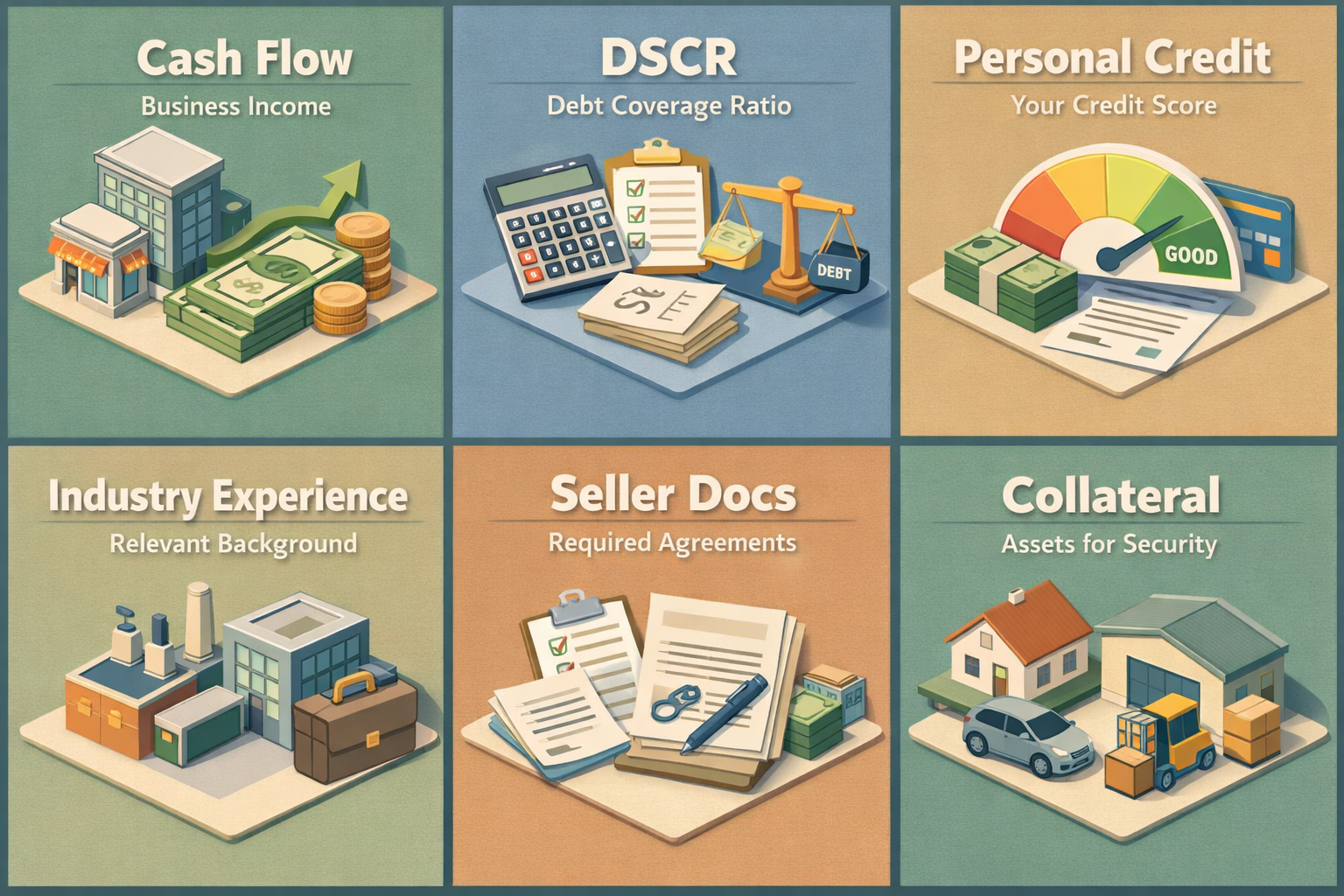
Understanding what lenders evaluate can help you prepare a stronger application. When reviewing SBA loan options for acquiring a local bakery business, lenders typically focus on several key areas:
- Business cash flow: Lenders want to see that the bakery generates enough income to service the debt. They'll review profit and loss statements, tax returns, and cash flow projections — usually for at least two to three years of operating history.
- Debt service coverage ratio (DSCR): This measures whether the business earns enough to cover its loan payments. A DSCR above 1.25 is often considered favorable, though specific thresholds may vary by lender.
- Your personal credit profile: SBA lenders will review your personal credit score and history. A score of 680 or higher is often mentioned as a general benchmark, though some lenders may work with scores slightly below this depending on other strengths in the application.
- Industry experience: Having prior experience in food service, bakery operations, or retail management may improve your standing. Lenders want confidence that you can successfully run the business after the acquisition.
- Seller documentation: You'll need a business purchase agreement, a business valuation, and potentially a non-compete agreement from the seller. Clean, organized documentation makes the underwriting process smoother.
- Collateral: While SBA loan options don't always require full collateral coverage, lenders will look at available assets — both from the business and sometimes personal — to secure the loan.
Preparing Your Financials and Documentation Before Applying
Strong preparation before you approach a lender can significantly improve your chances of approval. Here's what you'll likely need to have ready when pursuing a bakery acquisition loan through an SBA program:
- Personal financial statements and tax returns for the past two to three years
- The bakery's business tax returns and financial statements for the same period
- A signed letter of intent or purchase agreement with the seller
- A formal business valuation from a qualified appraiser or business broker
- A business plan outlining how you intend to operate and grow the bakery post-acquisition
- Evidence of your down payment funds (bank statements, investment accounts, etc.)
- A resume or biography highlighting your relevant business or industry experience
It's also a good idea to get pre-qualified early in the process. Some sellers may even require proof of financing ability before accepting an offer. Working with a lender familiar with SBA acquisition transactions can help you move quickly and confidently through the process.
Common Challenges and How to Navigate Them
Even with a solid application, bakery acquisition loans can come with a few hurdles. Being aware of them ahead of time lets you plan accordingly.
Valuation disagreements: The seller may believe the business is worth more than an independent appraisal suggests. Lenders will typically lend based on the appraised value, not the asking price, which can create a gap. A business broker or financial advisor can help negotiate a fair price that both parties and the lender can agree on.
Seller financing as a bridge: In some acquisition deals, the seller may agree to carry a portion of the purchase price as a note — sometimes called seller financing. SBA guidelines may allow this in certain structures, which could reduce the cash you need upfront. This arrangement must be disclosed to the lender and approved as part of the loan structure.
Lease or location risks: If the bakery operates in a leased space, lenders will want to review the lease terms. A short remaining lease or unfavorable renewal terms could be a red flag. Ideally, you'll want a long-term lease or renewal option in place before closing.
Longer processing timelines: SBA loans may take longer to close than conventional loans due to the additional documentation and government approval steps. Plan for a process that could take 60 to 90 days or more, and build that timeline into your purchase agreement.
Taking the Next Step Toward Owning a Bakery
If you've found a bakery you're excited about and you're ready to move forward, starting the financing conversation early is one of the smartest things you can do. Connecting with an SBA-approved lender — ideally one with experience in business acquisitions — gives you a clearer picture of what you can afford, what terms you might qualify for, and what documentation you'll need to gather.
At LoanWise, we work with small business owners and entrepreneurs who are navigating complex financing decisions every day. Whether you're exploring SBA 7(a) loans, SBA 504 structures, or a combination approach, we can help you understand your options and connect you with lenders who specialize in business acquisitions.
Don't wait until you have a signed purchase agreement to start the financing process. The earlier you begin, the better positioned you'll be to close the deal on your terms — and start baking success into your business future.
●Conclusion
Pursuing SBA loan options for acquiring a local bakery business is one of the most practical and accessible paths available to entrepreneurs looking to buy an established operation. With programs like the SBA 7(a) and SBA 504 offering favorable terms, lower equity requirements, and flexible use of funds, the path to bakery ownership may be more achievable than you think. The key is preparation — knowing what lenders look for, organizing your documents, and working with experienced professionals who understand business acquisition financing. If you're ready to take that next step, LoanWise is here to help you get started.