
SBA Loan Application Process Guide
The SBA Loan Application Process can feel overwhelming for real estate investors looking to expand their portfolios or finance commercial properties. While DSCR loans offer streamlined qualification based on property cash flow, SBA loans provide another avenue for investors seeking competitive rates and favorable terms for commercial real estate ventures. Understanding the application requirements and timeline helps investors make informed financing decisions that align with their investment strategies.
This guide breaks down the essential components of the SBA loan application process, providing investors with the knowledge needed to navigate this financing option effectively. Whether you're considering SBA 504 loans for commercial property purchases or exploring how they complement your existing investment loan portfolio, proper preparation can significantly improve your approval chances.
Understanding SBA Loan Basics for Real Estate Investors
Understanding SBA loan basics for real estate investors begins with recognizing how these government-backed loans differ from traditional investment financing options. SBA loans typically offer lower down payments and longer repayment terms compared to conventional commercial mortgages, making them attractive for certain types of real estate investments.
- SBA 504 loans may provide financing for up to 90% of commercial property purchases when combined with conventional financing
- Interest rates on SBA loans often remain competitive, though they might not always match current DSCR loan rates of 6.00% to 7.50%
- Owner-occupancy requirements typically apply, meaning investors must occupy at least 51% of the property for their business operations
- Loan amounts can reach several million dollars for qualifying commercial real estate projects
These characteristics make SBA loans particularly suitable for investors who plan to use commercial properties for their own business operations rather than purely as rental investments. The owner-occupancy requirement distinguishes SBA financing from DSCR loans, which focus primarily on rental income potential.
Required SBA Loan Documents and Documentation
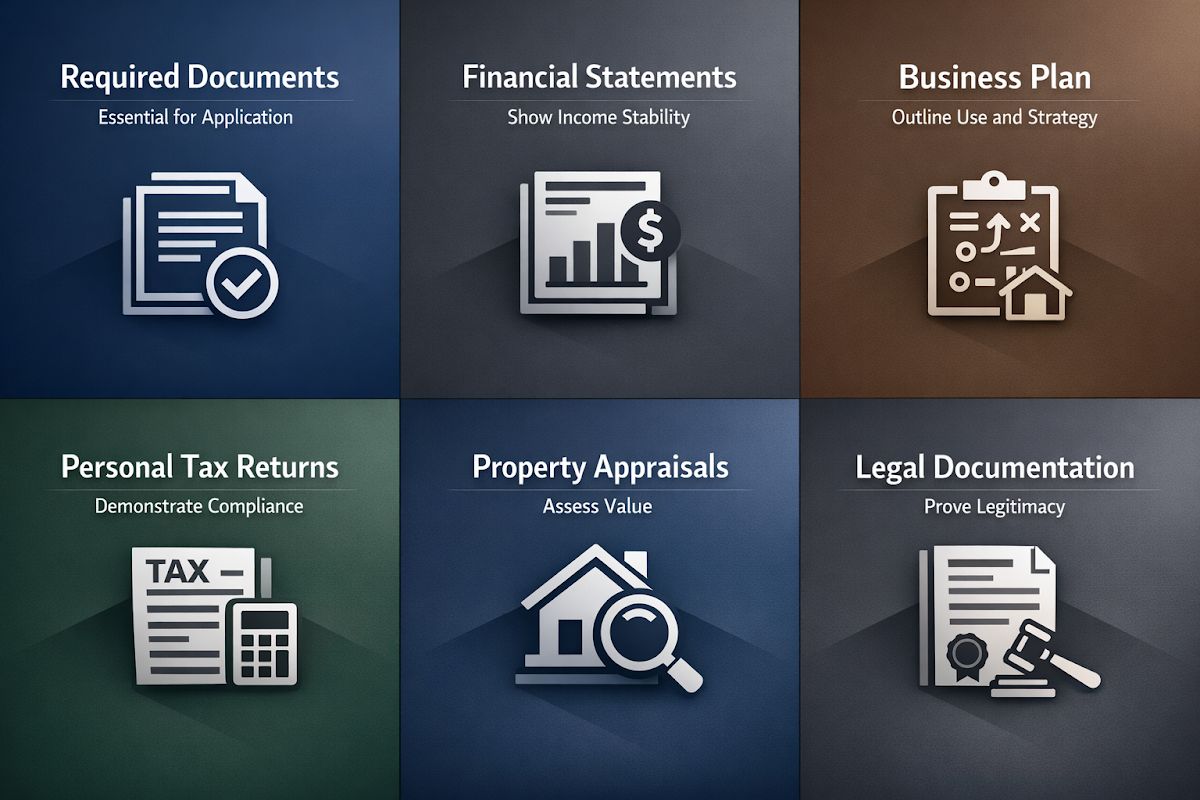
Required SBA loan documents and documentation form the foundation of a successful application, and thorough preparation can streamline the approval process. Lenders typically require extensive financial documentation to assess both personal and business creditworthiness, making organization crucial for investor success.
- Personal and business tax returns for the previous three years demonstrate income stability and tax compliance
- Business financial statements including profit and loss statements, balance sheets, and cash flow projections
- Personal financial statements detailing assets, liabilities, and net worth calculations
- Property appraisals, purchase agreements, and detailed project plans for the intended real estate investment
- Business licenses, insurance policies, and legal entity documentation proving business legitimacy
The documentation requirements often exceed those needed for DSCR loans, which primarily focus on property cash flow rather than comprehensive business analysis. Investors should begin gathering these documents early in the process, as incomplete submissions can delay approval timelines significantly.
SBA Loan Application Checklist and Preparation Steps
An SBA loan application checklist helps investors stay organized throughout the complex application process and avoid common delays that could jeopardize financing timelines. Systematic preparation often determines the difference between smooth approvals and extended processing periods.
- Complete Form 1919 (SBA Loan Application) with accurate business and personal information
- Prepare detailed business plan outlining property use, revenue projections, and operational strategy
- Obtain current credit reports and address any discrepancies before submission
- Secure property appraisals and environmental assessments as required by lenders
- Calculate debt service coverage ratios and cash flow projections to demonstrate repayment ability
Unlike DSCR loans that may approve based primarily on property income with DSCR ratios above 1.25, SBA applications require comprehensive business justification. Investors should ensure their business plans clearly demonstrate how the property acquisition supports their operational goals and revenue generation strategies.
Filling Out an SBA Loan Application Correctly
Filling out an SBA loan application correctly requires attention to detail and complete accuracy, as errors or omissions can trigger requests for additional information that extend processing timelines. Each section of the application serves a specific purpose in the lender's evaluation process.
- Business information sections must accurately reflect current operations, ownership structure, and financial performance
- Personal guarantee sections require complete disclosure of all principals with 20% or greater ownership stakes
- Use of proceeds must clearly outline how loan funds will support eligible business purposes and property acquisition
- Collateral descriptions should comprehensively detail all assets securing the loan, including property specifications
Accuracy becomes particularly important when describing the intended use of commercial property, as SBA guidelines require owner-occupancy. Investors must clearly demonstrate how their business operations will utilize the space, differentiating this approach from pure rental property investments that might be better suited for DSCR financing options.
SBA Loan Approval Timeline and Process Expectations
SBA loan approval timeline and process expectations help investors plan their real estate acquisition strategies and coordinate with sellers on closing schedules. Understanding typical timeframes allows for better decision-making when comparing financing options.
- Initial lender review and preliminary approval decisions typically take 30 to 45 days from complete application submission
- SBA review and final approval processes can extend timelines by an additional 30 to 60 days depending on loan complexity
- Closing preparations including final underwriting and documentation review may require 15 to 30 additional days
- Total timeline from application to closing often ranges from 75 to 135 days for straightforward transactions
- Complex deals or requests for additional documentation can extend timelines beyond standard expectations
These extended timelines contrast with DSCR loans, which might close in 30 to 45 days due to streamlined qualification requirements. Investors considering SBA financing should factor these longer timelines into their acquisition strategies, particularly when competing against cash buyers or investors using faster financing options.
●Conclusion
The SBA loan application process offers real estate investors access to competitive financing for commercial properties, though it requires significantly more preparation and documentation than alternative options like DSCR loans. Success depends on thorough preparation, accurate documentation, and realistic timeline expectations that account for the comprehensive review process.
Investors should carefully evaluate whether SBA financing aligns with their investment strategies, particularly considering owner-occupancy requirements and extended approval timelines. While DSCR loans currently offer rates between 6.00% and 7.50% with faster processing, SBA loans might provide better terms for investors planning to operate businesses from their commercial properties.
Understanding both financing options allows investors to make strategic decisions that optimize their portfolio growth and cash flow management in today's competitive real estate market.