
Running a small retail business comes with unique financial challenges, especially when your inventory needs spike during busy seasons. Whether you sell holiday gifts, summer sporting goods, or back-to-school supplies, managing cash flow around seasonal demand can be stressful. Fortunately, the U.S. Small Business Administration (SBA) offers loan programs that may help retail entrepreneurs bridge those gaps and grow with confidence. But before you apply, it's important to understand the requirements for SBA loan for a small retail business with seasonal inventory. This guide breaks down everything you need to know, from basic eligibility to the documentation lenders typically expect.
What Makes SBA Loans a Strong Option for Retail Business Owners
SBA loans are government-backed financing products designed to help small businesses access capital that might otherwise be difficult to obtain through conventional lenders. Because the SBA guarantees a portion of the loan, participating lenders take on less risk, which often means more favorable terms for borrowers, including lower interest rates and longer repayment periods.
For small retail business owners, this can be a significant advantage. Retail businesses often have inconsistent revenue patterns due to seasonal inventory cycles, and traditional lenders may view that variability with caution. The SBA's programs, particularly the SBA 7(a) loan, are structured to support businesses with working capital needs, inventory purchases, and operational expenses, making them especially relevant for retailers managing cyclical cash flow.
The SBA does not lend money directly. Instead, it partners with approved banks, credit unions, and non-bank lenders who originate the loans according to SBA guidelines. That means your experience can vary depending on which lender you choose, but the core eligibility criteria remain consistent across the program.
Core Eligibility Criteria Every Retail Applicant Must Meet
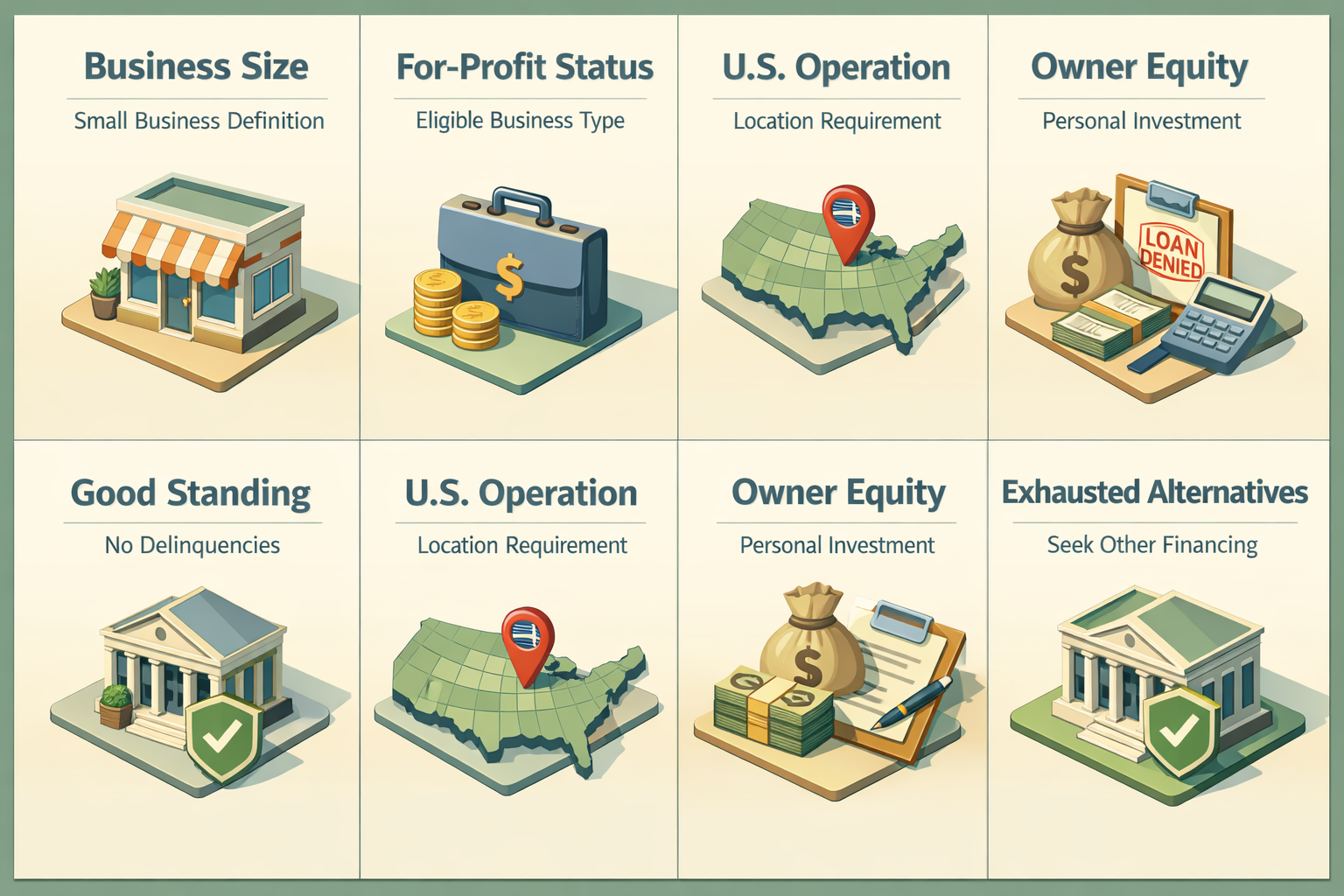
Before diving into the specifics of seasonal inventory financing, it helps to understand the foundational eligibility requirements that apply to all SBA loan applicants. Meeting these baseline standards is the first step toward a successful application.
- Business size: Your retail business must qualify as a small business under SBA size standards. For most retail operations, this typically means having average annual receipts below a defined threshold that varies by industry classification.
- For-profit status: The SBA only backs loans to for-profit businesses. Nonprofits and government entities are not eligible.
- U.S. operation: Your business must be physically located and operating within the United States or its territories.
- Owner equity: Business owners are generally expected to have invested their own time and money into the enterprise, demonstrating personal financial commitment.
- Exhausted alternatives: SBA guidelines typically require that applicants have sought financing through other reasonable means before turning to an SBA-backed loan.
- Good standing: You and your business should not have any outstanding delinquencies on prior government loans or obligations.
These are foundational requirements, but lenders may apply additional standards based on their own underwriting policies. It's wise to review your full financial profile before submitting an application.
Understanding the Requirements for SBA Loan for a Small Retail Business with Seasonal Inventory
The requirements for SBA loan for a small retail business with seasonal inventory go beyond the basics. Lenders want to see that your business has a clear, documented relationship between its inventory cycles and its revenue. Demonstrating that pattern convincingly is often what separates approved applications from declined ones.
Seasonal retail businesses tend to generate most of their revenue during specific months of the year. A Christmas ornament shop, a beachwear boutique, or a garden supply store may see revenue surges during predictable windows. Lenders understand this model, but they want proof. That means your financial records need to clearly show seasonal revenue peaks and how inventory investment drives those peaks.
Here's what lenders typically look for in this context:
- Consistent seasonal patterns: Lenders prefer to see at least two to three years of tax returns or financial statements that reflect recurring revenue cycles. One strong season may not be enough to establish a pattern.
- Clear inventory management records: Detailed records showing when inventory is purchased, how much is ordered, and how it correlates with sales help lenders understand your business model.
- Cash flow projections: A well-prepared cash flow forecast that accounts for your off-season slowdowns and peak-season ramp-up demonstrates financial maturity and planning ability.
- Purpose of loan funds: SBA lenders want to know exactly how the loan proceeds will be used. For seasonal retailers, this typically means inventory purchases, but it may also include staffing, marketing, or storage costs tied to the busy season.
Being transparent and organized in your application can make a meaningful difference. Lenders aren't just evaluating your numbers; they're evaluating your understanding of your own business.
Credit and Financial Health Standards That Lenders Evaluate
Your personal and business credit history plays a significant role in SBA loan approval. While the SBA itself doesn't publish a universal minimum credit score, most participating lenders look for a personal credit score of at least 650 to 680, though some may require higher scores depending on the loan size and risk profile.
For retail businesses with seasonal inventory needs, lenders may also look closely at your debt service coverage ratio (DSCR). This metric compares your net operating income to your total debt obligations. A DSCR above 1.25 is often considered acceptable, meaning your business generates at least 25% more income than it needs to cover its debt payments. For seasonal businesses, this ratio may be calculated on an annualized basis rather than month-to-month, which can be helpful when off-season months show lower income.
Additional financial indicators lenders may review include:
- Business bank statements: Typically, the most recent 12 months of business checking account statements to verify cash flow patterns.
- Profit and loss statements: Year-to-date and prior-year P&L statements to assess revenue trends and expense management.
- Balance sheet: A current balance sheet to evaluate your business assets, liabilities, and overall equity position.
- Personal financial statement: Owners with 20% or more ownership are usually required to submit a personal financial statement disclosing assets, liabilities, and income.
It's also worth noting that collateral may be required for larger SBA loans. Lenders may look at business assets, inventory, equipment, or even personal assets depending on the loan amount and structure.
Key Documentation You Should Prepare Before Applying
One of the most common reasons SBA loan applications slow down or get denied is incomplete documentation. Preparing a thorough application package in advance can speed up the process and improve your chances of approval. Here's a general checklist for retail business owners pursuing SBA loan seasonal inventory financing:
- Business and personal tax returns for the past two to three years
- Year-to-date profit and loss statement and balance sheet
- 12 months of business bank statements
- Business plan or executive summary (especially important for newer businesses)
- Cash flow projections for the next 12 to 24 months, including seasonal peaks and valleys
- Schedule of existing business debt (loan statements, lease agreements, etc.)
- Business licenses, certifications, and legal formation documents
- Personal financial statement for each owner with 20% or more equity
- Resume or background summary demonstrating industry experience
- Detailed explanation of how loan funds will be used
For seasonal retailers specifically, it helps to include a narrative that explains your inventory purchasing cycle. A short written summary describing when you buy inventory, how it ties to your sales calendar, and how the loan proceeds will support that cycle can add meaningful context to your application.
Retail Business Loan Requirements and How SBA Programs Compare
Not all SBA programs are created equal, and the right fit depends on how much you need and what you plan to do with the funds. Understanding how different programs align with retail business loan requirements helps you target the right product from the start.
SBA 7(a) Loan
The SBA 7(a) is the most widely used SBA loan program and is well-suited for working capital, inventory purchases, and operational expenses. Loan amounts can go up to $5 million, with repayment terms of up to 10 years for working capital loans. This program offers flexibility that seasonal retailers often need.
SBA CAPLines Program
Within the 7(a) umbrella, the SBA CAPLines program is specifically designed to help businesses meet short-term and cyclical working capital needs. The Seasonal CAPLine option is particularly relevant for retail businesses, as it's structured to finance seasonal increases in accounts receivable and inventory. This could be a strong match for small retail owners who need funding to stock up before peak season.
SBA Microloans
For smaller retail businesses or newer entrepreneurs, SBA Microloans offer up to $50,000 through nonprofit intermediary lenders. These may be easier to qualify for and can cover inventory costs for a boutique or specialty shop. Technical assistance is often included, which can be valuable for first-time borrowers.
Talking with an SBA-approved lender or a Small Business Development Center (SBDC) advisor can help you identify which program aligns best with your specific inventory and cash flow needs.
Practical Tips to Strengthen Your SBA Loan Application
Understanding the requirements is only half the battle. Taking proactive steps to present your business in the best possible light can meaningfully improve your outcome. Here are some strategies worth considering:
- Build your credit before applying: If your personal or business credit score has room to improve, work on paying down revolving balances and resolving any derogatory marks before submitting your application.
- Open a dedicated business bank account: If you haven't already, keeping business and personal finances separate helps lenders clearly assess your business cash flow.
- Document your seasonal patterns thoroughly: Use spreadsheets, inventory reports, and sales data to create a clear picture of how your business performs across different times of year.
- Work with an SBDC or SCORE mentor: These free resources can help you prepare a stronger business plan, review your financials, and even connect you with SBA-approved lenders in your area.
- Apply before peak season, not during it: SBA loan applications can take several weeks to process. Applying a few months before your inventory ramp-up gives you time to receive funds when you actually need them.
- Be honest about your business challenges: Lenders appreciate transparency. If your business had a rough year, explain why and what you've done to address it. A well-explained setback is often less damaging than an unexplained one.
Taking these steps before you apply shows lenders that you're a thoughtful, prepared business owner, which can go a long way in building the trust needed to secure financing.
●Conclusion
Navigating the requirements for SBA loan for a small retail business with seasonal inventory might feel overwhelming at first, but breaking it down into manageable steps makes the process much more approachable. From understanding your eligibility and credit health to gathering the right documentation and choosing the right SBA program, each step brings you closer to securing the capital your retail business needs to thrive. Whether you're stocking shelves for the holiday rush or preparing for a summer sales surge, an SBA loan could be a valuable tool in your growth strategy. At LoanWise, we're here to help small business owners explore their financing options with clarity and confidence. Reach out today to connect with a lending specialist who understands the unique needs of seasonal retail businesses.