
Buying a home while carrying student loan debt is a reality for millions of Americans. When those loans are in deferment, many borrowers assume the debt simply won't count against them during the mortgage approval process. Unfortunately, that assumption can lead to some unwelcome surprises at the closing table. Understanding the requirements for conventional loan with significant student loan deferment is essential for any homebuyer who wants to move through the process with confidence. Whether you're a first-time buyer, a recent graduate, or someone re-entering the housing market, knowing how lenders evaluate deferred student debt could make or break your application.
What Deferred Student Loans Actually Mean for Lenders
Student loan deferment is an arrangement where borrowers temporarily pause their monthly payments, typically because they're still in school, experiencing financial hardship, or navigating a grace period after graduation. While deferment sounds like a financial relief valve, conventional mortgage lenders don't simply ignore those balances when evaluating your application.
From a lender's perspective, a deferred student loan is still a financial obligation. The debt exists, and at some point, payments will resume. Because lenders are required to assess a borrower's long-term ability to repay a mortgage, they must account for what those student loan payments will eventually look like — even if you're not currently making them.
This is where many borrowers run into trouble. They see a zero-dollar monthly payment on their student loan statement and assume their debt-to-income ratio (DTI) won't be affected. In reality, conventional loan guidelines — particularly those set by Fannie Mae and Freddie Mac — have specific rules about how deferred balances must be counted, and ignoring them can derail an otherwise strong application.
How Conventional Loan Guidelines Handle Deferred Student Debt DTI
The two agencies that shape the vast majority of conventional mortgage guidelines are Fannie Mae and Freddie Mac. Each has its own approach to handling deferred student debt DTI calculations, and understanding the difference between them could influence which loan product works best for your situation.
Fannie Mae's Approach
Under Fannie Mae guidelines, if a student loan is deferred and no monthly payment is reflected on the credit report, the lender is typically required to use one percent of the outstanding loan balance as the assumed monthly payment for DTI purposes. So if you have $60,000 in deferred student loans, Fannie Mae may require your lender to count $600 per month as a liability — even if you aren't paying a single dollar right now.
However, there is an exception. If you can provide documented evidence of what your actual future payment will be — such as a written statement from your loan servicer — your lender may be able to use that figure instead, provided it's greater than zero. This can be a meaningful advantage for borrowers enrolled in income-driven repayment plans who expect very low future payments.
Freddie Mac's Approach
Freddie Mac follows a similar framework but may apply slightly different thresholds or documentation requirements depending on the loan scenario. Like Fannie Mae, Freddie Mac generally requires lenders to factor in a payment for deferred student loans rather than treating them as non-existent liabilities. Borrowers should consult directly with their lender to confirm which investor guidelines apply to their specific loan file.
The Full Picture: Core Requirements for Conventional Loan with Significant Student Loan Deferment
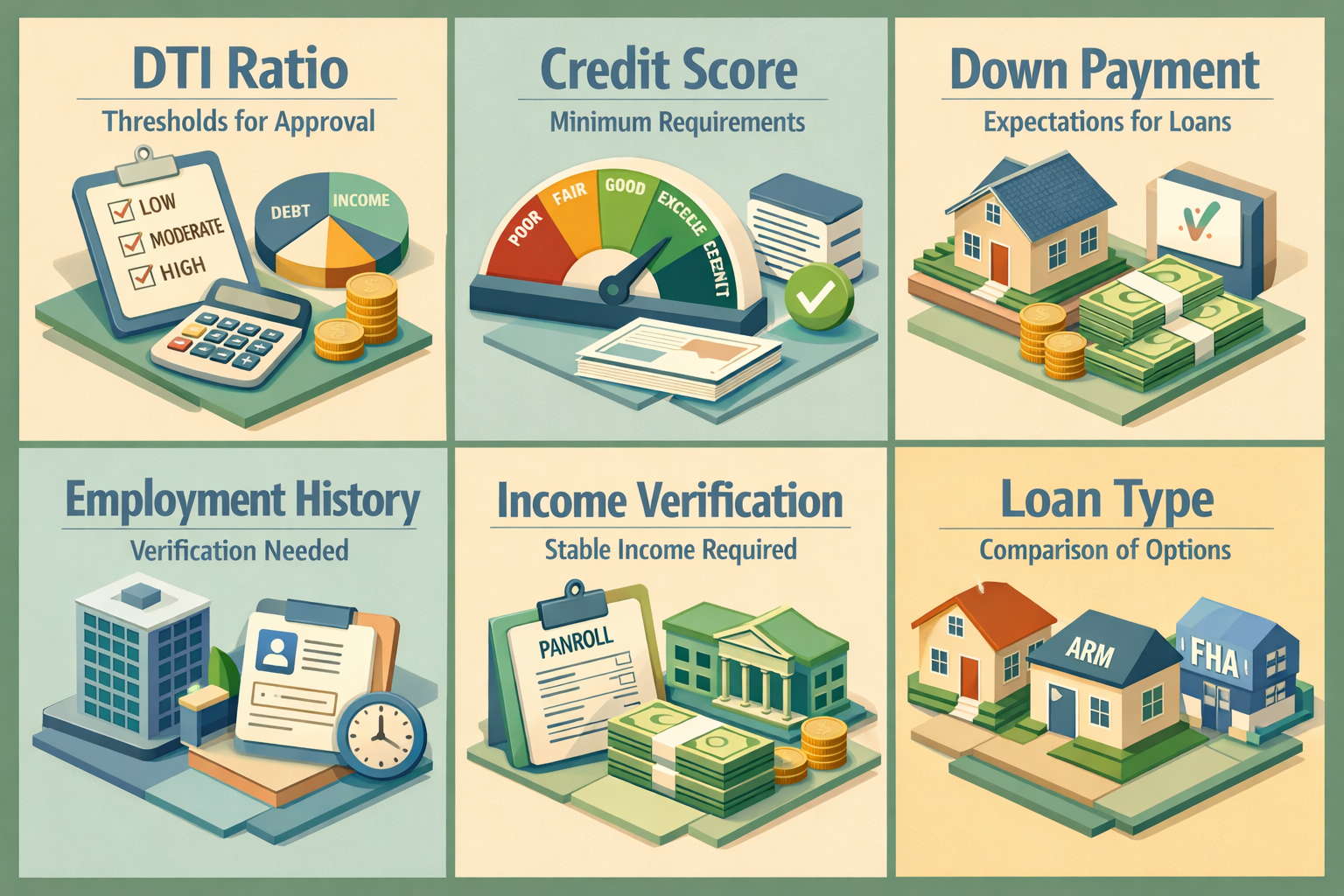
Beyond how student loans are calculated, there are several foundational criteria lenders evaluate when processing a conventional loan application. Meeting the requirements for conventional loan with significant student loan deferment involves satisfying multiple qualification benchmarks — not just your DTI ratio.
Debt-to-Income Ratio Thresholds
Conventional loans typically prefer a total DTI ratio at or below 45 percent, though some automated underwriting systems may approve ratios up to 50 percent under strong compensating factors. When deferred student loans are factored in using the one-percent rule, your DTI can rise considerably. Borrowers with large student loan balances may find that this calculation pushes them above the acceptable threshold, even if their actual monthly expenses feel manageable.
Credit Score Requirements
Most conventional loans require a minimum credit score of 620, though a higher score — generally 740 or above — tends to unlock the most favorable interest rates and terms. Student loans in deferment don't directly harm your credit score as long as they're in good standing, but any missed payments from before deferment may still appear on your credit report and affect your score.
Down Payment Expectations
Conventional loans allow for down payments as low as three percent for certain programs, though putting down less than 20 percent typically triggers private mortgage insurance (PMI). For borrowers with elevated DTI ratios due to student debt, a larger down payment could help lower the loan amount and improve the overall debt picture.
Employment and Income Verification
Stable, documented income is critical. Lenders want to see a consistent employment history — typically two years — and reliable income that supports both the projected mortgage payment and all other monthly obligations, including the imputed student loan payment. Self-employed borrowers or those with variable income may face additional scrutiny.
Strategies to Improve Your Student Loan Mortgage Qualification Odds
Even if your initial numbers don't look ideal, there are practical steps you can take to qualify and improve your student loan mortgage qualification outlook. None of these are guaranteed solutions, but they could meaningfully shift your application in a positive direction.
- Request a payment schedule from your servicer: If your actual projected payment is lower than one percent of your balance, getting documentation from your loan servicer could allow your lender to use the real number instead of the estimated one.
- Enroll in an income-driven repayment plan: Switching from deferment to an active income-driven repayment plan — even with a very low payment — may give lenders a documented, verifiable figure to use in your DTI calculation rather than the one-percent estimate.
- Pay down other debts: Reducing credit card balances, car loans, or other liabilities before applying can lower your overall DTI and create more room for the imputed student loan payment.
- Increase your income: Taking on additional documented income sources, such as a part-time job, freelance work, or rental income, may help offset the impact of deferred student debt on your qualification ratios.
- Save for a larger down payment: A bigger down payment reduces your loan amount, which can lower your projected mortgage payment and improve your DTI ratio.
- Consider a co-borrower: Adding a financially strong co-borrower to your application may strengthen the overall income picture, though their debts will also be factored into the DTI calculation.
How Loan Type Comparisons May Benefit Borrowers with Student Debt
It's worth noting that conventional loans aren't the only pathway to homeownership for borrowers carrying deferred student debt. Government-backed loan programs handle student loans somewhat differently, and comparing your options could reveal a more accessible path forward.
FHA Loans and Student Debt
FHA loans, backed by the Federal Housing Administration, have historically used a similar one-percent rule for deferred student loans. However, FHA guidelines have evolved over time, and in some scenarios, lenders may be permitted to use a documented actual payment figure. FHA loans also allow higher DTI ratios in certain cases, which may benefit borrowers with significant student debt. The trade-off is that FHA loans require mortgage insurance premiums for the life of the loan in most cases, which can increase long-term costs.
VA Loans for Eligible Borrowers
For veterans and active-duty service members, VA loans offer some of the most flexible qualification criteria available. VA guidelines may treat deferred student loans more favorably, and there's no PMI requirement. Eligible borrowers with significant student debt would be wise to explore VA options before defaulting to a conventional product.
USDA Loans in Rural Areas
USDA loans offer zero-down financing in designated rural and suburban areas. Their student loan treatment may vary, but like other government-backed options, they could offer more flexibility than conventional guidelines in certain scenarios. Income limits and property location restrictions apply.
The key takeaway is that even if conventional guidelines create hurdles for your student loan situation, alternative programs might provide a viable route to homeownership while you work toward improving your financial profile.
Working with a Lender Who Understands Your Financial Profile
Not all lenders approach deferred student loan scenarios with the same level of expertise or flexibility. Some lenders specialize in working with borrowers who have complex financial profiles — including those carrying significant student debt. Choosing the right lender can make a meaningful difference in your approval chances and overall experience.
When shopping for a mortgage, ask potential lenders directly how they handle deferred student loans in their DTI calculations. Some may offer manual underwriting options, which allow a human underwriter to evaluate compensating factors that an automated system might not fully appreciate. Strong reserves, a history of on-time rent payments, or a stable long-term career in a high-income field could all work in your favor during a manual review.
It's also worth getting a full pre-approval — not just a pre-qualification — before you begin house hunting. A thorough pre-approval involves a complete review of your income, credit, and liabilities, including your deferred student loans. This gives you a realistic picture of what you can afford and signals to sellers that you're a serious, qualified buyer.
Additionally, consider consulting with a HUD-approved housing counselor if you're feeling uncertain about your eligibility. These counselors can help you understand your options, review your budget, and connect you with programs designed to support borrowers in complex financial situations.
●Conclusion
Navigating the requirements for conventional loan with significant student loan deferment can feel complicated, but it's far from impossible. The most important thing you can do is understand how your deferred balances will be treated before you apply. Whether that means documenting your future payment amount, transitioning to an income-driven repayment plan, or exploring government-backed loan alternatives, there are real steps you can take to strengthen your position. At LoanWise, we're committed to helping borrowers like you make informed, confident decisions about home financing. Reach out to one of our mortgage specialists today to explore your options and build a plan that works for your unique situation.