
Filing for Chapter 7 bankruptcy can feel like hitting a financial reset button — and while it offers relief from overwhelming debt, it also raises an important question for many homebuyers: Can I still get a mortgage? The short answer is yes, but timing and preparation matter a great deal. Understanding the requirements for conventional loan with recent Chapter 7 bankruptcy is the first step toward reclaiming your path to homeownership. This guide walks you through everything you need to know, from mandatory waiting periods to the credit standards lenders expect once your discharge is behind you.
What Chapter 7 Bankruptcy Means for Your Mortgage Eligibility
Chapter 7 bankruptcy — sometimes called a liquidation bankruptcy — discharges most unsecured debts, such as credit card balances and medical bills, typically within three to six months of filing. While this process provides financial relief, it leaves a significant mark on your credit report and signals elevated risk to mortgage lenders.
For homebuyers and homeowners alike, the discharge date is the critical starting point. Lenders don't simply look at whether you've filed bankruptcy — they focus on how much time has passed since the bankruptcy was discharged and what you've done to rebuild your financial profile during that period.
Conventional loans are not backed by a government agency like the FHA or VA. Instead, they follow guidelines set by Fannie Mae and Freddie Mac, the two government-sponsored enterprises (GSEs) that purchase most conventional mortgages on the secondary market. Because these loans carry stricter eligibility standards, borrowers with a recent bankruptcy discharge typically face longer waiting periods compared to government-backed loan options.
It's important to understand that bankruptcy doesn't permanently disqualify you from homeownership. With disciplined financial habits and the right timeline, qualifying for a conventional mortgage is a realistic and achievable goal.
The Mandatory Waiting Period After a Chapter 7 Discharge
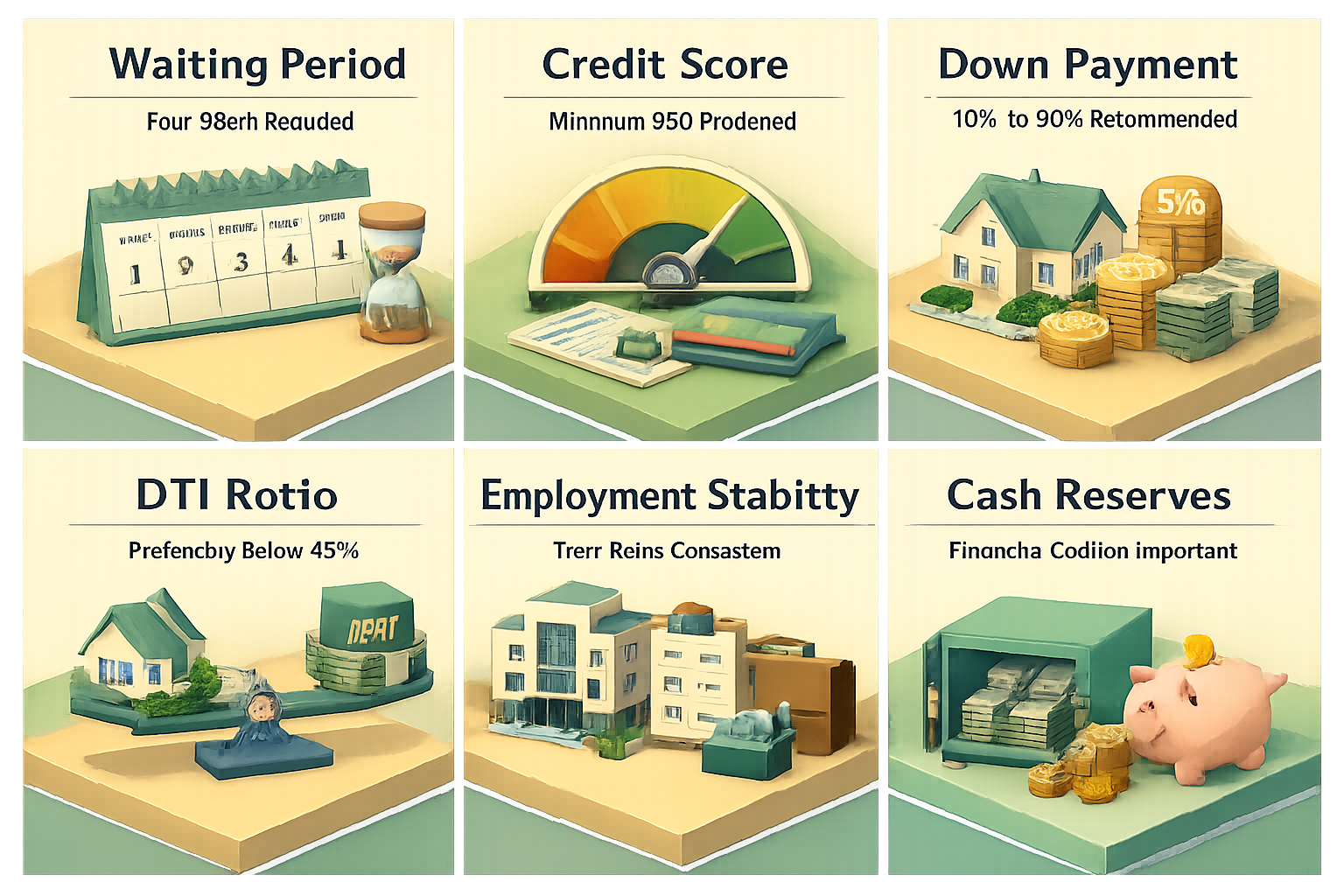
One of the most critical requirements for conventional loan with recent Chapter 7 bankruptcy is the mandatory waiting period. Under Fannie Mae and Freddie Mac guidelines, borrowers are generally required to wait four years from the discharge date of a Chapter 7 bankruptcy before they can qualify for a conventional mortgage.
This four-year clock starts on the official discharge date — not the filing date. If your bankruptcy was dismissed rather than discharged, the timeline may differ, and lenders will evaluate the circumstances individually.
There is, however, an important exception worth knowing. If the bankruptcy was filed due to extenuating circumstances — meaning situations largely beyond your control, such as a serious illness, job loss due to a natural disaster, or the death of a primary wage earner — Fannie Mae guidelines may allow a reduced waiting period of just two years. Borrowers pursuing this exception typically need to provide thorough documentation and a compelling explanation of the circumstances that led to the bankruptcy.
It's worth noting that government-backed loan programs, such as FHA loans, carry shorter waiting periods — often as little as two years after a Chapter 7 discharge. For buyers who are anxious to get back into the market sooner, exploring those alternatives alongside conventional options may be worthwhile while you continue building your credit profile.
Credit Score and Report Standards Lenders Look For
Once the waiting period has been satisfied, lenders shift their attention to your current creditworthiness. For a conventional loan, borrowers typically need a minimum credit score of 620, though many lenders prefer scores of 660 or higher to offer more competitive interest rates and terms. Some lenders, particularly those with stricter overlays, may set their own minimum thresholds above the baseline GSE requirement.
After a Chapter 7 discharge, your credit score may have dropped significantly — often by 100 points or more depending on where it stood before. Rebuilding that score over the waiting period is not just possible; it's essential. Here are the credit factors lenders typically evaluate:
- Payment history: Consistent on-time payments on all remaining accounts, including any new credit lines opened after discharge, carry heavy weight in your score recovery.
- Credit utilization: Keeping revolving balances low relative to your available credit limit — ideally below 30% — can help accelerate score improvement.
- New credit accounts: Responsibly opening one or two new accounts, such as a secured credit card or a credit-builder loan, demonstrates that you can manage credit post-bankruptcy.
- Derogatory marks: Lenders will look at your credit report to confirm that any accounts included in the bankruptcy are marked as discharged and that no new derogatory items have appeared since the discharge.
It may also help to pull your credit reports from all three major bureaus — Equifax, Experian, and TransUnion — to verify that discharged accounts are accurately reported. Errors on your report could unfairly suppress your score during the critical rebuilding phase.
Down Payment, Debt-to-Income Ratio, and Other Qualifying Factors
Beyond the waiting period and credit score, conventional lenders assess a range of additional financial factors when evaluating borrowers with a bankruptcy history. Meeting these benchmarks demonstrates that you've regained financial stability and are ready for the responsibilities of homeownership.
Down Payment Requirements
Conventional loans can technically allow down payments as low as 3% for qualified first-time homebuyers, but borrowers with a recent bankruptcy history may find that lenders prefer — or require — a larger down payment, often in the range of 10% to 20%. A larger down payment reduces the lender's risk and can also help you avoid private mortgage insurance (PMI) if you reach the 20% threshold.
Debt-to-Income Ratio (DTI)
Your debt-to-income ratio measures how much of your gross monthly income goes toward debt obligations. Conventional loan guidelines generally prefer a DTI of 45% or lower, though some lenders may allow up to 50% in certain situations with strong compensating factors. After bankruptcy, keeping your DTI on the lower end of the acceptable range could strengthen your application considerably.
Employment and Income Stability
Lenders want to see a consistent employment history — typically at least two years in the same field. If your bankruptcy was tied to a period of unemployment, demonstrating steady, reliable income since the discharge is especially important. Self-employed borrowers may need to provide additional documentation, such as two years of tax returns, to verify income consistency.
Cash Reserves
Having cash reserves — savings beyond your down payment and closing costs — can serve as a meaningful compensating factor for borrowers with a bankruptcy history. Lenders may feel more comfortable approving a loan when they can see that the borrower has financial cushion available.
Building a Strong Financial Profile During the Waiting Period
The waiting period after a Chapter 7 discharge isn't just a countdown — it's an opportunity. Borrowers who use this time strategically are far better positioned to meet the requirements for a conventional loan when the four-year mark arrives. Here are some steps that may help you rebuild effectively:
- Open a secured credit card: A secured card requires a deposit as collateral and reports to the credit bureaus like any other card. Used responsibly, it can be one of the fastest tools for rebuilding credit post-discharge.
- Make every payment on time: Payment history is the single most influential factor in your credit score. Even one late payment during the waiting period can slow your recovery significantly.
- Avoid new debt aggressively: While adding one or two accounts is helpful for credit diversity, taking on excessive new debt — especially auto loans, personal loans, or co-signing for others — can raise your DTI and signal ongoing financial instability.
- Save consistently for a down payment: Building savings not only prepares you for homeownership but also demonstrates financial discipline to lenders. A dedicated savings account can make your down payment story much more compelling at application time.
- Consult a HUD-approved housing counselor: These nonprofit counselors offer free or low-cost guidance tailored to buyers working toward homeownership after financial hardship. Their insights can help you create a realistic timeline and avoid common pitfalls.
It's also worth keeping close track of your credit score trends over time. Many banks and credit card issuers now offer free monthly score monitoring, making it easier to spot improvements — or potential problems — well before you apply for a mortgage.
Comparing Conventional Loans to Government-Backed Mortgage Options
While this article focuses on the requirements for conventional loan with recent Chapter 7 bankruptcy, it's worth understanding how conventional loans compare to other options that may be available to you during or after the waiting period. Knowing your alternatives helps you make a more informed decision about timing and loan type.
- FHA loans: Backed by the Federal Housing Administration, FHA loans typically require only a two-year waiting period after a Chapter 7 discharge. They also allow lower credit scores — sometimes as low as 580 with a 3.5% down payment. The trade-off is mandatory mortgage insurance premiums (MIP) for the life of the loan in many cases.
- VA loans: For eligible veterans and active-duty service members, VA loans may require only a two-year waiting period after discharge. VA loans also offer competitive rates and typically don't require a down payment.
- USDA loans: Designed for rural and suburban homebuyers, USDA loans generally carry a three-year waiting period after a Chapter 7 discharge and income eligibility requirements.
- Non-QM loans: Some specialty or non-qualified mortgage (Non-QM) lenders offer programs with shorter waiting periods or more flexible underwriting criteria. However, these often come with higher interest rates and fees, so they should be evaluated carefully.
For many borrowers, the strategy might involve pursuing an FHA loan as soon as they're eligible, then refinancing into a conventional loan once their credit score and equity have improved sufficiently. This approach could allow you to get into a home sooner while still benefiting from conventional loan terms down the road.
●Conclusion
Recovering from a Chapter 7 bankruptcy takes patience, consistency, and a clear plan — but homeownership is absolutely within reach. Understanding the full scope of requirements for conventional loan with recent Chapter 7 bankruptcy empowers you to take the right steps during the waiting period so that when the time comes to apply, you're presenting the strongest possible financial picture. Whether you're still in the waiting period or approaching the four-year mark, the decisions you make today will directly shape your mortgage after bankruptcy discharge. At LoanWise, we're here to help you navigate every stage of that journey with confidence. Reach out to one of our mortgage specialists to explore your options and build a personalized path to approval.