Filing for Chapter 13 bankruptcy is a tough but sometimes necessary financial decision. The good news is that it doesn't have to permanently close the door on homeownership. Many borrowers are surprised to learn that qualifying for a conventional loan after bankruptcy is genuinely possible — even while still in a repayment plan. When you add a gifted down payment into the mix, the process becomes a bit more layered, but it's absolutely manageable with the right preparation. This article walks you through the requirements for a conventional loan with recent Chapter 13 bankruptcy and gifted down payment, so you can approach the process with clarity and confidence.
What Chapter 13 Bankruptcy Means for Your Mortgage Eligibility
Unlike Chapter 7 bankruptcy, which involves liquidating assets to discharge debt, Chapter 13 allows borrowers to restructure and repay their debts over a three-to-five-year period. This distinction matters enormously when it comes to mortgage lending. Because Chapter 13 demonstrates a commitment to repaying creditors, lenders and conventional loan guidelines tend to view it more favorably than a Chapter 7 discharge.
Conventional loans are governed primarily by guidelines from Fannie Mae and Freddie Mac. Under these guidelines, borrowers may be eligible for a conventional mortgage while still in an active Chapter 13 repayment plan, provided certain conditions are met. This is a meaningful opportunity that many homebuyers don't realize exists.
That said, lenders are still evaluating risk carefully. A recent bankruptcy signals financial stress, and underwriters will look closely at the full picture of your financial behavior since the filing. Demonstrating consistent, on-time payments to your bankruptcy trustee and to any other creditors is one of the most important factors in building a credible mortgage application during this period.
Waiting Period Rules for Conventional Loans After Bankruptcy
One of the first questions homebuyers ask is: how long do I have to wait? The answer depends on whether your Chapter 13 case is still active or has been discharged.
Applying While Still in a Chapter 13 Plan
Fannie Mae guidelines may allow borrowers who are currently in a Chapter 13 repayment plan to apply for a conventional loan if they have made at least 12 months of on-time payments to the trustee and have received written permission from the bankruptcy court to take on new debt. This is a critical requirement — court approval is not optional. Without it, a lender cannot proceed with the loan.
Applying After Discharge
If your Chapter 13 has been formally discharged by the court, the conventional loan waiting period is typically two years from the discharge date. This is notably shorter than the four-year wait that often applies after a Chapter 7 discharge, reinforcing the idea that Chapter 13 is treated more favorably in the conventional mortgage space.
It's worth noting that some lenders may impose their own overlays — meaning they might require longer waiting periods than the minimum set by Fannie Mae or Freddie Mac. Shopping around and working with a lender experienced in bankruptcy mortgage requirements can make a real difference in finding the right fit.
Credit Score and Financial Standards Lenders Look For
Beyond the waiting period, lenders will evaluate several layers of your financial profile when reviewing a conventional loan application connected to a recent bankruptcy.
Minimum Credit Score Expectations
Conventional loans typically require a minimum credit score of 620 for most borrowers, though some lenders may set the bar higher depending on the loan profile. For borrowers coming out of a Chapter 13 bankruptcy, achieving a 620 or above may require deliberate credit rebuilding. Secured credit cards, small installment loans paid on time, and avoiding new derogatory marks can help improve your score during and after the repayment period.
Debt-to-Income Ratio Considerations
Your debt-to-income ratio (DTI) is another key metric. Conventional loan guidelines generally prefer a DTI at or below 45%, though some automated underwriting systems may approve slightly higher ratios with compensating factors. Since Chapter 13 repayment plans often include ongoing monthly obligations to the trustee, these payments are factored into your DTI calculation. Borrowers should be prepared to show how their finances will look both during and after the plan concludes.
Employment and Income Stability
Steady employment history is particularly important for borrowers with a recent bankruptcy. Lenders typically want to see at least two years of consistent employment in the same field. Self-employed borrowers or those with variable income may face additional documentation requirements. Demonstrating that your income is stable and sufficient to support the new mortgage payment is essential for approval.
Requirements for Conventional Loan with Recent Chapter 13 Bankruptcy and Gifted Down Payment
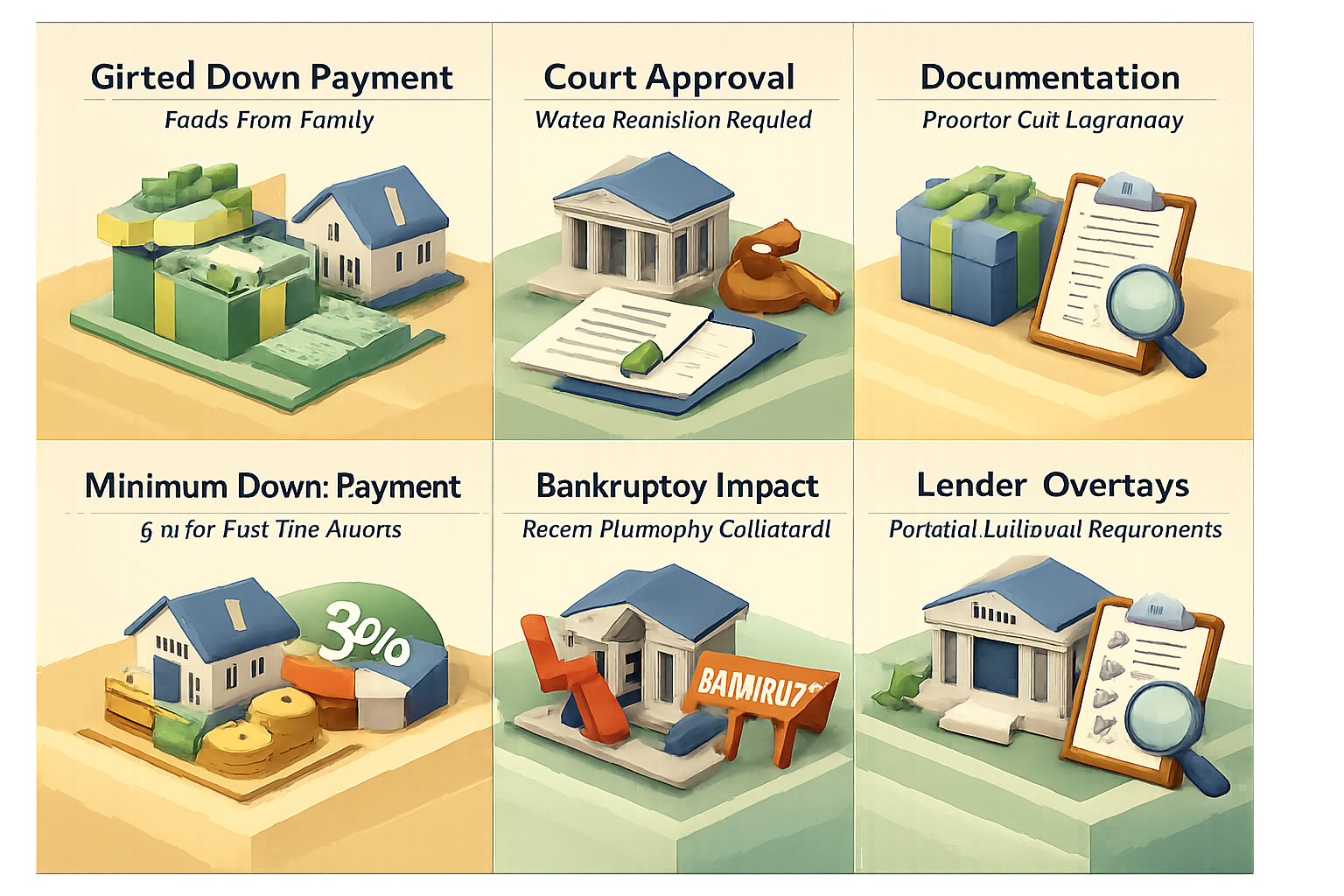
Meeting the requirements for a conventional loan with recent Chapter 13 bankruptcy and gifted down payment involves understanding how both components interact. Each piece has its own set of rules, and when combined, lenders will scrutinize the full application carefully.
How Gifted Down Payments Work on Conventional Loans
A gifted down payment means a family member or other eligible donor provides funds to cover all or part of your down payment — funds that do not need to be repaid. Conventional loan guidelines do allow gift funds, but there are specific rules around who can give them and how they must be documented.
Fannie Mae guidelines generally allow gift funds from a relative, which may include a spouse, child, parent, sibling, grandparent, or domestic partner. The gift must come from a personal account, and the donor cannot be the seller, real estate agent, builder, or any other party with a financial interest in the transaction.
Documentation Required for Gift Funds
Proper documentation is non-negotiable when using a gifted down payment loan strategy. Lenders will typically require:
- A signed gift letter from the donor stating the amount, the relationship to the borrower, and confirmation that no repayment is expected
- Evidence of the donor's ability to provide the funds, such as a bank statement
- Proof that the funds have been transferred to the borrower's account, such as a deposit slip or updated bank statement
When a borrower is also navigating a Chapter 13 bankruptcy, the documentation burden increases. Underwriters will want to ensure the gift funds are legitimate and that they don't represent an undisclosed loan that could affect your DTI or repayment obligations under the bankruptcy plan.
Minimum Down Payment Requirements
For a primary residence, conventional loans may allow down payments as low as 3% for qualified first-time buyers or 5% for other borrowers. However, when a borrower has a recent bankruptcy in their history, some lenders may require a larger down payment to offset the perceived risk — often 10% or more. Using gift funds can help meet this requirement, but the overall loan profile still needs to satisfy the lender's risk tolerance and guideline requirements.
Court Approval and Trustee Communication: Steps You Can't Skip
If you're still in an active Chapter 13 repayment plan and want to apply for a mortgage, getting written permission from the bankruptcy court is not just a recommendation — it's a firm requirement under conventional loan guidelines. This step involves petitioning the court, which typically means working with your bankruptcy attorney to file a motion explaining the purpose of the new debt and demonstrating that taking on a mortgage won't interfere with your repayment obligations.
Your bankruptcy trustee plays a role in this process as well. The trustee may need to review and approve the transaction before the court grants permission. Trustees generally want to see that the monthly mortgage payment is manageable within your current budget and won't jeopardize your ability to continue making plan payments.
This step often takes time, so borrowers should plan ahead. Waiting until you've found a home to start this process can delay closing significantly. Speaking with your bankruptcy attorney early — ideally before you begin home shopping — gives you a clearer picture of what court approval might look like and how long it could take in your jurisdiction.
Rebuilding Your Financial Profile to Strengthen the Application
A strong mortgage application doesn't happen overnight, especially after a bankruptcy. But there are practical steps borrowers can take to improve their standing before applying for a conventional loan after bankruptcy.
- Pay every bill on time: Payment history is the most heavily weighted factor in your credit score. Every on-time payment during and after your Chapter 13 plan builds positive credit history and signals reliability to lenders.
- Keep credit utilization low: If you have any revolving credit accounts, try to keep balances well below the credit limit — ideally under 30%. High utilization can drag down your score even if you're making payments on time.
- Avoid opening multiple new accounts: Each new credit inquiry can temporarily lower your score. Be strategic about any new credit you apply for during the mortgage preparation period.
- Build savings beyond the down payment: Lenders like to see reserves — money left in the bank after closing. Even with a gifted down payment loan, having your own savings demonstrates financial responsibility and provides a buffer in underwriting.
- Work with a HUD-approved housing counselor: These counselors can provide personalized guidance on credit rebuilding, budgeting, and navigating the mortgage process after bankruptcy.
The goal is to present a financial profile that tells a story of recovery and responsibility. Lenders understand that people face hardship; what they're evaluating is how you've responded to it.
Choosing the Right Lender and Loan Officer for Your Situation
Not all lenders are equally comfortable working with borrowers who have a recent Chapter 13 bankruptcy. Some institutions apply strict overlays that go well beyond the minimum Fannie Mae or Freddie Mac guidelines, while others specialize in helping borrowers in complex financial situations qualify for home financing.
Finding a loan officer who genuinely understands bankruptcy mortgage requirements is one of the most important decisions you can make in this process. An experienced loan officer will know how to structure your application, what documentation to gather, and how to communicate your story effectively to the underwriter. They can also help you determine whether you're better positioned to apply now or whether waiting a bit longer to strengthen your credit might lead to better terms.
It's also smart to get pre-qualified early. Even if you're not quite ready to buy, a pre-qualification conversation can reveal gaps in your application and give you a roadmap for what needs to improve before you apply formally. This kind of proactive approach saves time, reduces stress, and often leads to better outcomes at the closing table.
At LoanWise, our lending specialists have experience navigating complex loan scenarios, including conventional loans for borrowers managing the intersection of a recent bankruptcy and gift fund documentation. Reach out today to start a conversation about your options.
●Conclusion
Qualifying for a home loan after a Chapter 13 bankruptcy is challenging, but it's far from impossible. Understanding the requirements for a conventional loan with recent Chapter 13 bankruptcy and gifted down payment puts you in a much stronger position to move forward with purpose. From court approval and trustee communication to gift fund documentation and credit rebuilding, each step in this process matters. With careful preparation, the right lender, and a clear understanding of what's expected, many borrowers in your situation do successfully achieve homeownership. Take it one step at a time, and don't hesitate to lean on professionals who can guide you through the details.