A foreclosure can feel like the end of the road for homeownership, but it doesn't have to be. Many homebuyers who've experienced financial hardship have successfully returned to the housing market by understanding exactly what lenders expect. If you're researching the requirements for a conventional loan with low credit score after foreclosure, you've come to the right place. This article walks you through the key guidelines, waiting periods, credit benchmarks, and practical strategies to help you qualify for a conventional mortgage — even when your credit history isn't perfect.
What Is a Conventional Loan and Why Does It Matter After Foreclosure
A conventional loan is a mortgage that isn't backed by a government agency like the FHA, VA, or USDA. Instead, it follows guidelines set by Fannie Mae and Freddie Mac, the two government-sponsored enterprises that purchase most conventional mortgages from lenders. Because there's no government guarantee protecting the lender against default, conventional loans tend to have stricter qualification standards — especially when it comes to credit history and prior financial events like foreclosure.
That said, conventional loans also offer meaningful advantages. They can come with competitive interest rates, flexible term options, and the ability to cancel private mortgage insurance (PMI) once you've built enough equity. For borrowers who've gone through foreclosure, understanding how conventional loan guidelines apply to your situation is an important first step toward rebuilding your path to homeownership.
It's worth noting that not all lenders apply guidelines the same way. While Fannie Mae and Freddie Mac set the baseline standards, individual lenders may add their own requirements — often called "overlays" — that make qualification more or less difficult depending on where you apply.
The Mandatory Waiting Period After Foreclosure for Conventional Financing
One of the most critical factors in the requirements for a conventional loan with low credit score after foreclosure is the mandatory waiting period. Unlike government-backed loans, conventional loan guidelines typically impose a longer seasoning requirement before a borrower is eligible to apply again.
Under standard Fannie Mae guidelines, the waiting period after a foreclosure is generally seven years from the date the foreclosure was completed. This is measured from the date the foreclosure deed was transferred — not the date you stopped making payments or moved out of the home. Freddie Mac follows similar guidelines, though it's always a good idea to verify the most current standards with your lender.
There are some exceptions that may allow for a shorter waiting period. For instance, if the foreclosure resulted from documented extenuating circumstances — such as a serious illness, job loss due to no fault of your own, or a natural disaster — lenders may consider applications after a three-year waiting period, provided that additional conditions are met. These typically include a larger down payment and evidence that the hardship was truly beyond the borrower's control and is unlikely to recur.
It's important to gather documentation early if you believe your foreclosure qualifies as an extenuating circumstance. Lenders will want written explanations, supporting evidence, and often letters from employers, doctors, or other relevant parties to substantiate your claim.
Credit Score Requirements for a Conventional Loan When Your History Is Damaged
Credit score is one of the most talked-about aspects of mortgage qualification, and for good reason. It directly influences whether you're approved, what interest rate you receive, and how much your loan will cost over time. Understanding the credit score requirements for a conventional loan after foreclosure can help you set realistic goals and work toward them strategically.
For conventional loans backed by Fannie Mae or Freddie Mac, the minimum credit score is typically 620. However, a score at the minimum threshold doesn't necessarily mean you'll receive the best loan terms. Borrowers with scores closer to 700 or above tend to qualify for lower interest rates and may face fewer lender overlays.
After a foreclosure, it's common for credit scores to drop significantly — sometimes by 100 points or more. The good news is that credit scores can recover over time with consistent, responsible financial behavior. By the time the seven-year waiting period concludes, many borrowers have had enough time to rebuild their credit to a qualifying level, provided they've been actively managing their finances.
Keep in mind that lenders look beyond your score. They'll also evaluate your full credit report, including how you've managed debt since the foreclosure. A pattern of on-time payments, low credit utilization, and responsible account management can work in your favor — even if your score is right at the minimum.
Down Payment and Debt-to-Income Expectations You Should Prepare For
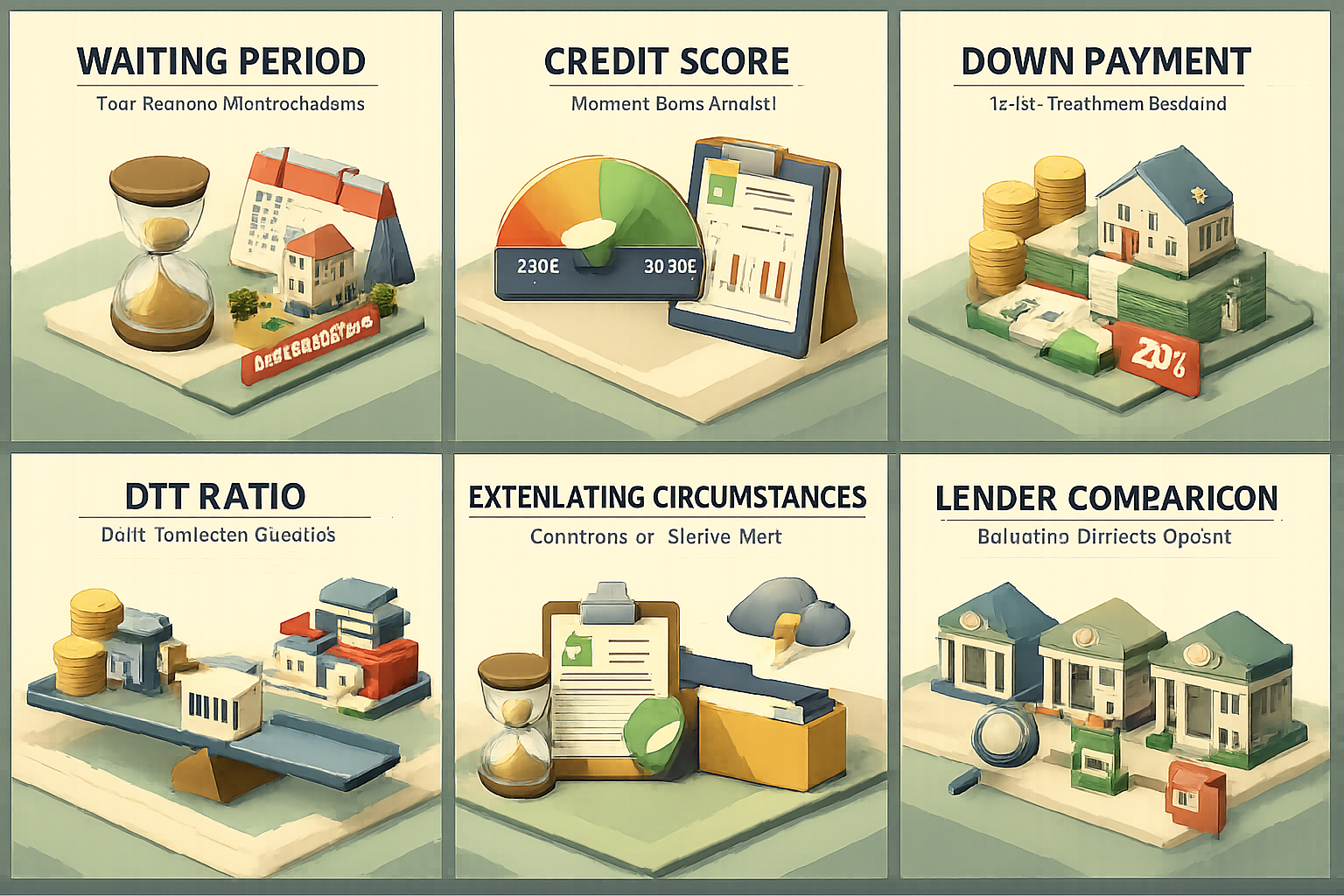
Beyond credit scores and waiting periods, conventional lenders will closely evaluate your down payment and your debt-to-income (DTI) ratio. These factors work together to paint a picture of your financial readiness and your ability to manage mortgage payments responsibly.
Down Payment Requirements
For a standard conventional loan, the minimum down payment is typically 3% to 5% of the purchase price, depending on the loan program and whether it's a first-time homebuyer product. However, if you're applying under an extenuating circumstances exception after foreclosure, lenders may require a higher down payment — often closer to 10% — to compensate for the elevated risk.
A larger down payment also works in your favor. It reduces the loan-to-value (LTV) ratio, which can lead to better interest rates and may even help offset a lower credit score in the eyes of some lenders. Saving aggressively during the waiting period is one of the smartest steps you can take.
Debt-to-Income Ratio Guidelines
Your DTI ratio compares your monthly debt obligations to your gross monthly income. For conventional loans, lenders typically prefer a DTI of 45% or lower, though some loan programs may allow up to 50% with strong compensating factors like significant cash reserves or a high credit score. Reducing existing debts — such as car loans, student loans, or credit card balances — during your waiting period can meaningfully improve your DTI and your overall loan eligibility.
How to Rebuild Your Credit Profile During the Waiting Period
The years between a foreclosure and your next mortgage application aren't just a waiting game — they're an opportunity. With a focused approach to credit rebuilding, you may be in a much stronger financial position when you're ready to apply again.
- Pay every bill on time: Payment history is the single most influential factor in your credit score. Setting up automatic payments can help you stay consistent.
- Keep credit card balances low: Credit utilization — the ratio of your balances to your credit limits — should ideally stay below 30%. Lower is generally better.
- Open new credit accounts strategically: A secured credit card or a small personal loan with a credit union can help you establish a positive track record without taking on too much risk.
- Monitor your credit reports regularly: You're entitled to free credit reports from the major bureaus. Reviewing them regularly helps you catch errors and dispute inaccuracies that could be dragging your score down.
- Avoid applying for too much new credit at once: Multiple hard inquiries in a short period can temporarily lower your score. Space out applications and be selective.
Many borrowers find that a combination of these habits, maintained consistently over several years, can bring a damaged credit score back to — and sometimes above — the conventional loan minimum threshold.
Mortgage After Foreclosure: Comparing Conventional Loans to Government-Backed Options
When exploring a mortgage after foreclosure, it's worth understanding how conventional loans compare to government-backed alternatives. Each loan type has different waiting periods, credit requirements, and eligibility conditions that may suit different borrowers.
FHA loans are often considered more accessible after financial hardship. The standard waiting period after foreclosure for an FHA loan is typically three years, and the minimum credit score requirement is generally lower — often around 580 for maximum financing. This makes FHA a popular choice for borrowers who haven't yet reached the seven-year mark or whose credit is still recovering.
VA loans are available to eligible veterans and active-duty service members. The waiting period is typically around two years after foreclosure, and VA loans don't have a strict minimum credit score set by the VA itself — though individual lenders often impose their own minimums.
USDA loans may also be an option for borrowers in eligible rural areas, generally with a three-year waiting period after foreclosure.
So why would someone choose a conventional loan over these options? Conventional loans don't require mortgage insurance for life (unlike FHA loans) and often offer more flexibility in property type and loan amount. If your credit has recovered and you've completed the waiting period, a conventional loan could offer better long-term value — making it worth the extra preparation.
Practical Steps to Take Before Applying for a Conventional Loan After Foreclosure
Meeting the requirements for a conventional loan with low credit score after foreclosure takes more than patience — it takes preparation. Here are some practical steps that could improve your chances of approval when you're ready to apply.
- Confirm your foreclosure completion date: Lenders will need to verify the exact date the foreclosure was finalized. Pull your public records or contact your previous mortgage servicer to get this documentation in order.
- Request a credit consultation early: Many mortgage professionals offer free consultations. A loan officer can review your credit profile and give you a realistic timeline and action plan for qualification.
- Save for a larger down payment: The more equity you bring into the purchase, the less risk the lender takes on. This could be a key factor in getting approved with a lower credit score.
- Document any extenuating circumstances: If your foreclosure resulted from a qualifying hardship, gather your evidence now. Organized documentation could shorten your waiting period and strengthen your application.
- Shop multiple lenders: Lender overlays can vary widely. One lender may decline your application while another, using the same Fannie Mae guidelines, may be more flexible. Comparing offers is always a smart move.
- Avoid major financial changes before applying: Changing jobs, taking on new debt, or making large purchases shortly before applying can complicate your application. Stability is a signal lenders appreciate.
Taking these steps methodically during your waiting period positions you as a stronger, more prepared borrower — and that preparation can make a real difference when your application lands on a lender's desk.
●Conclusion
Recovering from foreclosure and qualifying for a conventional mortgage is absolutely possible — it just requires time, strategy, and a clear understanding of what lenders expect. The requirements for a conventional loan with low credit score after foreclosure include meeting the mandatory waiting period, rebuilding your credit to at least the minimum threshold, saving for a sufficient down payment, and managing your debt responsibly. While the path may take several years, each positive financial decision you make brings you closer to homeownership again. If you're ready to explore your options or simply want to understand where you stand today, consider connecting with a knowledgeable mortgage professional who can guide you through the process with confidence.