Filing for bankruptcy is one of the most financially difficult experiences a person can go through. But it doesn't have to be the end of your homeownership dreams. Many borrowers are surprised to learn that qualifying for a conventional mortgage after bankruptcy is possible — it just requires patience, planning, and a clear understanding of lender expectations. This guide walks you through the requirements for conventional loan with low credit score after bankruptcy, so you can set realistic goals and take the right steps toward getting approved.
What a Conventional Loan Actually Requires
A conventional loan is a mortgage that isn't backed by a federal agency like the FHA or VA. Instead, these loans follow guidelines set by Fannie Mae and Freddie Mac, the two government-sponsored enterprises that purchase most conventional mortgages in the secondary market. Because there's no government guarantee behind them, lenders tend to apply stricter qualification standards.
For most borrowers, conventional loan requirements typically include:
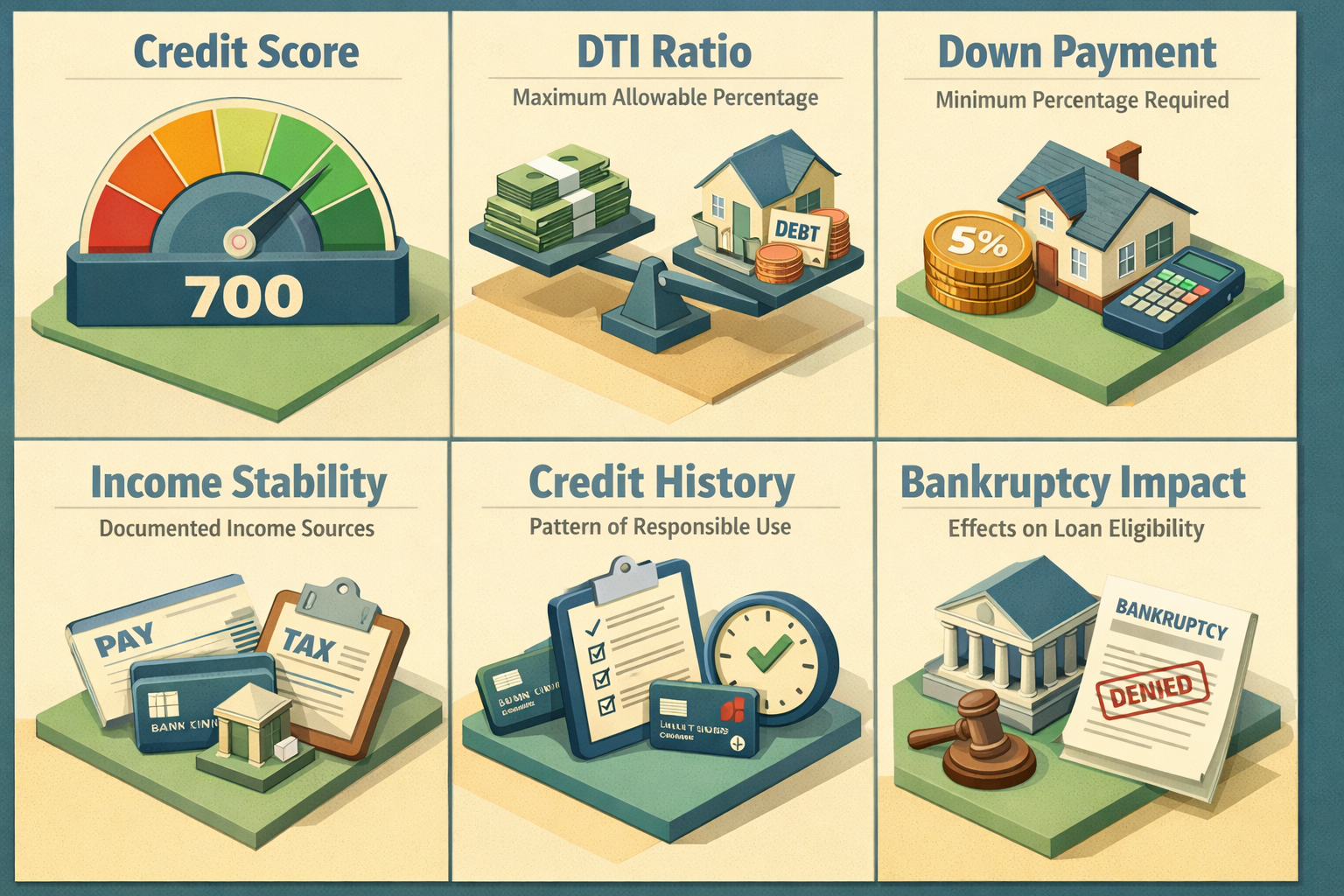
- A minimum credit score — often cited at 620, though some lenders may require higher
- A debt-to-income (DTI) ratio — generally at or below 43% to 45%
- A down payment — as low as 3% for some programs, though higher down payments may strengthen your application
- Stable, verifiable income — typically documented through pay stubs, tax returns, or bank statements
- A satisfactory credit history — including a demonstrated pattern of responsible credit use
When you add a bankruptcy to the picture, lenders look more carefully at your entire financial profile. A low credit score combined with a bankruptcy history signals higher risk, which means you'll likely face additional hurdles. That said, it's not impossible to meet the requirements for conventional loan with low credit score after bankruptcy — especially if you've taken meaningful steps to rebuild since your filing.
Understanding Bankruptcy Types and How They Affect Waiting Periods
Not all bankruptcies are treated the same way by mortgage lenders. The two most common types — Chapter 7 and Chapter 13 — carry different waiting periods before you may be eligible to apply for a conventional loan.
Chapter 7 Bankruptcy
Chapter 7 is a liquidation bankruptcy, where most of your unsecured debts are discharged. It's the more common filing type, but it also tends to carry a longer waiting period for conventional mortgage eligibility. According to Fannie Mae guidelines, borrowers who have filed Chapter 7 bankruptcy typically must wait four years from the discharge or dismissal date before applying for a conventional loan.
In cases where the bankruptcy was related to extenuating circumstances — such as a serious illness, job loss, or death of a co-borrower — some lenders may consider a reduced waiting period of two years. However, lenders will expect strong documentation proving the hardship was beyond your control.
Chapter 13 Bankruptcy
Chapter 13 is a reorganization bankruptcy, meaning you repay a portion of your debts over a structured three-to-five-year plan. For conventional loans, borrowers may be eligible after either two years from the discharge date or four years from the dismissal date, depending on the circumstances.
Importantly, if you're still in an active Chapter 13 repayment plan, some lenders may consider your application after at least 12 months of on-time payments — but this typically requires court approval and is evaluated on a case-by-case basis.
Why Your Credit Score Matters More After Bankruptcy
A bankruptcy filing can significantly damage your credit score — sometimes dropping it by 100 to 200 points or more, depending on where your score stood before the filing. For borrowers pursuing a conventional mortgage, this creates a real challenge, since most conventional lenders look for a score of at least 620.
If your credit score is still low when you apply, you might face:
- Higher interest rates, which increase your monthly payment and total loan cost
- Stricter DTI requirements
- Larger down payment requests from the lender
- A higher likelihood of denial, particularly from traditional banks
It's worth noting that a low credit score after bankruptcy isn't a permanent condition. Credit scores can recover over time — sometimes significantly — if you're consistent and deliberate about rebuilding. Many borrowers with a conventional mortgage bad credit bankruptcy history find that their scores improve enough to qualify within a few years of their discharge, especially with the right strategies in place.
Steps to Rebuild Your Credit Before Applying
The good news is that credit rebuilding is achievable with discipline. Here are some practical strategies that may help you meet the requirements for conventional loan with low credit score after bankruptcy when the time comes.
Open a Secured Credit Card
A secured credit card requires a cash deposit that serves as your credit limit. Using it regularly and paying the balance in full each month can help you establish a positive payment history — one of the most heavily weighted factors in credit scoring models.
Become an Authorized User
If a family member or close friend has a credit card with a strong payment history and low utilization, being added as an authorized user could give your score a boost. You don't even need to use the card — simply being listed may help.
Monitor Your Credit Reports
Review your credit reports from all three major bureaus — Equifax, Experian, and TransUnion — regularly. After a bankruptcy, errors or outdated information can sometimes appear on your report. Disputing inaccuracies is a straightforward way to ensure your score reflects your actual credit behavior.
Keep Balances Low
Credit utilization — how much of your available credit you're using — accounts for a significant portion of your score. Keeping balances below 30% of your credit limit is generally recommended, though lower is even better.
Avoid New Hard Inquiries
Each time you apply for new credit, a hard inquiry is recorded. Too many inquiries in a short period can temporarily lower your score. Be selective about new credit applications, especially as you approach your mortgage application timeline.
What Lenders Look for Beyond Credit Scores
Credit scores are important, but they're just one piece of the puzzle. When evaluating a borrower with a bankruptcy history, lenders often look at the full picture of financial recovery. Here's what may carry weight in their decision:
- Payment history after bankruptcy: Have you paid all your bills on time since the discharge? A clean post-bankruptcy record is one of the strongest signals of creditworthiness.
- Employment stability: Lenders want to see consistent income. If you've held the same job or stayed in the same industry, that continuity can work in your favor.
- Cash reserves: Having savings beyond your down payment shows lenders you have a financial cushion. This may help offset concerns about your credit score.
- Down payment size: A larger down payment reduces the lender's risk. Borrowers with a bankruptcy history may find that putting down 10% to 20% — or more — improves their chances of approval and can lead to better loan terms.
- Letters of explanation: Many lenders will ask for a written explanation of the bankruptcy. A clear, honest letter that explains the circumstances and demonstrates how your situation has changed can be helpful.
Lenders who specialize in working with borrowers who have a conventional mortgage bad credit bankruptcy history may be more flexible in how they evaluate these factors — so shopping around is genuinely worthwhile.
Should You Consider Alternative Loan Programs First?
If you're still within the waiting period for a conventional loan, or if your credit score hasn't recovered enough yet, it may be worth exploring government-backed mortgage options as a bridge strategy.
FHA Loans
FHA loans are backed by the Federal Housing Administration and tend to have more lenient credit and waiting period requirements. After a Chapter 7 bankruptcy, FHA borrowers may be eligible after just two years from the discharge date. Credit score minimums can be lower than conventional standards, which makes FHA a popular option for borrowers still rebuilding.
VA Loans
If you're a qualifying veteran or active-duty service member, VA loans offer competitive terms with no down payment requirement and relatively flexible credit guidelines. The waiting period after Chapter 7 bankruptcy is typically two years.
USDA Loans
For borrowers purchasing in eligible rural areas, USDA loans may offer another path. Waiting periods and credit requirements can vary, but these loans may be an option worth exploring if you meet the geographic and income criteria.
Starting with an FHA or VA loan doesn't mean you'll never have a conventional mortgage. Many homeowners use these programs to establish a strong track record of mortgage payments, then refinance into a conventional loan once their credit and equity position improve. It's a strategic approach that has worked for many borrowers navigating the post-bankruptcy landscape.
●Conclusion
Qualifying for a conventional mortgage after bankruptcy with a low credit score is challenging — but it's far from impossible. The key is understanding the waiting periods, knowing what lenders are looking for, and taking consistent steps to rebuild your financial profile during that time. Whether you're still in your waiting period or ready to apply, being proactive about your credit, savings, and documentation puts you in the best possible position. At LoanWise, we believe every borrower deserves clear guidance and real options. If you're ready to explore where you stand and what loan programs might work for your situation, connect with a LoanWise lending specialist today and take the next step toward homeownership.