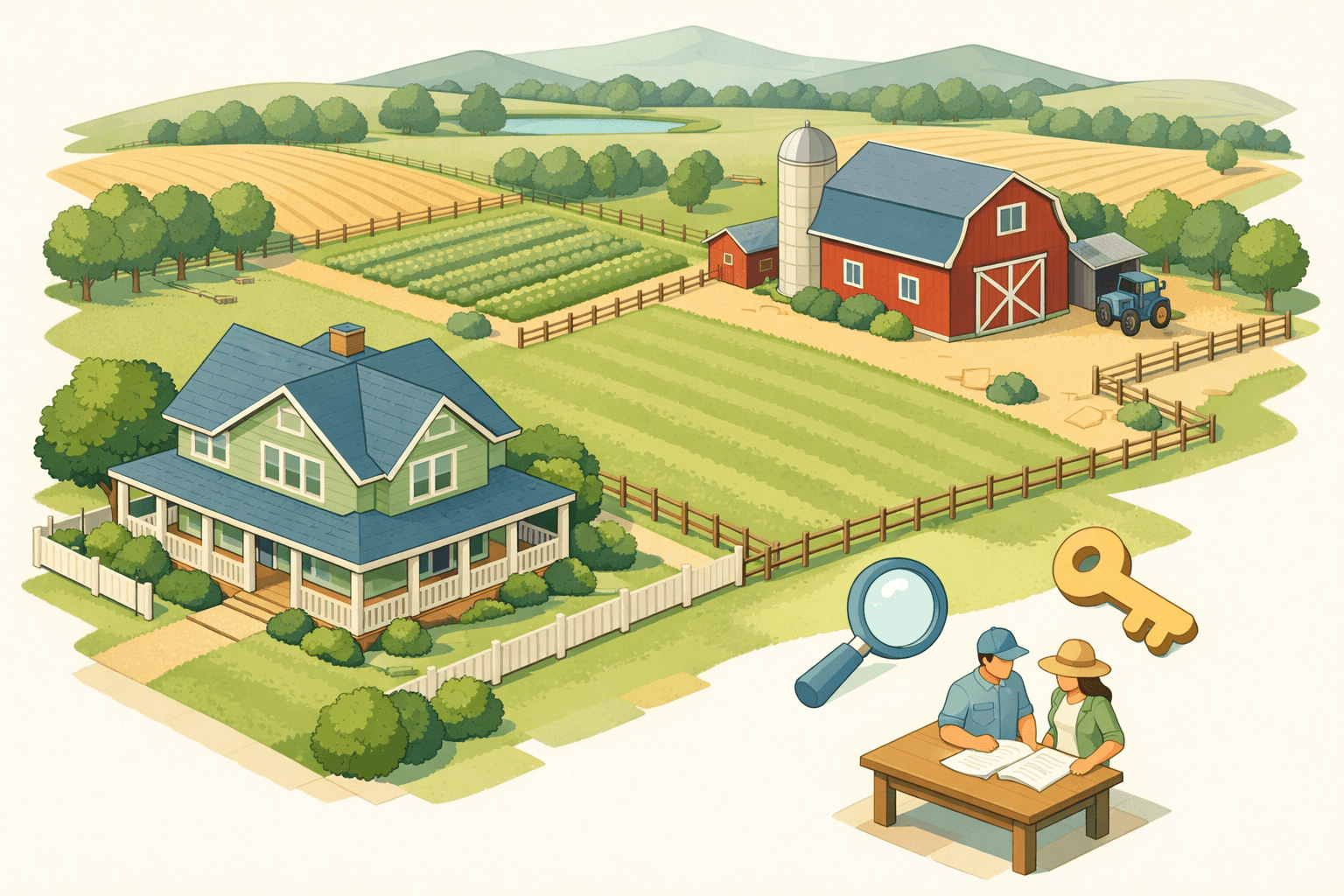
Inheriting a piece of farm land can feel like a tremendous gift — but it can also come with a surprising number of financial and legal complexities, especially if you're hoping to use that property to secure a conventional mortgage. Understanding the requirements for conventional loan with inherited farm land is essential before you begin the application process. Lenders evaluate agricultural properties differently than standard residential homes, and even small details about zoning, income, and acreage can make or break your approval. Whether you're a first-time homebuyer hoping to build on the land, a homeowner looking to refinance, or a real estate investor weighing your options, this guide walks you through everything you need to know.
What Makes Inherited Farm Land Different from Standard Residential Property
When you inherit farm land, you're not receiving a typical residential parcel. Agricultural properties come with unique characteristics that lenders treat with extra caution. These might include large acreage, outbuildings, barns, irrigation systems, and land that generates — or once generated — farming income. Each of these elements affects how a lender and appraiser categorize the property.
Conventional loans are typically backed by Fannie Mae or Freddie Mac, and both agencies have specific guidelines about what types of properties qualify. For a property to be eligible, it generally needs to meet the definition of a residential property rather than a commercial or agricultural one. If the primary use of the land is farming, it may not qualify under standard conventional loan guidelines at all. However, if there's a primary residence on the property and the farming activity is considered secondary or incidental, approval may still be possible.
It's also worth noting that properties with more than ten acres may face additional scrutiny, and appraisers are often required to evaluate the land using specific comparable sales that reflect the residential — not agricultural — value of the property. This distinction can significantly affect the appraised value and, in turn, how much you're able to borrow.
Key Requirements for Conventional Loan with Inherited Farm Land
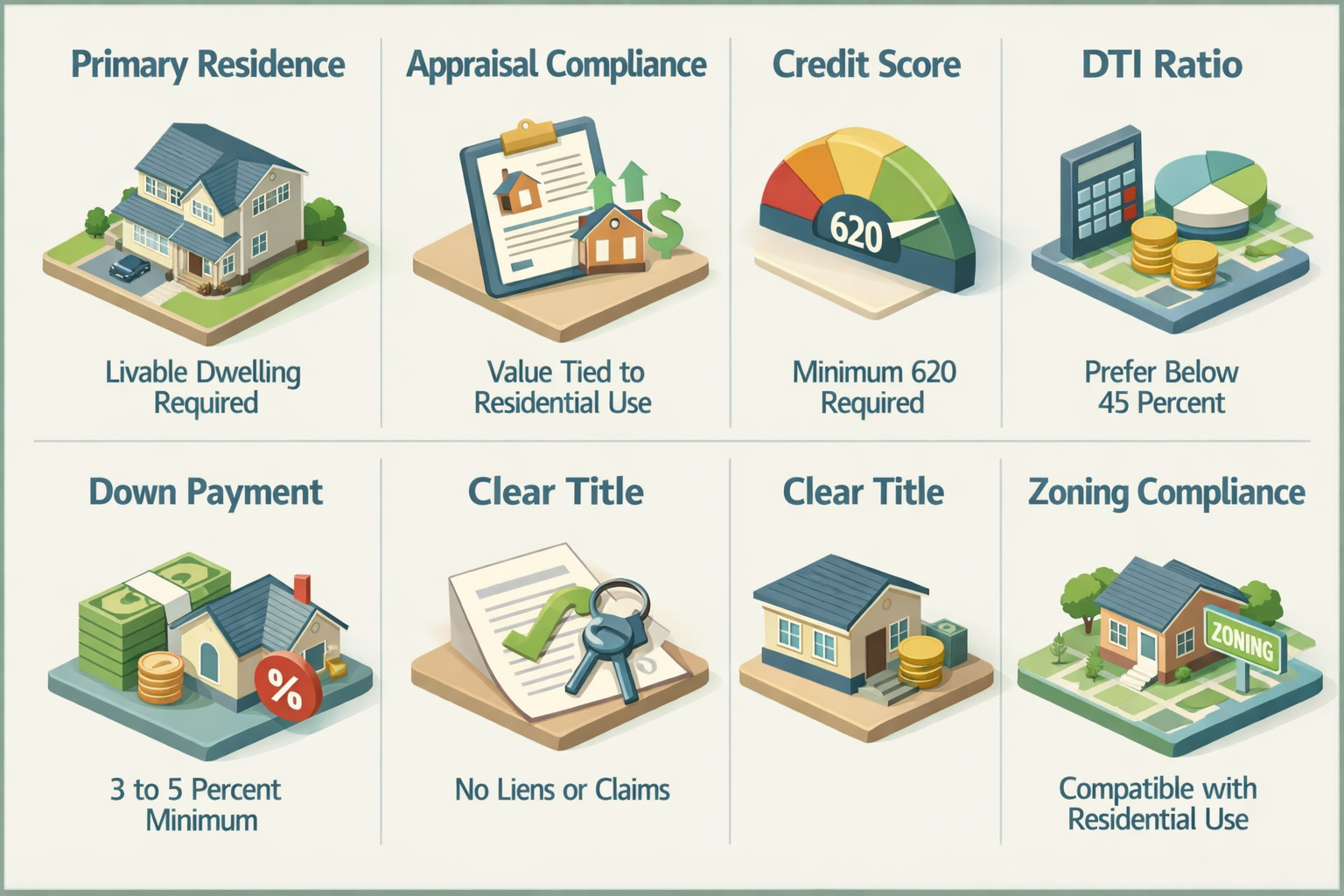
Meeting the requirements for conventional loan with inherited farm land involves satisfying both the standard borrower qualifications and the property-specific conditions set by Fannie Mae and Freddie Mac guidelines. Here's what lenders will typically look for:
- Primary Residence Requirement: The property must include a livable dwelling that serves as the borrower's primary residence, second home, or investment property. Vacant land with no residential structure typically does not qualify for a conventional mortgage.
- Appraisal Compliance: An appraiser must confirm that the property's value is primarily tied to its residential use, not its agricultural output. Lenders often require the appraiser to use non-agricultural comparable sales to support the valuation.
- Credit Score: Most conventional loans require a minimum credit score of 620, though stronger scores — typically 740 and above — unlock more favorable interest rates and terms.
- Debt-to-Income (DTI) Ratio: Lenders generally prefer a DTI ratio at or below 45%, though this can vary by lender and loan program. Farm income may or may not be counted, depending on how it's documented.
- Down Payment: Conventional loans typically require a minimum down payment of 3% to 5% for primary residences, though properties with unique characteristics like significant acreage may require a higher down payment — sometimes 20% or more — to offset perceived risk.
- Clear Title: Since the property was inherited, a title search is critical. The lender will want to confirm there are no outstanding liens, unpaid property taxes, or competing ownership claims from other heirs.
- Zoning Compliance: The property must be zoned in a way that's compatible with residential use. Agricultural zoning alone can disqualify a property unless a residential use is also permitted.
Each of these criteria plays an important role in the lender's decision. Failing to meet even one of them could result in a denial or require you to explore alternative financing paths.
How the Appraisal Process Works for Agricultural Property
The appraisal is one of the most critical steps when financing inherited land. Conventional mortgage appraisals follow Uniform Standards of Professional Appraisal Practice (USPAP) guidelines, and when farm land is involved, appraisers face unique challenges in determining market value.
For a conventional mortgage for agricultural property, the appraiser must identify the highest and best use of the property. If the highest and best use is residential — meaning a buyer would most likely purchase it as a home rather than a working farm — then the appraiser can proceed with a standard residential appraisal. However, if agricultural use is deemed the highest and best use, the property may be classified as a non-residential asset, which could make conventional financing significantly harder to obtain.
Appraisers are typically required to find at least three comparable sales of similar residential properties to support their valuation. On large tracts of farm land, finding truly comparable residential sales can be difficult, which sometimes results in lower appraisals or required adjustments. This could affect your loan-to-value ratio and potentially the amount of equity you can access.
If the property includes a farmhouse or other residential structure, the appraiser will evaluate the dwelling separately from the land when possible. In some cases, lenders may require a land appraisal in addition to the home appraisal to better understand what portion of the total value is attributable to agricultural assets.
Navigating Title and Ownership Challenges After Inheriting Land
One of the biggest hurdles in financing inherited land is establishing a clean and clear title. When farm land passes through an estate — especially across multiple generations or among several heirs — title complications are common and can delay or even derail the loan process.
Here are some title-related issues to be aware of:
- Probate Status: The property must have successfully passed through probate before it can be used as collateral. If the estate is still open or disputed, most lenders will not proceed.
- Heir Agreement: If the land was inherited by multiple heirs, all parties generally must agree on how the property is being used or transferred. Partial ownership can complicate your ability to mortgage the property without the consent of co-owners.
- Delinquent Taxes: Inherited properties sometimes carry unpaid property taxes from previous owners. These must be resolved before closing, as lenders won't approve a mortgage on a property with outstanding tax liens.
- Deed Accuracy: The deed must clearly reflect your ownership. Any discrepancies in names, acreage descriptions, or legal boundaries should be corrected with a professional title company before applying for the loan.
Working with an experienced real estate attorney and a reputable title company can help you identify and resolve these issues early. Many lenders strongly recommend — or require — title insurance to protect against any undiscovered claims that might arise after closing.
Can Farm Income Help You Qualify for a Conventional Mortgage
If your inherited farm is actively generating income — from crop leases, livestock operations, or land rentals — you might wonder whether that income can help you qualify for a conventional loan. The short answer is: it may, but it comes with conditions.
Fannie Mae guidelines generally allow agricultural income to be counted toward qualifying income if it has been consistently documented over a period of at least two years. This typically means providing two years of federal tax returns that show the farm income, along with a current profit and loss statement if the income is ongoing. Schedule F of the IRS Form 1040 is the standard form for reporting farm income and expenses, and lenders will scrutinize it carefully.
It's important to understand that farm operations often show significant deductions, which can reduce your net qualifying income considerably. Even if your gross farm revenue is substantial, the net income after allowable deductions may be modest — or even negative in some years — which could work against you during underwriting.
If you're leasing the land to another farmer rather than operating it yourself, rental income from the farm may be treated similarly to rental income from any investment property. In that case, lenders may count a percentage of the lease income — often around 75% — toward your qualifying income after accounting for vacancy and expenses. Always consult with your lender early to understand exactly how they plan to handle farm-related income in your specific situation.
Alternative Financing Options if Conventional Doesn't Work Out
Not every inherited farm property will qualify for a conventional mortgage, and that's okay. There are several alternative financing inherited land options worth exploring if conventional lending isn't the right fit.
- USDA Loans: If the property is located in a rural area and the borrower meets income requirements, a USDA loan could be an option. The USDA also offers farm operating loans and farm ownership loans through the Farm Service Agency (FSA), which are specifically designed for agricultural properties.
- Farm Credit System Lenders: Agricultural lenders like Farm Credit Services or CoBank specialize in farm and rural property financing and may have more flexible guidelines for properties that don't meet conventional standards.
- Portfolio Loans: Some community banks and credit unions offer portfolio loans — mortgages they hold in-house rather than selling on the secondary market. These lenders can write their own guidelines and may be more willing to work with non-standard properties like inherited farms.
- Land Contracts or Seller Financing: In some estate situations, especially when selling to a family member or co-heir, a land contract or seller-financed arrangement may allow the buyer to make payments directly without traditional lender involvement.
- Hard Money or Private Lending: While more expensive, hard money lenders may bridge a gap while you resolve title issues or improve your financial profile before applying for a conventional loan.
The best path forward depends heavily on the specifics of your property, your credit profile, and your long-term goals. Speaking with a mortgage professional who has experience with agricultural or rural properties can help you identify the most viable route.
Practical Tips to Strengthen Your Loan Application
If you're committed to pursuing a conventional loan on your inherited farm land, there are several steps you can take to improve your chances of approval.
First, organize your documentation early. This includes the deed, estate documents, two years of tax returns, proof of any farm income, and a current survey of the property. The more organized you are, the smoother the process tends to go.
Second, resolve any title issues before applying. Work with a title company to run a preliminary title search so you know what you're dealing with upfront. Clearing liens, correcting deed errors, and confirming probate completion will save time down the road.
Third, get a pre-appraisal consultation. Some appraisers offer consultations before a formal appraisal is ordered. This can help you understand how the property is likely to be valued and whether any adjustments — like fencing off the residential portion from the agricultural portion — might help your case.
Fourth, work with a lender experienced in rural or agricultural properties. Not every mortgage loan officer has dealt with farm land financing. Choosing one who has can make a significant difference in how your file is structured and presented to underwriting.
Finally, consider the property's zoning carefully. If the land is zoned exclusively for agricultural use, it may be worth consulting a local land use attorney about whether a zoning variance or rezoning is feasible. This isn't always practical or affordable, but in some cases it can open the door to conventional financing that wouldn't otherwise be available.
●Conclusion
Understanding the requirements for conventional loan with inherited farm land takes time, but being informed from the start can save you considerable stress and disappointment. Agricultural properties present unique challenges — from appraisal complexity to title history and zoning compliance — that simply don't exist with standard residential homes. The good news is that with the right preparation, the right professionals, and a clear understanding of what lenders need, many borrowers do successfully secure conventional financing on inherited farm properties. If conventional lending doesn't work out, a range of alternative options exists to help you unlock the value of your land. At LoanWise, we're here to help you explore every available path to financing so you can make the most of what you've inherited.