
Going through a divorce is one of life's most challenging experiences, and untangling shared finances can make it even more stressful. If you and your former spouse co-own a home, figuring out what happens next — whether that means buying out the other party, refinancing, or selling the property — often involves navigating a complex mortgage process. Understanding the requirements for conventional loan with divorce decree and shared equity can help you move forward with confidence. This guide breaks down what lenders typically look for, how the divorce decree factors into the loan process, and what you need to know about handling shared equity in a divorce mortgage split equity property situation.
What a Conventional Loan Is and Why It Matters After Divorce
A conventional loan is a mortgage that is not backed by a government agency such as the FHA, VA, or USDA. Instead, these loans typically conform to guidelines set by Fannie Mae and Freddie Mac. Because conventional loans often offer competitive interest rates and flexible terms, they're a popular choice for homebuyers and homeowners looking to refinance — including those navigating post-divorce property transitions.
After a divorce, one common goal is for one spouse to keep the home. To do this, the remaining spouse usually needs to qualify for a new conventional loan on their own. This means removing the other party from the existing mortgage, which can't simply be done by signing a document — it requires a full refinance. Lenders will evaluate the remaining borrower's income, credit, and assets independently, so it's important to understand what qualifications you'll need to meet before starting the process.
It's also worth noting that conventional loans come in two categories: conforming and non-conforming (also called jumbo loans). For most divorcing homeowners, a standard conforming conventional loan will be the most accessible path, provided the loan amount falls within current limits set by the Federal Housing Finance Agency (FHFA).
How the Divorce Decree Shapes Your Mortgage Eligibility
The divorce decree is one of the most important documents a lender will review when you apply for a conventional loan after a divorce. This court-issued agreement outlines how marital assets and debts are divided, which directly affects how lenders assess your financial picture.
Here are some of the key ways a divorce decree can influence your mortgage eligibility:
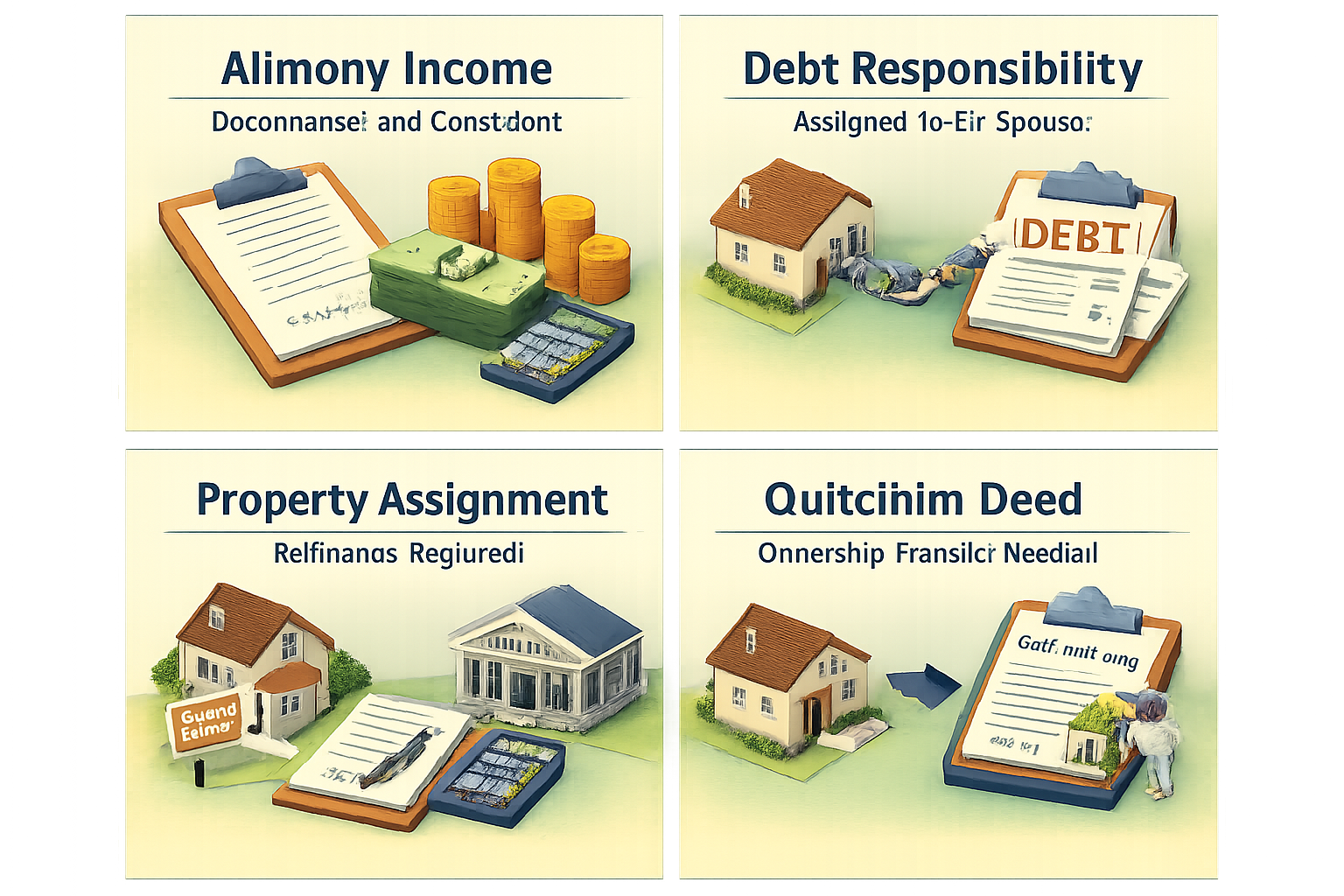
- Alimony and child support income: If the decree awards you alimony or child support, lenders may count this as qualifying income — provided the payments are documented, consistent, and likely to continue for a defined period. Typically, lenders want to see at least six months of received payments and evidence the income will continue for at least three years.
- Debt responsibility: If the decree assigns certain debts to your former spouse, lenders may still count those debts against you if your name remains on the account. The decree alone doesn't remove your legal liability to creditors.
- Property assignment: If the decree awards the home to you, you'll generally need to refinance the mortgage in your name alone to remove your ex-spouse's obligation. Lenders will require a copy of the signed, finalized decree as part of the loan file.
- Quitclaim deed: In many cases, a quitclaim deed is also required to transfer ownership of the property from joint names to a single owner. This document works alongside the divorce decree to establish clear title.
Lenders treat divorce decrees as legally binding instruments, so having a thorough and clearly written agreement can help streamline your mortgage application. If certain financial obligations are ambiguous in the decree, it may create delays or complications during underwriting.
Understanding Shared Equity and How Lenders Evaluate It
Shared equity refers to the ownership interest that both spouses have built up in a jointly owned property. When a couple divorces, this equity must be addressed — either by selling the home and splitting the proceeds, or by one spouse buying out the other's share. Understanding how lenders evaluate shared equity is a critical part of meeting the requirements for conventional loan with divorce decree and shared equity.
Here's how a typical equity buyout works in a divorce mortgage split equity property scenario:
- Home appraisal: A licensed appraiser determines the current market value of the property. This is the foundation of any equity calculation.
- Equity calculation: The home's current value is reduced by the outstanding mortgage balance to determine total equity. For example, if the home is worth $400,000 and the remaining mortgage is $250,000, the total equity is $150,000.
- Buyout amount: If both spouses hold equal equity, the remaining spouse would typically need to pay the departing spouse $75,000 — half of the total equity. However, the exact amount may vary based on what the divorce decree specifies.
- Cash-out refinance: To fund the buyout, the remaining spouse may use a cash-out refinance, borrowing against the home's equity to pay off the departing spouse. Conventional loan guidelines allow cash-out refinances up to certain loan-to-value (LTV) limits, which typically may go up to 80% of the home's appraised value, though this can vary by lender and borrower profile.
It's important to note that lenders will scrutinize the terms of the divorce decree carefully to confirm that the equity split described aligns with what's being requested in the loan. Any inconsistencies between the decree and the loan application could trigger additional documentation requests or underwriting conditions.
Qualifying on Your Own: Income, Credit, and Debt-to-Income Ratio
One of the most significant hurdles divorcing homeowners face is qualifying for a new conventional loan without the financial support of a second income. Lenders will evaluate your application based solely on your own financial standing, which means your income, credit score, and debt-to-income (DTI) ratio all need to meet conventional loan standards.
Credit Score Requirements
Most conventional loans require a minimum credit score of 620, though a higher score — typically 740 or above — may help you secure more favorable interest rates. Divorce can sometimes impact credit scores if joint accounts were mismanaged or if missed payments occurred during the transition. It's a good idea to review your credit report before applying and address any errors or negative items proactively.
Income Documentation
Lenders will want to verify that your income is stable and sufficient to support the new mortgage payment on your own. This may include W-2s, recent pay stubs, tax returns, and documentation of any alimony or child support income outlined in the divorce decree. Self-employed borrowers may face additional scrutiny and will typically need to provide two years of business tax returns as well.
Debt-to-Income Ratio
Your DTI ratio compares your monthly debt obligations to your gross monthly income. For conventional loans, lenders generally prefer a DTI at or below 45%, though some loan programs may allow slightly higher ratios depending on compensating factors such as strong reserves or a high credit score. If your ex-spouse was assigned certain debts in the divorce but those accounts remain in your name, those balances may still count toward your DTI unless they've been paid off or refinanced out of your name.
Down Payment and Equity Requirements in Post-Divorce Purchases
If you're not retaining the marital home but instead purchasing a new property after the divorce, you'll need to meet standard conventional loan down payment requirements. For a primary residence, conventional loans typically require a minimum down payment of 3% to 5%, though putting down 20% or more allows you to avoid private mortgage insurance (PMI).
When receiving your share of equity from the sale of the marital home, those proceeds can often be used toward a down payment on a new property. Lenders will generally want to see documentation showing the source of the funds, including a closing disclosure from the sale of the marital home or a record of the equity buyout payment received.
It's also worth noting that if you're purchasing a second home or investment property after the divorce, the down payment requirements are typically higher — often 10% to 25% or more — and qualifying standards tend to be stricter. Real estate investors going through a divorce should factor these requirements into their financial planning early.
Common Challenges and How to Prepare for Them
Applying for a conventional loan after a divorce isn't always straightforward. Here are some common challenges borrowers face — and some practical steps that may help you prepare:
- Remaining on the old mortgage: If your ex-spouse is keeping the home but your name stays on the mortgage, lenders may count that payment against your DTI. A divorce decree alone won't remove you from the liability. Encourage your former spouse to refinance promptly, or work with your attorney to establish a timeline for removal.
- Limited credit history: If most joint accounts were in your spouse's name, you may have a thin credit file. Start building individual credit by opening a secured credit card or becoming an authorized user on a trusted account.
- Reduced income: Going from a dual-income household to a single income is a major shift. Budget carefully and consider delaying the purchase of a new home until your financial picture is more stable, if possible.
- Title and legal delays: Unresolved title issues or contested property division can delay the mortgage process significantly. Working with an experienced real estate attorney and keeping all documentation organized can help minimize delays.
- Lender interpretation of the decree: Not all lenders interpret divorce decrees the same way. Working with a mortgage professional who has experience in post-divorce financing can make a meaningful difference in how smoothly your application proceeds.
Working With the Right Lender to Meet All Requirements
Meeting the requirements for conventional loan with divorce decree and shared equity is absolutely achievable with the right preparation and the right lending partner. Not every lender is equally experienced in handling post-divorce mortgage scenarios, so it's worth shopping around and asking questions before you commit.
When evaluating lenders, consider asking:
- Do you have experience handling divorce mortgage split equity property situations?
- How do you treat alimony and child support income for qualifying purposes?
- What documentation will you need from the divorce decree?
- Can you walk me through the equity buyout process and how it affects my loan terms?
A knowledgeable loan officer can help you understand which loan programs you may qualify for, how to structure a cash-out refinance for a buyout, and what steps to take if your credit or income needs improvement before applying. Many lenders also offer pre-qualification reviews that give you a realistic picture of where you stand before you formally apply.
At LoanWise, we understand that life changes — and so do your financing needs. Whether you're refinancing to retain the family home, purchasing a new property after a settlement, or simply trying to make sense of your options, our team is here to help guide you through every step of the process.
●Conclusion
Divorce is never easy, but it doesn't have to derail your homeownership goals. By understanding how lenders evaluate divorce decrees, shared equity, and individual financial qualifications, you can approach the conventional loan process with clarity and confidence. Whether you're buying out your former spouse's equity, refinancing into a loan in your own name, or starting fresh with a new home purchase, taking the time to prepare your finances and work with experienced professionals can make all the difference. If you're ready to explore your options, reach out to a LoanWise mortgage specialist today — we're here to help you move forward.