
Moving for a new job is exciting, but it can also raise some real concerns when you're trying to buy a home — especially if you're a veteran counting on your VA loan benefit. The good news is that understanding how to qualify for VA loan with recent job relocation and shared equity is more achievable than many borrowers realize. VA loans are among the most flexible mortgage programs available, and with the right preparation, even a recent employment change or a shared ownership arrangement doesn't have to stand in your way. This guide walks you through what lenders look for, how job relocations are evaluated, and how shared equity arrangements fit into the VA loan picture.
What Makes VA Loans Different from Other Mortgage Programs
VA loans are backed by the U.S. Department of Veterans Affairs and are available to eligible active-duty service members, veterans, and surviving spouses. What sets them apart is a combination of benefits that most conventional or FHA loans simply can't match.
- No down payment required: Qualified borrowers can finance 100% of the purchase price in many cases.
- No private mortgage insurance (PMI): This keeps monthly payments lower compared to other low-down-payment options.
- Competitive interest rates: Because the VA guarantees a portion of the loan, lenders may offer more favorable terms.
- Flexible credit guidelines: VA loans often accommodate borrowers with less-than-perfect credit histories.
These features make VA loans especially valuable for veterans who are relocating for work and trying to establish roots in a new area quickly. However, the program does have its own set of qualifying standards that borrowers must meet — and employment history is one of the most closely reviewed factors.
How Lenders Evaluate Employment After a Job Relocation
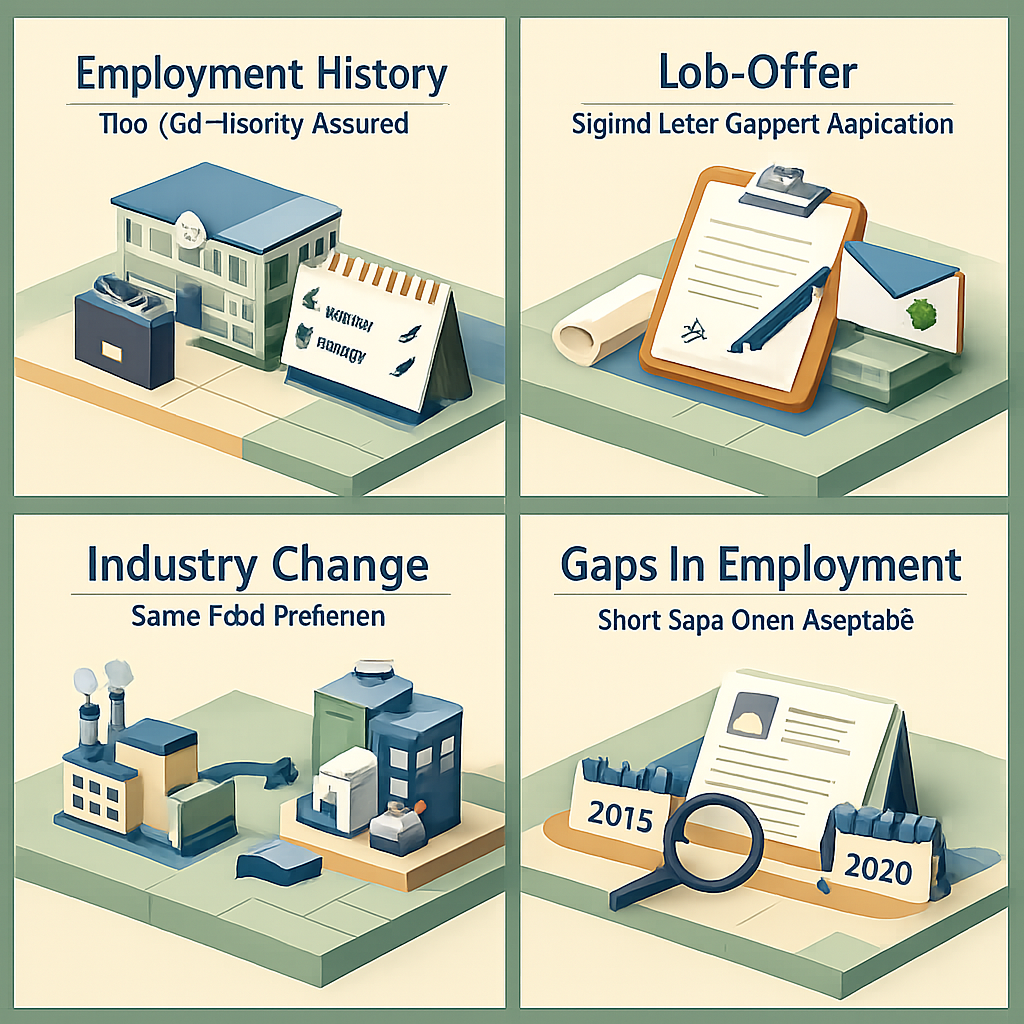
One of the most common concerns veterans face when applying for a VA loan after relocating is whether their new job history will satisfy lender requirements. The VA itself doesn't set a strict minimum employment duration, but most lenders want to see a two-year history of stable income. That said, a recent job change doesn't automatically disqualify you.
Lenders typically look at the overall pattern of your employment rather than a single data point. If your new position is in the same field or industry as your previous role, most lenders will view that transition favorably. A lateral move or a promotion within the same profession signals career continuity, which is exactly what underwriters want to see.
Here are factors lenders may consider when reviewing a job relocation scenario:
- Same field or industry: Changing employers but staying in the same career path is generally seen as stable.
- Offer letter or employment contract: If you've just started a new job, a signed offer letter confirming your salary and start date can help support your application.
- Gap in employment: Short gaps between jobs are often acceptable if explained clearly. Military transitions, medical leave, or family responsibilities are typically understood by VA lenders.
- Probationary status: Some lenders may be cautious if you're still in a probationary period, so it's worth asking upfront how each lender handles this.
If you're relocating specifically because of a job transfer from your current employer, that's often the easiest scenario to document. A letter from your employer confirming the transfer, your new compensation, and your continued employment can go a long way in satisfying lender requirements.
Understanding Shared Equity and How It Affects VA Loan Eligibility
Shared equity arrangements have become increasingly common, particularly in high-cost housing markets where affordability is a real challenge. In a shared equity agreement, a third party — such as a family member, employer, nonprofit, or private investor — contributes toward the purchase price of a home in exchange for a share of the property's future appreciation or equity.
When it comes to VA loan job relocation shared equity situations, the key question is how the VA and lenders view these arrangements. The VA has specific guidelines about co-borrowers and secondary financing, and shared equity structures can vary widely, so it's important to understand a few core principles:
- VA loans allow co-borrowers: A veteran can purchase a home with a co-borrower, such as a spouse or another veteran. However, the VA's guarantee only extends to the veteran's portion of the loan in some mixed co-borrower scenarios.
- Secondary financing rules: If a shared equity partner is contributing funds toward the purchase, lenders will want to know whether those funds are a gift, a loan, or an equity investment. Each is treated differently in underwriting.
- Equity sharing agreements with private investors: These are newer products and may not be compatible with all VA loan structures. Some lenders may have restrictions, so working with a VA-experienced lender is essential.
It's worth noting that the VA program is designed to help veterans achieve homeownership independently where possible. If a shared equity partner takes on an ownership interest in the property, lenders may need to evaluate that arrangement carefully to ensure it complies with VA guidelines. Transparency with your lender from the beginning is the smartest approach.
Steps to Strengthen Your VA Loan Application After Relocating
Whether you've just arrived in a new city or you're still in the process of relocating, there are concrete steps you can take to position your VA loan application for success.
Gather Your Employment Documentation Early
Start collecting pay stubs, offer letters, W-2 forms, and employer contact information before you apply. If your income has changed due to the relocation — either higher or lower — be prepared to explain the difference clearly. Lenders want a complete picture, not a guessing game.
Obtain Your Certificate of Eligibility (COE)
Your Certificate of Eligibility confirms to lenders that you meet the VA's service requirements. You can request one through the VA's eBenefits portal, through your lender, or by submitting VA Form 26-1880. Having this document ready speeds up the application process significantly.
Check and Improve Your Credit Profile
While VA loans are more flexible on credit than conventional mortgages, most lenders still prefer a credit score of at least 620. Review your credit report for errors, pay down high-balance accounts if possible, and avoid opening new lines of credit before applying.
Save for Closing Costs
Even though VA loans don't require a down payment, there are still closing costs to consider. Some of these can be negotiated into the purchase contract or covered by seller concessions, but having reserves available gives you more flexibility and may reassure lenders about your financial stability.
Work with a VA-Experienced Lender
Not all lenders have deep experience with VA loans, and even fewer have worked through VA loan job relocation shared equity scenarios. Choosing a lender who specializes in VA lending means you'll get guidance that's both accurate and tailored to your situation.
How Shared Equity Partners Can Support — Not Complicate — Your Purchase
For veterans relocating to high-cost areas, affordability can be a genuine obstacle even with VA loan benefits. A shared equity partner can help bridge the gap, but structuring the arrangement properly is critical.
If a family member is contributing funds to help with closing costs or a portion of the purchase price, lenders may classify those funds as a gift rather than an equity stake — especially if there's no expectation of repayment or ownership. A signed gift letter is typically required in these cases.
If you're working with a formal shared equity program — such as those offered by certain nonprofits, community land trusts, or employer-assisted housing programs — make sure the program is approved for use with VA financing. Some programs have been structured specifically to work alongside VA loans, while others have not.
Here are a few practical tips for veterans considering a shared equity arrangement:
- Ask any shared equity provider directly whether their program is compatible with VA loans.
- Have your lender review the shared equity agreement before you sign anything.
- Understand how the equity split will be calculated at resale and whether there are any restrictions on selling or refinancing.
- Keep all agreements in writing and consult with a housing counselor or real estate attorney if you have questions.
When structured correctly, shared equity can be a smart tool that expands your buying power without jeopardizing your VA loan eligibility.
Common Mistakes to Avoid When Applying for a VA Loan After a Move
Even well-prepared veterans can run into trouble if they're not aware of a few common pitfalls. Here's what to watch out for:
- Changing jobs again mid-application: Once you've started the loan process, avoid switching employers or roles. Even a well-intentioned career move can delay or derail your approval if it changes your income profile.
- Failing to disclose the shared equity arrangement: Lenders are required to review all aspects of your transaction. Trying to hide or minimize a shared equity agreement can raise red flags and may be viewed as a compliance issue.
- Underestimating the VA funding fee: Most VA borrowers pay a funding fee, which varies based on your down payment amount, loan type, and whether it's your first VA loan. Factor this into your budget.
- Assuming all lenders handle VA loans the same way: Lender overlays — additional requirements beyond VA minimums — vary from institution to institution. Shop around and compare.
- Not getting pre-approved before house hunting: In a competitive market, sellers want to see a pre-approval letter. Getting pre-approved also gives you a realistic picture of your budget and any gaps you'll need to address.
●Conclusion
Knowing how to qualify for VA loan with recent job relocation and shared equity starts with understanding that flexibility is built into the VA program — but preparation still matters. Lenders want to see stable income patterns, honest documentation, and well-structured arrangements. Whether you've just transferred to a new city for work or you're exploring a co-ownership arrangement to stretch your purchasing power, the VA loan benefit you've earned is still within reach. Take the time to work with an experienced VA lender, get your documents in order, and approach shared equity agreements with transparency and care. At LoanWise, we're here to help veterans navigate every step of the home financing journey — reach out today to explore your options and take the next step toward homeownership in your new community.