
Buying a home is one of the biggest financial steps most people will ever take, and coming up with a down payment can feel like the hardest part. Fortunately, many homebuyers don't have to do it alone. Family members and loved ones can contribute through monetary gifts — and conventional mortgage programs often allow this kind of support. If you're exploring the requirements for conventional loan with 10% down payment gifted funds, you're in the right place. This guide walks you through what lenders typically expect, what documentation you'll need, and how to set yourself up for a smooth approval process.
What Is a Gift Fund in Mortgage Lending?
A gift fund is money given to a homebuyer by an eligible donor — typically a family member — that the buyer can use toward their down payment, closing costs, or financial reserves. Unlike a personal loan, a true mortgage gift does not need to be repaid. This distinction is critical because lenders need to confirm that the funds won't create an additional financial obligation for the borrower.
Conventional loans backed by Fannie Mae and Freddie Mac generally permit gift funds, but only under specific conditions. The donor must meet eligibility requirements, the money must be properly sourced and documented, and in some cases, the borrower may need to contribute a portion of their own funds alongside the gift. Understanding these rules early can help you avoid surprises during the underwriting process.
It's worth noting that gift funds are different from down payment assistance programs, which typically come from government agencies or nonprofits. Gifts come directly from individuals in your personal network and follow their own set of guidelines under conventional loan rules.
Who Can Give a Gift for a Conventional Mortgage?
Not everyone can gift money for a conventional mortgage down payment. Lenders and GSE (government-sponsored enterprise) guidelines generally require that the donor have a close, established relationship with the borrower. Acceptable donors typically include:
- Immediate family members such as parents, siblings, children, or grandparents
- Extended relatives such as aunts, uncles, and cousins, depending on the lender
- Domestic partners or fiancés, in many cases
- Legal guardians or individuals who can document a family-type relationship
Gifts from employers, friends without a family connection, or unknown third parties are generally not allowed under conventional guidelines. Lenders are cautious about undisclosed relationships because undisclosed arrangements could mask a secondary loan or fraudulent transaction.
If you're unsure whether your donor qualifies, it's best to speak directly with your loan officer before the process gets underway. Getting clarity early can save time and prevent the need to restructure your financing strategy later on.
Understanding the Requirements for Conventional Loan With 10% Down Payment Gifted
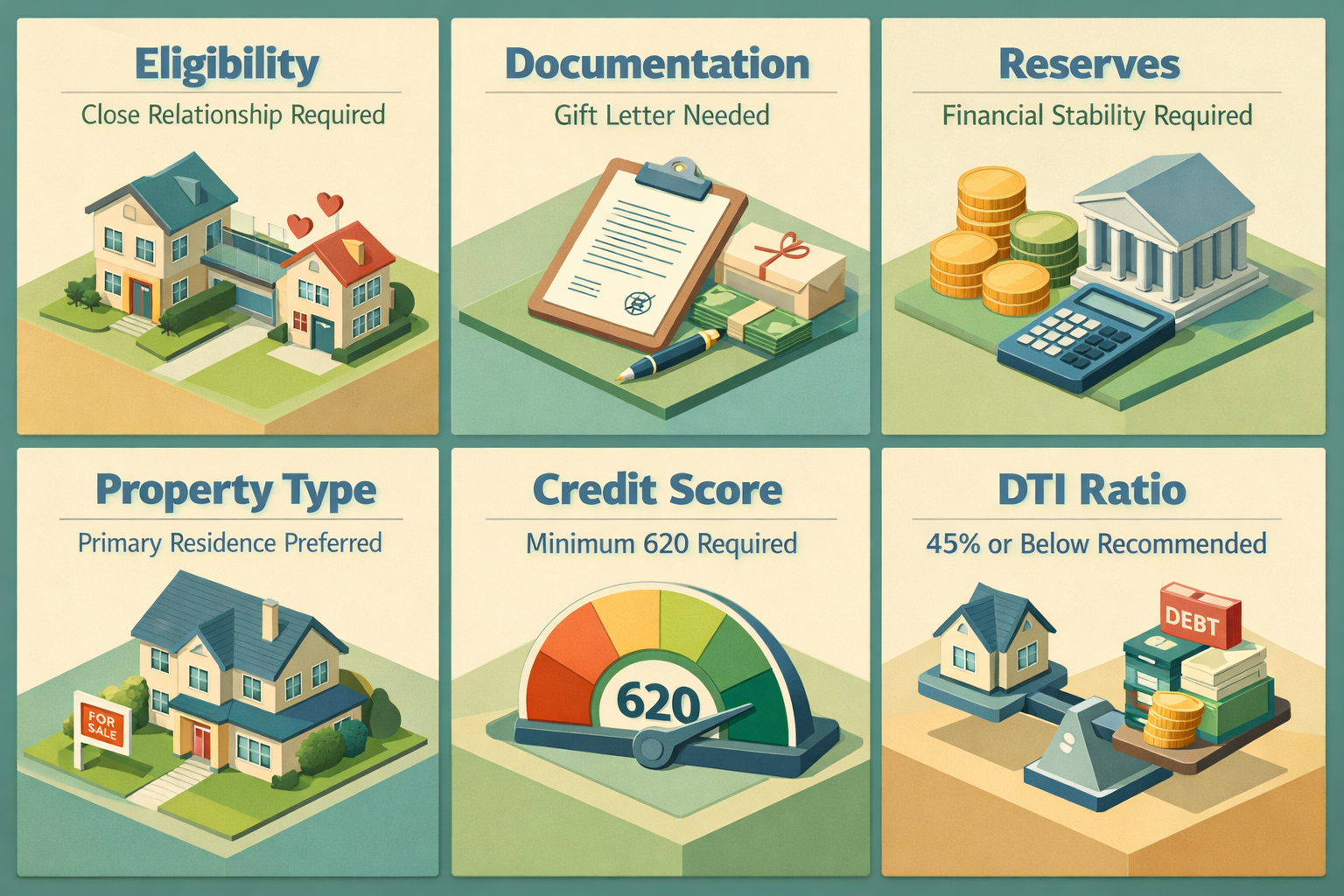
When it comes to the requirements for conventional loan with 10% down payment gifted, the rules can vary slightly depending on the lender and the specific loan program involved — whether it follows Fannie Mae or Freddie Mac guidelines. That said, several key conditions tend to apply across the board.
Property Type Matters
The type of property you're purchasing can affect whether a fully gifted down payment is allowed. For a primary residence, conventional guidelines may permit the entire 10% down payment to come from a gift. For second homes or investment properties, lenders often require that the borrower contribute at least some of their own funds, and gifted funds may not be permitted at all. Always confirm this detail with your lender based on your specific property type.
Credit Score and Debt-to-Income Requirements
Using gift funds doesn't eliminate your personal financial obligations. You'll still need to meet standard conventional loan qualification criteria, which typically include a minimum credit score — often 620 or higher — and a debt-to-income (DTI) ratio within acceptable limits, commonly around 45% or below, though some lenders may allow higher ratios with compensating factors.
Reserves and Residual Assets
Even if your down payment is fully gifted, lenders may still want to see that you have some financial reserves of your own after closing. Reserves are typically measured in months of mortgage payments and demonstrate that you can handle unexpected expenses without defaulting. The reserve requirement can vary by lender, loan amount, and borrower profile.
The Gift Letter: A Non-Negotiable Document
One of the most important documents in the gifted down payment process is the gift letter. This is a written statement signed by the donor that confirms the nature of the funds and that no repayment is expected. Without a valid gift letter, lenders typically cannot accept the funds as a true gift.
A properly formatted gift letter generally includes the following:
- The donor's full name, address, and relationship to the borrower
- The exact dollar amount being gifted
- The address of the property being purchased
- A clear statement that the funds are a gift and not a loan
- The donor's signature and date
Some lenders may also require a statement confirming that the donor has the financial capacity to make the gift without hardship. This could involve providing the donor's bank statement showing the funds were available prior to transfer.
It's important to make sure the gift letter is completed accurately. Incomplete or inconsistent gift letters are a common reason for delays in the underwriting process. Work with your loan officer to use a lender-approved template whenever possible.
Documenting the Money Trail: Source and Transfer of Gift Funds
Beyond the gift letter itself, lenders typically want to verify the movement of money from the donor's account to the borrower's account. This process — often called "sourcing" the funds — helps prevent fraud and confirms that the money didn't originate from an undisclosed loan or third party.
Here's what documentation is commonly required to properly source gifted funds:
- Donor's bank statement showing the funds in their account prior to the transfer
- Wire transfer confirmation or a copy of the check used to transfer funds
- Borrower's bank statement showing the deposit of the gifted amount
Some lenders allow for a simplified documentation process if the gift funds have already been deposited into the borrower's account for a certain period — sometimes called being "seasoned." However, policies on seasoning can vary, so it's wise to confirm this with your lender well in advance of closing.
Cash gifts can be particularly tricky. Handing over physical cash without a documented paper trail may make it difficult to satisfy lender requirements. In most cases, it's strongly recommended that gift funds be transferred electronically or via check to maintain a clear record.
How Gifted Down Payments Affect Your Mortgage Rate and PMI
Using a gifted down payment doesn't automatically change your mortgage interest rate — your rate is primarily driven by your credit score, loan type, loan amount, and current market conditions. However, it's worth understanding how a 10% down payment positions you compared to larger down payment options.
With a 10% down payment on a conventional loan, you'll be borrowing 90% of the home's purchase price. This means you'll have a loan-to-value (LTV) ratio of 90%, which typically triggers the requirement for private mortgage insurance (PMI). PMI protects the lender if you default and is usually required when your down payment is less than 20%.
The good news is that PMI is not permanent. Once you build enough equity in your home — typically reaching an LTV of 80% — you may be able to request cancellation of PMI. This can happen through regular mortgage payments over time, appreciation in your home's value, or a combination of both. Your loan servicer can provide guidance on the specific steps required to eliminate PMI under your loan terms.
It's also worth noting that a higher credit score may help you secure a lower PMI rate, partially offsetting the cost. Shopping around and comparing lenders can make a meaningful difference in the total cost of your loan over time.
Tips for a Smooth Approval When Using Gifted Funds
Meeting the gifted down payment conventional mortgage requirements doesn't have to be stressful. With the right preparation and communication, you can move through underwriting confidently. Here are some practical strategies to help the process go smoothly:
- Start the conversation early. Let your loan officer know upfront that your down payment will be partially or fully gifted. This gives everyone time to prepare the proper documentation without last-minute pressure.
- Transfer funds well before closing. Moving the gifted money into your account as early as possible gives the funds time to settle and appear clearly on your bank statements.
- Use a lender-approved gift letter template. Your loan officer may have a standard template that meets underwriting guidelines, which removes the guesswork.
- Avoid large unrelated deposits. Unexplained deposits in your bank account around the same time as the gift can raise questions during underwriting. Be prepared to explain any large incoming transfers.
- Keep communication clear between donor and borrower. Make sure the donor understands what documents they may be asked to provide, including their bank statements and signed letter.
Working with a knowledgeable mortgage professional who has experience with gifted conventional mortgage requirements can make a significant difference. They can guide both you and your donor through the process step by step, reducing the chance of documentation errors or delays.
●Conclusion
Using a gift to cover your down payment can be a practical and entirely legitimate path to homeownership. When you understand the requirements for conventional loan with 10% down payment gifted funds — from eligible donors and gift letters to sourcing documentation and PMI considerations — you're far better positioned to navigate the process with confidence. Every borrower's situation is unique, so it's always a smart idea to connect with a qualified mortgage advisor who can review your specific circumstances and help you find the best path forward. Whether you're a first-time buyer or moving into a new chapter of homeownership, you don't have to figure it out alone.