
Life doesn't always follow a straight path. Sometimes, a job loss and an unexpected inheritance happen around the same time — leaving you in a financially complex position. You may have enough money for a down payment, but your employment situation raises questions. If you're wondering about the requirements for a conventional loan with 10% down from inheritance after job loss, you're not alone. Many homebuyers face this exact scenario, and the good news is that it may still be possible to qualify — if you understand what lenders are looking for and how to present your financial picture clearly. This guide walks you through what you need to know.
What a Conventional Loan Is and Why 10% Down Matters
A conventional loan is a mortgage that isn't backed by a government agency like the FHA, VA, or USDA. Instead, it follows guidelines set by Fannie Mae and Freddie Mac, the two government-sponsored enterprises that purchase most conventional mortgages from lenders. Because these loans aren't government-insured, lenders typically hold borrowers to stricter qualification standards.
When it comes to conventional loan down payment requirements, putting down at least 10% down is a meaningful threshold. While some conventional loans allow as little as 3% to 5% down, a conventional loan down payment reduces the lender's risk and may open the door to more favorable terms. It also means you'll need private mortgage insurance (PMI), though your PMI costs may be lower than they would be with a smaller down payment. Once you reach 20% equity in the home, you can typically request PMI removal.
For homebuyers using inherited funds to cover this down payment, the 10% figure is achievable — but it's just one piece of the puzzle. Lenders will also evaluate your credit profile, employment history, and ability to repay the loan over time.
How Lenders View Inherited Funds as a Down Payment Source
One of the first things lenders will scrutinize is where your down payment money is coming from. Fortunately, inherited funds are generally considered an acceptable source for a conventional loan down payment. However, lenders won't simply take your word for it — they'll require thorough documentation.
Here's what you'll likely need to provide when using inheritance money:
- Proof of the inheritance: This could include a copy of the will, probate documents, or a letter from the estate attorney confirming you received the funds.
- Bank statements: Lenders typically want to see the deposit of inheritance funds into your account and may require two to three months of bank statements showing the money is now sitting in your account.
- Paper trail of the transfer: If the funds were wired or transferred from an estate account, documentation of that transaction is essential.
- Seasoning period: Some lenders prefer that large deposits have been in your account for at least 60 days before closing. This is known as "seasoning" the funds. If the inheritance was received recently, you may need to explain it in detail.
Unlike gift funds from a living relative, inherited funds are typically treated as your own assets once they've been transferred to you. This is a notable advantage because there's usually no gift letter requirement, though documentation of the source is still necessary.
The Challenge of Job Loss and How It Affects Your Mortgage Eligibility
Here's where things get more complicated. Employment is one of the most critical factors in conventional loan approval. Lenders want to confirm that you have a stable, ongoing income to make your monthly mortgage payments. A recent job loss can raise significant red flags, even if you have a substantial down payment ready.
Conventional loan guidelines generally require that borrowers have a consistent two-year employment history. However, this doesn't necessarily mean you need to be employed for two straight years with the same employer — lenders typically look at the overall pattern of your work history and whether any gaps are explainable and reasonable.
If you've experienced a job loss, consider the following:
- Timing matters: If your job loss is very recent, most conventional lenders will not approve you until you've secured new employment and can show a consistent income stream, often for at least 30 days on the new job (with a pay stub to prove it).
- Nature of the job loss: Lenders may consider whether the loss was a temporary layoff, a company-wide reduction in force, or a resignation. Voluntary job changes or layoffs due to industry downturns are viewed differently.
- Return to work: Borrowers who've returned to work in the same field they left may have an easier time qualifying, since it demonstrates continuity in their career.
- Unemployment income: Unemployment benefits are generally not considered stable qualifying income for conventional mortgages, as they are temporary by nature.
The bottom line is that a down payment from an inheritance is a strong asset, but it doesn't replace the need for verifiable income in most conventional loan scenarios.
Credit Score and Debt-to-Income Ratio Requirements You Should Know
Beyond employment and down payment, two other factors heavily influence whether you'll qualify for a conventional loan: your credit score and your debt-to-income (DTI) ratio.
Credit Score Minimums
For most conventional loans, lenders typically require a minimum credit score of 620. However, a higher score — ideally 700 or above — will give you access to better interest rates and more competitive loan terms. If your credit score dipped during your period of job loss due to missed payments or increased credit card balances, it's worth taking time to rebuild it before applying.
Debt-to-Income Ratio
Your DTI ratio compares your monthly debt obligations to your gross monthly income. For conventional loans, lenders generally prefer a DTI ratio of 45% or lower, though some automated underwriting systems may approve DTIs up to 50% under certain conditions.
If you're currently without employment income, your DTI could be difficult to calculate in a favorable way — even with low existing debts. This is another reason why securing a new job before applying may strengthen your position considerably.
If you have other sources of income — such as investment dividends, rental income, or Social Security — these may be used to supplement your qualifying income. Be prepared to document any and all income sources carefully.
Meeting the Full Requirements for Conventional Loan with 10% Down from Inheritance After Job Loss
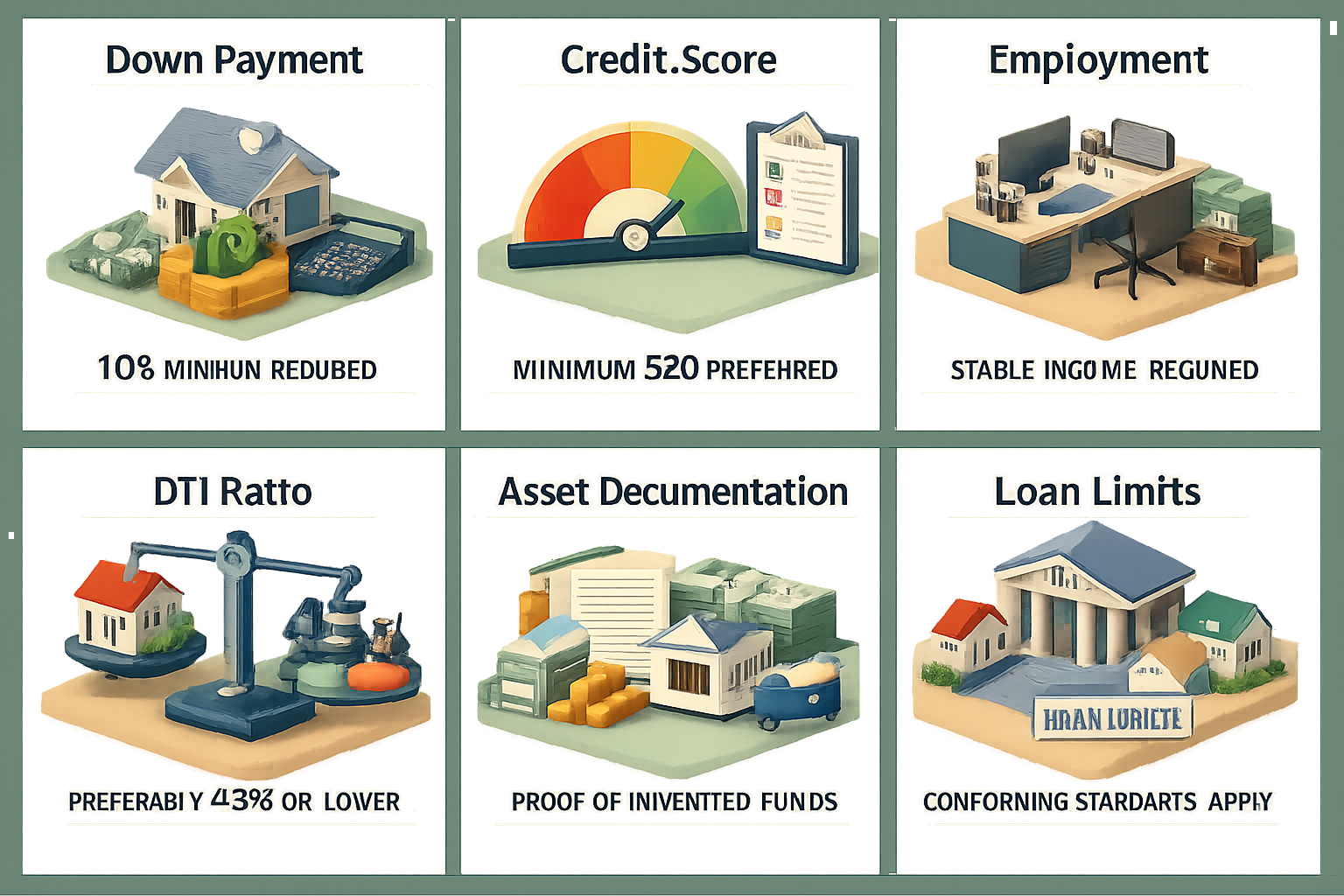
Understanding the requirements for a conventional loan with 10% down from inheritance after job loss means looking at the full picture — not just the down payment. Here's a consolidated checklist of what lenders will typically evaluate:
- Down payment: At least 10% of the purchase price, sourced and documented from the inheritance.
- Credit score: A minimum of 620, though higher scores improve your approval odds and loan terms.
- Employment and income: Verifiable, stable income at the time of application. This is often the biggest hurdle after a job loss.
- Debt-to-income ratio: Generally 45% or below based on your current qualifying income.
- Asset documentation: Full documentation of inherited funds, including sourcing, deposit records, and account statements.
- Loan limits: The loan amount must fall within conforming loan limits set annually by the Federal Housing Finance Agency (FHFA).
- Property requirements: The home must meet conventional appraisal standards and be the primary residence, second home, or investment property as disclosed on your application.
Meeting all of these requirements simultaneously can be challenging when you're between jobs. However, it's not impossible — especially if you act strategically and time your application after returning to work.
Practical Steps to Strengthen Your Application Before You Apply
If you've recently experienced a job loss and are planning to use inherited funds for a home purchase, there are several proactive steps you can take to improve your chances of approval when the time comes.
Secure New Employment First
This is likely the most important step. Most conventional lenders will want to see that you're back to work before they'll approve your application. Even 30 to 60 days of stable employment in a similar role or industry can make a meaningful difference. Keep your pay stubs, offer letter, and any employment verification documents organized and ready.
Season Your Inherited Funds
If possible, allow the inherited funds to sit in your bank account for at least 60 days before applying. This seasoning period simplifies the underwriting process and reduces the questions a lender may have about the source of your down payment.
Review and Repair Your Credit
Check your credit reports from all three bureaus for any errors or derogatory marks that may have appeared during your job loss. Dispute inaccuracies and work to pay down any balances that may have accumulated. Even modest improvements in your credit score could help you qualify for a better interest rate.
Reduce Your Monthly Debts
If you have outstanding credit card balances, auto loans, or personal loans, consider using a portion of your inheritance (beyond the down payment) to pay these down. A lower DTI ratio makes you a more attractive borrower — just be careful not to deplete reserves needed for closing costs or post-purchase emergencies.
Consult a Mortgage Professional Early
Speaking with a licensed mortgage advisor before you begin the formal application process can save you significant time and frustration. A knowledgeable lender can review your specific situation, help you understand what documentation you'll need, and advise on the best timing for your application.
Alternative Loan Options to Consider If You Don't Yet Qualify
If you're not quite ready to meet conventional loan standards, there may be other paths worth exploring in the meantime.
FHA Loans
FHA loans, backed by the Federal Housing Administration, often have more flexible credit and income requirements than conventional loans. They allow down payments as low as 3.5% and may be more forgiving of recent employment gaps. However, they do require mortgage insurance premiums for the life of the loan in most cases, which adds to your overall cost.
Non-QM or Bank Statement Loans
Non-qualified mortgage (Non-QM) products are designed for borrowers who don't fit traditional income verification molds. Some lenders offer asset-depletion loans, where your total assets — including inherited funds — are used to calculate a hypothetical income stream for qualifying purposes. This could be particularly relevant if you have a large inheritance but limited current income.
Waiting and Saving
Sometimes the most strategic option is patience. Waiting until you've been steadily employed for six months to a year, your inherited funds are fully seasoned, and your credit is in top shape could dramatically improve both your approval odds and the loan terms you're offered.
It's also worth noting that using more of your inheritance for a larger down payment — moving toward 20% — could eliminate the PMI requirement and reduce your monthly payment, making the overall loan more manageable even if your new income is somewhat lower than before your job loss.
●Conclusion
Navigating the requirements for a conventional loan with 10% down from inheritance after job loss requires careful planning and realistic expectations. A sizable down payment from an inheritance is a meaningful advantage, but it works best alongside stable employment, a solid credit profile, and a well-documented loan file. The good news is that with the right timing and preparation, homeownership may well be within your reach. At LoanWise, we're here to help you understand your options and connect with the financing solutions that fit your unique situation. Reach out to a mortgage specialist today and take the first step toward your new home with confidence.