Freelancing in software development offers incredible freedom, but it also comes with financial uncertainty. Income can be irregular, clients come and go, and expenses often spike before payments arrive. That's where a business line of credit can make a real difference. Unlike a traditional term loan, a line of credit gives you flexible access to funds you can draw from and repay as needed — making it a powerful tool for managing cash flow. But understanding the requirements for business line of credit for a freelance software developer can feel overwhelming, especially when your income doesn't fit into a neat salary box. This guide walks you through what lenders typically look for, what documents you'll need, and how to put your best foot forward.
Why Freelance Software Developers Benefit From a Business Line of Credit
A business line of credit works similarly to a credit card, but it's designed specifically for business expenses. You're approved for a maximum credit limit, and you only pay interest on what you actually use. For freelance developers, this flexibility is especially valuable.
Consider a common scenario: you land a major contract that requires you to upgrade your development tools, purchase software licenses, or hire a subcontractor. The project may not pay out for 60 to 90 days, but your expenses are due now. A line of credit bridges that gap without forcing you to dip into personal savings or take on high-interest debt.
Beyond bridging cash flow gaps, a freelancer business loan or line of credit can also help you invest in growth — whether that means attending a tech conference, upgrading your home office setup, or marketing your services. It gives your freelance business the working capital cushion it needs to operate confidently.
- Flexible draws: Borrow only what you need, when you need it.
- Revolving access: Repay and reuse the credit line as your business demands change.
- Cash flow management: Cover expenses during slow periods or between client payments.
- Business growth: Fund tools, training, or subcontractors without depleting savings.
Core Requirements for Business Line of Credit for a Freelance Software Developer
Meeting the requirements for business line of credit for a freelance software developer typically involves demonstrating financial stability and creditworthiness, even when your income is project-based. Lenders want to feel confident that you can repay what you borrow. Here's what they commonly evaluate.
Personal and Business Credit Scores
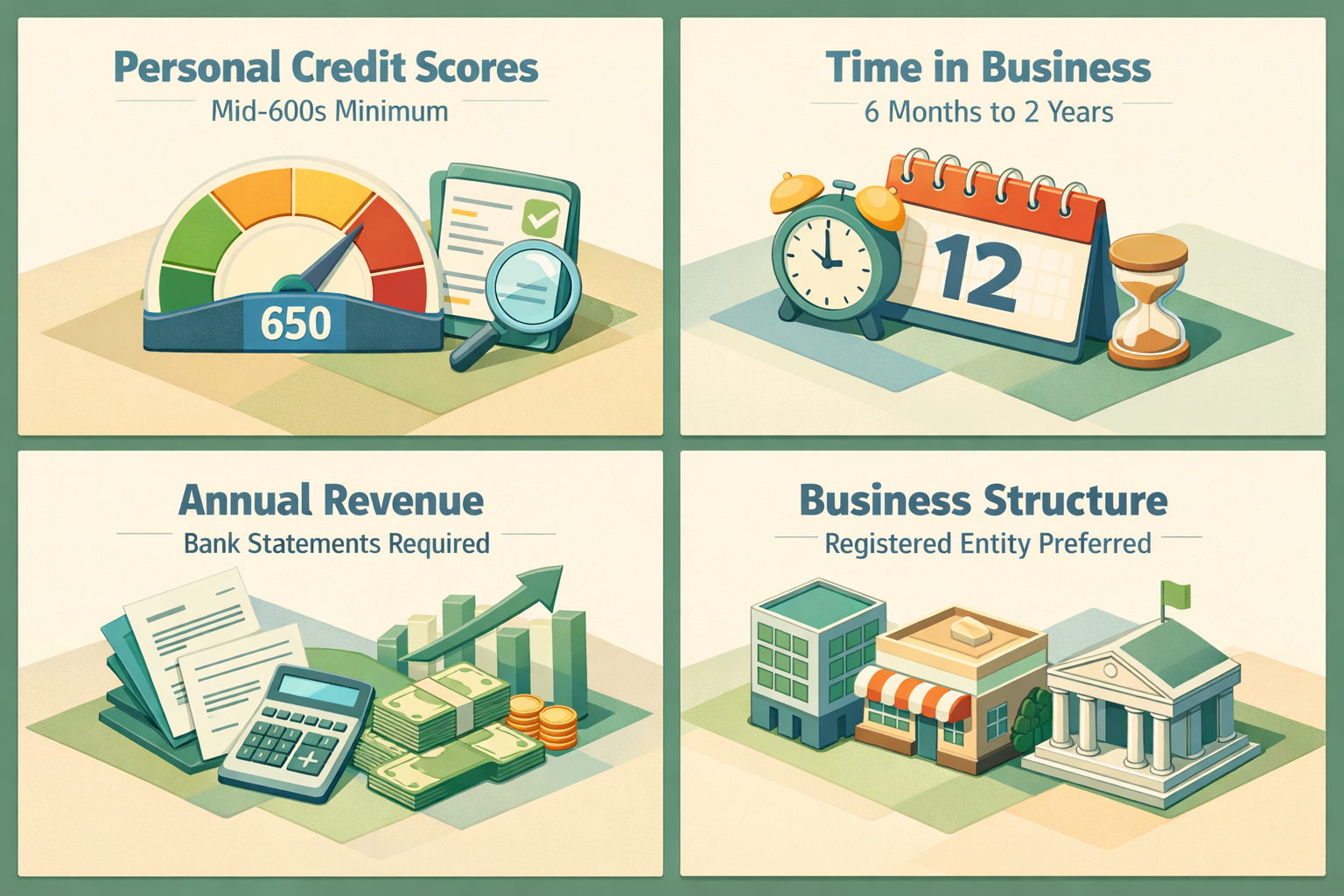
Your credit score is often the first filter lenders apply. Many traditional banks may look for a personal credit score in the mid-600s or higher, while online lenders may work with scores slightly lower. If you've established a business entity — such as an LLC — lenders may also check your business credit profile. Building a strong business credit history early can expand your financing options over time.
Time in Business
Most lenders prefer to see at least six months to two years of business operation history. For freelance software developers who've been working independently for a few years, this is typically not a barrier. However, newer freelancers — those just transitioning from traditional employment — may find their options more limited initially. In those cases, startup-friendly lenders or fintech platforms might be worth exploring.
Annual Revenue and Income Documentation
Since freelancers don't receive W-2s, lenders rely heavily on bank statements, tax returns, and profit and loss statements to verify income. Most lenders want to see consistent revenue streams, even if they fluctuate month to month. Some may ask for six to twelve months of bank statements to get a clear picture of your cash flow patterns. As a freelance developer, documenting your income thoroughly is one of the most important steps you can take before applying.
Business Structure and Registration
Operating as a sole proprietor is possible, but having a registered business entity such as an LLC or S-Corp can strengthen your application. It signals to lenders that you're running a legitimate, organized business. Some lenders may also require an Employer Identification Number (EIN), a business bank account, and proof of business registration.
Documents You'll Likely Need to Prepare
Gathering the right paperwork in advance can make your application process much smoother. While requirements vary by lender, here's what most will typically request from freelance software developers seeking a business line of credit.
- Personal tax returns: Usually two years of filed returns to verify your total income.
- Business bank statements: Typically three to twelve months of statements showing regular cash flow.
- Profit and loss statement: A current P&L that reflects your business income and expenses.
- Business license or registration documents: Proof that your business is legally established.
- Government-issued ID: A valid driver's license or passport for identity verification.
- EIN or Social Security Number: Depending on your business structure.
- Client contracts or invoices: Some lenders appreciate seeing active contracts as evidence of ongoing revenue.
Organizing these documents before you apply shows lenders that you're prepared and professional. It may also speed up the underwriting process significantly.
How Lenders Evaluate Tech Startup Working Capital Needs
For freelance developers who are growing their operations into something closer to a small tech business, lenders may evaluate your application with a tech startup working capital lens. This means they're not just looking at today's revenue — they're also considering the scalability of your business model and the consistency of your client base.
Lenders often want to understand your revenue concentration. If 80% of your income comes from a single client, that may raise a flag because losing that client could disrupt your ability to repay. Diversifying your client portfolio before applying can strengthen your profile considerably.
Underwriters may also consider your industry. Software development is generally viewed as a stable and growing sector, which could work in your favor. The demand for skilled developers remains strong, and lenders tend to view tech-related freelance businesses as lower risk compared to industries with more volatile demand cycles.
Some lenders also factor in the nature of your contracts. Long-term retainer agreements or multi-month project contracts may be viewed more favorably than one-off gig work, as they suggest more predictable future income.
Types of Lenders to Consider as a Freelance Developer
Not all lenders approach freelance applicants the same way. Understanding your options helps you find the best fit for your business profile and financial needs.
Traditional Banks and Credit Unions
Traditional financial institutions often offer competitive interest rates and longer repayment terms. However, they typically have stricter qualification requirements. If you have strong credit, several years of documented income, and a registered business entity, a bank or credit union could offer you excellent terms. The tradeoff is that the application process may take longer and require more documentation.
Online Lenders and Fintech Platforms
Online lenders have become increasingly popular among freelancers because they tend to move faster and may have more flexible qualification criteria. Some use alternative data — such as payment history, bank account activity, and invoice volume — to make lending decisions. This can benefit freelancers who have solid cash flow but limited credit history. Keep in mind that faster access often comes with higher interest rates, so it's worth comparing your options carefully.
Credit Unions for Small Business Members
If you're already a credit union member, it may be worth asking about their small business credit products. Credit unions are member-owned, which can sometimes mean more personalized service and a greater willingness to work with non-traditional income earners like freelancers.
SBA-Backed Programs
The U.S. Small Business Administration (SBA) offers loan programs designed to support small businesses, including those operated by self-employed individuals. While SBA lines of credit can come with more paperwork, they're backed by the government, which may make lenders more willing to approve applicants who might not qualify for conventional products. SBA microloans, in particular, may be a good starting point for newer freelance developers.
Tips to Strengthen Your Application Before You Apply
If you're not quite ready to apply today, there are several practical steps you can take to improve your chances of approval and potentially qualify for better terms.
- Build your business credit: Open a business credit card, use it responsibly, and pay it off monthly. Over time, this creates a positive business credit history separate from your personal credit.
- Separate your finances: Open a dedicated business bank account if you haven't already. Mixing personal and business finances makes it harder for lenders to assess your business cash flow clearly.
- File taxes consistently: Lenders heavily rely on tax returns. Filing on time, every year, and reporting your freelance income accurately demonstrates financial responsibility.
- Reduce existing debt: A lower debt-to-income ratio signals to lenders that you're not overextended, making you a more attractive borrower.
- Diversify your client base: Having multiple clients rather than relying on one reduces income concentration risk in a lender's eyes.
- Keep detailed records: Use accounting software to track income and expenses consistently. Clean financials make the application process faster and more straightforward.
Taking these steps even six to twelve months before applying could meaningfully change the outcome of your application. Lenders respond well to preparation and consistency.
●Conclusion
Navigating the requirements for business line of credit for a freelance software developer might seem complex at first, but it becomes much more manageable when you understand what lenders are actually looking for. Strong credit, consistent income documentation, a registered business entity, and a diversified client base are the pillars of a compelling application. Whether you're exploring a traditional bank, an online lender, or an SBA-backed program, preparation is your greatest advantage. At LoanWise, we're here to help small business owners and entrepreneurs like you explore financing options that fit your unique situation. If you're ready to take the next step, connect with one of our lending specialists today and find out what working capital solutions might be available for your freelance business.