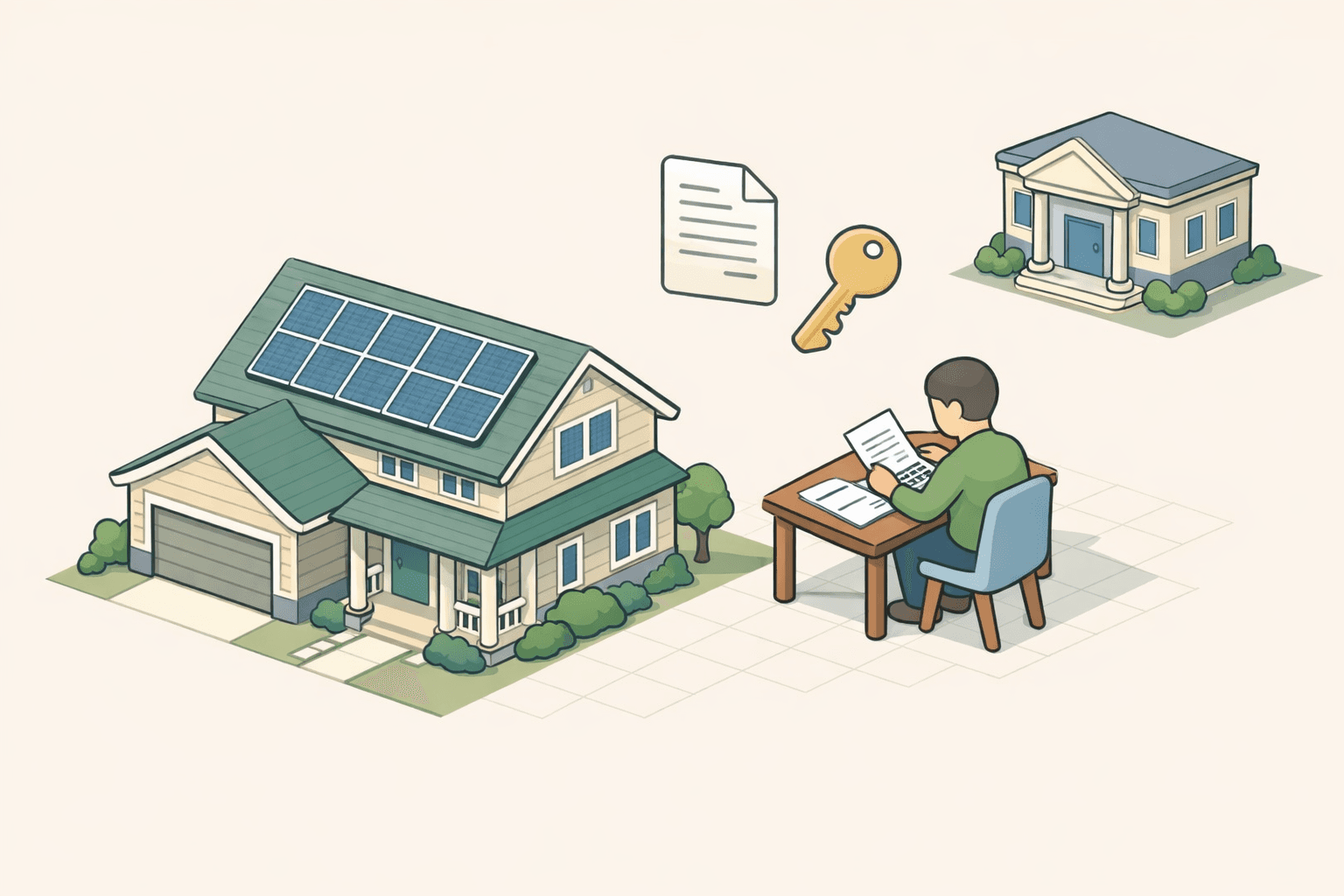
Home equity lines of credit — commonly known as HELOCs — give homeowners a flexible way to borrow against the value they've built in their property. But if your home has leased solar panels installed, the path to approval can get a bit more complicated. Lenders treat leased solar equipment differently than owned systems, and understanding those distinctions is essential before you apply. This guide walks through the requirements for a HELOC on a property with solar panel lease agreement, so you can move forward with confidence and avoid costly surprises along the way.
What Is a HELOC and How Does Home Equity Factor In
A HELOC is a revolving line of credit secured by your home. Lenders extend this type of financing based on a percentage of your home's appraised value, minus any outstanding mortgage balance. That difference — your available equity — forms the borrowing foundation. Most lenders allow homeowners to access somewhere between 80% and 85% of their combined loan-to-value ratio, though this can vary by lender and loan program.
For example, if your home is appraised at $400,000 and you owe $250,000 on your first mortgage, you may have a meaningful amount of home equity to draw from. However, anything that affects how your home is appraised — or how clear your title is — can directly influence what you're able to borrow. This is precisely where solar panel lease agreements enter the picture.
Unlike a home equity loan that delivers a lump sum, a HELOC functions more like a credit card with a draw period and a repayment period. During the draw period, you can borrow, repay, and borrow again as needed. This flexibility makes HELOCs popular for home renovations, debt consolidation, and major life expenses — but only when lender conditions are fully met.
How a Solar Panel Lease Agreement Differs from Ownership
When solar panels are owned outright or financed through a standard loan, they're typically considered a permanent improvement to the property. That can potentially add to the home's appraised value and generally doesn't create complications for secured lending.
A solar lease agreement, however, is a different arrangement entirely. In a solar lease, a third-party company — the solar provider — retains ownership of the panels installed on your roof. You, the homeowner, are essentially renting the equipment in exchange for reduced electricity costs. While this can be a financially sensible choice for energy savings, it introduces a layer of legal and financial complexity that mortgage lenders take seriously.
Because the panels are owned by a third party, lenders must evaluate whether the lease creates any liens, encumbrances, or priority claims on the property. Some solar leases are recorded as Uniform Commercial Code (UCC) filings or even as liens on the title, which can raise red flags during the underwriting process for any secured loan, including a HELOC.
Understanding this distinction is the first step toward preparing for the requirements for a HELOC on a property with solar panel lease agreement.
Title and Lien Considerations That Lenders Examine Closely
One of the most critical areas lenders review when evaluating solar lease HELOC eligibility is the property's title. A clean title — free from competing claims or priority encumbrances — is generally required for a HELOC to be approved and properly secured.
Solar lease agreements may sometimes be recorded against the property's title to protect the solar company's ownership interest in its equipment. If a UCC-1 financing statement or fixture filing has been recorded, it signals to the HELOC lender that another party has a legal interest tied to the property. Depending on how the filing is structured, this could complicate the lender's lien position or create ambiguity about what collateral they're actually securing.
Most HELOC lenders require a subordination agreement or a clarification letter from the solar company confirming that the solar equipment is personal property — not a fixture permanently attached to the real estate — and that its lease does not supersede or cloud the lender's security interest.
- UCC fixture filings: These may appear in title searches and need to be addressed before closing.
- Subordination agreements: The solar company may need to formally agree that its interest is subordinate to the HELOC lender's lien.
- Lease assumption clauses: Some solar leases require new owners or lienholders to acknowledge and accept the lease terms, which lenders may scrutinize carefully.
Working with a title company experienced in solar-encumbered properties can be a valuable step in this process.
Core Borrower Qualifications for Solar Lease HELOC Eligibility
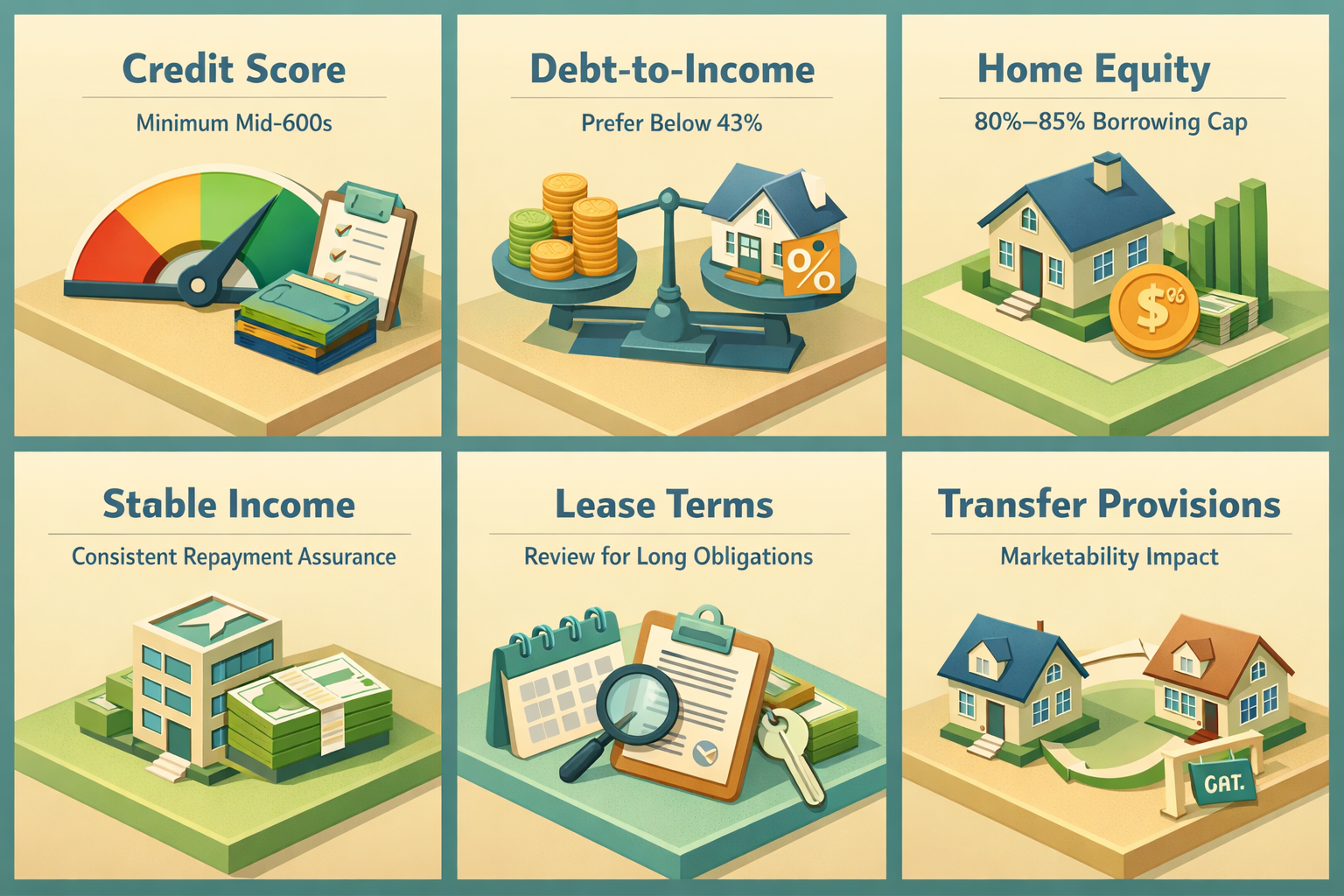
Beyond the title and lease-related issues, lenders will still evaluate you as a borrower using the same fundamental criteria applied to any HELOC application. Meeting these baseline requirements is necessary regardless of the solar lease complication.
Credit Score Requirements
Most lenders look for a minimum credit score in the mid-600s to qualify for a HELOC, though competitive rates and higher credit limits are typically reserved for borrowers with scores in the 700s or above. If your credit profile has some blemishes, it may be worth taking steps to improve your score before applying, especially since solar lease issues can already add friction to the process.
Debt-to-Income Ratio
Your debt-to-income (DTI) ratio measures how much of your monthly gross income goes toward debt payments. Lenders generally prefer a DTI at or below 43%, though some may allow higher ratios depending on compensating factors such as strong reserves or a long credit history. Your monthly solar lease payment may also be factored into this calculation, so it's worth asking your lender how they intend to treat it.
Sufficient Home Equity
As mentioned earlier, most lenders cap total borrowing at around 80%–85% of your home's combined loan-to-value. If leased solar panels don't contribute to your appraised value — and in some cases they may not, depending on appraiser methodology — your available equity could be somewhat lower than you expect.
Stable Income and Employment
Lenders want assurance that you can repay what you borrow. Consistent income, whether from employment, self-employment, or other verifiable sources, supports your application and helps demonstrate repayment capacity.
What the Solar Lease Agreement Itself Must Typically Include
Lenders may request a full copy of your solar lease agreement during underwriting. They'll review the document carefully for specific terms that could affect their lending decision. While lender requirements vary, several common elements tend to come under scrutiny.
- Lease term length: A very long-term lease — sometimes 20 to 25 years — may raise concerns, particularly if the remaining term extends well beyond the HELOC draw period. Lenders want to understand the long-term obligations attached to the property.
- Transfer and assumption provisions: Does the lease allow it to be transferred if the home is sold? Is a new buyer or lienholder required to assume the lease? These clauses affect the marketability of the property and thus the lender's collateral position.
- Default and removal clauses: What happens if you stop making lease payments? Can the solar company remove the equipment and potentially damage the roof or structure? Lenders may view removal risks as a potential threat to the property's condition and value.
- Escalation clauses: Some solar leases include annual payment increases. Lenders may want to understand if your financial obligations could grow significantly over time.
Having a clean, clearly written lease that addresses these points — and ideally includes a statement that the panels are personal property — can make a meaningful difference in how smoothly your HELOC application moves through underwriting.
Steps Homeowners Can Take to Strengthen Their Application
If you have a solar lease and want to pursue a HELOC, being proactive goes a long way. Here are practical steps that may help improve your chances of approval.
Contact Your Solar Provider Early
Reach out to your solar company before you formally apply. Ask whether they have a standard subordination agreement or personal property letter they provide to lenders. Many established solar companies deal with these requests routinely and can supply documentation quickly.
Order a Title Search in Advance
Understanding what's recorded against your property before a lender orders their own title search gives you time to address any issues. If a UCC filing or fixture lien appears, you can work to resolve or clarify it ahead of time.
Choose a Lender Familiar with Solar Leases
Not all lenders are equally experienced with solar-encumbered properties. Seeking out a lender or mortgage broker who has worked with solar lease situations before can reduce friction. They're more likely to know which documentation to request and how to structure the file for approval.
Review Your Lease Agreement Carefully
Read your solar lease thoroughly, or have a real estate attorney review it. Understanding your own obligations and the solar company's rights will help you answer lender questions accurately and identify any terms that may need to be clarified or renegotiated.
Improve Your Financial Profile
Since the solar lease adds complexity to your file, having strong credit, low debt, and solid equity may help offset lender concerns. Think of your financial strength as a compensating factor that makes it easier for underwriters to approve the loan despite the added documentation requirements.
●Conclusion
Navigating the requirements for a HELOC on a property with solar panel lease agreement takes more preparation than a standard application, but it's absolutely achievable. The key is understanding how your solar lease affects title, collateral, and lender risk — and then addressing those concerns proactively with the right documentation, the right lender, and a strong personal financial profile. Solar lease HELOC eligibility isn't guaranteed, but with the right approach, many homeowners successfully access their equity even with a lease in place. At LoanWise, we're here to help you understand your options and find lenders who are experienced with exactly these kinds of situations. Ready to explore your home equity potential? Connect with a LoanWise advisor today.