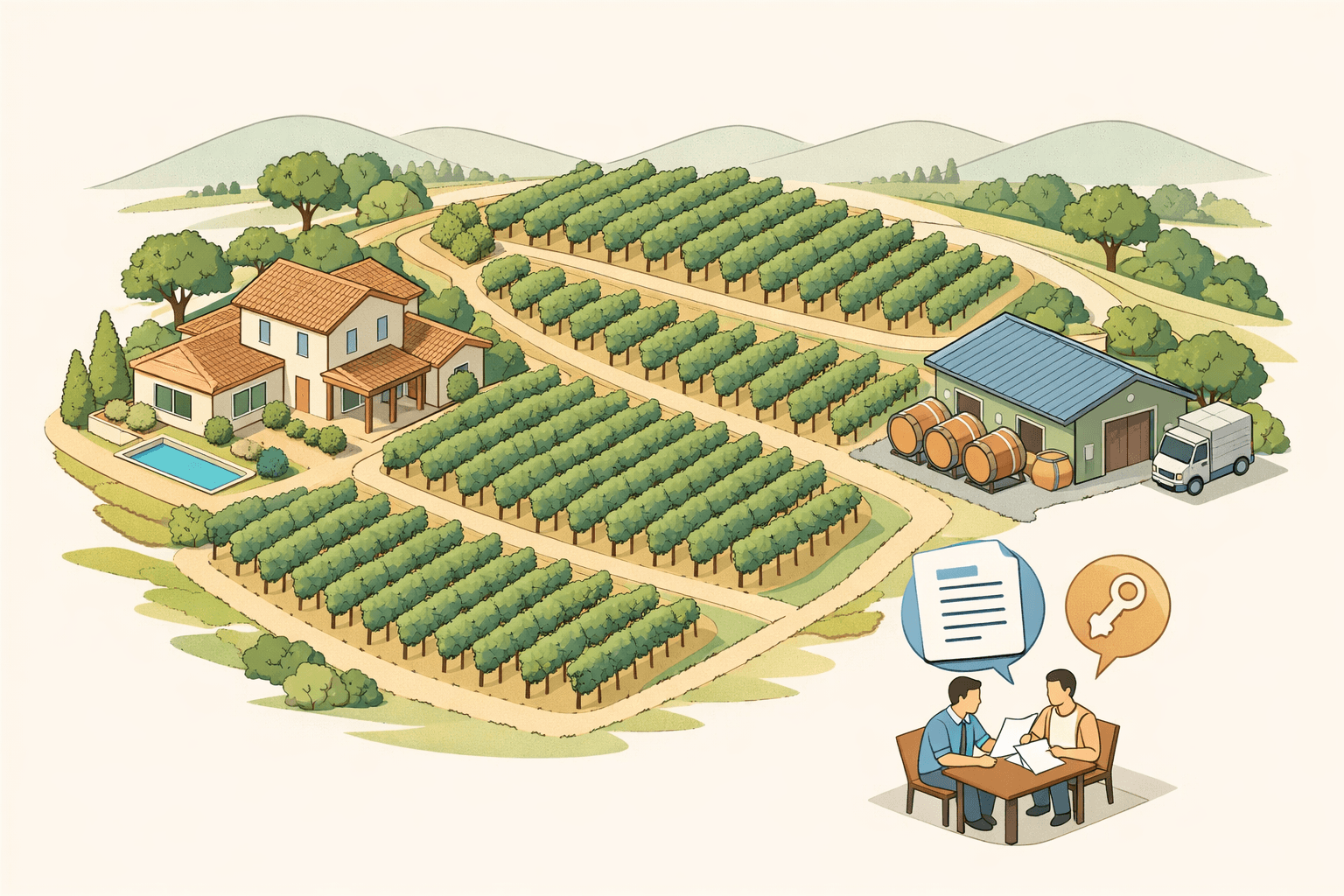
Owning a property that doubles as a commercial vineyard is a remarkable achievement — but when it comes to borrowing against that equity, things can get complicated quickly. A Home Equity Line of Credit, or HELOC, lets property owners tap into the equity they've built over time. However, the requirements for a HELOC on a property with a commercial vineyard differ significantly from what a standard residential homeowner might encounter. Lenders view agricultural properties with income-generating operations as a unique risk, and that means the approval process involves more scrutiny, more documentation, and sometimes more creative financing strategies. If you're a vineyard owner considering this route, understanding the landscape ahead of time can make all the difference.
Why Vineyard Properties Complicate HELOC Eligibility
Most HELOCs are designed with residential properties in mind — single-family homes, condos, or small multi-family units. When a property includes a working commercial vineyard, lenders must evaluate it through a very different lens. The presence of agricultural operations, wine production infrastructure, and business-use acreage raises questions about how the property should be classified: Is it residential? Agricultural? Commercial? Mixed-use?
This classification challenge matters because most conventional HELOC lenders operate within guidelines set by entities like Fannie Mae and Freddie Mac, which typically limit financing to properties that are primarily residential in nature. A vineyard estate where the majority of the land is used for commercial grape growing may fall outside those guidelines entirely.
Additionally, properties that generate business income introduce income variability and operational risk that standard home equity underwriting isn't built to assess. Lenders may worry about what happens to the property's value — and their collateral — if the vineyard operation struggles financially. This concern often leads to tighter requirements, lower loan-to-value ratios, and a preference for portfolio lenders or specialty agricultural financing institutions rather than traditional banks.
How Lenders Assess Value on Agricultural Property HELOCs
One of the first hurdles in meeting the requirements for a HELOC on a property with a commercial vineyard is the appraisal process. Vineyard properties are notoriously difficult to appraise because their value is tied to multiple factors: the land itself, the improvements and structures, the vineyard plantings, and sometimes the brand or reputation of the wine operation.
Standard residential appraisers may not have the expertise to accurately value a commercial vineyard. Lenders will typically require a licensed appraiser with agricultural or specialty property experience. This type of appraisal could consider comparable vineyard sales in the region, income-based valuation methods that factor in grape yields and wine production revenue, and the contributory value of equipment, irrigation systems, and tasting room facilities.
Because comparable sales for vineyard estates can be limited — especially in niche wine-growing regions — appraisers may have a wider margin of uncertainty in their valuations. This uncertainty can lead lenders to apply more conservative loan-to-value (LTV) ratios. While a standard residential HELOC might allow up to 85% combined LTV, a vineyard property HELOC might be capped at 65% to 75% or lower, depending on the lender's risk appetite and the property's complexity.
- Residential structures: Evaluated similarly to standard homes
- Vineyard land and plantings: May require income or yield-based valuation
- Commercial improvements: Assessed for contributory value to the whole property
- Equipment and infrastructure: May or may not be included in real property value
Credit, Income, and Debt Qualification Standards for Vineyard Owners
Beyond the property itself, lenders will scrutinize the borrower's financial profile closely. For vineyard owners, this often means navigating the same challenges that self-employed borrowers and small business owners face when applying for any type of financing.
Credit Score Requirements
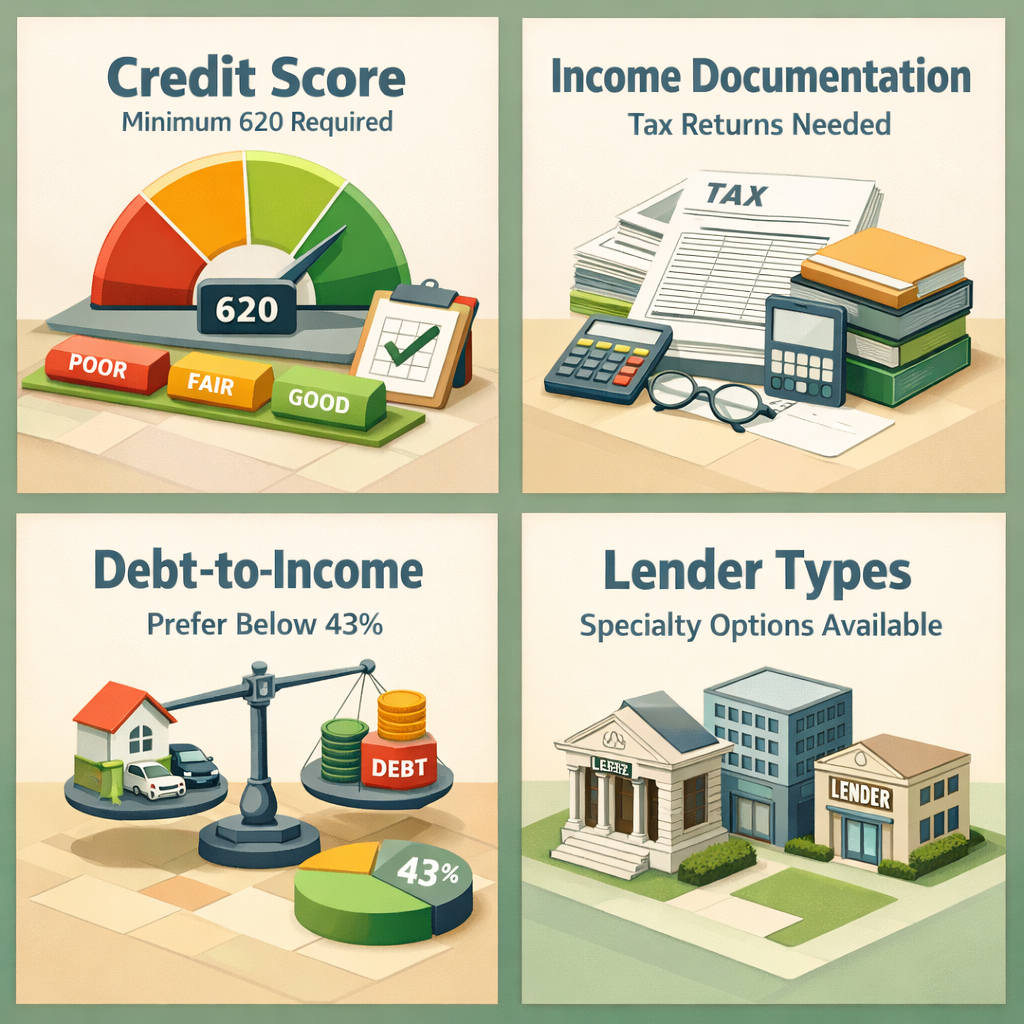
Most lenders require a minimum credit score of 620 to qualify for a HELOC, though competitive rates and higher credit limits are typically reserved for borrowers with scores above 700. For specialty or portfolio lenders handling agricultural property HELOCs, the threshold may be even higher given the added complexity of the collateral.
Documenting Income from a Vineyard Operation
If your primary income comes from the vineyard or a related wine business, expect to provide two or more years of personal and business tax returns. Lenders want to see stable, consistent income — but vineyard revenue can fluctuate significantly based on harvest quality, weather, and market demand. If your business shows heavy deductions that reduce your taxable income on paper, that same income may not qualify in full for HELOC purposes.
Some lenders may use bank statement programs or asset-based underwriting to better reflect a vineyard owner's actual cash flow. These non-QM (non-qualified mortgage) approaches can be particularly helpful when traditional income documentation doesn't tell the full story. Working with a lender experienced in agricultural property HELOC financing or self-employed borrower programs may open up more flexible paths to approval.
Debt-to-Income Ratio Considerations
Lenders generally prefer a debt-to-income (DTI) ratio below 43%, though some portfolio lenders may accept higher ratios depending on overall borrower strength. If your vineyard carries business debt — equipment loans, operating lines of credit, or commercial mortgages — those obligations will factor into your DTI calculation and could impact how much you're able to borrow.
Finding the Right Lender for a HELOC on a Commercial Vineyard
Not every lender has the appetite or the infrastructure to handle vineyard financing. Major national banks and credit unions that focus on conventional residential lending may decline these applications outright or offer very limited terms. The good news is that there are lenders who specialize in exactly this type of scenario.
Portfolio Lenders and Agricultural Banks
Portfolio lenders hold loans on their own books rather than selling them to the secondary market, which means they can set their own underwriting guidelines. Agricultural banks and Farm Credit institutions are well-versed in the nuances of farm and vineyard financing and may be more willing to structure a business asset HELOC or a blended agricultural credit facility that meets your needs.
Farm Credit System
The Farm Credit System is a government-sponsored network of lending cooperatives that serves agricultural borrowers across the United States. These institutions often offer land equity loans, operating lines of credit, and other products that function similarly to HELOCs for qualifying agricultural properties. If your vineyard qualifies, this could be a strong alternative or complement to traditional HELOC financing.
Specialty and Non-QM Lenders
Specialty mortgage lenders that focus on non-QM and jumbo products may also have programs for mixed-use and agricultural estates. These lenders tend to evaluate the full financial picture of the borrower and property rather than relying solely on standardized guidelines. Rates may be slightly higher than conventional options, but the flexibility in underwriting can be well worth it for complex vineyard properties.
Key Documents You'll Need to Apply
Preparing a thorough application package ahead of time can significantly speed up the approval process and demonstrate to lenders that you're a well-organized borrower. For vineyard HELOC applications, expect to gather more documentation than a typical home equity applicant would.
- Personal tax returns: Typically two to three years, including all schedules
- Business tax returns: For the vineyard operation and any related entities
- Profit and loss statements: Year-to-date figures prepared by a CPA
- Bank statements: Personal and business accounts, often 12 to 24 months
- Existing mortgage statements: For all liens on the property
- Property deed and legal description: Particularly important for large acreage parcels
- Agricultural lease agreements: If any portion of the land is leased to another operator
- Crop insurance and production records: May be requested to assess vineyard viability
- Business licenses and permits: Including any winery or alcohol production licenses
Having these documents organized and readily available not only speeds up processing but also signals to underwriters that your operation is professionally managed — a factor that can quietly work in your favor during the review process.
Practical Strategies to Strengthen Your HELOC Application
Even if your vineyard property doesn't fit neatly into a lender's standard box, there are steps you can take to improve your chances of approval and secure better terms.
Separate Your Residential and Commercial Components
If possible, work with a real estate attorney or land surveyor to clearly delineate the residential portion of your property from the commercial vineyard acreage. Some lenders may be willing to extend a HELOC against the residential parcel alone, treating it more like a standard home equity product. This approach may limit how much equity you can access, but it could open doors with lenders who wouldn't otherwise consider the full property.
Reduce Existing Debt Before Applying
Paying down business debt or consolidating operating lines of credit before applying can improve your DTI ratio and make the application more competitive. Even modest reductions in outstanding balances can have a meaningful impact on how lenders assess your creditworthiness.
Work with an Experienced Mortgage Broker
A mortgage broker who has experience placing loans on agricultural or specialty properties can be invaluable. They'll know which lenders are actively working in this space, what their specific requirements look like, and how to present your application in the most favorable light. This can save significant time and reduce the number of hard credit inquiries on your report from shopping around independently.
Consider Alternative Equity Products
If a traditional HELOC proves difficult to secure, a home equity loan (a lump-sum second mortgage), a cash-out refinance, or an agricultural operating line of credit may serve similar purposes. Each carries its own trade-offs in terms of rate structure, repayment terms, and flexibility, so it's worth comparing options carefully before committing.
●Conclusion
Navigating the requirements for a HELOC on a property with a commercial vineyard is undeniably more complex than applying for a standard home equity line — but it's far from impossible. The key is understanding how lenders evaluate mixed-use agricultural properties, preparing thorough documentation, and finding the right lending partner with experience in this niche. Whether you're looking to fund vineyard expansion, equipment upgrades, or other business goals, tapping into your property's equity could be a smart and strategic move. At LoanWise, we're here to help you explore your options and connect with lenders who understand the unique value of what you've built. Reach out today to get started on your path to financing.