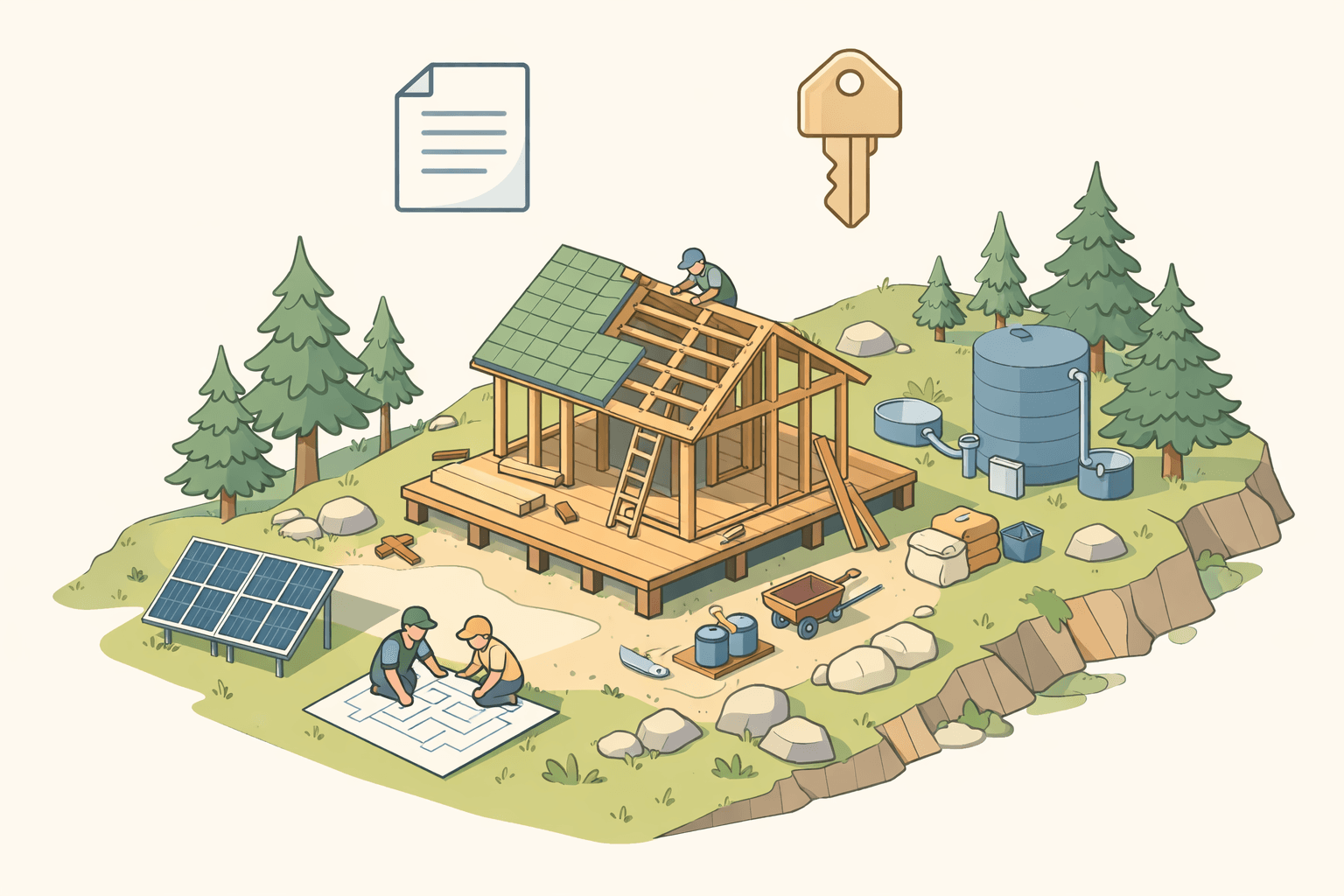
Building a home far from city infrastructure is an exciting goal for many homebuyers and real estate investors. Whether you're dreaming of a solar-powered cabin in the mountains or a self-sufficient homestead on rural acreage, financing the project comes with a unique set of challenges. Understanding the requirements for a construction loan on a remote off-grid property is the first step toward turning that vision into a real, livable home. This guide breaks down what lenders typically look for, what makes off-grid projects more complex to finance, and how you can prepare to strengthen your application.
What Makes Off-Grid Construction Loans Different From Standard Loans
A standard construction loan is already more complex than a traditional mortgage. Lenders are financing a home that doesn't yet exist, which means they're taking on more risk from the start. When you add a remote or off-grid element to the project, that risk increases even further — and lenders respond by applying stricter scrutiny.
Most conventional mortgage products are backed by government-sponsored entities like Fannie Mae or Freddie Mac. These programs have specific property eligibility rules, and remote off-grid properties often struggle to meet them. A home without public utility connections, located on a gravel road miles from the nearest town, may not qualify for standard conforming loan programs at all.
An off-grid construction loan typically falls into the portfolio lending or private lending space. This means the lender holds the loan on their own books rather than selling it to the secondary market. Portfolio lenders often have more flexibility in their underwriting guidelines, but they may also charge higher interest rates and require larger down payments to offset the added risk.
It's also worth noting that construction loans are usually structured as short-term financing. Most have terms of 12 to 18 months, during which funds are disbursed in stages called "draws" as construction milestones are completed. Once the build is done, the loan typically converts to a permanent mortgage — a process known as a construction loan-to-permanent loan. For off-grid properties, finding a lender willing to offer that conversion may require additional effort.
Credit Score and Financial Profile Requirements
Your personal financial profile plays a major role in whether a lender will approve a construction loan for a remote off-grid property. While specific minimums vary by lender, borrowers pursuing specialty or portfolio loans often need stronger credit than those applying for conventional home loans.
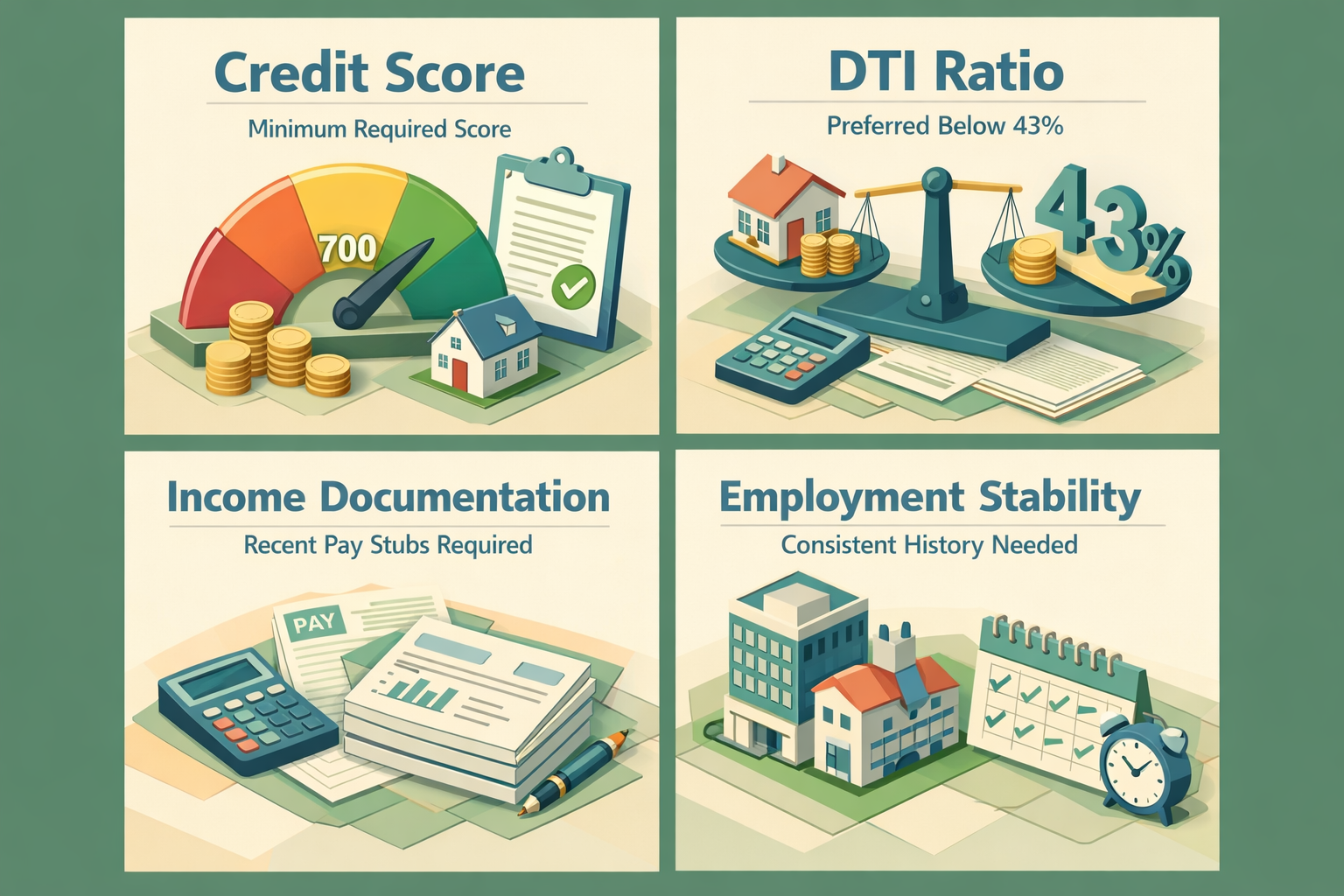
Many portfolio lenders who handle remote property building loans may look for credit scores of 680 or higher, though some might require 700 or above depending on the complexity of the project and the property's location. A strong credit history demonstrates that you're a reliable borrower — which matters more when the collateral itself is harder to appraise and sell.
Beyond your credit score, lenders will typically evaluate:
- Debt-to-income ratio (DTI): Most lenders prefer a DTI below 43%, meaning your total monthly debt obligations should not exceed 43% of your gross monthly income.
- Income documentation: Expect to provide recent pay stubs, W-2s, or tax returns. If you're self-employed, two years of business tax returns may be required.
- Cash reserves: Lenders may want to see several months of mortgage payments held in liquid savings beyond your down payment and closing costs.
- Employment stability: A consistent employment history of at least two years is typically viewed favorably.
If your financial profile has any weak points, addressing them before you apply could meaningfully improve your chances of approval and help you secure better loan terms.
Down Payment Expectations for Remote Off-Grid Projects
One of the most significant financial hurdles in meeting the requirements for a construction loan on a remote off-grid property is the down payment. Because these projects carry elevated risk, lenders typically require a larger upfront investment from the borrower compared to standard construction or purchase loans.
While a conventional construction loan might allow a down payment as low as 5% to 10% for a well-qualified borrower building in a suburban area, off-grid and remote property construction loans may require anywhere from 20% to 35% down — and in some cases even more. The exact figure depends on several factors, including the lender's policies, the property's appraised value, the remoteness of the location, and the overall complexity of the build.
Lenders view a higher down payment as a form of protection. If the borrower defaults, the lender needs to be able to recover the loan balance through a sale of the property. Remote off-grid homes can be harder to sell and may attract a smaller pool of buyers, making them more difficult to liquidate quickly. A larger equity cushion helps offset that risk.
It's a good idea to have your down payment funds ready and documented well before you apply. Lenders will typically want to verify the source of your funds, so be prepared to provide bank statements covering at least the past two to three months.
Construction Plans, Permits, and Builder Qualifications
Lenders financing a construction project need confidence that the build will be completed properly and on time. For that reason, the documentation you submit alongside your loan application matters just as much as your financial credentials.
Most lenders will require:
- Detailed construction plans: Architectural drawings and blueprints that outline the home's layout, square footage, materials, and structural components. These plans should be prepared or reviewed by a licensed architect or engineer.
- Itemized cost breakdown: A line-by-line budget covering all anticipated costs, including site preparation, foundation, framing, roofing, plumbing, electrical (or alternative energy systems), and finishing work.
- Building permits: Evidence that you've obtained or applied for the required permits from the relevant county or municipal authority. Remote properties may fall under different jurisdictional rules, so verifying local requirements early is important.
- Licensed and insured general contractor: Most lenders require that the construction be managed by a licensed general contractor with a verifiable track record. Owner-builder arrangements — where you act as your own contractor — are possible but harder to finance and may require additional documentation or approvals.
For off-grid builds specifically, lenders may also want to understand how the home will handle utilities. Plans for solar panels, rainwater collection, septic systems, and propane heating should be clearly outlined and compliant with local codes. These systems affect both the home's livability and its appraised value.
Property Appraisal Challenges and How Lenders Assess Remote Land
One of the more difficult aspects of securing an off-grid construction loan is the appraisal process. Lenders need an independent appraiser to estimate the property's value — both as vacant land and as a completed home — before they'll approve financing. For remote off-grid properties, finding comparable sales (commonly called "comps") can be a significant challenge.
Appraisers typically look for recently sold properties within a reasonable distance that share similar characteristics. In rural or remote areas, there may be very few comparable sales to draw from, which can make the appraisal process slower and the resulting value estimate less precise. When appraisers have limited data, they may apply conservative value estimates — which could affect how much the lender is willing to lend.
Lenders will generally base the loan amount on the lesser of the appraised value or the total project cost. If the appraisal comes in lower than expected, you may need to cover the difference out of pocket or revise your construction budget.
To help the appraisal process go more smoothly, consider working with a local real estate agent or appraiser who has specific experience with rural and off-grid properties. They'll have a better understanding of the local market and may be able to identify relevant comps that an outside appraiser might miss.
Finding the Right Lender for Off-Grid Construction Financing
Not every lender offers construction loans for remote or off-grid properties, and even fewer do so with favorable terms. Finding the right financing partner is often one of the most time-consuming parts of the process — but it's also one of the most important.
Here are some lender types that may be worth exploring:
- Community banks and credit unions: Local financial institutions often have more flexibility in their underwriting standards and may be familiar with rural property values in your area. They're frequently a strong starting point for borrowers seeking a remote property building loan.
- Portfolio lenders: These lenders hold loans in-house rather than selling them to the secondary market, allowing them to set their own guidelines. They may be more willing to work with non-standard properties.
- USDA construction loans: The U.S. Department of Agriculture offers loan programs designed for rural housing, and some may be applicable to off-grid builds. Eligibility is based on location and income, and not all off-grid properties will qualify, but it's worth investigating.
- Specialty or niche lenders: Some lenders specifically focus on rural, agricultural, or alternative housing projects. These lenders may have more experience evaluating off-grid systems and remote locations.
When comparing lenders, pay close attention to interest rates, origination fees, draw schedules, and whether the loan includes a conversion option to permanent financing. Getting quotes from multiple sources gives you a clearer picture of what's available and helps you negotiate from a stronger position.
●Conclusion
Building an off-grid home in a remote location is one of the more ambitious paths a homebuyer can take — and the financing reflects that complexity. Meeting the requirements for a construction loan on a remote off-grid property means preparing on multiple fronts: strengthening your credit and financial profile, saving for a substantial down payment, assembling thorough construction documentation, and identifying lenders who actually work with these types of projects.
It takes more planning than a standard home purchase or conventional construction loan, but it's entirely achievable with the right preparation and the right lending partner. If you're ready to take the next step, LoanWise can help you explore your financing options and connect with lenders experienced in specialty and rural construction lending. Start your journey today and build the home — and the lifestyle — you've been envisioning.