
Refinancing for Investment Property: Your Complete Guide to Portfolio Optimization
Real estate investors today face a unique opportunity in the refinancing landscape. With the Federal Reserve suggesting stable interest rates for 2026, many investors are evaluating their current mortgage terms and exploring refinancing for investment property as a strategic tool to enhance returns and access equity.
Unlike traditional homeowner refinancing, investment property refinancing operates under different guidelines and requirements. Most lenders typically allow cash-out refinancing up to 75% of the appraised property value, which can significantly impact your borrowing power and ability to reinvest in additional properties.
Understanding the nuances of refinancing rental property, cash-out refinance investment property options, and current investment property refinance rates is crucial for making informed decisions that align with your portfolio growth objectives.
Essential Pre-Refinancing Investment Property Checklist
Before diving into refinancing for investment property, successful investors typically evaluate several critical factors that could impact their refinancing success and overall returns.
- Equity Position Assessment: Verify you have at least 25% equity in the property, as most lenders require this minimum threshold for investment property refinancing
- Cash Reserve Verification: Ensure you have 6-12 months of mortgage payments in reserves, as lenders typically require this liquidity cushion for cash-out refinancing
- Property Performance Analysis: Review your rental income history and vacancy rates to demonstrate stable cash flow to potential lenders
- Current Loan Terms Review: Compare your existing interest rate, remaining balance, and monthly payments against current market conditions
- Credit Score Optimization: Confirm your credit score meets investment property lending standards, which are often higher than primary residence requirements
Cash-Out Refinance Investment Property Benefits
Cash-out refinancing rental property offers several strategic advantages that can enhance your investment portfolio's performance and provide access to capital for further expansion.
- Equity Access for Portfolio Growth: Tap into accumulated property appreciation to fund additional investment purchases or property improvements
- Interest Rate Optimization: Replace higher-rate existing mortgages with potentially lower current rates, improving monthly cash flow
- Tax Strategy Enhancement: Interest on investment property loans may be tax-deductible, potentially improving your overall tax position
- Debt Consolidation Opportunities: Combine multiple higher-rate debts into a single, potentially lower-rate investment property mortgage
Investment Property Refinance Rates Evaluation
Understanding investment property refinance rates and how they differ from primary residence rates is essential for making informed refinancing decisions that support your investment strategy.
- Rate Premium Awareness: Investment property rates typically run 0.125% to 0.75% higher than primary residence rates, affecting your cost-benefit analysis
- Loan-to-Value Impact: Lower LTV ratios often qualify for better rates, with most lenders offering optimal pricing at 75% LTV or below
- Term Selection Strategy: Evaluate whether 15-year, 20-year, or 30-year terms align better with your cash flow goals and investment timeline
- Rate Lock Timing: Consider market volatility and your closing timeline when deciding on rate lock periods for investment properties
Step-by-Step Refinancing Process for Rental Properties
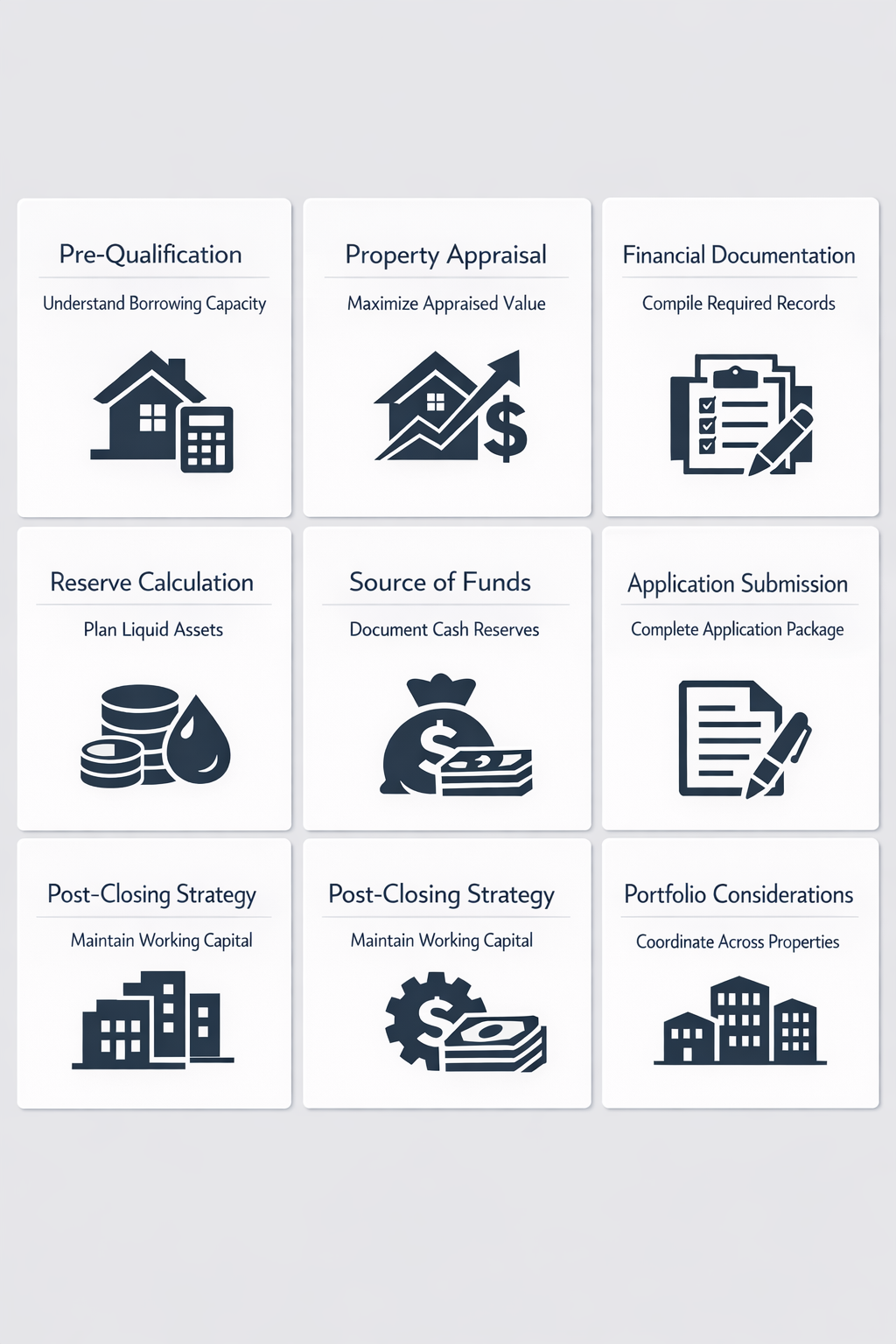
The refinancing rental property process involves specific steps that differ from traditional homeowner refinancing, requiring careful attention to investment-focused documentation and requirements.
- Pre-Qualification and Lender Selection: Research investment property specialists and get pre-qualified to understand your borrowing capacity and potential terms
- Property Appraisal Coordination: Schedule the required appraisal, ensuring the property is in optimal condition to maximize the appraised value for better loan terms
- Financial Documentation Assembly: Compile rental agreements, property management records, tax returns, and other investor-specific documentation lenders require
- Application Submission and Processing: Submit your complete application package and respond promptly to any lender requests for additional documentation
- Closing Preparation and Execution: Review final loan terms, coordinate closing logistics, and prepare for the funding of your new investment property loan
Reserve Requirements and Cash Management Strategies
Effective cash management around refinancing for investment property requires understanding lender reserve requirements and planning for optimal liquidity throughout the process.
- Reserve Calculation Planning: Calculate the required 6-12 months of mortgage payments in liquid assets and plan for these funds to remain available during underwriting
- Source of Funds Documentation: Prepare clear documentation showing the legitimate sources of your cash reserves and down payment funds
- Post-Closing Liquidity Strategy: Plan for maintaining adequate working capital after refinancing to handle property maintenance, vacancy periods, and other investment needs
- Multi-Property Portfolio Considerations: If you own multiple properties, coordinate reserve requirements across your entire portfolio to optimize cash deployment
Refinancing Timing and Market Conditions
Strategic timing of refinancing for investment property can significantly impact your returns and overall portfolio performance, especially in the current stable rate environment.
- Rate Environment Analysis: Monitor Federal Reserve policies and interest rate trends to identify optimal refinancing windows for your investment properties
- Property Value Cycle Timing: Consider local market conditions and property appreciation cycles when scheduling appraisals for maximum value recognition
- Cash Flow Optimization Timing: Align refinancing with lease renewal periods or property improvement completions that could enhance rental income
- Portfolio-Wide Coordination: Plan refinancing across multiple properties to optimize overall portfolio cash flow and avoid overwhelming your financial resources
Maximizing Your Investment Property Refinancing Success
Successful refinancing for investment property requires a strategic approach that considers both immediate benefits and long-term portfolio objectives. With stable rates expected in 2026, investors have a valuable opportunity to optimize their financing costs and access equity for further growth. The key lies in understanding lender requirements, maintaining adequate reserves, and timing your refinancing to align with broader market conditions and your investment strategy. By following established guidelines and working with investment property specialists, you can leverage refinancing strategies as a powerful tool to enhance your real estate investment returns and build long-term wealth.
●Conclusion
Refinancing for investment property remains one of the most effective strategies for real estate investors to optimize their portfolios and access capital for growth. With current market conditions presenting opportunities for rate improvement and equity access, now may be an ideal time to evaluate your existing investment property loans.
Remember that successful refinancing requires careful planning, adequate reserves, and a clear understanding of your investment objectives. Whether you're looking to improve cash flow, access equity for additional purchases, or restructure debt, the right refinancing strategy can significantly enhance your investment returns.
At Trulo Mortgage, we specialize in investment property financing solutions including DSCR loans, fix and flip financing, and rental property refinancing. Our team understands the unique needs of real estate investors and can help you navigate the refinancing process to achieve your portfolio objectives.