
Smart Refinancing for Investment Property Strategies
Refinancing for investment property has become a cornerstone strategy for savvy real estate investors looking to unlock equity and fuel portfolio growth. With favorable market conditions and evolving loan products, investors can now access up to 75% of their property's appraised value through strategic refinancing approaches. Whether you're seeking to lower monthly payments, extract cash for new acquisitions, or take advantage of improved interest rates, understanding the nuances of investment property refinancing can significantly impact your bottom line and long-term wealth building objectives.
Essential Requirements for Investment Property Refinancing
Essential requirements for investment property refinancing form the foundation of a successful refinancing strategy. Most lenders have established specific criteria that investors must meet to qualify for favorable terms and maximize their refinancing benefits.
- Maintain at least 25% equity in your property: This translates to a maximum loan-to-value ratio of 75%, which most lenders require for investment property refinancing approval
- Prepare 6-12 months of mortgage payment reserves: Lenders typically require cash reserves spanning this timeframe post-refinance to ensure financial stability and payment capacity
- Document property income and expenses: Rental income documentation and property expense records help lenders assess the investment's cash flow potential and your ability to service the new loan
- Meet credit and income requirements: Investment property refinancing often requires higher credit scores and more stringent income verification compared to primary residence loans
Cash-Out Refinance Investment Property Opportunities
Cash-out refinance investment property strategies offer investors powerful ways to access their accumulated equity for portfolio expansion and property improvements. Understanding these opportunities can help you make informed decisions about leveraging your existing assets.
- Access up to 75% of property's appraised value: Current guidelines allow investors to extract significant equity while maintaining reasonable loan-to-value ratios that protect both borrower and lender interests
- Fund additional property acquisitions: The extracted cash can serve as down payments for new investment properties, allowing you to compound your real estate holdings more rapidly
- Finance property renovations and improvements: Use refinancing proceeds to upgrade existing properties, potentially increasing rental income and overall property values
- Diversify investment portfolio: Cash-out refinancing provides capital flexibility to explore different property types or geographic markets within your investment strategy
DSCR Loan Benefits for Investment Property Refinancing
DSCR loan benefits for investment property refinancing have gained considerable traction among investors seeking streamlined approval processes and property-focused underwriting. These debt service coverage ratio loans evaluate the property's income potential rather than solely relying on personal income documentation.
- Property income-based qualification: DSCR loans primarily consider the rental property's cash flow rather than your personal employment income, making them ideal for investors with multiple properties
- Streamlined documentation requirements: These loans typically require less personal financial documentation compared to traditional refinancing products, speeding up the approval process
- Portfolio expansion capabilities: DSCR loans can facilitate refinancing multiple properties simultaneously, allowing investors to optimize their entire portfolio's financing structure
- Flexible borrower profiles: Self-employed investors and those with complex income structures often find DSCR loans more accommodating than conventional refinancing options
Step-by-Step Investment Property Refinancing Process
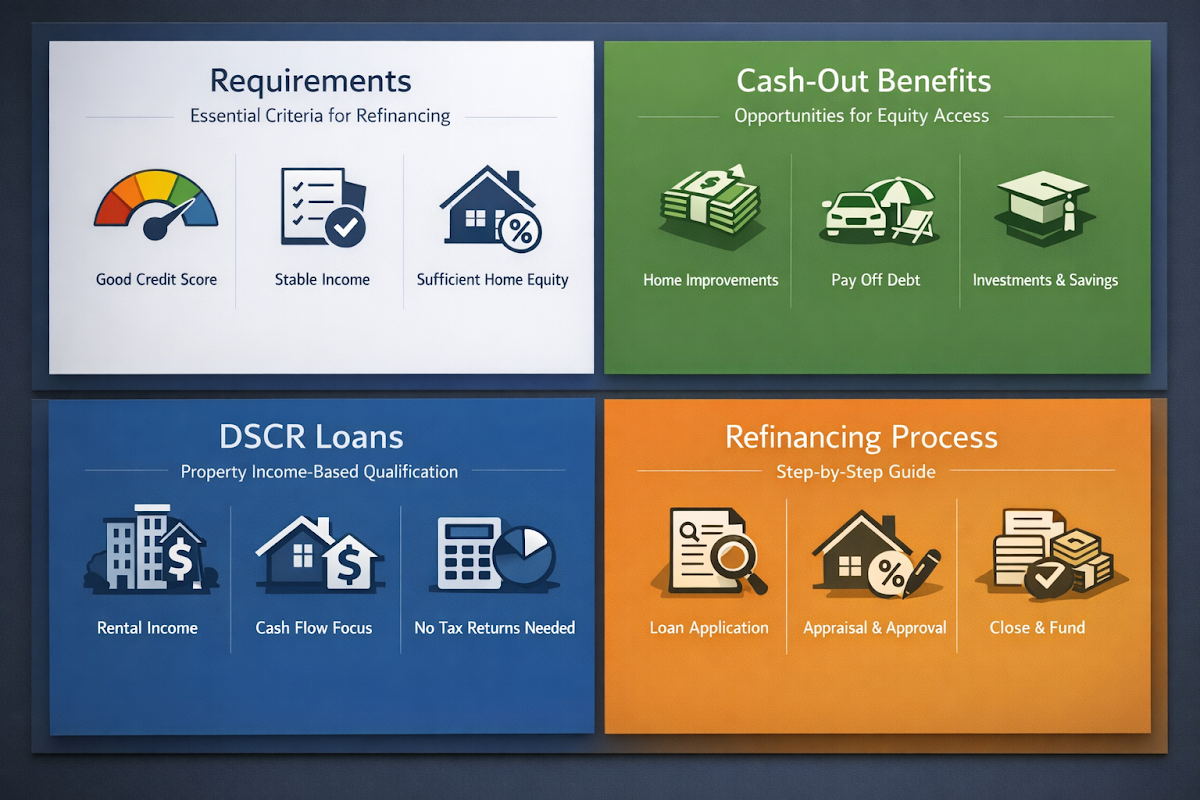
The step-by-step investment property refinancing process requires careful planning and execution to maximize your chances of approval and secure favorable terms. Following a systematic approach can help streamline your refinancing experience.
- Evaluate your current loan terms and property value: Compare your existing interest rate, monthly payments, and loan balance against current market conditions and recent property appraisals to determine potential benefits
- Gather required documentation and financial records: Compile rental agreements, property tax records, insurance documentation, and recent financial statements to support your refinancing application
- Shop multiple lenders for competitive rates and terms: Different lenders may offer varying interest rates, fees, and loan programs, so comparing options can result in significant long-term savings
- Submit application and coordinate property appraisal: Work with your chosen lender to complete the application process and schedule the required property appraisal to determine current market value
- Review final loan terms and close on the new mortgage: Carefully examine the loan documents, closing costs, and payment schedule before finalizing your refinancing transaction
Optimal Timing Strategies for Refinancing Rental Property
Optimal timing strategies for refinancing rental property can significantly impact your investment returns and overall portfolio performance. Market conditions and personal circumstances both play crucial roles in determining the ideal refinancing window.
- Monitor interest rate trends and Federal Reserve policy: Current market indicators suggest favorable interest rate environments may persist, creating opportunities for investors with higher existing mortgage rates to secure better terms
- Assess property appreciation and equity accumulation: Properties that have experienced significant value increases provide more refinancing options and higher cash-out potential for portfolio expansion
- Evaluate cash flow needs and investment opportunities: Time your refinancing to coincide with identified acquisition opportunities or necessary property improvements that can enhance rental income
- Consider seasonal market factors and lender capacity: Refinancing during periods of lower lender volume may result in faster processing times and more competitive pricing
Investment Property Refinance Rates and Market Outlook
Investment property refinance rates and market outlook present compelling opportunities for investors to optimize their financing costs and improve cash flow. The current rate environment offers particular advantages for investors with higher existing mortgage rates who can benefit from refinancing into more favorable terms. Federal Reserve indications suggest that low interest rates may continue throughout 2026, creating a favorable backdrop for refinancing activities. This environment allows investors to capture improved rates while enhancing their properties' cash flow performance. DSCR loan programs are also becoming increasingly popular for cash-out refinancing strategies, offering investors alternative pathways to access equity and reinvest in new opportunities. Understanding these market dynamics helps investors time their refinancing decisions strategically and capitalize on evolving lending conditions that support portfolio growth and optimization.
●Conclusion
Refinancing for investment property represents a powerful tool in the real estate investor's arsenal, offering multiple pathways to unlock equity, improve cash flow, and fund portfolio expansion. From traditional cash-out refinancing that provides access to up to 75% of property value to innovative DSCR loan products that focus on property performance rather than personal income, today's refinancing landscape offers unprecedented flexibility for strategic investors. Success in investment property refinancing hinges on understanding lender requirements, maintaining adequate reserves, and timing your refinancing activities to align with favorable market conditions. As interest rates remain competitive and lending programs continue to evolve, investors who master these refinancing strategies will be well-positioned to accelerate their wealth building and achieve their long-term real estate investment objectives.