
Owning a property with an adjustable-rate mortgage can feel like a financial tightrope walk. When rates rise, so do your monthly payments — and that uncertainty can be stressful for any homeowner or real estate investor. If you also rent your property on platforms like Airbnb or Vrbo, you might be sitting on a financial asset that many borrowers overlook: short-term rental income. The good news is that lenders are increasingly recognizing this type of earnings as a legitimate qualification tool. Understanding your options for refinancing ARM mortgage with short-term rental income could help you secure a more predictable loan structure and better long-term financial footing.
Why Adjustable-Rate Mortgages Create Urgency for Refinancing
An adjustable-rate mortgage, or ARM, typically offers a lower introductory interest rate for a set period — often five, seven, or ten years. After that initial period ends, the rate adjusts periodically based on a market index, which means your monthly payment can increase significantly depending on where rates stand at the time of adjustment.
For homeowners and real estate investors who locked in ARMs during periods of historically low rates, the reset period can bring a real financial shock. If your ARM is approaching its adjustment date or has already begun fluctuating, refinancing into a fixed-rate mortgage may offer the payment stability you're looking for. The challenge, of course, is qualifying — and that's where short-term rental income may play a meaningful role in your application.
It's also worth noting that refinancing isn't just about escaping rate risk. Many borrowers use a refinance to access home equity, lower their overall interest costs, or restructure loan terms to better fit their current financial situation. If your property has appreciated in value — which is common in markets popular for short-term rentals — you may have more equity available than you realize.
How Lenders View Short-Term Rental Income During Refinancing
This is one of the most important things to understand before you apply: not all lenders treat short-term rental income the same way. Traditional conventional lenders often have strict guidelines about what types of income they'll count toward your debt-to-income ratio. Long-term rental income from a formal lease agreement has historically been easier to document and verify. Short-term rental income — the kind you'd earn from Airbnb, Vrbo, or similar platforms — is sometimes viewed as less predictable by certain underwriters.
That said, the landscape is shifting. Some lenders now have programs specifically designed to account for short-term rental income, particularly for investment properties and vacation homes. These lenders may look at your platform earnings history, typically requesting one to two years of documented rental receipts, 1099 forms from the platform, or bank statements showing consistent deposits.
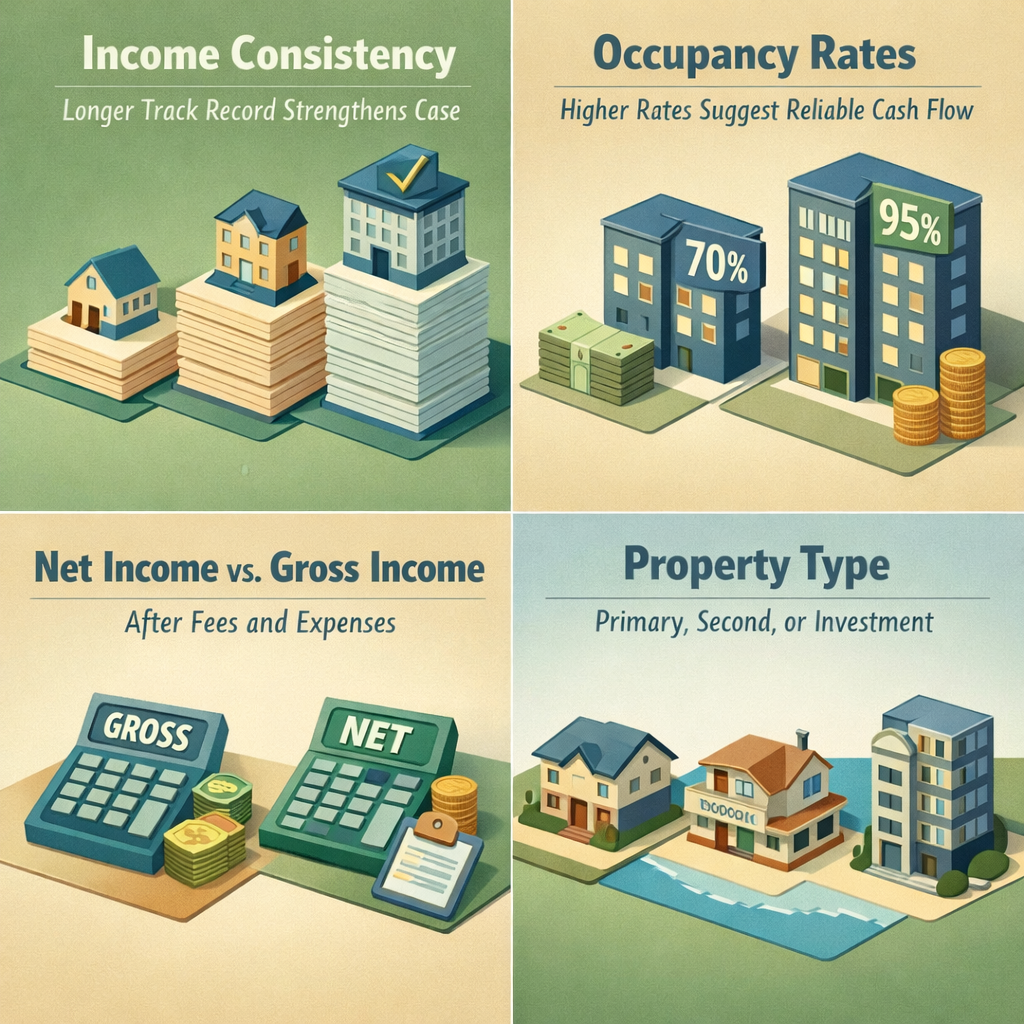
The key factors lenders often evaluate include:
- Income consistency: A longer track record of rental earnings generally strengthens your case.
- Occupancy rates: Higher occupancy over time may suggest more reliable cash flow.
- Net income vs. gross income: Lenders typically want to see income after platform fees and allowable expenses.
- Property type: Whether the home is your primary residence, a second home, or a dedicated investment property can affect how income is treated.
If you've been renting your property on Airbnb for at least a year or two and have solid documentation, you may be in a stronger position than you expect when exploring a refinance ARM mortgage Airbnb income scenario.
Loan Programs That May Accept Short-Term Rental Earnings
Several refinancing options could work for borrowers who earn short-term rental income. Each has its own eligibility requirements, documentation standards, and qualifying criteria, so it's worth understanding the landscape before committing to one route.
Conventional Refinance with Fannie Mae or Freddie Mac Guidelines
Both Fannie Mae and Freddie Mac have updated their guidelines over the years to better reflect how rental income is earned in the modern economy. Fannie Mae, for example, has introduced programs that allow lenders to consider rental income from short-term platforms under certain conditions. Borrowers typically need to show a history of rental activity on their tax returns, specifically Schedule E, and meet other standard qualification benchmarks like a sufficient credit score and loan-to-value ratio.
Non-QM (Non-Qualified Mortgage) Loans
For borrowers whose income doesn't fit neatly into conventional boxes, non-QM loans may offer more flexibility. These are portfolio loans held by lenders rather than sold to government-sponsored entities, which means the lender sets its own income documentation standards. A non-QM lender might accept bank statement loans or cash flow-based underwriting that directly counts your rental platform deposits as qualifying income. This could be especially helpful if your tax returns don't fully reflect your actual earnings due to deductions.
DSCR (Debt Service Coverage Ratio) Loans
DSCR loans are increasingly popular among real estate investors. Rather than relying on your personal income, these loans qualify you based on the property's ability to generate enough rental income to cover its own mortgage payment. If your short-term rental property brings in sufficient cash flow relative to the proposed loan payment, you may qualify without needing to prove personal employment income at all. This can be a powerful option for investors who own multiple properties or those who are self-employed.
Documentation You'll Likely Need to Gather
Preparation is everything when it comes to refinancing with non-traditional income sources. Lenders who are open to counting short-term rental income will still want to see strong documentation. Getting organized early can help speed up the approval process and reduce the chance of surprises.
Here's what you'll likely want to have on hand:
- Platform earnings statements: Airbnb, Vrbo, and similar platforms typically provide annual income summaries or monthly statements. Download these and keep them organized by year.
- 1099 tax forms: If you earned more than a certain threshold from a rental platform, the platform should issue you a 1099 form, which is also reported to the IRS.
- Bank statements: Lenders using bank statement underwriting will want to see consistent deposits over a set period, often 12 to 24 months.
- Tax returns with Schedule E: If you've been reporting rental income on your taxes, Schedule E shows your net rental income after expenses — this is what many conventional lenders will use to calculate qualifying income.
- Lease agreements or booking history: Some lenders may want a history of bookings to verify occupancy trends.
If your documentation is incomplete or your rental history is short, it may be worth waiting a few months to build a stronger paper trail before applying. A mortgage advisor can help you assess your readiness.
Credit, Equity, and Other Qualifying Factors That Matter
Short-term rental income is just one piece of the refinancing puzzle. Lenders will also evaluate several other factors that can influence your approval odds, your interest rate, and your loan terms.
Credit Score
Your credit score remains one of the most important factors in any mortgage refinance. A higher score typically unlocks better rates and more favorable terms. If your score has dipped since you first took out your ARM, it may be worth spending a few months improving it before you apply — paying down balances, correcting errors on your credit report, and avoiding new credit inquiries can all help.
Loan-to-Value Ratio (LTV)
Your LTV compares your remaining loan balance to the current appraised value of your home. If your property has appreciated — which is common in popular short-term rental markets — you may have a lower LTV than when you originally borrowed, which can work in your favor. A lower LTV often means better rates and may allow you to avoid private mortgage insurance on a conventional refinance.
Debt-to-Income Ratio (DTI)
Your DTI measures your total monthly debt obligations against your gross monthly income. Including short-term rental income in your income calculation could lower your DTI, making you appear less risky to lenders. This is one of the primary reasons why getting your rental income recognized is so valuable during a refinance.
Timing Your Refinance for Maximum Benefit
Knowing when to refinance is just as important as knowing how. Several timing considerations can affect whether refinancing makes financial sense right now or whether waiting might serve you better.
If your ARM is approaching its first adjustment date, refinancing before the rate resets may help you lock in before any rate increases take effect. On the other hand, if fixed-rate mortgage rates are significantly higher than your current ARM rate, the math might not work in your favor in the short term — even though a fixed rate provides long-term certainty.
Consider running a break-even analysis. This calculation estimates how long it will take for your monthly savings from a lower rate to offset the closing costs of refinancing. If you plan to hold the property for several more years, refinancing sooner may make sense. If you're planning to sell within a year or two, the costs may outweigh the benefits.
Also think about the seasonality of your rental income. Lenders will look at your full income history, so applying during or shortly after your peak rental season — when your documentation reflects strong earnings — could strengthen your application.
Working with a Lender Who Understands Short-Term Rental Properties
Not every lender has experience with short-term rental income or investment property refinancing. Choosing the right lending partner can make a significant difference in both the outcome and the experience. A lender who understands the nuances of platforms like Airbnb, the flexibility of DSCR loans, and the documentation requirements for non-traditional income sources will be better equipped to structure a loan that fits your situation.
When evaluating lenders, consider asking:
- Do you have experience refinancing properties with short-term rental income?
- Which loan programs do you offer for investment or vacation rental properties?
- How do you calculate qualifying income from rental platforms?
- Are DSCR or non-QM loan options available through your institution?
Working with a mortgage broker or advisor who has access to multiple lenders may also give you a broader range of options for refinancing ARM mortgage with short-term rental income, since different institutions have different appetites for this type of loan. Shopping your refinance across several lenders — and comparing loan estimates directly — is one of the smartest moves you can make as a borrower.
●Conclusion
Refinancing an adjustable-rate mortgage when you earn short-term rental income might feel complicated at first, but the opportunity is real. With the right documentation, a knowledgeable lender, and a clear picture of your financial profile, you may find that your Airbnb or vacation rental earnings open doors that traditional income alone might not. Whether you pursue a conventional refinance, a non-QM loan, or a DSCR product, the most important first step is understanding where you stand. Reach out to a LoanWise mortgage advisor today to explore your refinancing options and find the path that makes the most sense for your property and your goals.