If you're a freelance graphic designer carrying an adjustable-rate mortgage, you may already be feeling the pressure of unpredictable monthly payments. As interest rates shift, your ARM could reset to a higher rate — and that uncertainty can make budgeting feel impossible. The good news is that there are meaningful options for refinancing an ARM mortgage with income from freelance graphic design. While the path might look a little different than it does for a salaried borrower, it's absolutely navigable with the right preparation. This guide walks you through what lenders look for, which loan programs may work best for your situation, and how to put your best financial foot forward as a self-employed homeowner.
Why Freelancers with ARMs Should Consider Refinancing Now
An adjustable-rate mortgage typically starts with a fixed introductory period — often three, five, seven, or ten years — before it begins adjusting based on a market index. Once that initial period ends, your rate can rise significantly, depending on market conditions and your loan's cap structure.
For freelance graphic designers, this creates a double layer of financial uncertainty. Your income may already fluctuate from month to month based on client volume, project timelines, and seasonal demand. Adding a mortgage payment that can change unexpectedly on top of that can put real stress on your cash flow.
Refinancing your ARM into a fixed-rate mortgage could eliminate that moving variable from your financial picture. A stable monthly payment makes it far easier to plan your business expenses, set aside quarterly taxes, and maintain an emergency fund — all of which are priorities for any self-employed professional. Even if fixed rates are somewhat higher than your current ARM rate, many homeowners find the long-term predictability well worth it.
Additionally, if your home has gained equity since you originally purchased it, refinancing could give you access to better loan terms, potentially allow you to remove private mortgage insurance, or open the door to a cash-out refinance that funds your design business or equipment upgrades.
How Lenders View Freelance Graphic Design Income During ARM Refinance
This is where things get a bit more complex for self-employed borrowers. Lenders who offer conventional or government-backed loans typically want to see consistent, verifiable income over at least two years of self-employment. For freelance graphic designers, that means your tax returns become one of your most important financial documents.
Here's the challenge: freelancers often take advantage of legitimate business deductions — software subscriptions, home office expenses, equipment depreciation, and professional development costs. While these deductions reduce your tax liability, they also reduce the net income that lenders can use to qualify you for a loan. This means your qualifying income on paper may be lower than what you actually bring in.
Lenders typically use a two-year average of your net self-employment income as reported on your Schedule C or partnership returns. If your income has been increasing year over year, some lenders may use the more recent year's figure, but this varies by program and underwriter discretion.
It's also worth knowing that lenders will look at the stability and continuity of your freelance work. If you've been operating your graphic design business consistently and can show a pipeline of ongoing client relationships, that context can strengthen your application — even if your income fluctuates month to month.
Documentation That Strengthens Your ARM Refinance Application
Preparation is your most powerful tool when refinancing as a self-employed borrower. Here's what you'll likely need to gather before applying:
- Two years of personal tax returns with all schedules, including Schedule C for sole proprietors
- Two years of business tax returns if your design work is structured as an LLC or S-corp
- Year-to-date profit and loss statement, ideally prepared or reviewed by a CPA
- Bank statements — typically 12 to 24 months of both personal and business accounts
- Evidence of active business operation, such as a business license, client contracts, or a professional website
- 1099 forms from clients, which help verify income sources
- Current mortgage statement showing your existing ARM terms and balance
The more organized and complete your documentation, the smoother your refinance process is likely to go. Lenders appreciate borrowers who come prepared, and a well-documented file can reduce back-and-forth requests that slow down closing timelines.
If your income was unusually low in one of the past two years due to a slow client season or a gap in projects, be ready to provide a written explanation. Context matters, and lenders are generally more understanding when they have the full picture.
Exploring Your Options for Refinancing ARM Mortgage with Income from Freelance Graphic Design
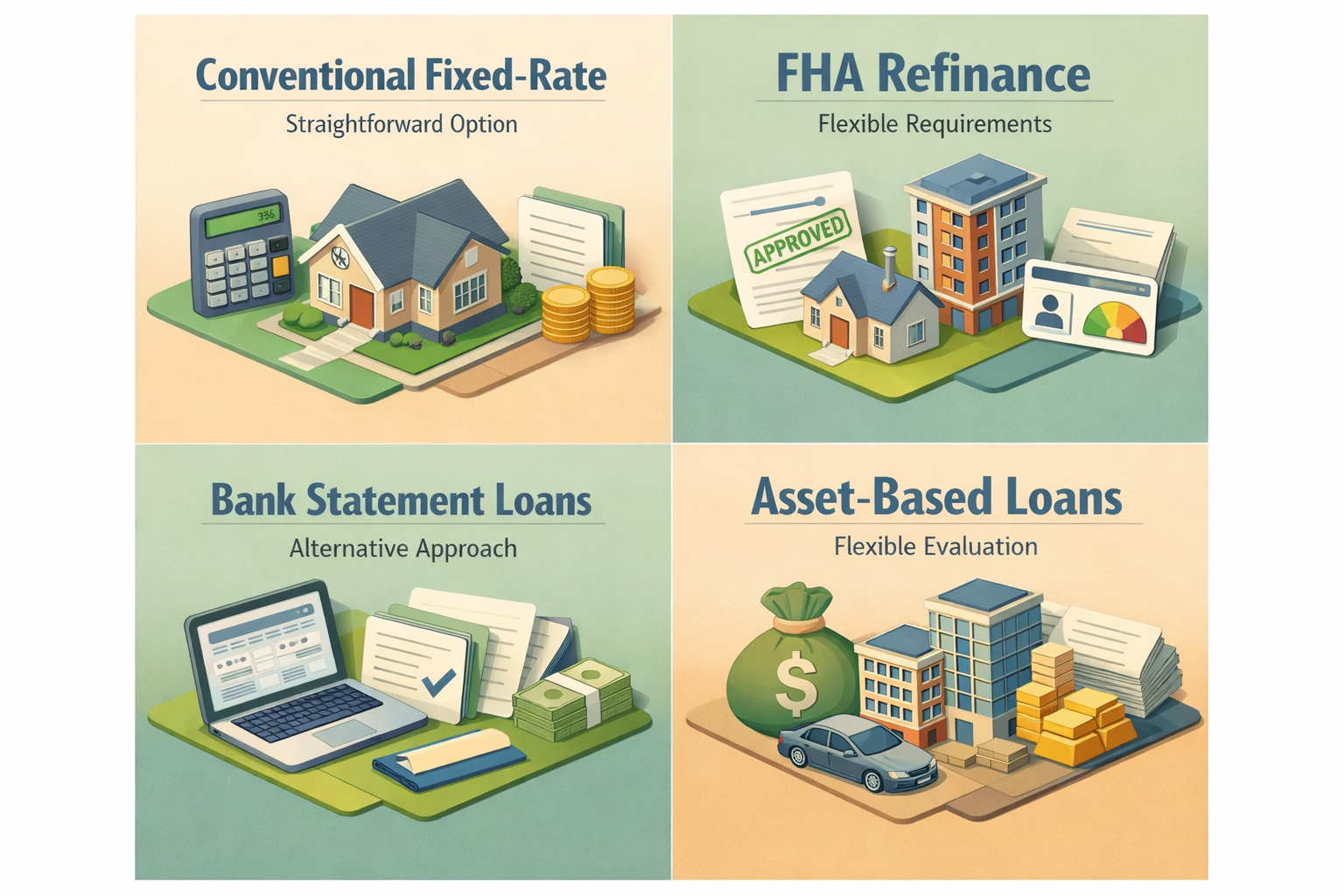
There's no single refinance product that works for every self-employed borrower, but understanding the landscape helps you find the best fit. Here are the most common refinancing paths available to freelance graphic designers looking to exit an ARM:
Conventional Fixed-Rate Refinance
If you have strong credit, at least two years of documented self-employment income, and sufficient equity in your home, a conventional refinance may be your most straightforward option. Fannie Mae and Freddie Mac both have guidelines that accommodate self-employed borrowers, though the income documentation requirements are thorough. A credit score of 620 or higher is typically required, though better rates are generally available to borrowers with scores above 740.
FHA Refinance for Self-Employed Borrowers
FHA loans are government-backed and tend to have more flexible credit and income requirements. If your credit score is lower or your debt-to-income ratio is slightly elevated, an FHA refinance might be worth exploring. Keep in mind that FHA loans require mortgage insurance premiums, which add to your monthly costs — so it's worth comparing the total loan cost against conventional options.
Bank Statement Loans (Non-QM)
For freelancers whose tax returns don't reflect their true earning power due to significant deductions, bank statement loans offer an alternative approach. These are non-qualified mortgage products that allow lenders to use 12 to 24 months of bank deposits — rather than tax returns — to verify income. This can be a valuable option if your actual cash flow is strong but your taxable income appears low on paper. Interest rates on non-QM loans may be somewhat higher than conventional rates, but they can open doors that traditional programs might not.
Asset-Based or Portfolio Loans
Some lenders — especially community banks and credit unions — offer portfolio loans that they hold in-house rather than selling to the secondary market. These lenders have more flexibility in how they evaluate income and may be willing to work with self-employed borrowers who have strong assets, long-standing banking relationships, or unique income profiles. If you have substantial savings or investment accounts, asset-based qualification might also be available through certain lenders.
Improving Your Qualifying Profile Before You Apply
If you're not quite ready to refinance today, taking a few strategic steps could put you in a stronger position within six to twelve months. Here's where to focus your energy:
- Reduce your debt-to-income ratio by paying down credit card balances or other installment debts before applying
- Avoid opening new credit accounts in the months leading up to your refinance application, as new inquiries can temporarily lower your credit score
- Work with a CPA to understand how your current deductions affect your qualifying income and whether adjustments make sense for your situation
- Build your cash reserves — lenders feel more comfortable with self-employed borrowers who have three to six months of mortgage payments in savings
- Keep your business and personal finances clearly separated with dedicated accounts, which makes bank statement documentation cleaner and more credible
It's also a good idea to pull your credit reports from all three bureaus and review them for any errors or outdated negative items. Disputing inaccuracies ahead of time can prevent delays during the underwriting process.
Working with the Right Lender Makes a Difference
Not every lender has the same experience working with self-employed borrowers, and that gap in experience can mean the difference between an approval and a frustrating denial. When you're exploring ARM refinance self-employed income solutions, it's worth seeking out lenders who specifically advertise expertise with freelancers, independent contractors, and business owners.
A mortgage broker can be especially valuable here. Because brokers have access to multiple lenders and loan products — including non-QM options — they can shop your profile across several programs to find the best fit. A direct lender, on the other hand, only offers their own products, which may or may not include the flexibility you need.
Ask potential lenders or brokers directly whether they've worked with freelance graphic designers or similar self-employed professionals before. Inquire about which income documentation methods they accept, and get a clear sense of how they handle income averaging for variable earners. The more specific their answers, the more confident you can feel in their ability to guide your refinancing ARM mortgage application successfully.
It's also worth getting pre-qualified — or at minimum, having an initial consultation — with two or three lenders before committing. Comparing loan estimates side by side allows you to evaluate interest rates, closing costs, and loan terms with real numbers rather than general assumptions.
●Conclusion
Refinancing out of an adjustable-rate mortgage is a smart goal for many homeowners, and being a freelance graphic designer doesn't have to stand in your way. The options for refinancing an ARM mortgage with income from freelance graphic design are broader than many borrowers realize — from conventional fixed-rate programs to bank statement loans designed specifically for self-employed earners. The key is understanding how lenders evaluate your income, gathering thorough documentation, and connecting with a lender who truly understands the self-employed borrowing landscape. With the right preparation and guidance, you can trade in your unpredictable ARM for a stable, manageable mortgage that supports both your home and your creative career. Ready to explore your refinance options? Connect with a LoanWise mortgage specialist today to find the path that fits your financial picture.