
Rising monthly payments can catch homeowners off guard, especially when an adjustable-rate mortgage begins to reset. If you're carrying an ARM and feeling the pressure of unpredictable rate adjustments, refinancing into a fixed-rate loan might be exactly what you need. But here's the good news — if you've been earning money through a side hustle, that secondary income could actually work in your favor. Understanding the options for refinancing ARM mortgage with income from side hustle earnings is an increasingly relevant topic, particularly as millions of Americans now supplement their primary wages with freelance work, gig economy jobs, or small business activity. This guide breaks down how lenders evaluate non-traditional income, what documentation you'll need, and which refinancing paths may be best suited for your situation.
Why Homeowners With ARMs Are Looking to Refinance
An adjustable-rate mortgage can seem like a smart move early on. Initial interest rates are often lower than those offered by fixed-rate loans, which means lower monthly payments during the introductory period. However, once that period ends, the rate adjusts based on a benchmark index — and in a rising rate environment, those adjustments can become costly very quickly.
For many homeowners, the uncertainty alone is enough motivation to explore refinancing. Switching from an ARM to a fixed-rate mortgage locks in a predictable monthly payment, making it easier to plan your finances long-term. This is especially appealing for homeowners who plan to stay in their home for several more years and want to avoid the risk of future rate spikes.
Beyond rate stability, refinancing can also open doors to better loan terms, reduced private mortgage insurance, or access to home equity through a cash-out option. The challenge, of course, is qualifying — and that's where your side hustle income enters the picture.
How Lenders View Secondary Income During the Refinance Process
When you apply to refinance mortgage with secondary income, lenders don't automatically dismiss earnings that fall outside a traditional W-2 paycheck. In fact, many lenders are experienced in evaluating diverse income streams — but they do apply specific criteria before counting that income toward your qualifying total.
The key factors lenders typically consider include:
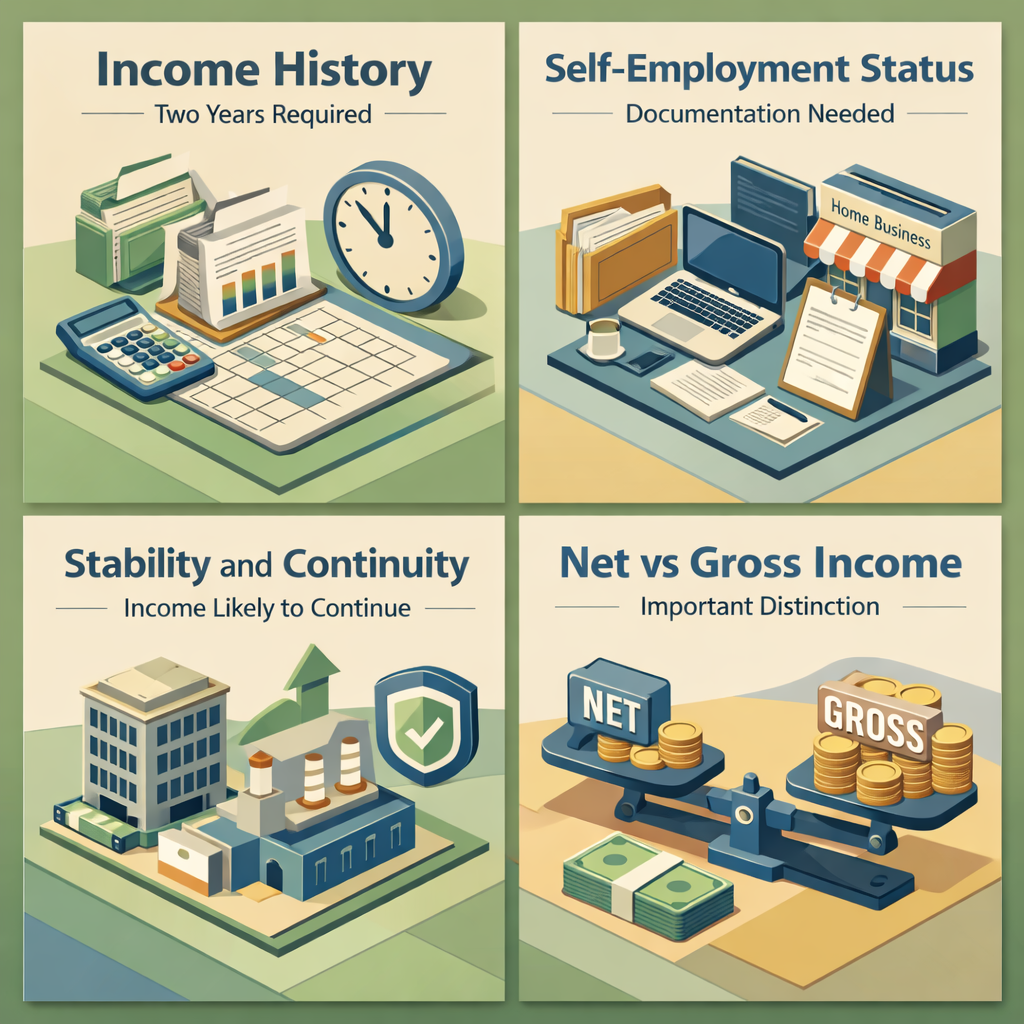
- Income history: Most lenders want to see at least two years of documented side hustle earnings before they'll factor it into your debt-to-income ratio. This demonstrates that the income is consistent rather than a one-time occurrence.
- Self-employment status: If your side hustle operates as a sole proprietorship, LLC, or freelance arrangement, lenders may treat it as self-employment income, which comes with its own documentation requirements.
- Stability and continuity: Lenders may ask whether the income is likely to continue. A well-established freelance client base or recurring gig platform earnings tends to be viewed more favorably than sporadic or project-based income.
- Net versus gross income: For self-employed borrowers, lenders typically use net income after business deductions rather than gross revenue. This is an important distinction that can affect how much qualifying income you can claim.
It's worth noting that underwriting standards can vary significantly between lenders and loan programs. Working with a knowledgeable mortgage professional who understands non-traditional income can make a meaningful difference in how your application is evaluated.
Documenting Your Side Hustle Income for a Mortgage Refinance
Documentation is everything when it comes to qualifying with non-W-2 income. If you're exploring the options for refinancing ARM mortgage with income from side hustle work, you'll want to gather a thorough paper trail well before submitting your application.
Here's what lenders commonly request from borrowers with secondary income:
- Two years of federal tax returns: This is usually the foundation of income verification for self-employed or gig workers. Lenders look at Schedule C, Schedule E, or other applicable schedules depending on how your business is structured.
- 1099 forms: If you receive payments from platforms or clients without tax withholding, 1099 forms serve as important supporting documents alongside your tax returns.
- Profit and loss statements: Some lenders, particularly those offering non-QM or bank statement loans, may accept a year-to-date profit and loss statement prepared by a licensed CPA.
- Bank statements: Twelve to twenty-four months of business or personal bank statements can help lenders verify consistent cash deposits that align with your reported income.
- Business licenses or contracts: Evidence that your side hustle is an active and legitimate enterprise — such as a business license, client contracts, or platform account records — can strengthen your application.
Getting organized early is critical. Missing or inconsistent documentation is one of the most common reasons refinance applications face delays or denials, especially for borrowers with complex income profiles.
Loan Programs That May Work Well for Side Hustle Earners
Not every loan program handles non-traditional income the same way. Depending on your credit profile, equity position, and the nature of your side hustle, some refinancing ARM mortgage options may suit you better than others.
Conventional Refinance Loans
Conventional loans backed by Fannie Mae or Freddie Mac do allow for self-employment and secondary income, provided it meets their documentation and stability requirements. If you can demonstrate two years of consistent side hustle earnings on your tax returns and your debt-to-income ratio falls within acceptable limits, a conventional refinance may be a viable path. Keep in mind that aggressive tax deductions can reduce your qualifying income, so it's worth discussing this trade-off with your loan officer before filing.
FHA Streamline and Standard FHA Refinance
If your current mortgage is FHA-insured, an FHA Streamline Refinance may offer a simplified path with limited income verification requirements. However, if you need a full income review — for example, because you're switching to a different loan type — standard FHA guidelines for self-employment income will apply, which generally mirror conventional requirements for documentation history.
Non-QM and Bank Statement Loans
For borrowers whose tax returns don't fully reflect their true earnings due to business write-offs, non-qualified mortgage (non-QM) products can be a compelling alternative. Bank statement loans, for instance, allow lenders to average deposits over twelve or twenty-four months to calculate qualifying income — bypassing the need to rely solely on tax returns. These products often come with slightly higher interest rates but can open doors for self-employed borrowers and gig workers who might not qualify under traditional guidelines.
VA Interest Rate Reduction Refinance Loan (IRRRL)
If you're an eligible veteran or service member with a VA loan, the IRRRL program allows streamlined refinancing with minimal income documentation in many cases. If your current loan qualifies, this could be one of the simpler pathways regardless of your side hustle income situation.
Improving Your Debt-to-Income Ratio Before You Apply
Your debt-to-income ratio — commonly referred to as DTI — is one of the most critical factors lenders evaluate when reviewing a refinance application. It measures how much of your gross monthly income goes toward debt payments. Most conventional lenders prefer a DTI below 43%, though some programs may allow higher ratios under certain conditions.
If your side hustle income isn't yet sufficient to bring your DTI into a qualifying range, there are steps you can take to strengthen your position:
- Pay down high-balance revolving debt: Reducing credit card balances can meaningfully lower your monthly obligations and improve your DTI before you apply.
- Avoid taking on new debt: Opening new credit accounts or financing large purchases in the months leading up to your refinance application could negatively affect both your DTI and your credit score.
- Grow your documented side hustle income: If you're early in your side hustle journey, it may be worth waiting until you have a stronger, more consistent income history before applying. A second full year of tax returns showing stable or growing earnings can make a significant difference.
- Consider a co-borrower: If you have a spouse, partner, or family member with stable income, adding them as a co-borrower could help offset any qualifying shortfalls.
Credit Score Considerations When Refinancing With Non-Traditional Income
Your credit score plays a major role in determining not just whether you qualify for a refinance, but also what interest rate you'll receive. Borrowers with higher credit scores typically access more favorable loan terms, which is especially important when the goal is to escape the unpredictability of an ARM.
For homeowners relying on side hustle income, maintaining a strong credit profile is particularly important because lenders may scrutinize other risk factors more closely when income is non-traditional. Here are some credit strategies worth keeping in mind:
- Check your credit reports early: Review your reports from all three major bureaus before applying. Errors or outdated negative items can drag your score down and may be disputed and corrected before your application.
- Keep credit utilization low: Aim to use no more than 30% of your available revolving credit at any given time. Lower utilization ratios tend to support stronger credit scores.
- Avoid applying for new credit before refinancing: Each hard inquiry can temporarily lower your score. Hold off on new credit applications until after your refinance closes.
- Maintain on-time payment history: Payment history is typically the most heavily weighted factor in credit scoring models. Even one late payment in the months before your application could affect your outcome.
Some non-QM lenders may work with lower credit scores if other compensating factors are strong, such as significant home equity, a large cash reserve, or a well-documented income history. It's always worth exploring your options for refinancing ARM mortgage across multiple lenders.
●Conclusion
Exploring your options for refinancing ARM mortgage with income from side hustle earnings doesn't have to be overwhelming. The lending landscape has evolved considerably, and there are more pathways available today for borrowers with non-traditional income than ever before. Whether you qualify through a conventional program, an FHA loan, or a non-QM product, the key is preparation — organizing your documentation, understanding how lenders evaluate your income, and working with a mortgage professional who has experience with self-employed and gig economy borrowers.
If your adjustable-rate mortgage is creating financial uncertainty and your side hustle is generating meaningful income, now may be a great time to start the conversation. At LoanWise, our team can help you evaluate your refinancing options based on your complete financial picture — including the income you've worked hard to build outside your primary job. Reach out today to learn what might be possible for your situation.