
Adjustable-rate mortgages can be a smart short-term financing tool, but as interest rates shift, many homeowners start looking for more stable ground. If you're earning dividend income from a stock portfolio, you might already have a strong financial foundation — but turning that income into a qualifying asset for a mortgage refinance takes some know-how. Exploring your options for refinancing an ARM mortgage with dividend income from stocks means understanding how lenders evaluate non-traditional income, which loan programs are most flexible, and what documentation you'll need to make your case. This guide walks you through the essentials so you can move forward with confidence.
Why Homeowners With ARM Loans Consider Refinancing
An adjustable-rate mortgage starts with a fixed introductory rate — often lower than the market average — before switching to a variable rate tied to a financial index. That variability is exactly what prompts many homeowners to refinance into a fixed-rate product once their initial period ends.
When rates are rising, monthly payments on an ARM can increase significantly, making budgeting more difficult. Refinancing into a 30-year or 15-year fixed-rate mortgage offers payment predictability, which is especially appealing for long-term homeowners. Even when rate environments are relatively stable, locking in a fixed rate can provide peace of mind that an ARM simply can't match.
For homeowners who also hold investment portfolios, the timing of a refinance often aligns with a review of their overall financial picture. If your stocks are generating consistent dividend income, that cash flow could potentially strengthen your refinance application — provided you document it correctly and choose a lender familiar with investment-based income.
How Lenders View Dividend Income During the Qualification Process
Lenders don't treat all income the same way. Salary income is simple to verify, but dividend income from stocks requires a different approach. Most conventional lenders will want to see that your dividend income is stable, documented, and likely to continue. That typically means providing at least two years of tax returns showing consistent dividend earnings.
Specifically, lenders may look at your Schedule B (Interest and Ordinary Dividends) from your IRS Form 1040 to calculate an average annual dividend income. They'll often use a two-year average to smooth out fluctuations, and they may require that the underlying assets — your stock holdings — remain intact after closing. In other words, if you plan to liquidate your portfolio to cover closing costs, the lender may no longer count those dividends as qualifying income.
It's also worth noting that qualified dividends and ordinary dividends are treated similarly for income purposes in most lending scenarios, though lenders may scrutinize the source. Dividends from publicly traded companies in established sectors are generally viewed more favorably than income from smaller or more speculative investments.
Keep in mind that lenders evaluate debt-to-income (DTI) ratio when reviewing any refinance application. Your dividend income, when properly documented, gets added to your total qualifying income — potentially lowering your effective DTI and improving your chances of approval.
Loan Programs That May Work Well for Dividend Income Borrowers
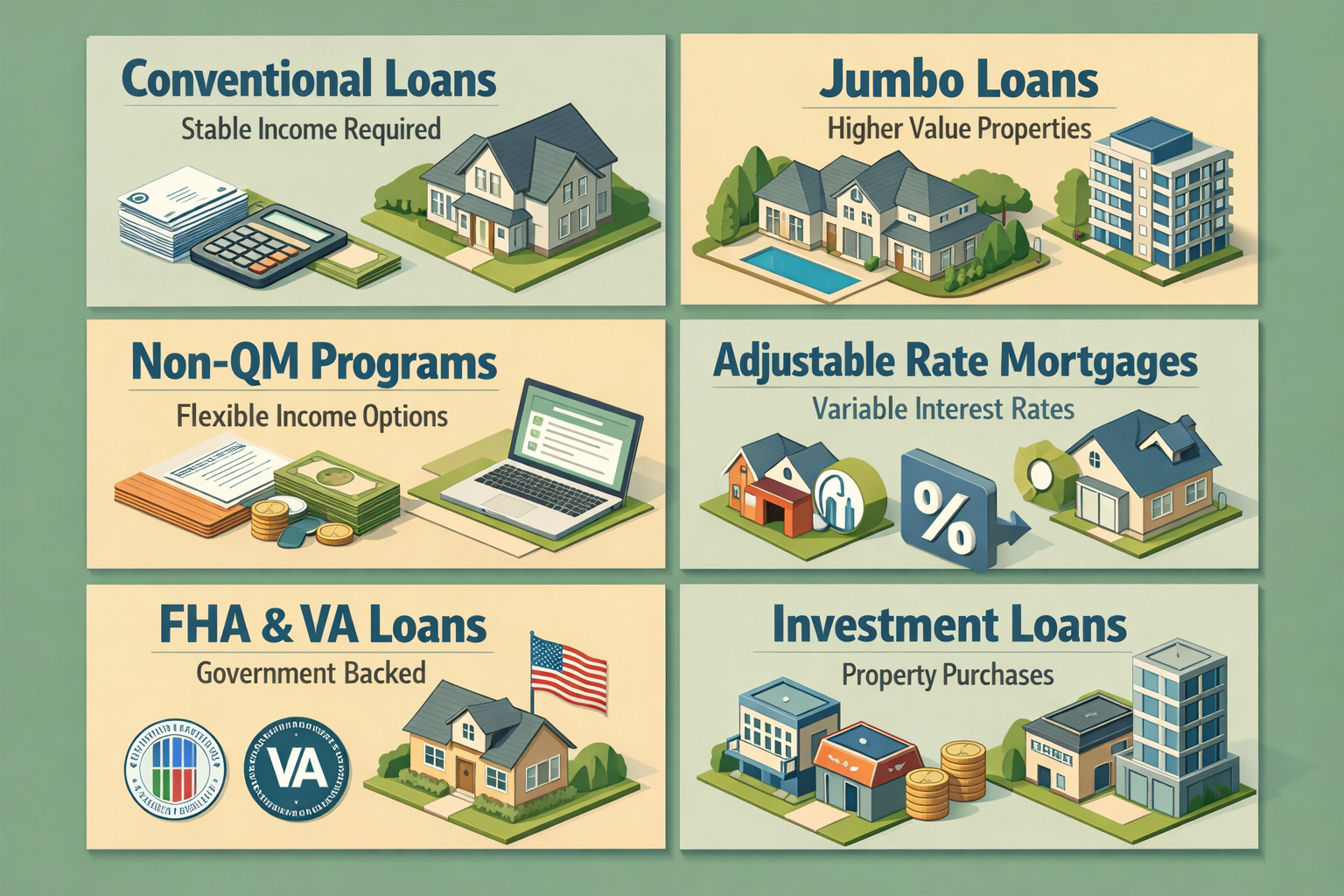
Not every loan program handles non-traditional income the same way. Understanding which options align with your financial profile is a key step in exploring your options for refinancing an ARM mortgage with dividend income from stocks.
Conventional Conforming Loans
Conventional loans backed by Fannie Mae or Freddie Mac do allow dividend income as qualifying income, provided the borrower can document it through tax returns and prove the assets generating that income will remain available post-closing. These programs can be a solid fit for borrowers with strong credit scores, stable dividend histories, and reasonable loan-to-value (LTV) ratios. Conforming loan limits apply, so if your loan balance exceeds those thresholds, you may need to look at jumbo options.
Jumbo Mortgage Refinancing
For higher-value properties, jumbo loans are often the go-to refinance vehicle. Jumbo lenders tend to be portfolio lenders — meaning they hold the loans rather than selling them — which can give them more flexibility in how they evaluate income. Some jumbo lenders may be more comfortable with investment-heavy borrower profiles, including those who rely heavily on dividend income. However, jumbo programs typically require excellent credit, significant reserves, and lower LTV ratios.
Non-QM (Non-Qualified Mortgage) Programs
Non-QM loans are designed for borrowers whose income doesn't fit neatly into standard qualification boxes. Asset depletion or asset utilization programs, for example, allow lenders to calculate qualifying income based on your total investable assets — including your stock portfolio — divided over a set number of months. This approach could work well if your dividend income alone doesn't quite hit the required threshold, but your overall portfolio value is substantial. Non-QM loans may carry slightly higher rates, but they offer meaningful flexibility.
Documentation You'll Likely Need to Support Your Application
Gathering the right paperwork ahead of time can make the refinance process smoother and faster. When using dividend income to qualify, you'll generally want to prepare the following:
- Two years of federal tax returns (IRS Form 1040) — including Schedule B showing interest and dividend income
- Recent brokerage account statements — typically the most recent two to three months, showing the current value of your stock holdings
- Proof of ongoing income — some lenders may request a letter from your brokerage or financial advisor confirming expected future distributions
- Current mortgage statement — to confirm your existing ARM balance, remaining term, and current rate
- Credit report authorization — lenders will pull your credit as part of the underwriting process
- Property appraisal — a current home valuation to determine LTV for the new loan
If you also earn W-2 wages, self-employment income, or rental income, those documents will be needed too. The more complete your file, the more smoothly underwriting tends to go. Working with a loan officer experienced in investment income borrowers can help you anticipate any additional requirements upfront.
Strategies to Strengthen Your Refinance Application
Even with consistent dividend income, there are steps you can take to improve your overall refinance profile before you apply.
Maintain a Strong Credit Score
Credit scores play a major role in the rate you're offered and whether your application is approved at all. Before applying, review your credit report for any errors and pay down revolving balances where possible. A score above 740 typically unlocks the most competitive rates, though many programs accommodate scores in the 680–739 range as well.
Keep Your DTI Ratio in Check
Lenders typically prefer a DTI at or below 43% for conventional loans, though some programs allow higher ratios with compensating factors. If your dividend income brings your total income up while your debts remain manageable, you may find yourself in a favorable DTI position. Reducing high-interest consumer debt before refinancing ARM mortgage could improve your ratios further.
Preserve Your Investment Portfolio
Since lenders may require that the assets generating your dividend income remain intact after closing, it's wise to avoid making large portfolio changes during the loan process. Selling holdings to cover closing costs, for instance, could disqualify some of that income from your qualifying calculation. If you need liquidity for closing, consider other sources such as savings accounts or a cash-out refinance component.
Consider Your LTV Ratio
The loan-to-value ratio — your loan balance divided by your home's appraised value — affects both your approval odds and your rate. A lower LTV generally means better terms. If your home has appreciated since your original purchase, that equity could work in your favor during refinancing.
Timing Your Refinance Around Market Conditions and Portfolio Performance
Timing matters in refinancing, and homeowners with stock portfolios have an added layer of consideration. Interest rate environments shift frequently, and the spread between your current ARM rate and available fixed rates will heavily influence whether refinancing makes financial sense at a given moment.
A break-even analysis can help here. Calculate your monthly savings from refinancing your adjustable-rate mortgage, then divide your estimated closing costs by that number to find how many months it would take to recoup the upfront expense. If you plan to stay in your home well beyond that break-even point, refinancing may make good financial sense.
On the portfolio side, consider whether your dividend income has been consistent over the past two or more years. If you recently shifted your investment strategy or if income was unusually low in a given tax year, lenders may average that lower figure into your qualifying income. Timing your application during a period of strong, documented income history can work to your advantage.
It's also worth consulting with a financial advisor who can help you understand the tax implications of any portfolio adjustments you make in connection with your refinance. Keeping your investment strategy aligned with your mortgage goals can help you avoid unintended consequences.
●Conclusion
Refinancing an adjustable-rate mortgage while drawing on dividend income from stocks is absolutely achievable — it just requires preparation, the right loan program, and a lender who understands how to work with investment income. Whether you're drawn to the stability of a conventional fixed-rate loan, the flexibility of a jumbo product, or the creative underwriting of a non-QM program, your options for refinancing an ARM mortgage with dividend income from stocks are broader than many borrowers realize. Start by organizing your documentation, reviewing your credit profile, and speaking with a knowledgeable mortgage advisor who can match your unique financial picture to the most suitable refinance path. The equity you've built, combined with a well-documented income stream, may put you in a stronger position than you think.