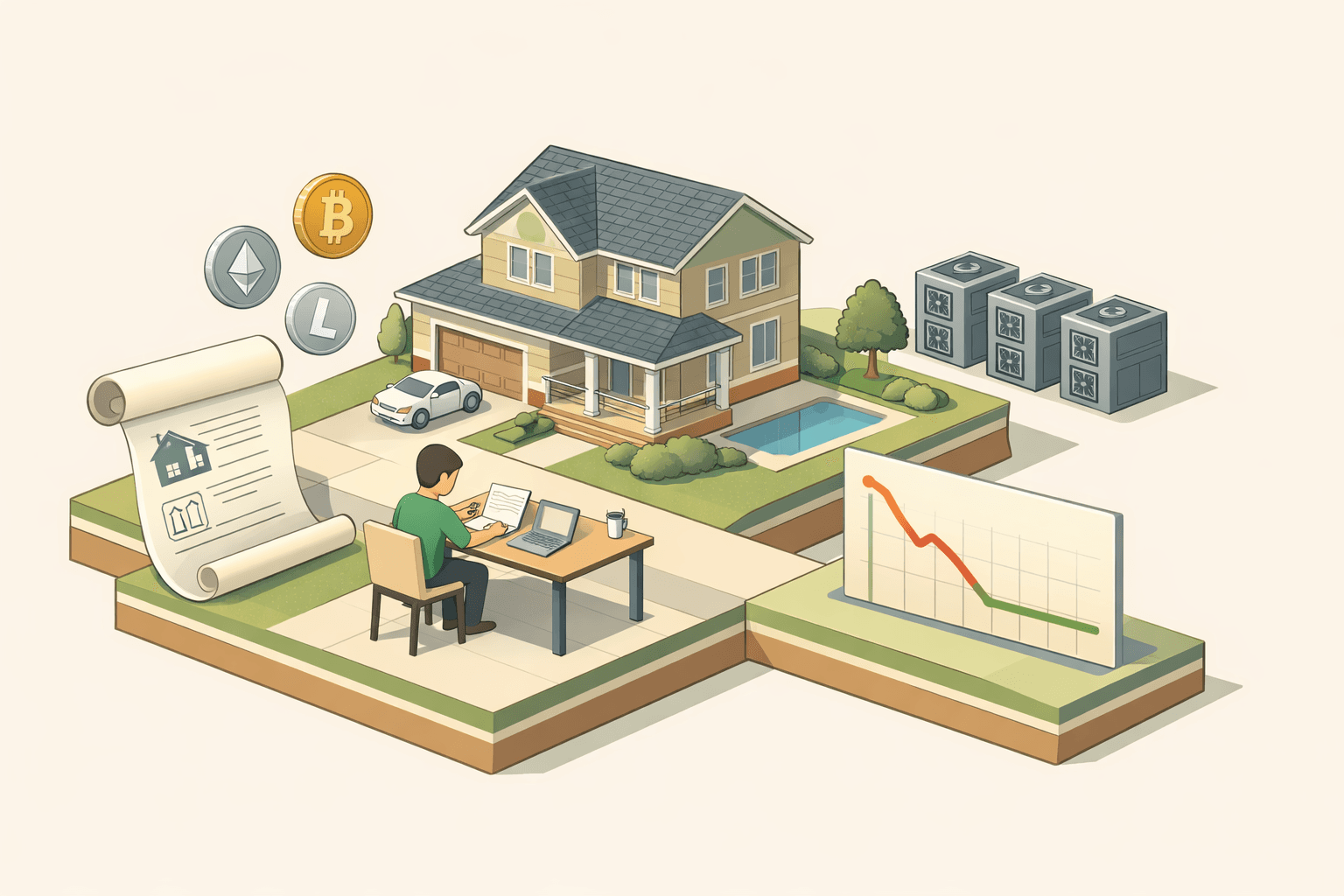
Navigating the mortgage market with non-traditional income can feel overwhelming — especially when you're sitting on an adjustable-rate mortgage (ARM) that could reset at any time. For homeowners who earn income through cryptocurrency mining, the challenge is real. Lenders tend to favor predictable, documentable income sources, and crypto mining earnings don't always fit neatly into that box. Still, there are options for refinancing ARM mortgage with cryptocurrency mining income that may work in your favor. This guide walks you through how lenders evaluate variable income like crypto earnings, what documentation you'll likely need, and which loan programs might offer the most flexibility.
Understanding Why an ARM Refinance Matters for Crypto Miners
An adjustable-rate mortgage starts with a fixed interest rate for an introductory period — often five, seven, or ten years — before adjusting periodically based on a benchmark index. Many homeowners who took out ARMs during periods of low rates are now watching their payments creep upward as rates reset. For cryptocurrency miners, who often deal with volatile income month to month, an unpredictable mortgage payment on top of an unpredictable income stream can create serious financial strain.
Refinancing into a fixed-rate mortgage is a common strategy to lock in a stable monthly payment. For crypto miners, the appeal is clear: if you can replace a fluctuating ARM payment with a consistent fixed-rate obligation, you gain more control over your household budget — even when your mining revenue swings up or down. The key challenge is convincing a lender that your income, despite its volatility, is reliable enough to support the new loan.
It's worth understanding that lenders don't just look at how much you earned last month. They're typically interested in a sustained income history, usually covering at least 24 months, that demonstrates your ability to service the debt. Crypto mining income may qualify — but the documentation requirements are often more involved than those for a salaried borrower.
How Lenders View Cryptocurrency Mining Income and Why It's Complicated
Cryptocurrency mining income is generally treated as self-employment income by most lenders. This is because miners operate independently, manage equipment and operational expenses, and receive earnings that fluctuate with coin prices and network difficulty. From an underwriting perspective, this classification brings both opportunities and hurdles.
On the opportunity side, self-employment income is an accepted income type under most conventional and non-QM (non-qualified mortgage) loan programs. On the hurdle side, lenders will typically want to see a two-year history of this income documented through tax returns — and they'll often use the net income figure after business deductions, not your gross mining revenue. If you've written off significant equipment costs or electricity expenses, your qualifying income may be lower than you expect.
There's also the question of income trending. Underwriters often look at whether your income is increasing or decreasing year over year. If your cryptocurrency mining revenue has dropped in recent years — which can happen during bear markets or as mining difficulty increases — a lender may average your two-year income at a reduced figure, or in some cases decline to use that income altogether if the trend is negative enough.
Additionally, some lenders are still cautious about cryptocurrency-related income in general, as regulatory guidance from agencies like Fannie Mae and Freddie Mac continues to evolve. This means the lender you approach may have significant influence over whether your income qualifies at all.
Documentation You'll Need to Support Your ARM Refinance Application
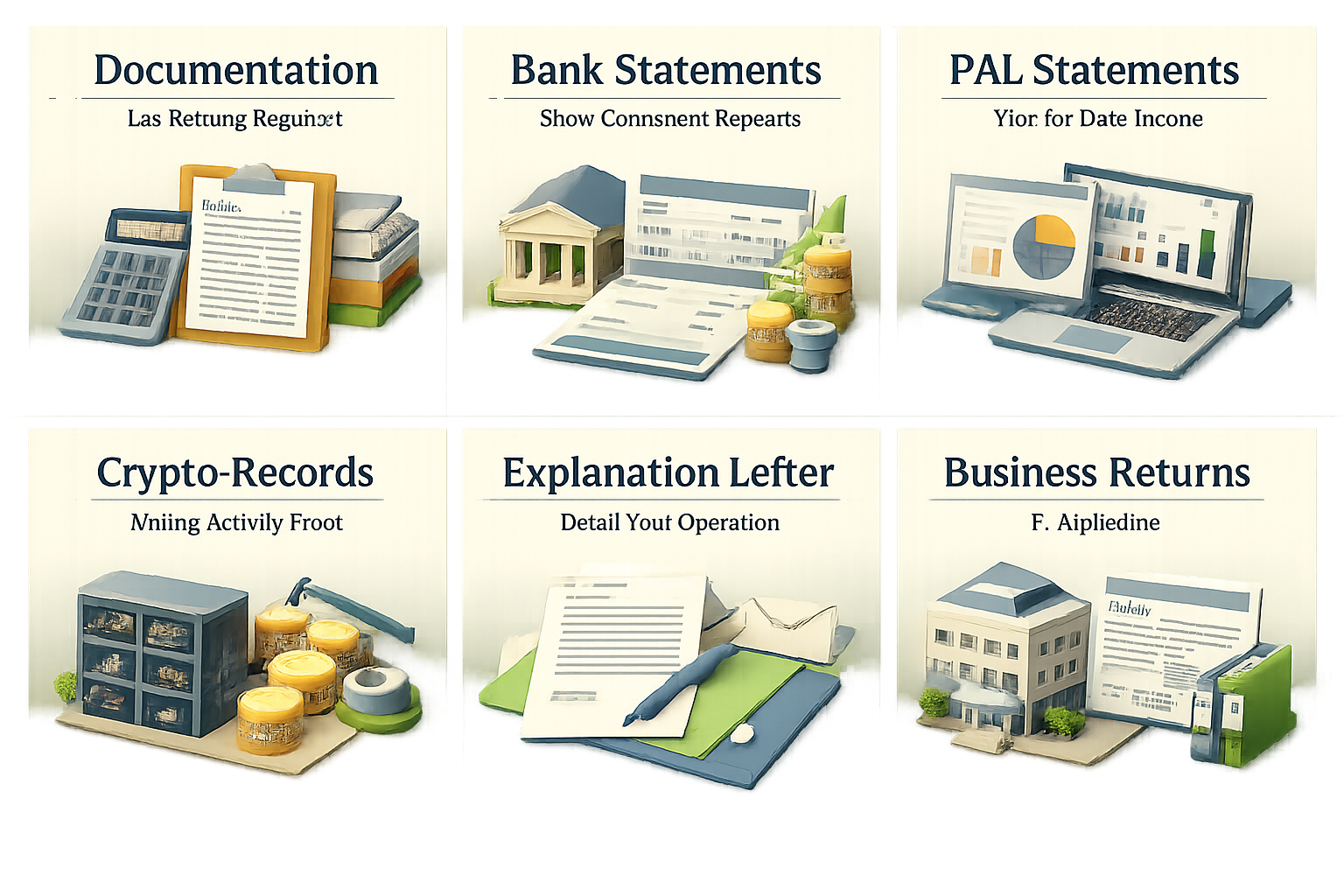
Preparation is one of the most important steps when pursuing an ARM refinance with crypto income. Lenders will typically require a more thorough documentation package than they'd ask of a W-2 employee. Getting this paperwork organized ahead of time can help speed up underwriting and reduce the chance of a last-minute denial.
- Two years of personal tax returns (IRS Form 1040): These are the foundation of your income verification. Lenders will use your net income from Schedule C or similar forms.
- Two years of business tax returns (if applicable): If your mining operation is structured as an LLC or other business entity, you may need to provide business returns as well.
- Profit and loss statements: Some lenders, particularly those offering non-QM products, may accept a year-to-date P&L prepared by a CPA.
- Bank statements: Statements showing consistent deposits from your mining activity can help support your case, especially for bank statement loan programs.
- Crypto wallet or exchange records: Some lenders may request documentation of your mining activity, including records from platforms like Coinbase, Kraken, or mining pool payouts.
- Explanation letter: A written explanation of your mining operation — how it works, how long you've been doing it, and how you receive income — can help an underwriter better understand your situation.
The more organized and transparent your documentation, the better your chances of moving through underwriting smoothly. Working with a CPA who has experience in cryptocurrency taxation can be especially helpful when preparing your returns.
Loan Programs That May Work for Variable Income Mortgage Borrowers
Not every loan program handles non-traditional income the same way. Depending on your financial profile, one of the following options might be a good fit when exploring options for refinancing ARM mortgage with cryptocurrency mining income.
Conventional Loans with Self-Employment Guidelines
If your tax returns show at least two years of mining income and your debt-to-income (DTI) ratio is within acceptable limits, a conventional loan backed by Fannie Mae or Freddie Mac may be possible. These loans typically require a minimum credit score around 620, though higher scores will help you access better rates. Keep in mind that conventional guidelines around crypto income are still developing, so lender overlays — internal rules stricter than agency guidelines — may apply.
Non-QM Bank Statement Loans
Non-qualified mortgage (non-QM) products are specifically designed for borrowers whose income doesn't fit traditional documentation requirements. A bank statement loan allows lenders to calculate your qualifying income based on 12 to 24 months of bank deposits rather than tax returns. This can be advantageous if your tax returns show lower net income due to business deductions but your actual cash flow is strong. However, non-QM loans often come with higher interest rates and may require a larger down payment or higher equity position for a refinance.
Asset-Based or Asset Depletion Loans
If you hold significant cryptocurrency assets or other liquid reserves, some lenders offer asset-based lending programs that calculate qualifying income from your total asset portfolio rather than your earned income. This could be a compelling path if your mining income is inconsistent but you've accumulated meaningful holdings. Note that lenders may apply a discount or haircut to the value of crypto assets when calculating eligibility, and not all lenders will accept cryptocurrency as a qualifying asset at all.
DSCR Loans for Investment Properties
If the property you're refinancing is an investment or rental property rather than a primary residence, a Debt Service Coverage Ratio (DSCR) loan might be worth exploring. These loans qualify borrowers based on the property's rental income rather than personal income, which means your cryptocurrency mining earnings may not need to be the primary qualifying factor.
Strategies to Strengthen Your Refinance Application Before Applying
Even if your income situation is complex, there are steps you can take to improve your odds of refinancing successfully. These strategies may help present your financial profile in the most favorable light possible.
- Build or maintain a strong credit score: A higher credit score can offset concerns about income volatility. Aim for a score of 700 or above if possible, and address any derogatory marks well before applying.
- Reduce your debt-to-income ratio: Pay down credit card balances or other revolving debt before applying. A lower DTI gives lenders more comfort that you can manage your new mortgage payment.
- Increase your home equity position: The more equity you have in your home, the less risk a lender assumes. If your home has appreciated since your original purchase, a new appraisal may work in your favor.
- Maintain consistent mining income history: Avoid large gaps in mining activity in the months leading up to your application. Lenders want to see that your income source is active and ongoing.
- Work with a mortgage broker who understands non-traditional income: Not all lenders are equally experienced with crypto income. A broker with access to multiple lenders — including non-QM specialists — can help match you with the right program.
- Convert crypto gains to fiat currency strategically: If you're planning to use cryptocurrency assets as reserves or toward closing costs, consult with a tax advisor about the timing of conversions to minimize tax liability and provide a clean paper trail.
Timing Your ARM Refinance in Today's Rate Environment
Interest rates have moved considerably in recent years, and timing a refinance involves weighing several factors beyond just your personal qualification. For homeowners with ARMs approaching their first or subsequent adjustment date, acting before the reset could lock in a rate that's more favorable than where the adjustable rate might land.
It's also worth considering the break-even point of a refinance. Closing costs on a refinance typically range from 2% to 5% of the loan amount, depending on your location and lender. Dividing those costs by the monthly savings from your new payment gives you a rough estimate of how many months it will take to recoup the expense. If you plan to stay in the home well beyond that break-even point, refinancing likely makes financial sense.
For cryptocurrency miners, there's an additional timing consideration: your tax return history. If you've only recently started mining or only began reporting the income on your most recent return, you may need to wait until you have a two-year documented history before qualifying under most programs. Planning ahead and building that track record now can put you in a much stronger position when you're ready to apply.
●Conclusion
Exploring the options for refinancing ARM mortgage with cryptocurrency mining income takes patience, preparation, and the right lending partner. While the path may be less straightforward than a typical refinance, it's far from impossible. Non-QM programs, bank statement loans, and asset-based products have opened meaningful doors for borrowers with variable or non-traditional income sources. The most important steps you can take are documenting your income thoroughly, maintaining a strong credit profile, and working with a mortgage professional who genuinely understands your situation. If your ARM is approaching a rate adjustment, don't wait — start gathering your documentation and exploring your options today. The sooner you act, the more time you have to find the right program and lock in terms that protect your financial future.