Purchasing a property that sits on agriculturally zoned land can be a dream come true — rolling acreage, open skies, and a quieter way of life. But for many homebuyers, the financing journey quickly reveals that not all lenders treat these properties the same way as a standard suburban home. If you're wondering how to get a mortgage for a home with agricultural zoning restrictions, you're not alone. Many buyers are surprised to discover that zoning designations can significantly affect loan eligibility, appraisal outcomes, and the type of lenders willing to finance the purchase. The good news is that financing options do exist, and with the right preparation and guidance, securing a mortgage on an ag-zoned property is entirely achievable.
What Agricultural Zoning Actually Means for Your Mortgage
Agricultural zoning is a land-use designation assigned by local governments to preserve farmland and regulate what activities are permitted on a parcel. Properties with this designation might include hobby farms, rural residential homes, ranches, or land with active crop production. The presence of this zoning label doesn't automatically disqualify a property from mortgage financing — but it does introduce a layer of complexity that buyers need to understand early in the process.
From a lender's perspective, agricultural zoning raises questions about the primary use of the property. Most conventional mortgage programs are designed to finance residential properties, not commercial or agricultural operations. If a lender determines that a home functions primarily as an agricultural business rather than a residence, it may fall outside the guidelines of standard home loan programs. This distinction is crucial, and it's one reason why working with an experienced mortgage professional who understands rural and ag-zoned properties is so important.
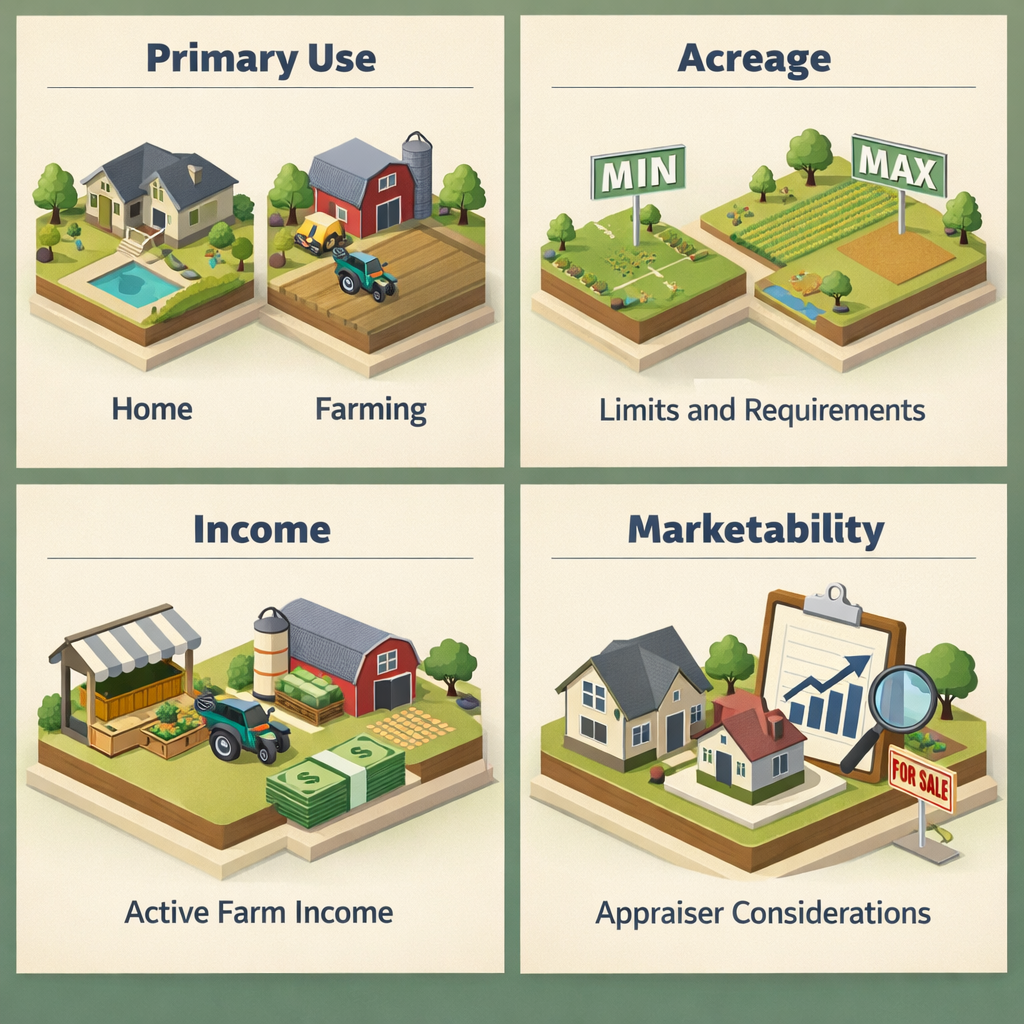
Key factors that lenders typically evaluate include:
- Primary use of the property: Is the home the main structure, and is farming a secondary activity?
- Acreage: Many conventional loan programs have acreage limits or require that excess land doesn't detract from the property's residential value.
- Income from agricultural activity: Active farm income can complicate underwriting and may require additional documentation.
- Marketability: Appraisers must determine whether the property would appeal to a typical buyer in that market.
Understanding how these factors interact with your specific property will help you set realistic expectations before you apply for financing.
Loan Programs That May Work for Agriculturally Zoned Properties
Not every loan program handles agricultural zoning the same way. Some are more flexible than others, and knowing which programs to explore could save you a significant amount of time and frustration. Here's a look at the options that might be available to you.
USDA Rural Development Loans
The USDA Single Family Housing Guaranteed Loan Program is often one of the first options to consider for rural and ag-zoned properties. These loans are designed specifically for properties in eligible rural areas and may be a strong fit when the home is the primary structure on the land. However, USDA loans do come with restrictions — the property must meet the agency's definition of a rural area, and the land's primary purpose must remain residential rather than income-producing agriculture. Buyers should also be aware that USDA loans have income limits that vary by county and household size.
Conventional Loans with Portfolio Lenders
Conventional loans backed by Fannie Mae or Freddie Mac can sometimes be used for properties with agricultural zoning, but they typically come with guidelines that limit the financing of properties where farming is the primary use. However, portfolio lenders — those who keep loans on their own books rather than selling them to the secondary market — may have more flexible internal guidelines. These lenders might be more willing to consider the full picture of a property, especially when the home itself is the dominant feature and any agricultural activity is minimal or hobby-level.
Farm Credit Lenders and Agricultural Lending Institutions
Farm Credit System institutions, such as Farm Credit Services or AgriBank affiliates, specialize in financing agricultural and rural properties. These lenders are experienced in evaluating properties that blend residential use with farmland, and they may offer products specifically designed for this type of hybrid ownership. Interest rates and terms can vary, but borrowers often find that these institutions are far more comfortable with agricultural zoning than traditional retail banks.
FHA Loans on Rural Properties
FHA loans may be available for properties in rural or ag-zoned areas, provided the home meets the FHA's minimum property standards and the primary use is residential. FHA appraisers are trained to flag properties where the agricultural component might affect habitability or marketability. If the property passes appraisal and meets FHA guidelines, this could be a viable path — particularly for buyers with lower down payments or credit scores that don't qualify for conventional financing.
How to Find Agricultural Zoning Mortgage Lenders
One of the biggest challenges buyers face is simply finding the right lender. Not every bank or mortgage company has experience with ag-zoned properties, and approaching the wrong lender can lead to unnecessary denials or delays. Finding agricultural zoning mortgage lenders who understand the nuances of rural property financing is a critical first step.
Here are some practical strategies to help you connect with the right financing partners:
- Work with a mortgage broker: A broker who specializes in rural or non-QM lending may have access to multiple lenders who actively finance ag-zoned properties. This can be far more efficient than approaching lenders one at a time.
- Contact your local Farm Credit office: Farm Credit institutions are geographically distributed and often have deep knowledge of local land markets. A quick call or visit can help you understand whether they can serve your financing needs.
- Ask your real estate agent for referrals: Agents who specialize in rural or equestrian properties typically have relationships with lenders who've successfully closed deals on similar properties.
- Check with community banks and credit unions: Local financial institutions sometimes have more flexibility in their lending criteria and may be familiar with the agricultural zoning patterns in your area.
- Explore state agricultural finance programs: Many states operate their own agricultural lending programs or offer guarantees that can make it easier for buyers to get a mortgage on rural properties.
When you do connect with a potential lender, be upfront about the property's zoning, acreage, and any existing agricultural use. Providing complete information early helps lenders give you an accurate assessment of what's possible.
Getting Your Property Appraised and Meeting Lender Requirements
The appraisal process is one of the most important — and sometimes most challenging — steps when financing a home with agricultural zoning. Standard residential appraisers may not have the experience needed to accurately evaluate a rural property with mixed-use characteristics. If an appraiser undervalues the property or flags it as primarily agricultural, it could derail your financing entirely.
Here's what you can do to set the appraisal process up for success:
- Request an appraiser with rural property experience: Ask your lender to assign or approve an appraiser who has demonstrated experience with agricultural or rural residential properties. Some lenders will accommodate this request, and it can make a meaningful difference in the outcome.
- Prepare comparable sales data: Work with your real estate agent to gather recent sales of similar properties in the area. Providing this data to the appraiser can help ensure they're using the most relevant comparables.
- Document the residential use of the property: If there's a home on the land that is clearly the primary structure, make sure this is well-documented. Utility records, photos, and a clear floor plan can all help establish residential intent.
- Understand lender acreage guidelines: Some lenders have a maximum acreage they'll accept for a residential mortgage. If your property exceeds that threshold, you may need to explore portfolio or agricultural lending options instead.
Meeting lender requirements also typically means demonstrating strong creditworthiness. A solid credit score, stable income documentation, and an appropriate debt-to-income ratio are all important factors regardless of the property type. If you're self-employed or derive income from farming activity, be prepared to provide additional documentation such as tax returns, profit-and-loss statements, and farm business records.
Common Pitfalls to Avoid When Financing an Ag-Zoned Home
Even well-prepared buyers can run into obstacles when navigating the mortgage process for agriculturally zoned properties. Being aware of common mistakes ahead of time can help you avoid costly delays or denials.
Assuming Any Lender Can Help
One of the most common missteps is applying for a conventional residential mortgage without first confirming that the lender has experience with ag-zoned properties. A lender who isn't familiar with these nuances may pre-approve you based on your financials alone, only to decline the loan during underwriting once the property's zoning is flagged. Always verify the lender's experience before submitting a full application.
Ignoring the Impact of Active Farm Income
If the property currently generates farm income — whether from crop leases, livestock, or other agricultural activity — this can complicate how underwriters classify the property. Some programs may treat it as a commercial or mixed-use asset rather than a primary residence. Be transparent about any existing income streams and discuss how they might affect your loan eligibility early in the process.
Overlooking Title and Easement Issues
Agricultural properties sometimes come with unique financing challenges like easements, mineral rights considerations, or deed restrictions that can affect financing. A thorough title search and review of any recorded agreements on the land is essential before you proceed. Some lenders may decline to finance a property where certain types of easements exist, particularly those that grant third parties access to or use of the land.
Underestimating the Timeline
Financing a home with agricultural zoning restrictions often takes longer than a standard residential purchase. Finding the right lender, securing an appropriate appraisal, and navigating additional underwriting requirements can add weeks to the process. Build this into your timeline and communicate clearly with your seller about potential delays.
Building a Strong Financial Profile Before You Apply
Because agricultural zoning introduces added complexity, lenders often look more carefully at the borrower's financial profile when evaluating these loans. Strengthening your application before you apply can improve your chances of approval and may even help you secure better terms.
Consider the following steps to put your best foot forward:
- Review and improve your credit score: Pull your credit reports from all three bureaus and address any errors or outstanding accounts that may be dragging down your score. Most conventional programs prefer a score of at least 620, though some lenders may set higher thresholds for rural or non-standard properties.
- Save for a larger down payment: A higher down payment reduces the lender's risk and may open up more financing options. Some agricultural lending programs and portfolio lenders may require 20% or more down.
- Organize your income documentation: Whether you're employed, self-employed, or generate any income from farm activity, have at least two years of tax returns, W-2s, and bank statements ready to provide.
- Reduce your debt-to-income ratio: Paying down existing debts before applying can improve your DTI, which is a key factor in loan approval for any property type.
- Get pre-qualified early: A pre-qualification with a lender experienced in agricultural properties can give you a clearer picture of your borrowing capacity and help you shop with confidence.
●Conclusion
Learning how to get a mortgage for a home with agricultural zoning restrictions requires patience, preparation, and the right team of professionals by your side. From identifying agricultural zoning mortgage lenders who understand rural property nuances, to navigating appraisals and meeting program-specific guidelines, the process has more moving parts than a standard home purchase — but it's far from impossible. Many homebuyers and rural property enthusiasts successfully secure financing on ag-zoned homes every year by doing their homework and partnering with experienced lenders. At LoanWise, we're here to help you explore your options and connect you with the right resources for your unique situation. Ready to take the next step? Reach out to a LoanWise mortgage specialist today and start your journey toward owning the rural property you've been dreaming about.