
Strategic Mortgage Refinance Options for Real Estate Investors in 2026
Real estate investors face unique opportunities in 2026 as mortgage refinance options evolve with changing market conditions. The current environment presents multiple pathways to optimize investment portfolios through strategic refinancing. From cash-out refinancing to specialized DSCR loan products, investors can leverage these mortgage refinance options to improve cash flow, access capital, and position their properties for long-term success.
Understanding which refinancing strategy aligns with your investment goals is crucial for maximizing returns. Market trends indicate that investors who act strategically with refinancing decisions may find significant advantages in the current rate environment.
Essential Cash-Out Refinance Strategies
Cash-out refinance strategies have become increasingly valuable for real estate investors looking to unlock property equity. This refinancing approach typically allows investors to access accumulated property value while potentially securing better loan terms.
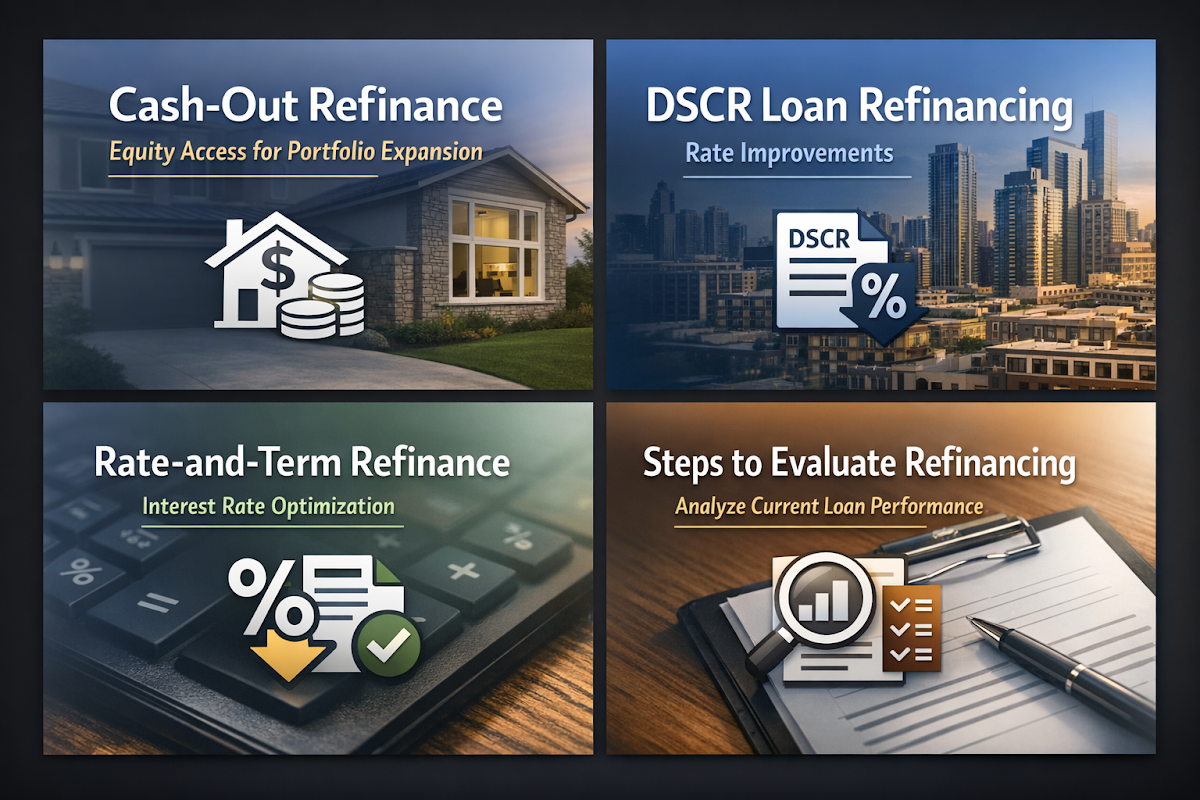
- Equity Access for Portfolio Expansion: Cash-out refinancing can provide vital liquidity for investors looking to acquire additional properties or fund major renovations that increase property value
- Strategic Debt Consolidation: Investors might consolidate higher-interest debts into a single mortgage payment, potentially reducing overall borrowing costs across their portfolio
- Capital for Property Improvements: The extracted equity often funds renovations or upgrades that enhance rental income potential and long-term property appreciation
- Market Timing Advantages: Current market forecasts suggest cash-out refinances may spike in 2026, creating opportunities for investors to capitalize on existing property equity
DSCR Loan Refinancing Benefits
DSCR loan refinancing has emerged as a particularly attractive option for real estate investors in 2026. These specialized loan products focus on property cash flow rather than personal income, making them well-suited for investment properties.
- Rate Improvements: DSCR loan rates have notably decreased since 2024, offering advantageous conditions for refinancing existing investment property loans
- Flexible Qualification Standards: These loans are tailored to real estate investor financial profiles, providing flexibility that traditional mortgages might not offer
- Portfolio-Friendly Terms: DSCR refinancing often accommodates investors with multiple properties, streamlining the refinancing process for larger portfolios
- Cash Flow Optimization: Lower rates combined with investor-focused underwriting can significantly improve monthly cash flow from rental properties
Rate-and-Term Refinance Considerations
Rate-and-term refinancing allows investors to adjust loan terms without extracting equity, focusing purely on improving loan conditions. This mortgage refinance option can be particularly effective in the current market environment.
- Interest Rate Optimization: Investors can lock in lower interest rates to reduce monthly debt service burdens and improve property cash flows
- Loan Term Adjustments: Modifying loan terms might help investors better align payment schedules with their investment strategies and cash flow needs
- Payment Structure Changes: Some investors benefit from switching between fixed and adjustable rate structures based on their risk tolerance and market outlook
- Portfolio Rebalancing: Strategic refinancing can help investors rebalance their loan portfolio to optimize overall returns and risk exposure
Steps to Evaluate Refinancing Opportunities
Successfully navigating mortgage refinance options requires a systematic approach to evaluating potential opportunities. These steps can help investors make informed refinancing decisions.
- Analyze Current Loan Performance: Review existing loan terms, interest rates, and monthly payments against current market conditions to identify potential savings opportunities
- Calculate Break-Even Timelines: Determine how long it takes for refinancing savings to offset closing costs and fees associated with the new loan
- Assess Property Value Changes: Obtain updated property valuations to understand available equity and refinancing options based on current market values
- Compare Loan Product Options: Evaluate different refinancing products including conventional loans, DSCR loans, and specialized investor products to find the best fit
Implementation Timeline for Refinancing
Planning the refinancing process timeline helps investors coordinate refinancing activities with their broader investment strategies. Understanding typical timeframes can improve decision-making and portfolio management.
- Initial Research and Preparation Phase: Gather financial documents, research lenders, and compare mortgage refinance options typically taking 2-4 weeks for thorough preparation
- Application and Underwriting Process: Submit applications and navigate lender underwriting, which often takes 30-45 days depending on loan complexity and lender efficiency
- Property Appraisal and Verification: Complete property inspections and value assessments, usually requiring 1-2 weeks once scheduled with qualified appraisers
- Closing and Fund Disbursement: Finalize loan documents and receive funds, typically occurring within 1-2 weeks after final approval and clearing all conditions
Market Conditions and Strategic Timing
The 2026 mortgage market presents unique conditions that may influence refinancing decisions for real estate investors. Understanding these market dynamics helps investors time their refinancing activities strategically. Current trends suggest that adjustable-rate mortgages are returning as rates drop, providing additional refinancing options for investors managing rental property portfolios. These products could mean additional opportunities to reduce monthly payments and optimize cash flow. Investors who leverage lower rates and ARM products may find strategic advantages in their refinancing decisions this year. The combination of improving rate environments and expanded product options creates a favorable landscape for investment property refinancing.
●Conclusion
Strategic use of mortgage refinance options can significantly impact real estate investment success in 2026. Whether pursuing cash-out refinancing for portfolio expansion, DSCR loan refinancing for better terms, or rate-and-term refinancing for improved cash flow, investors have multiple pathways to optimize their properties.
The current market environment, with its improving rate conditions and expanded product offerings, creates opportunities for investors who approach refinancing strategically. Success typically depends on careful evaluation of individual property performance, thorough comparison of available options, and timing decisions that align with broader investment goals.
Real estate investors who take advantage of these mortgage refinance options while market conditions remain favorable may position themselves for stronger portfolio performance and enhanced long-term returns.