
Buying a home is one of the biggest financial decisions most people will ever make. Before you start touring properties or falling in love with a listing, there's a foundational step that could make or break your home purchase journey — mortgage pre-approval. Whether you're a first-time homebuyer, a repeat buyer, or someone exploring refinancing options, understanding the pre-approval process can save you time, stress, and money. In this guide, we'll walk you through everything you need to know about mortgage pre-approval, from how it works to why it matters in today's competitive housing market.
What Mortgage Pre-Approval Actually Means
Mortgage pre-approval is a formal evaluation by a lender that determines how much money you may be eligible to borrow for a home loan. Unlike a casual pre-qualification — which is typically based on self-reported information — a pre-approval involves a more thorough review of your financial background. This usually includes a hard credit inquiry, verification of your income, employment history, assets, and outstanding debts.
Once a lender completes this review, they'll issue a pre-approval letter that states the loan amount they're willing to offer, subject to certain conditions. It's important to understand that this letter is not a final loan commitment. Final approval typically happens after a property is identified, appraised, and all underwriting conditions are satisfied. Still, it's a strong signal to sellers and real estate agents that you're a serious, financially capable buyer.
It's also worth distinguishing between pre-approval and pre-qualification. Pre-qualification is generally faster and less rigorous — it gives you a rough estimate of borrowing power without verifying your documents. Pre-approval, on the other hand, carries significantly more weight in a real estate transaction because it reflects an actual review of your financial profile.
The Key Financial Factors Lenders Evaluate
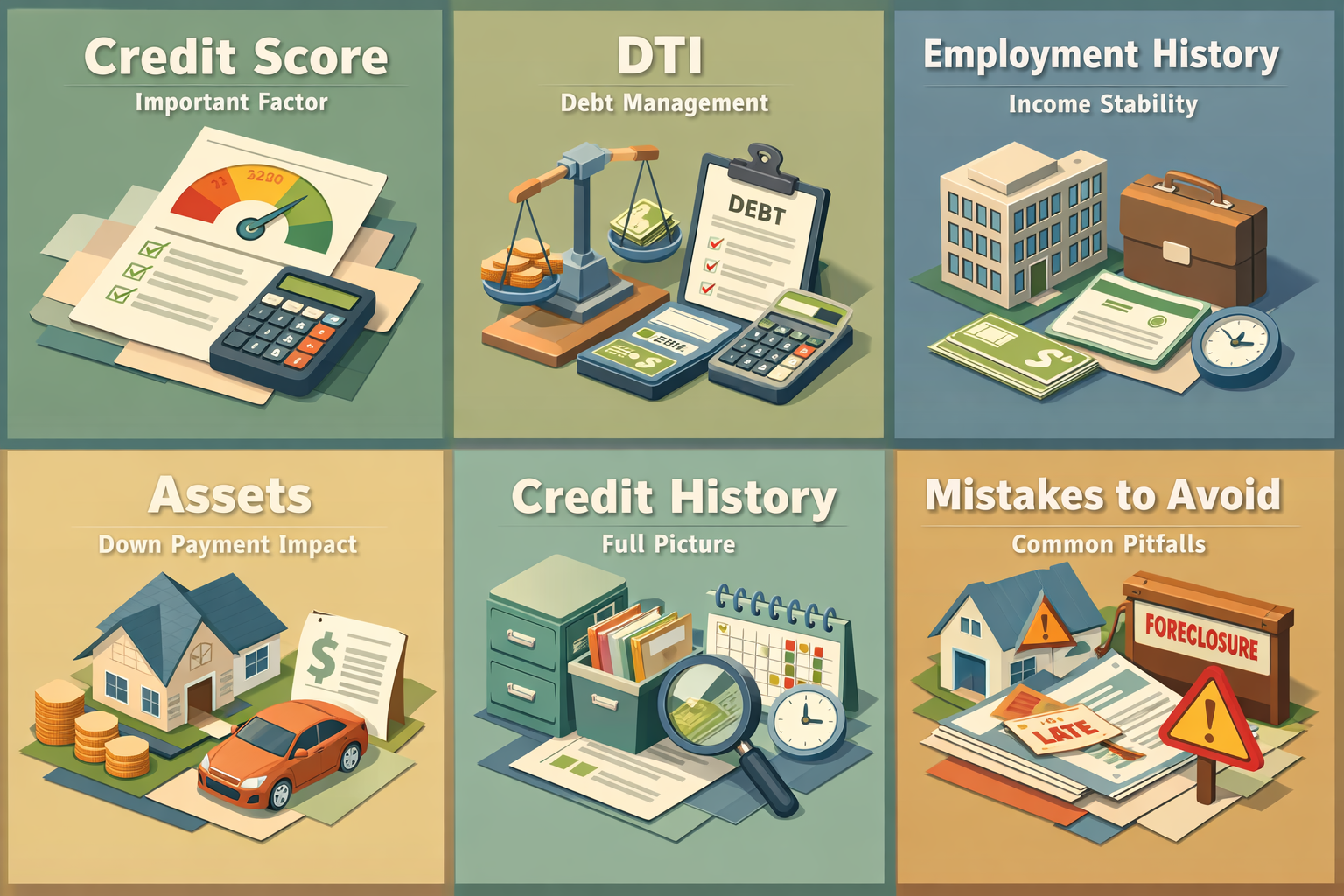
When you apply for mortgage pre-approval, lenders take a close look at several critical factors to determine your creditworthiness and borrowing capacity. Understanding these factors ahead of time can help you prepare a stronger application.
- Credit Score: Your credit score is one of the most important factors in the pre-approval process. Higher scores typically translate to better interest rates and more favorable loan terms. Many conventional loan programs may require a minimum score, though certain government-backed programs like FHA loans can be more flexible.
- Debt-to-Income Ratio (DTI): Lenders calculate your DTI by dividing your total monthly debt obligations by your gross monthly income. A lower DTI ratio generally signals to lenders that you have enough income to manage your mortgage payments comfortably. Most lenders prefer a DTI below a certain threshold, though the acceptable range can vary by loan type.
- Employment and Income Verification: Lenders want to see a stable employment history, typically reviewing your W-2s, pay stubs, or tax returns for the past couple of years. Self-employed borrowers may need to provide additional documentation, such as profit-and-loss statements.
- Assets and Down Payment: The size of your down payment can influence your loan terms, interest rate, and whether you'll need to pay private mortgage insurance (PMI). Lenders will also want to verify that your down payment funds have been in your account for a sufficient period — not just recently moved or gifted without documentation.
- Credit History: Beyond just your score, lenders review the full picture of your credit report, including payment history, any collections, bankruptcies, or foreclosures, and how long you've had credit accounts open.
Being aware of these criteria before you apply gives you the opportunity to address any potential weaknesses in your financial profile and improve your chances of receiving a favorable pre-approval outcome.
How the Mortgage Pre-Approval Process Works Step by Step
The pre-approval process may feel daunting at first, but breaking it down into clear steps makes it much more manageable. Here's what you can typically expect:
Step 1: Gather Your Financial Documents
Before you even contact a lender, it helps to organize your financial paperwork. This commonly includes recent pay stubs, W-2 forms or tax returns from the past two years, bank statements, and documentation of any additional income sources such as rental income or investments.
Step 2: Choose a Lender and Submit Your Application
You can apply for pre-approval through banks, credit unions, mortgage brokers, or online lenders. Shopping around and comparing multiple lenders is often a smart strategy, as rates and terms can vary. When you submit your application, the lender will likely pull your credit report, which results in a hard inquiry.
Step 3: Undergoing the Lender's Review
The lender's team will review all submitted documents, verify your employment, and assess your overall financial health. This process can take anywhere from a few hours to several business days, depending on the lender and the complexity of your financial situation.
Step 4: Receive Your Pre-Approval Letter
If the lender is satisfied with your financial profile, they'll issue a pre-approval letter indicating the maximum loan amount you may qualify for. Keep in mind that pre-approval letters often have an expiration date — commonly around 60 to 90 days — so timing your home search accordingly is important.
It's also worth noting that receiving pre-approval from one lender doesn't prevent you from shopping around. In fact, comparing offers from multiple lenders within a short window may minimize the impact on your credit score.
Why Mortgage Pre-Approval Gives You a Competitive Edge
In today's competitive housing market, having a mortgage pre-approval letter in hand can make a meaningful difference when you're ready to make an offer. Sellers often prefer buyers who come pre-approved because it reduces the risk of the deal falling through due to financing issues. In multiple-offer situations, a pre-approved buyer may be viewed as a stronger candidate compared to someone who hasn't yet started the mortgage process.
Beyond impressing sellers, pre-approval also benefits you as the buyer. It sets a realistic budget so you're not wasting time looking at homes outside your price range. It can also speed up the closing process because much of the financial verification work has already been completed during pre-approval.
Real estate agents also tend to take pre-approved buyers more seriously. Many agents prefer to work with buyers who have already taken this step because it signals commitment and financial readiness. This could mean you receive more attentive service and better access to listings as they become available.
For homeowners considering a refinance, a similar documentation and evaluation process applies. Lenders will assess your current equity, credit profile, and income to determine whether a refinance makes financial sense and what terms you may qualify for.
Common Mistakes to Avoid During the Pre-Approval Process
Even well-prepared buyers can make missteps that complicate or delay the pre-approval process. Here are some of the most common pitfalls to watch out for:
- Making large financial changes before applying: Avoid opening new credit accounts, making large purchases on credit, or changing jobs right before or during the pre-approval process. These actions can shift your DTI ratio or credit score in ways that may affect your eligibility.
- Not reviewing your credit report ahead of time: Errors on your credit report are more common than many people realize. Pulling your credit report before you apply gives you time to dispute any inaccuracies and potentially improve your score before a lender conducts their review.
- Applying with only one lender: Limiting yourself to a single lender means you could miss out on better rates or terms. Comparing offers from multiple sources is a widely recommended practice among financial advisors and mortgage professionals.
- Overestimating your budget: Just because a lender pre-approves you for a certain amount doesn't mean you should borrow the maximum. Your actual comfortable budget should account for property taxes, homeowner's insurance, maintenance costs, and other ongoing expenses beyond the mortgage payment itself.
- Letting the pre-approval expire: If your home search takes longer than expected, your pre-approval letter may expire before you find the right property. Be prepared to update your documents and renew your pre-approval if needed.
How Pre-Approval Fits Into Your Broader Home Financing Strategy
Mortgage pre-approval is just one piece of a larger home financing puzzle. Once you've secured pre-approval and found a property you'd like to purchase, the next steps include making an offer, entering escrow, completing the full underwriting process, and ultimately closing on the home. Each of these stages builds on the foundation laid during pre-approval.
It's also worth thinking about how the type of loan you're pursuing affects the pre-approval process. Conventional loans, FHA loans, VA loans for eligible veterans, and USDA loans for rural buyers all have different qualification requirements and documentation standards. Knowing which loan program aligns best with your situation before you apply can help you target the right lenders and streamline the process.
For real estate investors considering their next rental or investment property, pre-approval remains equally important. Investment property loans often come with stricter qualification requirements and may require larger down payments, so getting pre-approved early gives investors a clear picture of what's feasible before they start evaluating deals.
Working with a knowledgeable mortgage professional can make all the difference. A skilled loan officer can guide you through the pre-approval process, help you understand your options across different loan programs, and position your application as strongly as possible before it reaches the underwriter's desk.
●Conclusion
Mortgage pre-approval is far more than just a formality — it's a strategic first step that sets the tone for your entire home buying experience. By understanding what lenders look for, preparing your financial documents in advance, and shopping around for the best terms, you're giving yourself the best possible foundation for a successful purchase. Whether you're a first-time homebuyer, a seasoned real estate investor, or a homeowner thinking about refinancing, taking the pre-approval process seriously can save you time, protect your budget, and put you in a stronger negotiating position. Ready to take the next step? Connect with a LoanWise mortgage professional today and discover how we can help you navigate the path to homeownership with confidence.