
Smart Mortgage Loan Prepayment Strategies for Real Estate Investors
Mortgage loan prepayment decisions can significantly impact your real estate investment returns and portfolio growth. While many investors focus on acquiring new properties, understanding when and how to pay down existing investment property loans might offer substantial financial advantages. The benefits of prepaying mortgage debt aren't always straightforward for investors, as the decision often depends on current market conditions, interest rates, and your overall investment strategy.
For real estate investors using DSCR loans, fix and flip financing, or traditional rental property mortgages, prepayment strategies require careful consideration of opportunity costs and long-term goals. Making extra mortgage payments can reduce interest expenses over time, but it also ties up capital that could potentially generate higher returns elsewhere in your portfolio.
Key Benefits of Strategic Mortgage Prepayment
Strategic mortgage prepayment offers several compelling advantages for real estate investors who choose to pay down their investment property loans ahead of schedule. These benefits can strengthen your overall portfolio position and provide greater financial flexibility.
- Reduced Total Interest Costs: Making extra mortgage payments typically reduces the total interest paid over the loan term, as each additional payment directly reduces the principal balance on which future interest calculations are based.
- Improved Cash Flow Stability: Paying off rental property mortgages early can eliminate monthly payment obligations, potentially improving your property's cash flow and reducing financial stress during market downturns.
- Enhanced Portfolio Resilience: Properties with lower loan balances or no mortgage debt may provide better protection during economic uncertainty, as they generate positive cash flow even if rental income temporarily decreases.
- Increased Borrowing Capacity: Reduced debt obligations on existing properties might improve your debt-to-income ratios, potentially making it easier to qualify for additional investment property loans or better terms on future acquisitions.
Understanding the Impact on Investment Returns
The impact of prepayment on interest and overall investment returns requires careful analysis of your specific situation and market conditions. Prepayment decisions should align with your broader investment strategy and financial objectives.
- Opportunity Cost Considerations: Extra mortgage payments represent capital that could potentially be deployed in other investments, so investors must compare the guaranteed interest savings against potential returns from alternative investments.
- Tax Implications: Mortgage interest deductions on investment properties may reduce the effective cost of carrying debt, making prepayment less attractive from a tax perspective for some investors.
- Market Timing Factors: In low interest rate environments, maintaining mortgage debt might be more advantageous, while higher rate periods could favor prepayment strategies.
- Liquidity Impact: Funds used for mortgage prepayment become less liquid, as accessing home equity typically requires refinancing or obtaining a line of credit, which may not always be available on favorable terms.
Optimal Timing for Mortgage Prepayment Decisions
Timing plays a crucial role in determining whether mortgage prepayment makes financial sense for real estate investors. Several market and personal factors can influence the optimal timing of these decisions.
- Interest Rate Environment: Higher interest rate periods may favor prepayment strategies, as the guaranteed savings from reduced interest payments become more substantial compared to potential investment alternatives.
- Portfolio Maturity Stage: Experienced investors with established portfolios might benefit more from prepayment strategies compared to newer investors who may need capital for property acquisitions and improvements.
- Market Cycle Position: During market peaks when property acquisition opportunities are limited, directing funds toward mortgage prepayment might provide better risk-adjusted returns than purchasing overpriced properties.
- Personal Financial Stability: Investors with stable income sources and adequate emergency reserves may be better positioned to commit funds to mortgage prepayment without compromising financial flexibility.
Comparing Prepayment Options for Different Loan Types
Different types of investment property loans may respond differently to prepayment strategies, and understanding these variations can help investors make more informed decisions about their mortgage prepayment approaches.
- DSCR Loan Prepayment: These investor-focused loans often have different prepayment terms compared to traditional mortgages, and some may include prepayment penalties that could affect the financial benefits of early payment.
- Fix and Flip Financing: Short-term bridge loans used for property renovations typically benefit less from prepayment strategies, as these loans are designed for quick payoff once the project is completed and sold.
- Traditional Rental Property Mortgages: Conventional investment property loans might offer the most straightforward prepayment benefits, as they typically have longer terms and more predictable interest savings calculations.
- Portfolio Loan Considerations: Some lenders offer portfolio loans with unique terms that may include different prepayment provisions, requiring careful review of loan documents before implementing prepayment strategies.
Implementation Steps for Effective Prepayment Strategy
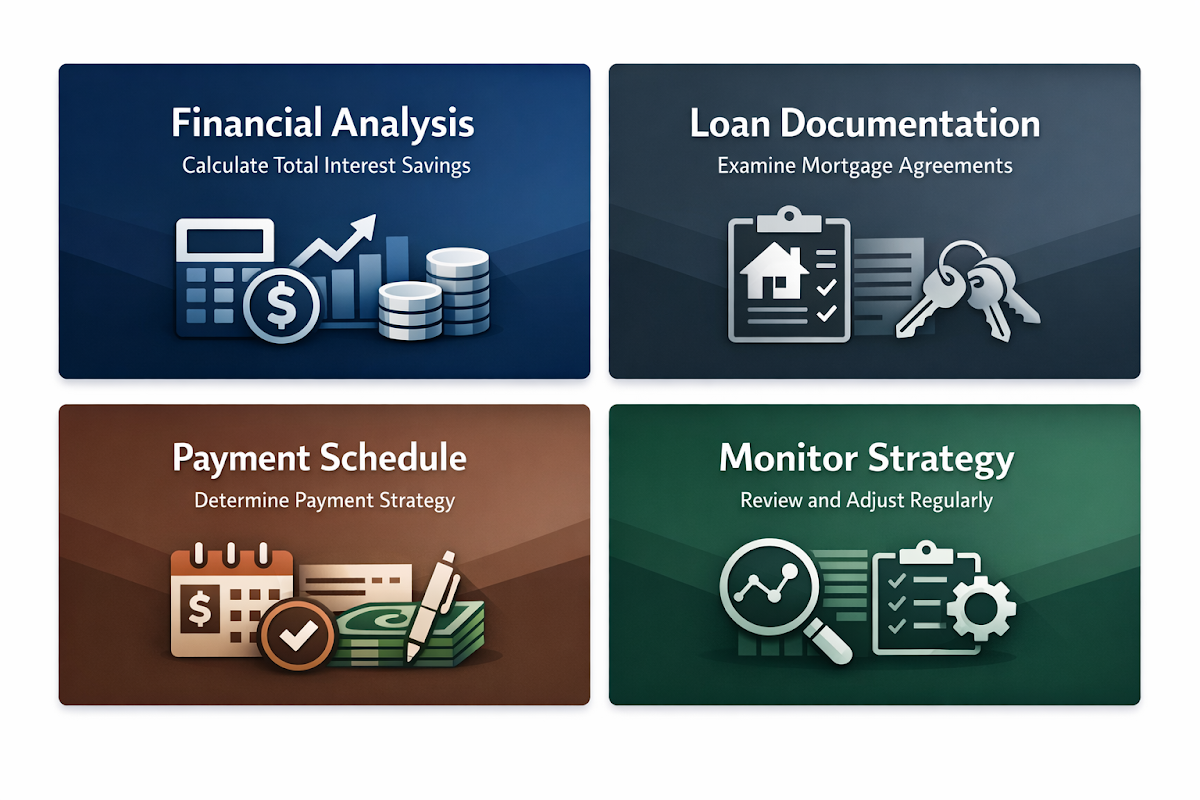
Successfully implementing mortgage prepayment strategies requires systematic planning and ongoing evaluation to ensure the approach continues to serve your investment objectives effectively.
- Conduct Financial Analysis: Calculate the total interest savings from prepayment and compare these guaranteed returns against potential returns from alternative investments, considering your risk tolerance and market conditions.
- Review Loan Documentation: Examine your mortgage agreements for prepayment penalties, minimum payment requirements, or other restrictions that could affect your prepayment strategy implementation.
- Establish Payment Schedule: Determine whether to make large lump-sum payments, regular additional monthly payments, or periodic extra payments based on your cash flow and financial goals.
- Monitor and Adjust Strategy: Regularly review your prepayment approach as market conditions, interest rates, and personal financial situations change, adjusting the strategy as needed to maintain optimal results.
- Coordinate with Tax Planning: Work with tax professionals to understand how prepayment decisions affect your overall tax situation, particularly regarding mortgage interest deductions and investment property taxation.
●Conclusion
Mortgage loan prepayment strategies can serve as valuable tools for real estate investors seeking to optimize their portfolio performance and financial stability. However, these decisions require careful consideration of multiple factors, including current interest rates, investment alternatives, tax implications, and personal financial objectives.
The most effective prepayment approaches typically align with broader investment strategies and adapt to changing market conditions. Whether you're managing DSCR loans, traditional rental property mortgages, or other investor-focused financing, understanding the benefits and limitations of prepayment can help you make more informed decisions about your real estate investment portfolio.
Consider consulting with financial advisors and tax professionals to ensure your mortgage prepayment strategy complements your overall investment approach and maximizes long-term returns while maintaining appropriate financial flexibility.