
Understanding Mortgage Loan Prepayment Penalties for Real Estate Investors
Real estate investors face unique challenges when managing mortgage debt across their portfolios. One often overlooked cost that can significantly impact your bottom line is mortgage loan prepayment penalties. These fees might apply when you pay off a loan early, refinance, or sell a property before the penalty period expires. Understanding these penalties is crucial for making informed decisions about your investment strategy and maximizing returns on your rental properties, fix and flip projects, and other real estate ventures.
What Are Prepayment Penalties and When Do They Apply
Q: Are prepayment penalties common on investment property loans?
Prepayment penalties are fees charged by lenders when borrowers pay off their mortgage loan earlier than scheduled. While these penalties have become less common on primary residence mortgages, they may still appear on certain investment property loans, particularly DSCR loans, commercial mortgages, and bridge financing. The frequency of these penalties varies significantly among different lenders and loan types, making it essential for investors to carefully review loan terms before committing to financing.
Key Factors That Trigger Prepayment Penalties
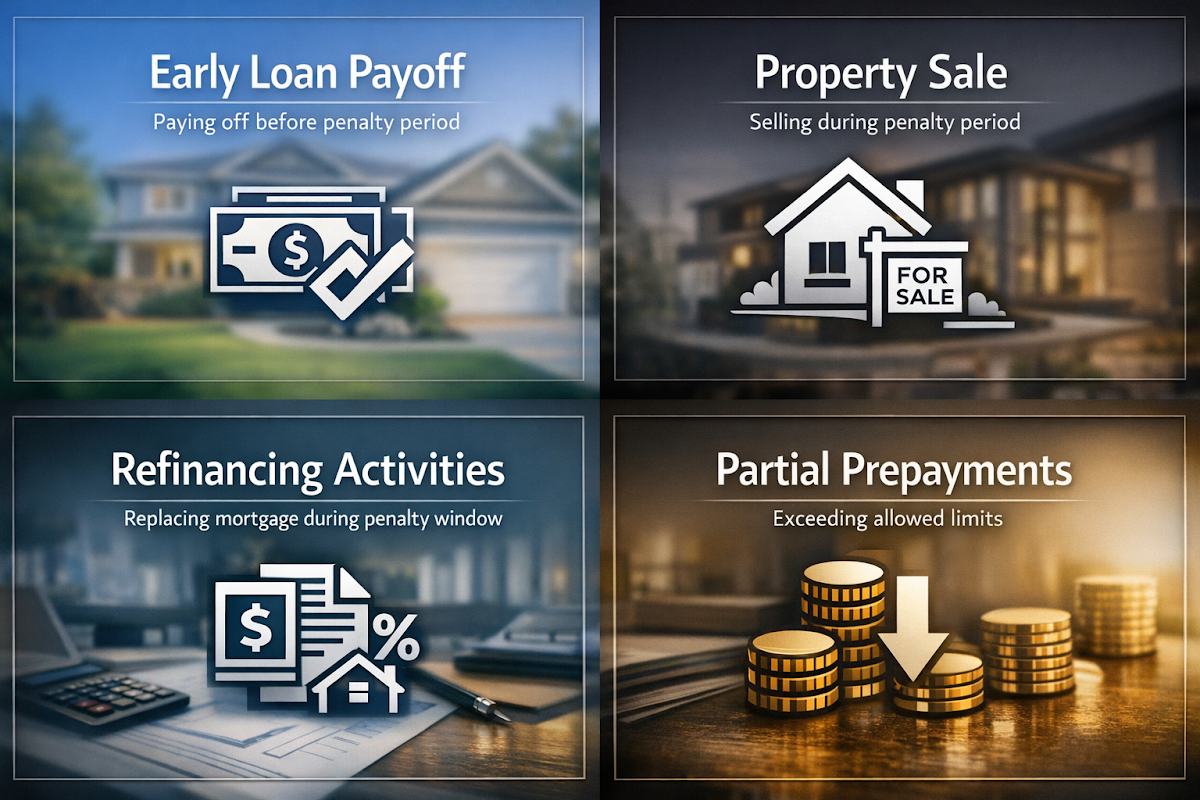
Several situations could trigger prepayment penalties on your investment property loans. Understanding these scenarios helps you plan your exit strategies and refinancing decisions more effectively.
- Early loan payoff: Paying the full loan balance before the penalty period ends, typically within the first 2-5 years of the loan term
- Property sale during penalty period: Selling an investment property that triggers the loan payoff before the penalty expiration date
- Refinancing activities: Replacing your current mortgage with a new loan from a different lender during the penalty window
- Partial prepayments exceeding limits: Making additional principal payments beyond the allowed threshold, which might be 10-20% of the original loan amount annually
Types of Investment Properties Most Affected
Certain types of investment property financing are more likely to include prepayment penalties than others. Recognizing these patterns helps investors negotiate better terms and plan their financing strategies accordingly.
- Commercial real estate loans: Multi-unit properties and commercial buildings often carry prepayment penalties to protect lender yield expectations
- Bridge and hard money loans: Short-term financing products may include penalties to ensure minimum interest income for lenders
- Portfolio loans: Large loan amounts or non-conforming investment property loans might include these penalties as risk management tools
- DSCR loan products: Some debt service coverage ratio loans include prepayment restrictions to maintain lending profitability
Calculating Prepayment Penalty Costs
Calculating prepayment penalty costs accurately helps investors make informed decisions about early payoffs and refinancing opportunities. The calculation method varies depending on your loan structure and lender requirements.
- Percentage of remaining balance method: Multiply your current loan balance by the penalty percentage specified in your loan documents, typically ranging from 1-5% of the outstanding principal
- Months of interest method: Calculate a specific number of months of interest payments as outlined in your mortgage agreement, commonly 6 months of interest
- Yield maintenance calculation: Compare the difference between your loan rate and current market rates, then apply this difference to your remaining balance over the penalty period
- Step-down penalty structure: Apply decreasing penalty rates based on how long you've held the loan, with higher penalties in earlier years gradually reducing over time
Strategic Ways to Avoid or Minimize Penalties
Smart investors employ various strategies to avoid or reduce prepayment penalties while maintaining flexibility in their investment portfolios. These approaches require careful planning and timing but can save substantial money over time.
- Negotiate penalty-free periods: Work with lenders to establish specific windows during which prepayments are allowed without fees, such as after the third year of a five-year penalty period
- Structure assumption clauses: Include loan assumption options that allow qualified buyers to take over your mortgage without triggering prepayment penalties when you sell
- Time transactions strategically: Plan property sales, refinancing, and major transactions to occur after penalty periods expire, maximizing your flexibility and minimizing costs
- Maximize allowed prepayments: Take advantage of any partial prepayment allowances in your loan terms, typically 10-20% of the original balance annually without penalty
State Regulations and Legal Protections
State laws on prepayment penalties vary significantly across the country, and understanding your local regulations helps protect your interests as an investor. Some states provide stronger consumer protections than others regarding these fees.
- Research state-specific limitations: Some states limit or prohibit prepayment penalties on certain types of mortgages, while others allow more flexibility for commercial and investment property mortgages
- Understand disclosure requirements: Many states require lenders to clearly disclose prepayment penalty terms in loan documents and provide advance notice before penalties apply
- Know your appeal rights: Certain jurisdictions provide borrowers with rights to challenge excessive or improperly applied prepayment penalties through regulatory agencies or court systems
- Consider federal regulations: While investment properties may not receive the same protections as primary residences, federal lending regulations still impose some limits on penalty structures and applications
●Conclusion
Mortgage loan prepayment penalties represent a significant cost factor that real estate investors must carefully evaluate when structuring their financing strategies. While these penalties are becoming less common overall, they still appear frequently enough on investment property loans to warrant serious consideration. By understanding how penalties work, calculating their potential costs, and implementing strategic approaches to minimize their impact, investors can make more informed decisions about their mortgage financing. Remember that avoiding mortgage prepayment penalties often requires advance planning and careful negotiation with lenders, but the potential savings make these efforts worthwhile for serious real estate investors building long-term wealth through property investments.