
Mortgage Loan Interest Rates Explained
Understanding mortgage loan interest rates can make the difference between a profitable investment deal and a costly mistake. For real estate investors, these rates directly impact cash flow, debt service coverage ratios, and overall portfolio returns. Recent market shifts have created new opportunities, with DSCR loan rates dropping significantly in early 2026 compared to previous years.
This comprehensive guide breaks down everything you need to know about investment property mortgage rates, from current market trends to proven strategies for securing better terms. Whether you're acquiring rental properties or refinancing existing investments, understanding these fundamentals will help you make more informed financing decisions.
Current Investment Property Rate Landscape
The current investment property rate landscape shows encouraging trends for real estate investors in 2026. Understanding where rates stand today helps you evaluate deals more accurately and time your financing decisions.
- DSCR loan rates have decreased significantly: Rates dropped from the previous range of 8-9% to approximately 5.875% to 7.375% for qualified borrowers in March 2026, creating better financing opportunities for rental property acquisitions
- Residential investment property rates typically range: Between 6.5% and 8.75% for DSCR loans, with actual rates depending on borrower qualifications, property type, and loan terms
- Market conditions favor investors: The rate reduction represents substantial savings on borrowing costs, making both new acquisitions and refinancing existing properties more attractive from a cash flow perspective
- Rate variations depend on multiple factors: Property location, loan-to-value ratio, debt service coverage ratio, and borrower credit profile all influence the final rate offered by lenders
Factors Influencing Investment Mortgage Rates
Several key factors influence investment mortgage rates, and understanding these elements helps you position yourself for better loan terms. Lenders evaluate risk differently for investment properties compared to owner-occupied homes.
- Property cash flow and DSCR: Your property's debt service coverage ratio directly impacts rate pricing, with higher ratios typically qualifying for better rates as they demonstrate stronger cash flow relative to debt obligations
- Down payment and loan-to-value ratio: Larger down payments reduce lender risk and often result in more favorable interest rates, with most investment property loans requiring 20-25% minimum down payments
- Credit score and financial strength: Higher credit scores and stronger overall financial profiles help secure lower rates, though investment property loans may have different credit requirements than residential mortgages
- Property type and location: Single-family rentals in strong markets might qualify for better rates than multi-unit properties or investments in declining areas, as lenders assess both property and market risk
Fixed vs Variable Rates for Investment Properties
Choosing between fixed and variable rates for investment properties requires careful consideration of your investment strategy and market outlook. Each option offers distinct advantages depending on your specific situation.
- Fixed-rate stability protects cash flow: Fixed rates provide predictable monthly payments throughout the loan term, making it easier to calculate returns and maintain consistent cash flow from rental properties
- Variable rates may offer initial savings: Adjustable-rate mortgages often start with lower initial rates than fixed options, potentially improving early cash flow, though rates can increase over time based on market conditions
- Investment timeline affects the decision: Short-term hold strategies like fix and flip projects might benefit from variable rates, while long-term rental properties often work better with fixed-rate financing for budget predictability
- Rate environment considerations matter: In rising rate environments, locking in fixed rates might provide protection, while falling rate periods could favor variable options or shorter-term fixed products
Strategies to Secure Better Investment Loan Rates
Securing better investment loan rates requires preparation and strategic positioning. These proven strategies can help you qualify for more favorable terms on your investment property financing.
- Strengthen your financial profile before applying: Improve credit scores, reduce debt-to-income ratios, and document steady income sources to present yourself as a lower-risk borrower to potential lenders
- Shop multiple lenders and loan programs: Different lenders specialize in various investment loan products, and rate spreads can vary significantly between institutions, making comparison shopping essential
- Consider relationship banking benefits: Existing banking relationships, significant deposit balances, or multiple loans with the same institution might qualify you for preferred pricing or streamlined approval processes
- Time your applications strategically: Market conditions change frequently, and applying when rates are trending lower or during less competitive periods might result in better terms for your investment loans
Rate Impact on Investment Property Returns
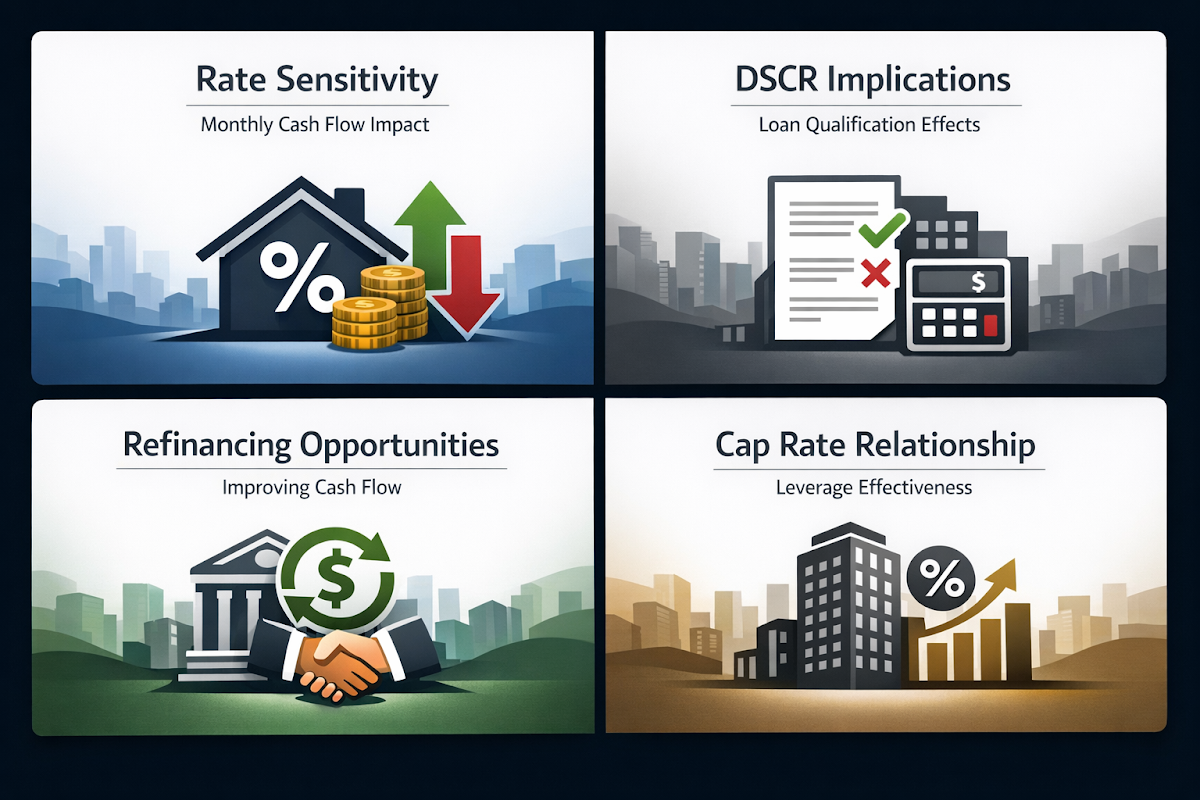
Understanding how interest rates affect your investment property returns helps you make better financing decisions and evaluate deals more accurately. Even small rate differences can significantly impact long-term profitability.
- Monthly cash flow sensitivity to rates: Each percentage point in interest rate changes can affect monthly payments by hundreds of dollars on typical investment properties, directly impacting positive cash flow and overall returns
- Debt service coverage ratio implications: Higher rates reduce DSCR calculations, potentially affecting loan qualification or requiring larger down payments to meet lender requirements for investment property financing
- Refinancing opportunities with rate changes: The recent rate decline from 8-9% to 5.875-7.375% for DSCR loans creates significant refinancing opportunities for investors with existing higher-rate loans to improve cash flow
- Cap rate and financing cost relationship: The spread between property cap rates and financing costs determines leverage effectiveness, with wider spreads generally creating better investment opportunities for leveraged purchases
●Conclusion
Mortgage loan interest rates play a crucial role in investment property success, affecting everything from monthly cash flow to long-term returns. The significant rate decreases seen in early 2026, with DSCR loans dropping to the 5.875-7.375% range, present compelling opportunities for both new acquisitions and refinancing existing properties.
Success in today's market requires understanding the factors that influence rates, choosing the right loan structure for your investment strategy, and positioning yourself as an attractive borrower. Whether you're focused on rental properties, fix and flip projects, or portfolio expansion, staying informed about rate trends and maintaining strong financial credentials will help you secure better financing terms.
As market conditions continue to evolve, investors who understand these fundamentals and act strategically will be better positioned to build profitable real estate portfolios while managing financing costs effectively.