
Strategic Debt Consolidation Through Mortgage Financing
Real estate investors often juggle multiple financing obligations across their portfolios, from acquisition loans to renovation credit lines. A mortgage loan for debt consolidation might offer a strategic pathway to streamline these obligations while potentially improving overall investment returns. For investors managing diverse debt structures, understanding how to leverage property equity for consolidation could transform portfolio management and cash flow optimization.
Smart debt consolidation through mortgage financing typically involves more than simply combining payments. Savvy investors may use these strategies to reduce interest costs, extend payment terms, or free up capital for new acquisitions. However, the approach requires careful analysis of existing debt structures, property values, and long-term investment goals.
Common Questions About Mortgage-Based Debt Consolidation
Common questions about mortgage-based debt consolidation often center on timing, costs, and strategic implementation. Investors frequently wonder about the most effective approaches for their specific situations.
Q: Can investment property equity be used for debt consolidation?
Investment property equity may be accessed through refinancing or home equity products, though qualification requirements and terms often differ from owner-occupied properties. Lenders typically evaluate rental income, debt service coverage ratios, and overall portfolio performance when considering these applications.
Q: What types of debt work best for mortgage consolidation?
High-interest debt such as credit cards, personal loans, or short-term financing might benefit most from consolidation into lower-rate mortgage products. However, investors should carefully evaluate the total cost over the extended term.
Q: How does this strategy affect investment property cash flow?
Consolidating higher-rate debt into mortgage financing could potentially improve monthly cash flow by reducing overall payment obligations, though this depends on individual circumstances and loan terms.
Primary Benefits of Using Mortgage to Consolidate Debt
Using mortgage to consolidate debt may provide several advantages for real estate investors managing complex financial portfolios. These benefits often extend beyond simple payment reduction.
- Interest Rate Optimization: Mortgage rates typically offer lower costs compared to credit cards or personal loans, potentially reducing overall interest expenses across the portfolio.
- Payment Simplification: Consolidating multiple payments into a single mortgage obligation may streamline financial management and reduce administrative overhead.
- Tax Strategy Considerations: Mortgage interest on investment properties might offer different tax implications compared to other debt types, though investors should consult tax professionals for specific guidance.
- Extended Payment Terms: Longer mortgage terms could reduce monthly payment pressure, potentially improving cash flow for reinvestment opportunities.
Home Equity Loan for Debt Consolidation Approaches
Home equity loan for debt consolidation strategies often provide investors with flexible access to property value for debt restructuring. These approaches may work particularly well for investors with significant equity positions.
- Home Equity Line of Credit (HELOC): Variable-rate credit lines secured by property equity, offering flexibility to access funds as needed for debt payoff or new investments.
- Fixed-Rate Home Equity Loans: Lump-sum financing with predictable monthly payments, suitable for consolidating specific debt amounts with known payoff targets.
- Cash-Out Refinancing: Replacing existing mortgages with larger loans, providing cash proceeds for debt consolidation while potentially securing better rates or terms.
- Second Mortgage Products: Additional financing layers that preserve existing first mortgage terms while accessing equity for consolidation purposes.
Refinance Mortgage for Debt Payoff Considerations
Refinance mortgage for debt payoff strategies require careful evaluation of current loan terms, market conditions, and long-term investment objectives. These decisions may significantly impact portfolio performance.
- Rate Environment Analysis: Current mortgage rates compared to existing loan terms help determine whether refinancing provides net benefits after closing costs and fees.
- Loan-to-Value Impact: Cash-out refinancing increases loan balances, potentially affecting future financing capacity and investment property debt service coverage ratios.
- Closing Cost Evaluation: Refinancing expenses must be weighed against potential savings from debt consolidation to ensure positive long-term outcomes.
- Portfolio-Wide Effects: Changes to one property's financing structure might influence qualification for future acquisitions or refinancing on other properties.
Step-by-Step Debt Consolidation Planning Process
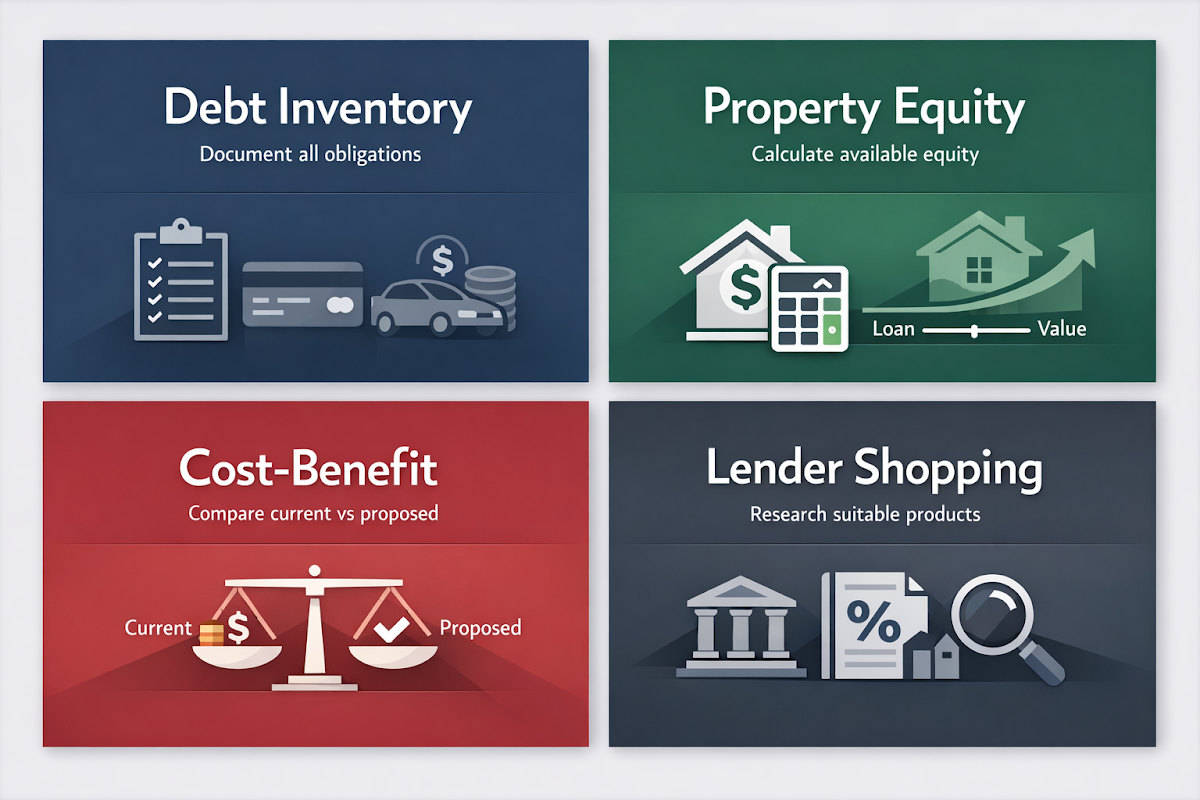
Step-by-step debt consolidation planning helps investors systematically evaluate opportunities and implement effective strategies. This structured approach may reduce oversights and optimize outcomes.
- Comprehensive Debt Inventory: Document all existing obligations including balances, interest rates, payment terms, and monthly obligations across the entire investment portfolio.
- Property Equity Assessment: Obtain current property valuations and calculate available equity after considering existing mortgage balances and potential loan-to-value limitations.
- Cost-Benefit Analysis: Compare total costs of current debt structure against proposed consolidation scenarios, including interest savings, payment changes, and closing expenses.
- Lender Shopping and Qualification: Research mortgage products suitable for investment properties and debt consolidation, comparing terms from multiple lenders specializing in investor financing.
- Implementation and Monitoring: Execute the consolidation strategy while establishing systems to track performance improvements and ensure alignment with broader investment objectives.
Essential Risk Management Strategies
Essential risk management strategies help investors navigate potential challenges when using mortgage financing for debt consolidation. These precautions may protect portfolio stability and long-term growth potential.
- Cash Flow Buffer Maintenance: Preserve adequate cash reserves to handle unexpected expenses, vacancy periods, or market fluctuations that might affect payment capacity on consolidated debt.
- Property Value Monitoring: Track real estate values regularly to ensure equity positions remain adequate for the consolidated mortgage obligations and future financing needs.
- Interest Rate Risk Assessment: For variable-rate consolidation products, establish contingency plans for potential rate increases that might affect payment obligations and cash flow.
- Portfolio Diversification Review: Ensure debt consolidation doesn't create over-concentration in specific properties or markets that might increase overall investment risk.
●Conclusion
Strategic debt consolidation through mortgage financing might offer real estate investors powerful tools for portfolio optimization and cash flow management. However, success typically depends on careful analysis of individual circumstances, market conditions, and long-term investment objectives.
Investors considering a mortgage loan for debt consolidation should evaluate their entire portfolio context rather than focusing solely on immediate payment reductions. The most effective strategies often align consolidation benefits with broader investment goals, whether that's improving cash flow for new acquisitions, reducing administrative complexity, or optimizing overall financing costs.
Working with experienced mortgage professionals who understand investment property financing can help navigate the complexities of debt consolidation options. These partnerships may prove essential for identifying the most suitable products and structuring consolidation strategies that support long-term portfolio growth and financial stability.