
Life can be unpredictable. Whether you're facing a sudden job loss, a medical emergency, or an unexpected financial setback, keeping up with your mortgage payments can feel overwhelming. That's where a mortgage forbearance agreement can make a real difference. This arrangement between a borrower and lender may allow you to temporarily pause or reduce your monthly payments — giving you the breathing room you need while you get back on your feet. In this guide, we'll walk through what a mortgage forbearance agreement is, how it typically works, and what you should consider before pursuing this option.
Understanding What a Mortgage Forbearance Agreement Really Means
A mortgage forbearance agreement is a formal arrangement between a homeowner and their mortgage servicer. Under this agreement, the lender agrees to temporarily reduce or suspend your required monthly mortgage payments for a set period of time. In return, the borrower agrees to eventually repay the missed or reduced amounts according to terms worked out with the lender.
It's important to understand that forbearance is not forgiveness. The payments you skip or reduce during the forbearance period don't simply disappear — they're deferred and must be repaid later. The specific repayment terms can vary significantly depending on your loan type, lender, and the reason for your hardship.
Forbearance is typically considered a short-term solution, often lasting anywhere from a few months up to a year in many cases. Some programs may allow extensions depending on the circumstances. The key purpose is to provide temporary relief without forcing a homeowner into foreclosure.
Common Reasons Homeowners Seek Mortgage Payment Relief
Mortgage servicers generally consider forbearance requests when a borrower is experiencing a genuine financial hardship. Some of the most common situations that may qualify include:
- Job loss or significant income reduction — sudden unemployment or a reduction in hours can make it difficult to meet monthly obligations.
- Medical emergencies or disability — unexpected health expenses or an inability to work may strain household finances.
- Natural disasters — homeowners impacted by hurricanes, floods, wildfires, or other declared disasters may be eligible for relief.
- Divorce or separation — a change in household income due to a relationship breakdown can affect mortgage affordability.
- Other temporary financial setbacks — any situation that causes a short-term but meaningful disruption to income may be worth discussing with your servicer.
The key word here is temporary. Forbearance is designed for situations where the borrower expects their financial condition to improve. If the hardship is long-term or permanent, other options — such as a loan modification or refinancing — might be more appropriate to explore.
How the Forbearance Request and Approval Process Typically Works
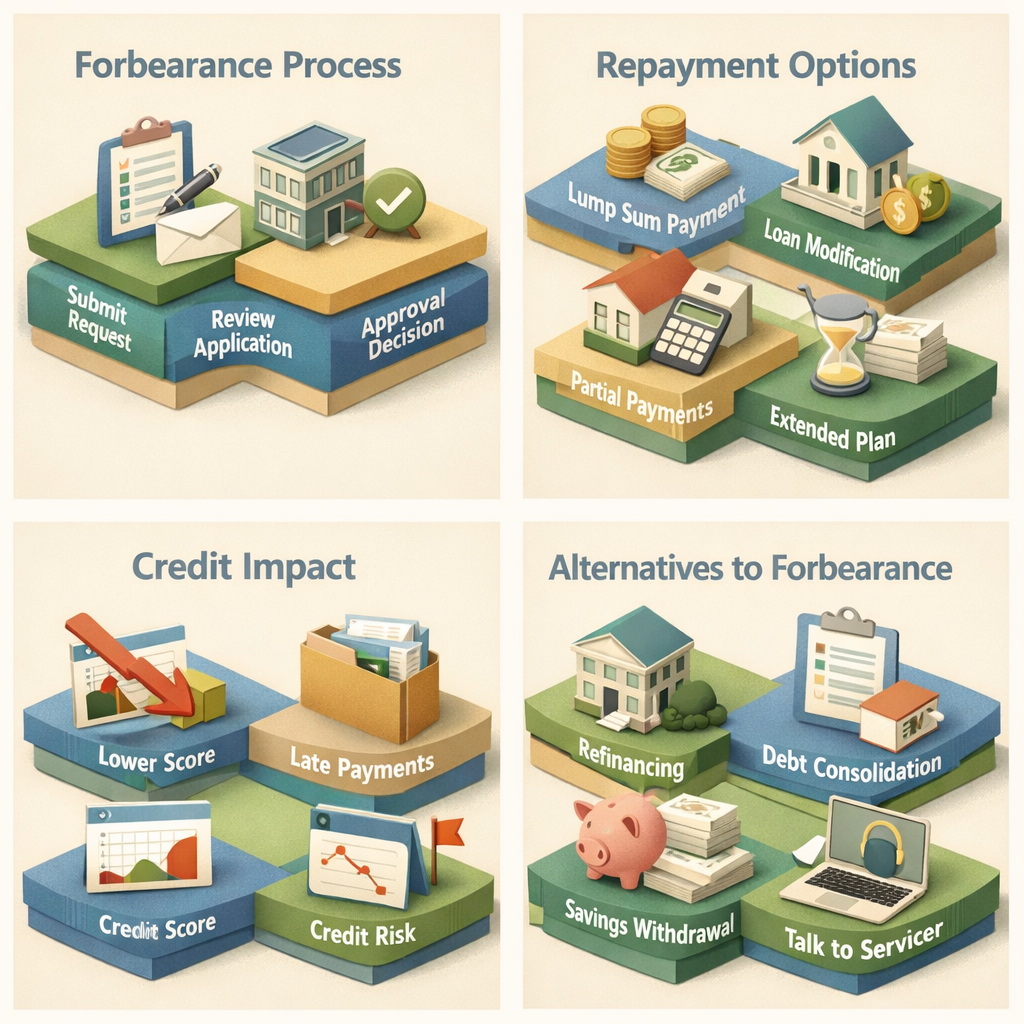
If you believe a mortgage forbearance agreement might be the right path for you, reaching out to your mortgage servicer as early as possible is strongly recommended. Most servicers have dedicated hardship departments, and contacting them proactively — before you miss a payment — can put you in a stronger position.
Here's a general overview of what the process may look like:
- Step 1: Contact your servicer. Call the customer service number on your mortgage statement or visit their website to inquire about hardship assistance options.
- Step 2: Explain your situation. Be ready to describe your financial hardship clearly and honestly. Some servicers may require written documentation.
- Step 3: Review the terms. If approved, your servicer will outline the length of the forbearance period, what happens to missed payments, and the repayment plan.
- Step 4: Get the agreement in writing. Always confirm the terms in a written agreement before stopping or reducing payments. Verbal agreements may not be sufficient protection.
Depending on your loan type — whether it's a conventional mortgage, FHA loan, VA loan, or USDA loan — the rules and protections around forbearance may differ. Government-backed loans often have federally defined guidelines that servicers must follow.
What Happens After Your Forbearance Period Ends
One of the most important things to understand about a mortgage forbearance agreement is what comes next. Once the forbearance period ends, you'll need to address the payments that were paused or reduced. Lenders typically offer several options for repayment, and it's worth asking about all of them early in the process.
Common repayment options may include:
- Lump-sum repayment — paying all missed amounts at once when the forbearance ends. This option works well for borrowers who receive a large sum of money, such as a settlement or insurance payout, but it may not be realistic for everyone.
- Repayment plan — spreading the missed amounts over several months by adding a portion to your regular payment. For example, if you missed three months of payments, you might pay an extra amount each month for the next year.
- Loan modification — adjusting the terms of your original mortgage, potentially extending the loan term to absorb the missed payments without dramatically increasing monthly costs.
- Deferral or partial claim — in some loan programs, deferred amounts may be moved to the end of the loan term, essentially delaying repayment until the mortgage is paid off, refinanced, or the home is sold. This option is more common with government-backed loans.
It's wise to discuss all available options with your servicer well before your forbearance period ends so you're not caught off guard.
How Forbearance May Affect Your Credit and Future Borrowing
Many homeowners worry about how a forbearance agreement might impact their credit score and their ability to borrow in the future. The reality is nuanced, and outcomes can vary depending on how your servicer reports the account to credit bureaus.
In general, if your lender reports your account as current during the forbearance period — which is often the case under properly documented agreements — it may not negatively affect your credit score in the short term. However, if payments are missed without a formal forbearance agreement in place, your credit could be impacted more significantly.
For future mortgage applications, lenders will typically look at your forbearance history. Conventional loan guidelines, for example, may require a waiting period after forbearance before you're eligible to refinance or purchase a new home. FHA and VA loans may have their own specific requirements in this regard. It's best to speak with a mortgage professional to understand exactly how your situation might be evaluated under different loan programs.
One thing is clear: being proactive and communicating openly with your servicer tends to produce better outcomes than going silent and missing payments without explanation.
Forbearance vs. Other Mortgage Relief Options Worth Considering
While forbearance can be a helpful tool, it's not the only option available to struggling homeowners. Depending on your situation, you might also want to explore:
- Loan modification — a permanent change to your mortgage terms, such as a lower interest rate, extended loan term, or a reduced principal balance in some cases. This is typically for borrowers facing long-term hardship rather than a temporary setback.
- Refinancing — if you have sufficient equity and your credit is still in good shape, refinancing into a lower rate or extending your loan term could reduce your monthly mortgage payments without needing a formal hardship program.
- Short sale — if staying in the home is no longer feasible, a short sale allows you to sell the property for less than what's owed on the mortgage, with lender approval. This can help avoid foreclosure but does have credit implications.
- Deed in lieu of foreclosure — voluntarily transferring ownership of your home to the lender to satisfy the mortgage debt. Like a short sale, this is typically considered when other options have been exhausted.
The right choice depends heavily on your individual financial picture, how long the hardship is expected to last, and how much equity you have in the property. A HUD-approved housing counselor can provide free or low-cost guidance to help you evaluate your options.
●Conclusion
A mortgage forbearance agreement can be a valuable lifeline for homeowners navigating temporary financial hardship. It may give you the time you need to stabilize your finances without losing your home. That said, it's essential to go in with clear expectations — forbearance defers payments, it doesn't erase them. Understanding the repayment terms, potential credit implications, and alternative options will help you make the most informed decision possible. If you're facing difficulty keeping up with your mortgage, don't wait. Reach out to your servicer, explore your options, and consider speaking with a qualified mortgage advisor at LoanWise who can help guide you through the process with confidence.