
Mortgage for Self-Employed Borrowers: Your Path to Investment Property Financing
Self-employed real estate investors face unique challenges when securing financing for investment properties. Traditional mortgage underwriting often relies on W-2 income verification, which doesn't align with the variable income patterns typical of entrepreneurs and independent contractors. However, specialized mortgage products and alternative documentation methods can help self-employed borrowers access the capital they need for their real estate investments.
Understanding the specific requirements and available options for a mortgage for self-employed borrowers is crucial for building a successful investment portfolio. From DSCR loans that focus on property cash flow to alternative income verification methods, today's lending landscape offers multiple pathways for self-employed investors to secure financing.
Essential Credit Score Strategies for Self-Employed Investors
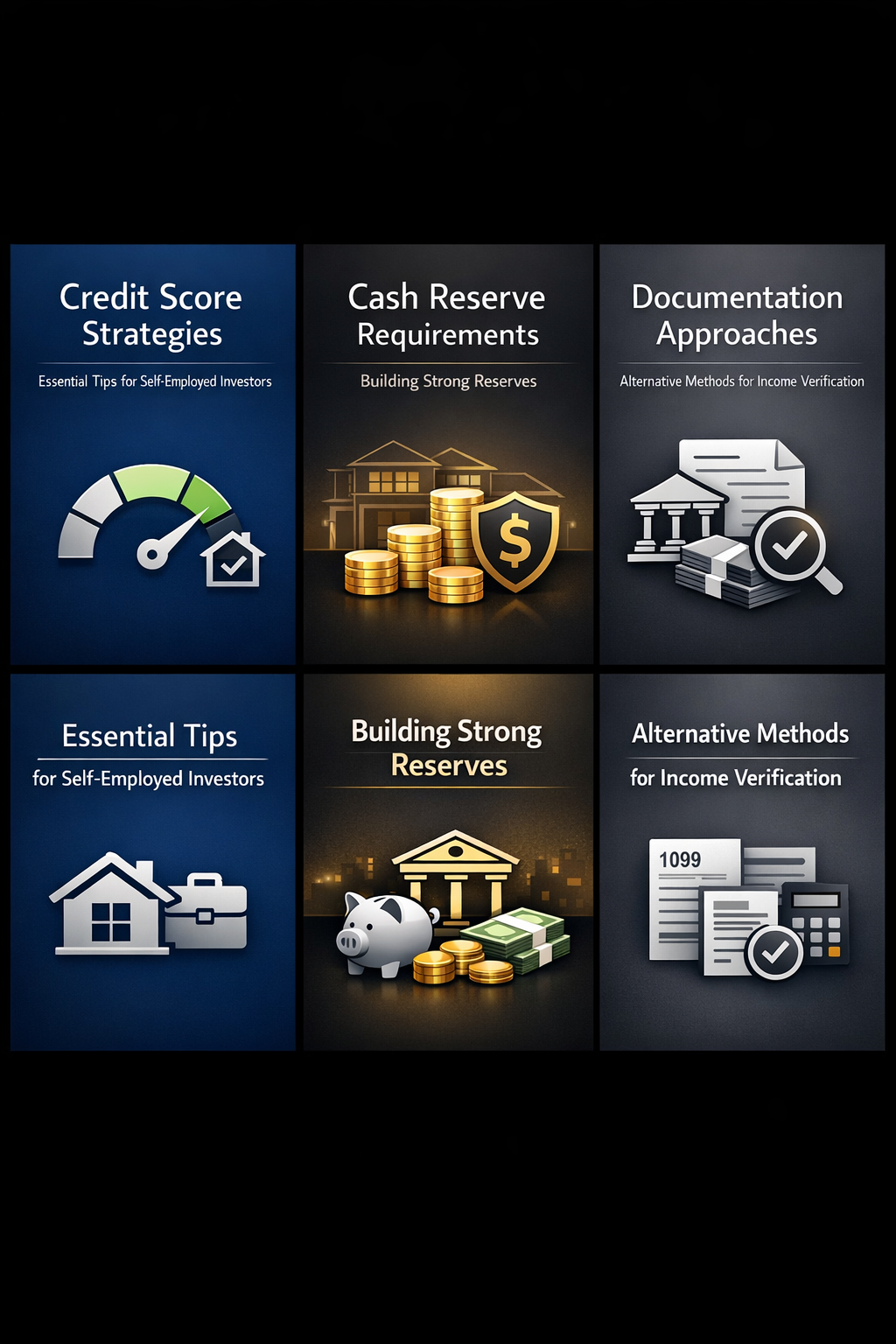
Essential credit score strategies for self-employed investors can make the difference between approval and rejection. Self-employed borrowers might qualify for certain mortgage products with credit scores as low as 640, though higher scores typically unlock better terms and more options.
- Maintain consistent credit utilization: Keep credit card balances below 30% of available limits across all accounts. This demonstrates financial discipline and can positively impact your score over time.
- Monitor your credit report regularly: Self-employed individuals should check for errors or discrepancies that could negatively affect their mortgage application. Address any issues well before applying for financing.
- Consider DSCR loan requirements: These investment-focused products typically require credit scores around 680, making them accessible for many self-employed investors who maintain good credit habits.
Building Strong Cash Reserve Requirements
Building strong cash reserve requirements is often more critical for self-employed borrowers than traditional employees. Lenders may require significant cash reserves, sometimes six to twelve months of mortgage payments in savings, to offset the perceived risk of variable income.
- Establish dedicated reserve accounts: Keep liquid savings separate from business operating funds to demonstrate financial stability. These reserves show lenders you can handle mortgage payments during income fluctuations.
- Document all income sources: Maintain clear records of multiple revenue streams, including rental income, business profits, and investment returns. Comprehensive documentation strengthens your financial profile.
- Plan for property-specific reserves: Each investment property may require additional reserves, so factor this into your acquisition strategy when building your cash position.
Alternative Documentation Approaches That Work
Alternative documentation approaches that work can help self-employed borrowers overcome traditional income verification challenges. These methods focus on demonstrating financial capacity through various means beyond standard tax returns.
- Bank statement programs: Some lenders accept 12-24 months of business and personal bank statements instead of tax returns. This approach can better reflect actual cash flow for self-employed investors.
- Asset-based qualification: Demonstrate wealth through investment accounts, retirement funds, and other assets that can support mortgage payments. This method works well for investors with substantial asset portfolios.
- Property cash flow documentation: For rental properties, providing lease agreements and rental income history can support your application, especially with DSCR loan products that focus on property performance.
Top Self-Employed Mortgage Requirements to Meet
Top self-employed mortgage requirements to meet vary by lender and loan type, but certain standards remain consistent across most programs. Understanding these requirements helps investors prepare comprehensive applications that improve approval odds.
- Two years of tax returns: Most traditional mortgage programs require two years of complete tax returns with all schedules. Business tax returns may also be necessary for sole proprietors and business owners.
- Profit and loss statements: Current year-to-date P&L statements prepared by a CPA can help bridge the gap between your latest tax filing and your current application date.
- Business license and registration documents: Lenders typically want to verify that your business is legitimate and has been operating for at least two years in the same field.
- Debt-to-income ratio compliance: Self-employed borrowers must demonstrate that their debt obligations don't exceed acceptable DTI ratios, which may require careful income calculation methods.
DSCR Loan Advantages for Self-Employed Real Estate Investors
DSCR loan advantages for self-employed real estate investors center on the focus on property cash flow rather than personal income verification. These loans evaluate the property's ability to generate sufficient rental income to cover the mortgage payment.
- No personal income verification required: DSCR loans assess the rental property's cash flow potential, making them ideal for self-employed investors with complex income structures or those seeking privacy regarding personal finances.
- Faster approval processes: Without extensive personal income documentation requirements, DSCR loans often move through underwriting more quickly than traditional mortgages, allowing investors to act on opportunities faster.
- Higher loan amounts possible: Since approval is based on property performance rather than personal income, investors might qualify for larger loan amounts than traditional programs would allow.
- Portfolio growth flexibility: DSCR loans enable investors to expand their rental property portfolios without being limited by personal debt-to-income ratios that might constrain traditional financing.
Common Documentation Mistakes Self-Employed Borrowers Make
Common documentation mistakes self-employed borrowers make can delay or derail mortgage applications. Avoiding these pitfalls improves your chances of securing favorable financing terms for investment properties.
- Inconsistent income reporting: Discrepancies between tax returns, bank statements, and loan applications raise red flags with underwriters. Ensure all documentation tells the same financial story.
- Missing business continuation evidence: Failing to demonstrate business stability and likelihood of continued operation can concern lenders. Provide client contracts, recurring revenue documentation, or business growth indicators.
- Inadequate expense documentation: Self-employed borrowers often struggle to clearly separate business expenses from personal income, leading to confusion about actual earning capacity and qualification amounts.
- Poor record organization: Disorganized financial records create delays and may suggest poor financial management. Maintain clean, organized documentation that's easy for underwriters to review and verify.
●Conclusion
Securing a mortgage for self-employed borrowers requires strategic preparation and understanding of available options. While traditional mortgage programs may present challenges for self-employed real estate investors, alternative products like DSCR loans offer viable pathways to investment property financing.
Success depends on maintaining strong credit scores, building adequate cash reserves, and organizing comprehensive documentation that accurately reflects your financial capacity. By understanding lender requirements and preparing accordingly, self-employed investors can access the capital needed to grow their real estate portfolios.
Consider working with lenders who specialize in investor financing and understand the unique needs of self-employed borrowers. The right financing partner can help navigate documentation requirements and identify the most suitable loan products for your investment strategy.