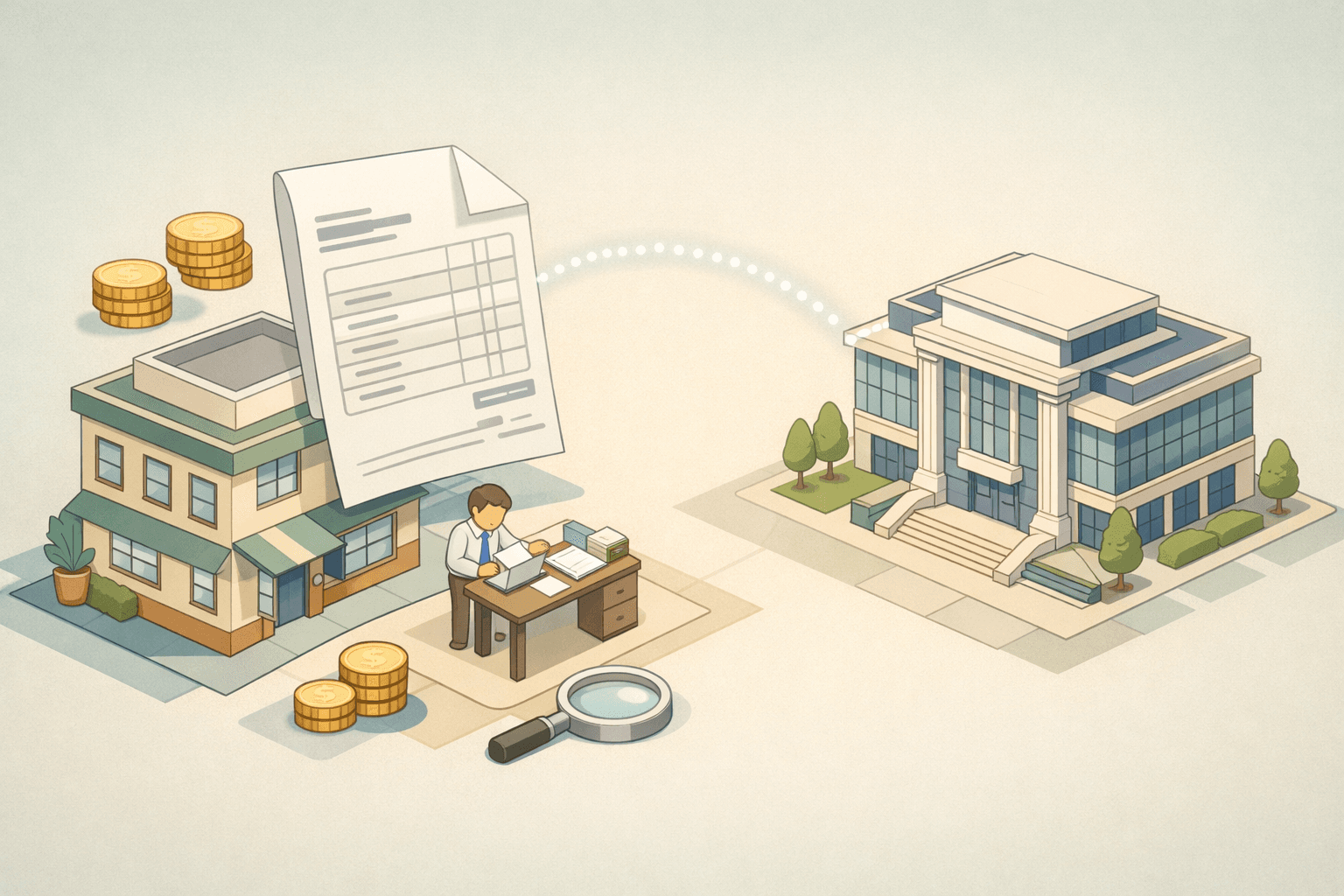
Cash flow is the lifeblood of any small business. But when your clients take 30, 60, or even 90 days to pay their invoices, that gap between delivering work and getting paid can create serious financial strain. That's where invoice financing comes in. Whether you're a small business owner, entrepreneur, or commercial borrower looking for flexible funding solutions, understanding how invoice-based lending works could be the key to keeping your operations running smoothly and confidently. In this guide, we'll break down the differences between invoice financing and factoring, explore how each option works, and help you decide which path might make the most sense for your business.
What Is Invoice Financing and How Does It Work?
Invoice financing is a type of short-term borrowing that allows businesses to access funds tied up in unpaid invoices. Instead of waiting weeks or months for clients to pay, you can leverage those outstanding receivables to get cash quickly — often within 24 to 48 hours of approval.
Here's the basic idea: you submit your unpaid invoices to a lender, who then advances you a percentage of their total value — typically somewhere between 70% and 90%. Once your client pays the invoice, you receive the remaining balance, minus any fees the lender charges for the service.
This type of financing is particularly popular among B2B companies, staffing agencies, freight carriers, and service-based businesses that regularly deal with net-30 or net-60 payment terms. Rather than taking on a traditional term loan, you're essentially using your own receivables as collateral — which can make approval easier, especially if your clients have strong credit histories.
- Fast access to working capital without waiting for client payments
- Collateral is your invoices, not business assets or real estate
- Approval often based on client creditworthiness, not just your own
- Flexible — you can choose which invoices to finance
It's worth noting that invoice financing is sometimes used as a broad term that encompasses both invoice discounting and invoice factoring. While they share similarities, there are meaningful differences between the two that every business owner should understand before moving forward.
Invoice Factoring Explained: Selling Your Receivables
Invoice factoring takes things a step further. Rather than borrowing against your invoices, you're actually selling them to a third-party company known as a factor. The factor then takes on the responsibility of collecting payment directly from your clients.
Once you sell your invoices, the factor typically advances you a large portion of the total value upfront — again, often in the range of 70% to 90%. When your client pays the factor in full, you receive the remaining balance minus the factoring fee, which is sometimes called a discount rate.
Here's how the process generally looks in practice:
- You complete work and issue invoices to your clients as usual
- You sell those invoices to a factoring company
- The factor advances you a significant portion of the invoice value immediately
- Your client pays the factor directly when the invoice is due
- The factor sends you the remaining balance, minus their fees
One of the biggest distinctions with factoring is that your clients will know their payments are being directed to a third party. For some businesses, this transparency is perfectly fine. For others, it may feel uncomfortable or potentially affect client relationships. This is an important consideration when weighing your options.
Factoring can be especially useful for newer businesses or those with limited credit history, since approval decisions are often based heavily on the creditworthiness of your clients rather than your business's financial track record.
Key Differences Between Invoice Financing and Factoring
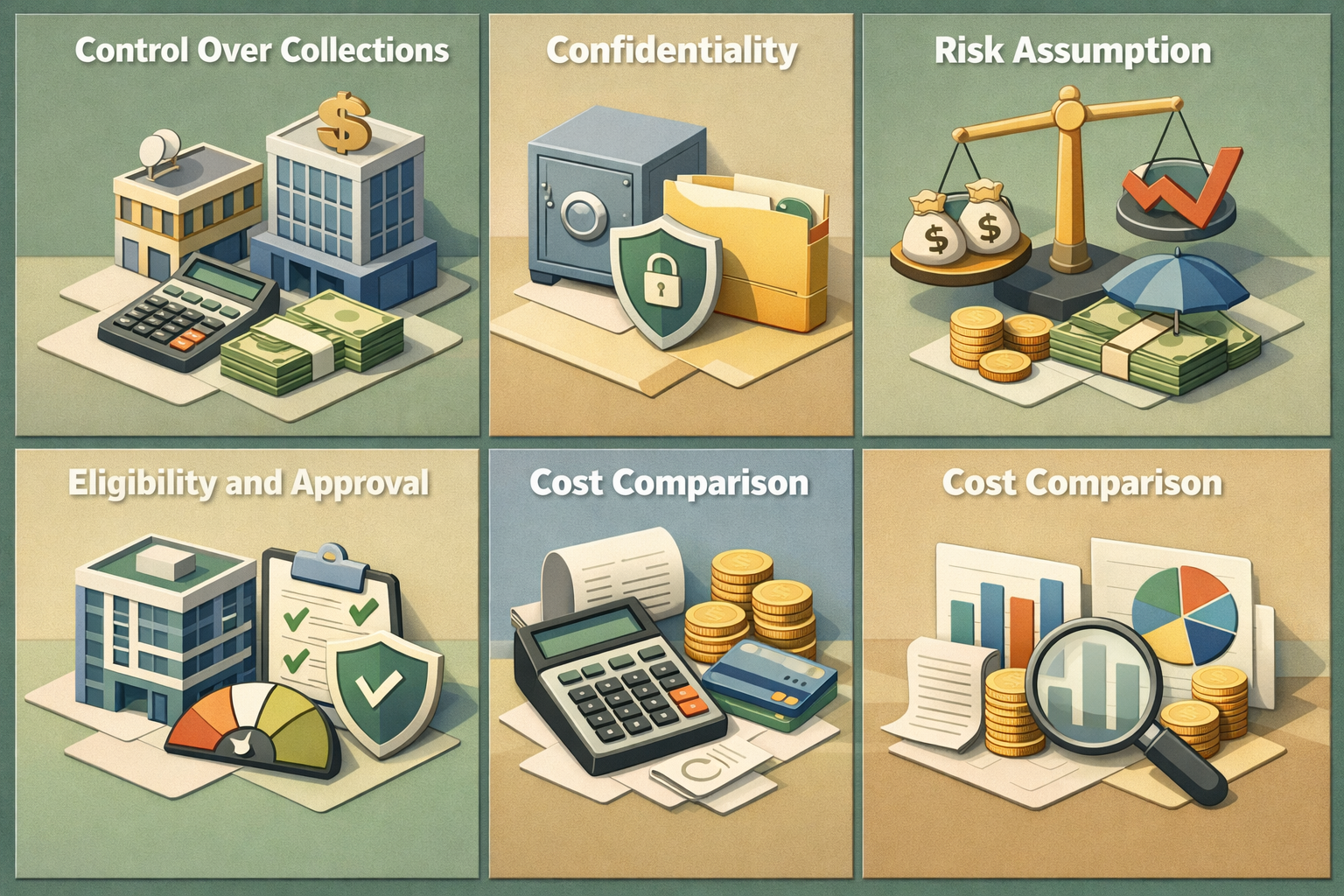
While both options help businesses access cash tied up in receivables, they differ in several important ways. Understanding these distinctions can help you choose the right fit for your situation.
Control Over Collections
With traditional invoice financing (also called invoice discounting), you remain in control of your collections process. Your clients may not even know you've borrowed against their invoices. With factoring, the factoring company takes over collections, which means your clients will interact with a third party when paying their bills.
Confidentiality
Invoice discounting is generally a confidential arrangement. Factoring, on the other hand, is typically disclosed to your clients — though some factors do offer confidential factoring arrangements, which may come at a higher cost.
Who Assumes the Risk
In recourse factoring — the most common type — your business is still responsible if a client fails to pay. In non-recourse factoring, the factor absorbs the risk of non-payment, though these arrangements often come with stricter eligibility requirements and higher fees.
Eligibility and Approval
Both options tend to place significant weight on the quality of your receivables and the creditworthiness of your clients. However, factoring companies may be more willing to work with startups or businesses with thin credit profiles, since the factor is ultimately relying on your clients to pay — not you.
Cost Comparison
Fees for both products can vary widely depending on the lender, the volume of invoices, the creditworthiness of your clients, and your industry. Factoring fees are often expressed as a percentage of the invoice value per week or month. It's important to read the fine print carefully and compare total costs before committing to any agreement.
When Invoice Financing Might Be the Right Move for Your Business
Invoice financing can be a smart solution in a variety of situations. Here are some scenarios where it might make good sense for small business owners and entrepreneurs:
- Seasonal cash flow gaps: If your revenue fluctuates throughout the year, invoice financing can help bridge slow periods without disrupting operations.
- Rapid growth: When you're scaling quickly and need working capital to hire staff, purchase supplies, or take on larger contracts, waiting for client payments simply isn't an option.
- Long payment cycles: Businesses that routinely deal with net-60 or net-90 payment terms may find that financing receivables is far more practical than relying on a traditional line of credit.
- Avoiding additional debt: Since invoice financing is tied to your receivables rather than a separate loan, some business owners appreciate that it doesn't add a traditional liability to their balance sheet in the same way.
- Limited collateral: If your business doesn't own significant physical assets, receivables-based financing may be more accessible than asset-backed lending options.
That said, invoice financing isn't a perfect fit for every business. Companies that sell directly to consumers (B2C) rather than other businesses typically won't qualify, since the model depends on creditworthy commercial clients. Similarly, if your invoice amounts are small or irregular, the fees involved may outweigh the convenience.
Evaluating Lenders and Understanding the Fine Print
Choosing the right invoice financing or factoring partner is just as important as understanding the product itself. Not all lenders are created equal, and the terms can vary significantly from one provider to the next. Here are some factors to consider when shopping around:
Advance Rate
The advance rate is the percentage of the invoice value the lender provides upfront. Higher advance rates mean more immediate cash — but compare this figure alongside the fee structure to understand the true cost.
Fee Structure
Some lenders charge a flat percentage of the invoice value, while others use a tiered structure based on how long the invoice remains outstanding. Be sure to ask about all fees, including origination fees, service charges, and any penalties for early termination of the agreement.
Contract Terms
Some factoring companies require you to factor a minimum volume of invoices each month or enter into long-term agreements. Others offer spot factoring, which lets you choose which invoices to sell on a case-by-case basis. Flexibility may come at a premium, but it could be worth it depending on your business model.
Industry Experience
Certain lenders specialize in specific industries such as trucking, construction, staffing, or healthcare. Working with a lender who understands your sector can lead to smoother processing and more tailored terms.
Customer Service and Transparency
Since your lender may be interacting directly with your clients (in the case of factoring), their professionalism matters. Choose a provider known for clear communication and respectful client interactions.
It's also wise to consult with a financial advisor or commercial lending specialist before signing any agreement. Understanding the full cost of capital — and how it compares to other financing options — will help you make a more informed decision.
How Invoice Financing Compares to Other Small Business Loan Options
Invoice financing and factoring are just two of the many funding tools available to small business owners. Depending on your needs, timeline, and financial profile, other options might also be worth exploring.
Business Lines of Credit
A business line of credit offers revolving access to funds up to a set limit. Unlike invoice financing, it isn't tied to your receivables — but it typically requires a stronger credit profile and may involve more stringent approval criteria.
SBA Loans
Small Business Administration (SBA) loans — such as the SBA 7(a) or SBA 504 programs — offer competitive rates and favorable terms for qualifying businesses. However, the application process can be lengthy and documentation-heavy, making them less suitable for businesses that need quick capital.
Term Loans
Traditional term loans provide a lump sum repaid over a fixed schedule. They can be useful for large, planned expenses but may not be flexible enough to address short-term cash flow gaps caused by slow-paying clients.
Merchant Cash Advances
Merchant cash advances provide upfront capital in exchange for a percentage of future sales. While they offer speed and accessibility, their effective cost can be significantly higher than other lending products, making them a last resort for many business owners.
The right financing solution depends on your specific circumstances. Invoice financing shines when the root cause of your cash flow challenge is simply the timing of receivables — not a fundamental gap in revenue. If that describes your situation, it may be one of the more efficient and targeted tools available.
●Conclusion
Invoice financing and factoring offer small business owners and entrepreneurs a practical way to unlock the cash that's already sitting in their receivables — without waiting weeks or months for clients to pay. Whether you prefer to maintain control over your collections through invoice discounting or prefer the hands-off simplicity of selling invoices to a factor, there's likely a solution that fits your business model and cash flow needs.
As with any financing decision, it pays to do your homework. Compare lenders carefully, understand the full cost of the arrangement, and consider how each option aligns with your long-term business goals. At LoanWise, we're here to help you navigate your financing options with clarity and confidence. Reach out to one of our commercial lending specialists today to explore which receivables-based solution might be the right fit for your business.