Buying a condominium with an FHA loan can be a smart path to homeownership, especially for first-time buyers who may not have a large down payment saved up. But the process comes with a layer of complexity that many buyers don't fully anticipate — particularly when it comes to closing costs and homeowners association fees. If you're trying to understand closing costs for FHA loan on a condo with high HOA fees, you're not alone. These two financial factors interact in ways that can significantly affect how much cash you'll need at the closing table, and how lenders evaluate your overall affordability. This guide walks you through everything you need to know so you can move forward with confidence.
What Makes FHA Condo Loans Different from Standard Home Loans
FHA loans are government-backed mortgages insured by the Federal Housing Administration. They're popular among first-time homebuyers and those with moderate credit scores because they typically require a lower down payment — often as low as 3.5% — and are more flexible on credit qualifications than conventional loans.
However, when you apply that loan to a condominium rather than a single-family home, the rules change. The FHA requires that the condo complex itself be on its approved condo list, sometimes called the FHA-approved condo list. This means the homeowners association and the building must meet certain financial, structural, and operational standards set by the FHA. Not every condo qualifies, and the approval process can add steps and potentially some costs to your transaction.
Because the FHA is insuring the loan, it also requires mortgage insurance premiums — both an upfront premium and an annual premium paid monthly. These premiums are a core part of FHA condo loan closing costs and must be factored into your budget from day one. Understanding this distinction early helps you avoid any unpleasant financial surprises once you reach the closing table.
Breaking Down FHA Condo Loan Closing Costs Line by Line
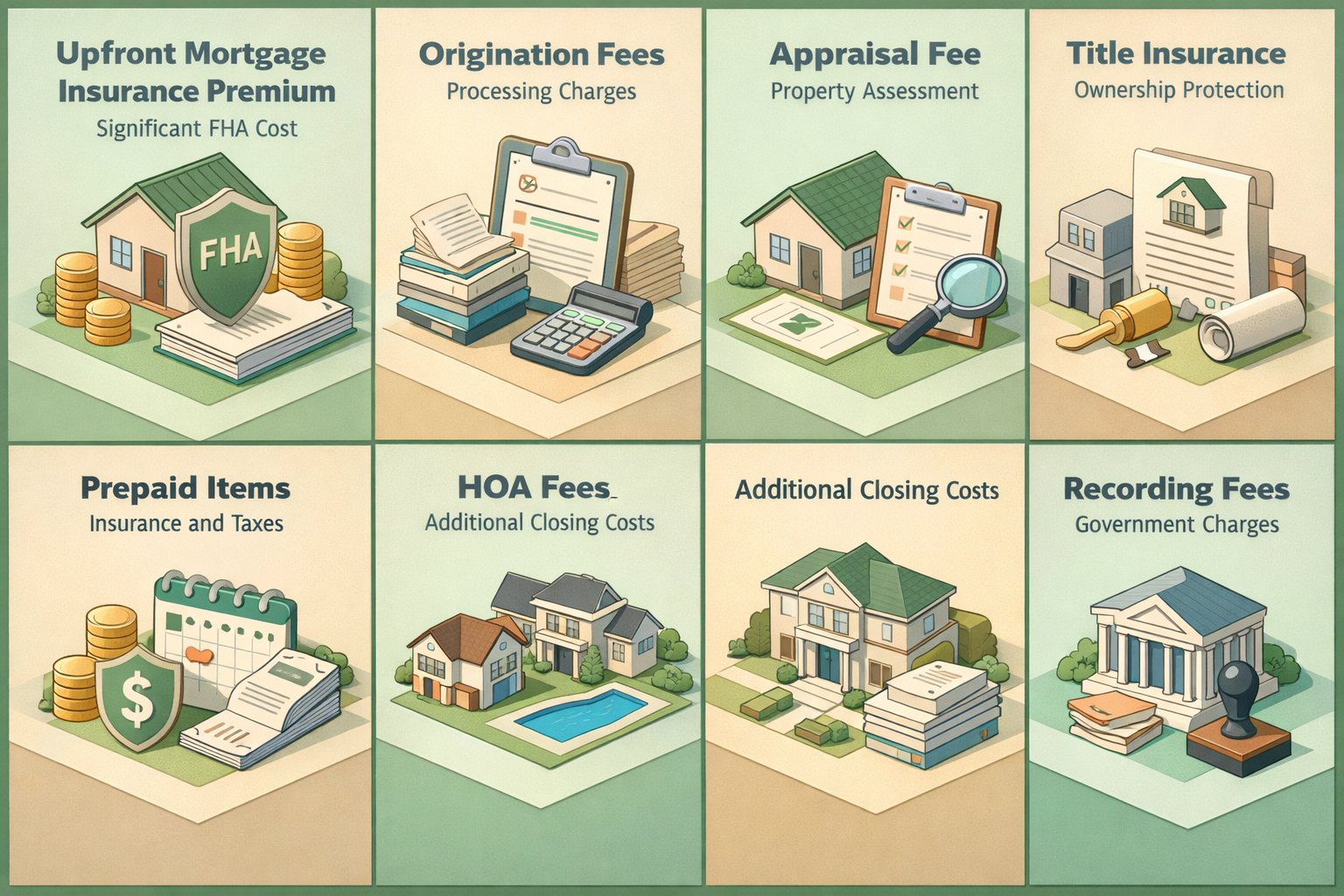
Closing costs on an FHA loan for a condo typically range from roughly 2% to 5% of the loan amount, though your specific costs will depend on your lender, the property location, and other factors. Here's a look at the key components you're likely to encounter:
- Upfront Mortgage Insurance Premium (UFMIP): The FHA charges an upfront mortgage insurance premium, which is currently set at a standard percentage of the base loan amount. This is one of the most significant FHA-specific closing costs and can often be rolled into the loan rather than paid out of pocket at closing.
- Origination Fees: Lenders charge fees for processing and underwriting your loan. These may be listed as a flat fee or a percentage of the loan amount, and they can vary widely between lenders.
- Appraisal Fee: FHA loans require an FHA-approved appraiser to assess the property. Condo appraisals may take longer and cost slightly more because the appraiser must also review the building's overall condition and any shared amenities.
- Title Insurance and Title Search: These protect both you and your lender from future ownership disputes. Title fees are generally non-negotiable in terms of their necessity, though pricing can vary.
- Prepaid Items: These include prepaid homeowners insurance, prepaid interest for the days between closing and your first mortgage payment, and the initial escrow deposits for property taxes and insurance.
- HOA-Related Fees at Closing: Depending on the condo association's rules, you may owe prorated HOA dues, move-in fees, or a working capital contribution at closing. These are separate from your monthly HOA fees but can add a meaningful amount to your upfront costs.
- Recording Fees and Transfer Taxes: Local governments charge fees to record the deed and mortgage. These vary significantly by state and county.
Getting a clear Loan Estimate from your lender within three business days of applying is one of the best ways to see all these costs laid out in a standardized format. Compare it carefully and don't hesitate to ask questions about any line item you don't recognize.
How HOA Fees Impact Your FHA Loan Qualification and Affordability
This is where things get particularly important for condo buyers: HOA fees impact FHA loan qualification in a direct and measurable way. Lenders are required to include your monthly HOA fees when calculating your debt-to-income ratio (DTI). This is a critical metric that compares your total monthly debt obligations to your gross monthly income.
For FHA loans, lenders generally look for a total DTI of around 43% or lower, though some lenders may allow slightly higher ratios with compensating factors such as strong reserves or a higher credit score. When HOA fees are high — sometimes several hundred dollars per month in certain urban condo communities — they can push your DTI above the acceptable threshold even if your mortgage payment alone seems manageable.
Let's say you're buying a condo and your estimated principal and interest payment is $1,400 per month. If the condo community charges $600 per month in HOA fees, your total housing expense is $2,000 before you even account for your annual mortgage insurance premiums and property taxes. All of these are added together when calculating your housing expense ratio, which lenders also review closely under FHA guidelines.
It's worth having a candid conversation with your loan officer early in the process about what HOA fee level you can absorb while still qualifying for the loan amount you need. In some cases, a buyer may need to reduce the purchase price target or increase their down payment to improve their DTI.
The FHA Condo Approval Process and Its Effect on Your Timeline and Costs
Before an FHA loan can be used to purchase a specific condo unit, the entire condominium project typically needs to meet FHA approval standards. The FHA does allow something called single-unit approval, which may let a buyer finance a condo in a non-approved complex under certain conditions, but this process can add time, documentation requirements, and potentially additional lender fees.
When a condo complex is FHA-approved, the process is smoother. But if the complex is not approved, you or your lender may need to gather financial documents from the HOA, including budget records, insurance certificates, reserve fund disclosures, and information about owner-occupancy rates. The FHA requires that a minimum percentage of units be owner-occupied rather than rented out, and that the HOA maintain adequate financial reserves.
High HOA fees can actually be a signal worth investigating further. In some cases, elevated dues reflect a well-funded reserve account and quality maintenance — which is positive for FHA approval. In other cases, high fees might indicate deferred maintenance costs being caught up, pending special assessments, or financial instability within the association. Any of these factors could affect whether the complex qualifies under FHA guidelines and could also affect the appraised value of the unit.
Buyers should request the HOA's most recent financial statements and budget documents before making an offer. This due diligence can save you from wasted appraisal and inspection fees on a property that ultimately won't clear the FHA approval hurdle.
Strategies to Reduce Your Out-of-Pocket Costs at Closing
Managing your closing costs doesn't have to feel overwhelming. There are several legitimate strategies that may help you reduce what you'll owe at the closing table when financing a condo with an FHA loan.
- Negotiate seller concessions: In many markets, sellers may agree to contribute toward your closing costs as part of the purchase negotiation. FHA guidelines permit sellers to contribute up to 6% of the purchase price toward the buyer's closing costs, which can be a meaningful amount of relief.
- Roll the UFMIP into the loan: The FHA allows you to finance the upfront mortgage insurance premium into your loan balance rather than paying it at closing. This keeps more cash in your pocket on closing day, though it does slightly increase your loan balance and monthly payment.
- Shop lenders carefully: Lender fees, including origination charges and discount points, can vary significantly from one institution to another. Getting quotes from multiple FHA-approved lenders and comparing their Loan Estimates is one of the most effective ways to reduce your total closing costs.
- Look into down payment assistance programs: Some state housing finance agencies and nonprofit organizations offer assistance programs that may also help cover closing costs for qualifying buyers. Eligibility requirements vary, so it's worth researching what's available in your state or local area.
- Time your closing strategically: Closing earlier in the month means you'll owe more in prepaid interest at closing. Closing near the end of the month can reduce this prepaid cost, though it may also affect your schedule and other logistics.
What to Ask Your Lender Before Signing on a High-HOA Condo
When you're trying to fully understand closing costs for FHA loan on a condo with high HOA fees, your lender is one of your most important resources. But you'll get the most value from those conversations if you come prepared with the right questions. Here are some worth asking before you move forward:
- Is this condo complex currently on the FHA-approved list, or will single-unit approval be needed?
- How do the HOA fees affect my debt-to-income ratio, and do I still qualify at my target purchase price?
- Are there any HOA-related closing costs I should budget for beyond the standard lender fees?
- Can I roll the upfront mortgage insurance premium into my loan?
- What compensating factors might help if my DTI is higher than preferred due to the HOA fees?
- How does the HOA's financial health affect the FHA appraisal or approval process?
A knowledgeable loan officer who has experience with FHA condo loan closing costs will be able to walk you through the Loan Estimate in detail and flag any potential issues early. Don't be afraid to ask for clarification on any fee or term you don't fully understand — clarity at this stage protects you from costly misunderstandings later.
●Conclusion
Navigating an FHA loan for a condo with high HOA fees takes careful planning, but it's absolutely manageable when you know what to look for. From FHA condo approval requirements to the way monthly HOA dues influence your debt-to-income ratio, each piece of the puzzle matters. The key is to understand closing costs for FHA loan on a condo with high HOA fees before you reach the closing table — not after. Review your Loan Estimate carefully, work with an experienced lender, do your due diligence on the HOA's financial standing, and explore every available strategy to reduce your upfront costs. With the right preparation, your condo purchase can be a smooth and rewarding step toward building long-term equity and financial stability.