Starting or expanding a blacksmithing business takes more than raw skill and a passion for metalwork. It takes capital — and often quite a bit of it. A professional blacksmithing forge can require a substantial upfront investment, from high-heat furnaces and power hammers to anvils, blowers, and ventilation systems. For many small business owners and entrepreneurs entering the trade, paying for all of that out of pocket simply isn't realistic. That's where equipment financing comes in. If you've been wondering how to secure equipment financing for a professional blacksmithing forge, you're in the right place. This guide walks you through the key financing options, lender expectations, and smart strategies to help you get your forge up and running without draining your savings.
Understanding What Equipment Financing Actually Covers
Before diving into applications and lender meetings, it helps to understand what equipment financing actually is — and what it typically covers. In general terms, equipment financing refers to loans or leases specifically designed to help businesses purchase machinery, tools, and other physical assets needed to operate.
For a blacksmithing operation, this could include:
- Coal or propane forges and gas-fired furnaces
- Power hammers and hydraulic presses
- Anvils, swage blocks, and hardy tools
- Ventilation and exhaust systems
- Quench tanks, grinders, and finishing equipment
- Safety gear and workshop infrastructure
One of the most useful features of equipment financing is that the equipment itself often serves as collateral. This means lenders may be more willing to approve loans for borrowers who might not qualify for unsecured business credit. The asset secures the loan, which can reduce the lender's risk and potentially make it easier for newer businesses to qualify.
It's worth noting that not every lender will finance every type of equipment. Some specialize in industrial machinery, while others may be more cautious about niche or specialty tools. Before applying, it's a good idea to confirm that your intended equipment falls within a lender's eligible asset categories.
Loan Programs Worth Exploring for Forge Equipment
Small business owners looking to fund a blacksmithing forge have several financing paths available to them. Each comes with its own set of benefits, requirements, and trade-offs.
SBA 7(a) Loans
The SBA 7(a) loan program is one of the most flexible small business financing options available in the United States. It can be used for a wide range of purposes, including equipment purchases. Loan amounts may go up to $5 million, though most forge setups would likely require far less. These loans tend to offer competitive interest rates and longer repayment terms than many conventional options, which could help keep monthly payments manageable.
SBA 504 Loans
The SBA 504 program is specifically designed for major fixed asset purchases, including heavy machinery and equipment. If you're investing in a large-scale professional forge operation, this program may be worth exploring. It typically involves a partnership between a Certified Development Company (CDC), a conventional lender, and the borrower — with the borrower contributing a down payment, often around 10%.
Traditional Equipment Loans
Many banks and credit unions offer straightforward equipment term loans. These are installment loans where you borrow a fixed amount, purchase the equipment, and repay the loan over a set period — usually two to seven years. The equipment serves as collateral, which may make approval more accessible even for businesses without extensive credit history.
Equipment Leasing
If ownership isn't your top priority right away, equipment leasing could offer a lower-cost entry point. You make regular payments to use the equipment, and at the end of the lease term, you may have the option to purchase it, renew the lease, or return it. Leasing can preserve cash flow and may offer tax advantages worth discussing with your accountant.
What Lenders Typically Look for When Reviewing Your Application
Whether you're applying through a bank, credit union, or online lender, most financing providers will evaluate similar factors when reviewing your application. Understanding these criteria ahead of time can help you prepare a stronger submission.
Credit Score and Credit History
Your personal and business credit scores are among the first things most lenders check. A stronger credit profile typically opens the door to better rates and higher loan amounts. If your credit score needs work, it may be worth taking a few months to pay down existing debts and correct any errors on your credit report before applying.
Time in Business
Many conventional lenders prefer to work with businesses that have been operating for at least one to two years. That said, some lenders — especially those focused on startup financing — may be more flexible. If you're just launching your blacksmithing business, be prepared to provide a solid business plan and possibly offer additional collateral.
Revenue and Cash Flow
Lenders want to see that your business generates enough income to cover loan repayments. If you're already operating, expect to provide bank statements, tax returns, and profit-and-loss statements. Even projected revenue can be helpful for newer businesses, especially when supported by a detailed business plan.
Down Payment Readiness
Some equipment loans may require a down payment, typically ranging from 10% to 20% of the equipment's cost. Having this ready demonstrates financial responsibility and reduces the lender's exposure. It could also help you secure a more favorable interest rate.
Building a Business Case That Gets Lenders Interested
One of the most underestimated parts of securing blacksmith forge equipment financing is the quality of your business documentation. Lenders aren't just evaluating numbers — they're evaluating you as a borrower and your business as a viable operation.
A well-prepared business plan can make a meaningful difference. It should clearly outline:
- What your blacksmithing business does or will do
- Your target market (custom metalwork, artistic pieces, industrial components, etc.)
- Projected revenue and expenses for the first one to three years
- How the financed equipment will contribute to business growth
- Your experience and qualifications in the trade
If you have existing clients, contracts, or letters of intent, include those as well. They signal to lenders that demand exists for your services and that revenue is likely to follow the equipment purchase.
Additionally, be prepared to explain the specific equipment you're financing. Lenders may ask for quotes from suppliers, equipment descriptions, and appraisals in some cases. Having documentation ready speeds up the process and demonstrates professionalism.
How to Secure Equipment Financing for a Professional Blacksmithing Forge Step by Step
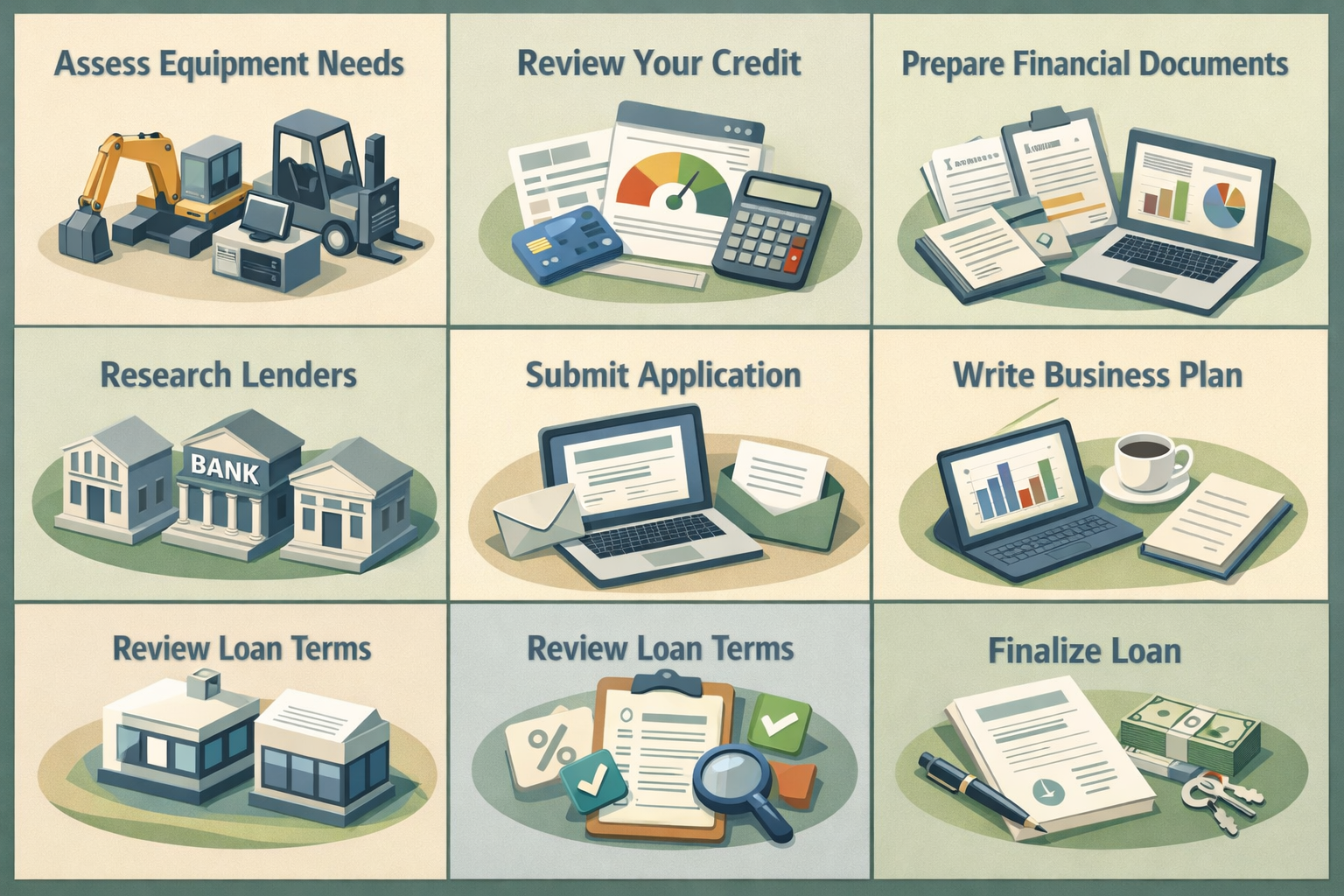
If you're ready to move forward, here's a practical step-by-step approach to help you navigate the process of securing equipment financing for a professional blacksmithing forge.
- Step 1 — Assess your equipment needs: Create a detailed list of everything your forge will require, along with estimated costs from reputable suppliers.
- Step 2 — Review your credit: Pull your personal and business credit reports. Address any errors and work on improving your score if needed.
- Step 3 — Prepare your financial documents: Gather tax returns, bank statements, profit-and-loss statements, and any other financial records lenders may request.
- Step 4 — Write or update your business plan: Make sure it clearly explains your forge business, revenue model, and how the equipment will be used.
- Step 5 — Research lenders: Compare banks, credit unions, SBA-approved lenders, and online financing companies. Look at rates, terms, fees, and eligibility requirements.
- Step 6 — Submit your application: Apply to one or more lenders with your complete documentation package. Be responsive to any requests for additional information.
- Step 7 — Review loan terms carefully: Before signing, understand the interest rate, repayment schedule, prepayment penalties, and any fees associated with the loan.
Taking a methodical approach can reduce stress and improve your chances of approval. Don't rush the process — a well-prepared application is almost always more effective than a hasty one.
Comparing Rates and Terms to Find the Right Fit
Not all equipment financing deals are created equal. Interest rates, repayment terms, and fee structures can vary significantly from one lender to the next — and those differences add up over the life of the loan.
When comparing offers, pay attention to:
- Annual Percentage Rate (APR): This reflects the true cost of borrowing, including fees. A lower APR generally means a less expensive loan overall.
- Repayment term length: Longer terms mean lower monthly payments but more interest paid over time. Shorter terms cost more monthly but less in total interest.
- Origination fees: Some lenders charge upfront fees to process your loan. These should be factored into your cost comparison.
- Prepayment penalties: If you plan to pay off the loan early, check whether there's a fee for doing so.
- Collateral requirements: Most equipment loans use the equipment as collateral, but some lenders may also require personal guarantees or additional business assets.
It may also be helpful to work with a financing broker or advisor who has experience with small business equipment loans. They can help you identify lenders who specialize in commercial equipment and may have access to programs not widely advertised to the public.
Tips for Strengthening Your Application and Improving Approval Odds
Even if your financials aren't perfect, there are steps you can take to improve your chances of getting approved for blacksmith forge equipment financing.
Consider a Co-Signer or Guarantor
If your business credit history is limited, having a co-signer with strong personal credit could make lenders more comfortable extending financing. This is especially relevant for newer businesses that haven't yet established a track record.
Start Smaller If Needed
If you're having trouble qualifying for a large loan, consider starting with essential equipment first and financing additional tools as your business grows. Building a positive repayment history on a smaller loan can help you qualify for larger amounts down the road.
Explore Microloan Programs
The SBA Microloan program provides smaller loan amounts — typically up to $50,000 — through nonprofit intermediary lenders. These programs are often more accessible to newer businesses and may come with business development support as well.
Keep Your Personal Finances in Order
For many small business owners, especially sole proprietors, personal credit is just as important as business credit. Keeping personal debt low, paying bills on time, and avoiding new credit inquiries in the months before applying can all have a positive impact on your application.
Be Transparent With Lenders
If there are challenges in your financial history, address them proactively. Lenders appreciate honesty, and a clear explanation of past difficulties — along with evidence of how you've addressed them — is often better received than an application that appears to hide something.
●Conclusion
Securing the right financing for your forge is one of the most important steps you can take as a blacksmithing entrepreneur. Whether you're outfitting a brand-new shop or upgrading an existing operation, knowing how to secure equipment financing for a professional blacksmithing forge puts you in a far stronger position to move forward with confidence. From SBA loan programs and traditional equipment loans to leasing options and microloans, there are more paths available than many small business owners realize. The key is preparation — knowing your numbers, understanding what lenders look for, and presenting your business in the best possible light. At LoanWise, we're here to help small business owners and entrepreneurs explore financing options that make sense for their unique situation. Ready to take the next step? Connect with a lending specialist today and start building the forge business you've always envisioned.