The mobile entertainment industry has seen remarkable growth in recent years, and mobile escape rooms sit right at the exciting intersection of experiential fun and entrepreneurial opportunity. Whether you're just starting out or looking to expand your fleet of puzzle-packed trailers, one of the biggest hurdles you'll face is funding. That's why understanding how to secure a business line of credit for a mobile escape room startup is such a valuable skill. A business line of credit could give you the flexible, revolving access to capital you need to cover equipment costs, marketing expenses, staffing, and seasonal cash flow gaps — without locking you into a rigid repayment structure. Let's walk through everything you need to know.
What Is a Business Line of Credit and Why It Suits a Startup
A business line of credit is a flexible financing tool that lets you borrow up to a set limit, repay what you use, and borrow again as needed. Think of it like a business credit card, but typically with higher limits and lower interest rates. Unlike a term loan, you're not receiving a lump sum that starts accruing interest immediately. Instead, you only pay interest on the funds you actually draw.
For a mobile escape room startup, this kind of revolving credit can be especially useful. Your income may fluctuate depending on seasons, event bookings, or corporate contract cycles. A business line of credit helps smooth those cash flow bumps. It could also cover unexpected costs — like vehicle repairs, theme upgrades, or prop replacements — without disrupting your operating budget.
From a lender's perspective, a business line of credit for a startup is considered a higher-risk product. That's because new businesses have limited financial history. However, with the right preparation, many startup entrepreneurs in the entertainment and event industries do successfully qualify for this type of financing.
Understanding the Lender's View on Mobile Business Financing
When you apply for mobile business financing, lenders typically assess several key factors before approving your application. Understanding their perspective can help you prepare a much stronger application and avoid common rejection triggers.
- Business age and revenue history: Many traditional lenders prefer businesses that have been operating for at least one to two years with documented revenue. Startups may need to look at alternative lenders or SBA-backed programs that are more startup-friendly.
- Personal credit score: For a new business, lenders often rely heavily on your personal credit profile. A score of 680 or higher is typically preferred, though some alternative lenders may work with scores in the 600 range.
- Business plan quality: A detailed business plan that outlines your target market, pricing, booking projections, and competitive advantages can significantly strengthen your application. Lenders want to see that you understand your industry.
- Cash flow projections: Even without years of bank statements, showing realistic and well-researched revenue forecasts may help demonstrate your startup's viability.
- Collateral: Some lenders may require collateral, which could include your escape room trailer, equipment, or other business assets.
It's worth noting that lenders who specialize in entertainment business loans or event-based businesses may be more familiar with the seasonal and project-based nature of your revenue, potentially making them a better fit than a conventional bank that primarily serves retail or manufacturing clients. When applying for mobile business financing, comparing your options carefully can make a significant difference.
How to Secure a Business Line of Credit for a Mobile Escape Room Startup: Step-by-Step
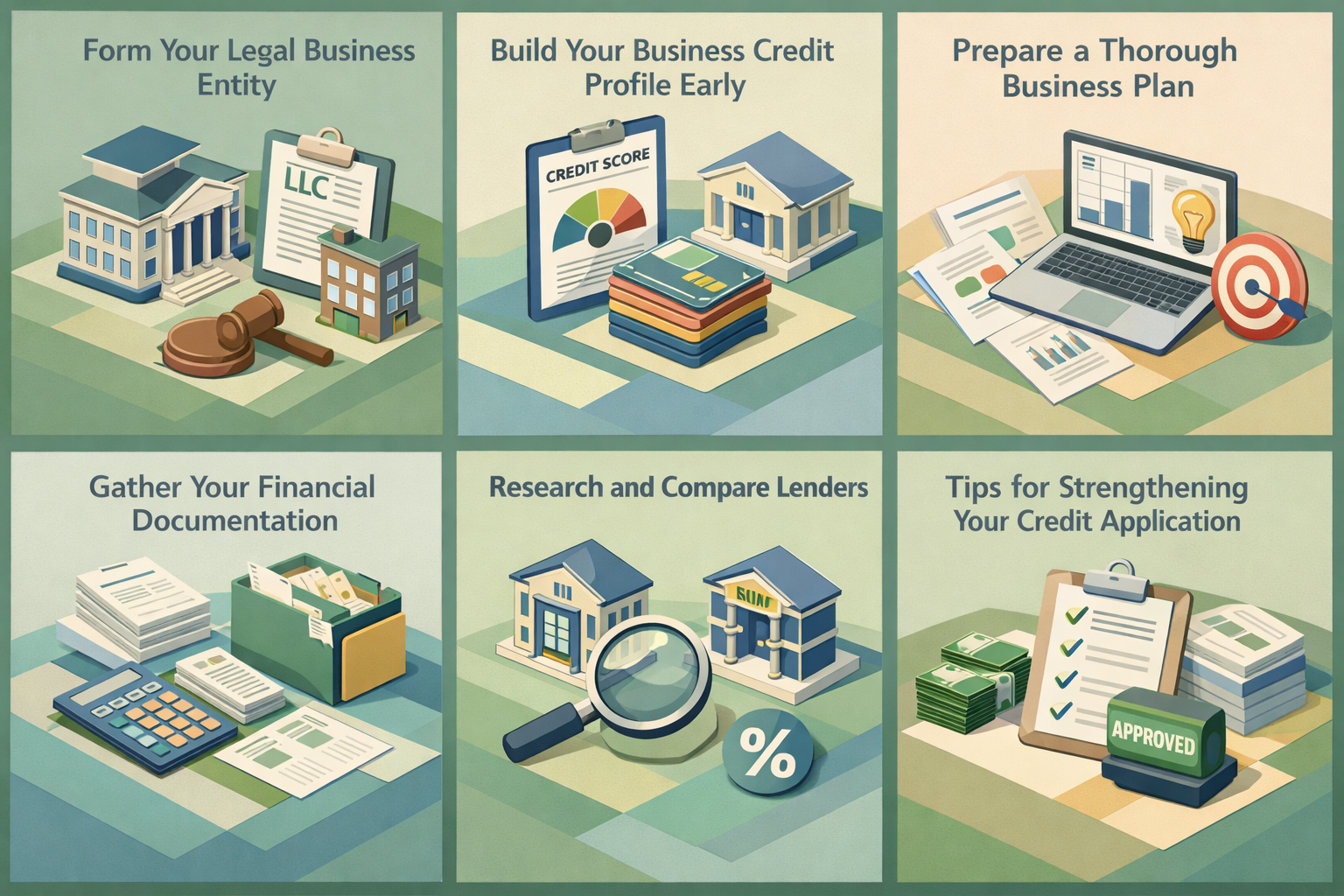
Knowing the process helps you move through it with confidence. Here's a practical, step-by-step look at how to secure a business line of credit for a mobile escape room startup.
Step 1: Form Your Legal Business Entity
Before approaching any lender, you'll need to have your business formally registered. This typically means forming an LLC or corporation, obtaining an Employer Identification Number (EIN) from the IRS, and opening a dedicated business bank account. Lenders want to see a clear separation between your personal and business finances.
Step 2: Build Your Business Credit Profile Early
Start building your business credit from day one. This could include opening a business credit card, establishing trade lines with vendors, and making sure any accounts are reported to business credit bureaus like Dun & Bradstreet or Experian Business. A strong business credit profile may improve your chances of qualifying for larger lines and better terms over time.
Step 3: Prepare a Thorough Business Plan
Your business plan should address the mobile escape room market specifically — including local competition, event partnership opportunities, school and corporate booking potential, and your pricing model. Include a detailed financial section with startup costs, operating expenses, and a month-by-month revenue forecast for at least the first 12 to 24 months.
Step 4: Gather Your Financial Documentation
Even as a startup, you'll likely need to provide personal tax returns for the past two years, bank statements, a list of business assets, and possibly a personal financial statement. If you've already generated any business revenue, gather those bank statements and invoices as well.
Step 5: Research and Compare Lenders
Not all lenders are created equal when it comes to escape room funding. Compare traditional banks, credit unions, online business lenders, and SBA Microloan programs. Each comes with different qualification thresholds, draw limits, interest rates, and repayment structures. Online lenders may offer faster approval but could carry higher rates, while credit unions may offer more personalized service and competitive terms for local small business owners.
Exploring SBA Programs and Alternative Sources for Escape Room Funding
If traditional lenders aren't the right fit yet, there are other paths worth exploring. The U.S. Small Business Administration (SBA) offers several programs that could support a mobile escape room startup at various stages of development.
The SBA Microloan program provides loans of up to $50,000 through nonprofit intermediary lenders. This could be a practical starting point for purchasing your first escape room trailer and props. The SBA 7(a) loan program is another option for larger funding needs and may be used for working capital, equipment, or even refinancing existing business debt.
Beyond SBA programs, consider these alternative funding paths:
- Crowdfunding platforms: Entertainment concepts often perform well on crowdfunding platforms like Kickstarter or Indiegogo, where community interest can translate into early capital.
- Business grants: Some local economic development agencies, arts councils, or tourism boards offer small business grants to entertainment or event-based businesses. These don't require repayment and can reduce your overall borrowing needs.
- Friends and family investment: Early-stage funding from personal networks, when structured properly with written agreements, can help you demonstrate initial traction to formal lenders later on.
- Equipment financing: If your primary need is the vehicle and escape room setup itself, equipment loans or leases may be a more accessible entry point before you qualify for a broader line of credit.
Tips for Strengthening Your Credit Application Before You Apply
A strong application doesn't happen overnight. Here are several strategies that may improve your chances of approval and help you secure better terms when applying for a business line of credit startup.
- Check and clean up your personal credit: Review your personal credit reports from all three major bureaus. Dispute any errors, pay down high balances, and avoid opening new personal credit lines before applying.
- Demonstrate consistent deposits: Lenders often look at your average daily bank balance and the consistency of your deposits. Even if your business is new, depositing funds regularly into your business account builds a stronger banking history.
- Avoid maxing out existing credit: High credit utilization on your business or personal accounts is a red flag for lenders. Try to keep balances well below 30% of your available credit limits.
- Build relationships with local lenders: Sometimes, a relationship with a local community bank or credit union can carry more weight than a credit score alone. Introduce yourself, share your business concept, and ask about their lending programs before you formally apply.
- Get a co-signer if needed: If your personal credit profile isn't quite there yet, a creditworthy co-signer or business partner may help you qualify. Make sure both parties fully understand the risks involved.
Managing Your Line of Credit Responsibly Once You're Approved
Getting approved is just the beginning. How you manage your business line of credit will determine whether it helps or hurts your business over time. Here's what responsible credit management typically looks like for a growing mobile entertainment business.
First, only draw what you need. A common mistake among new business owners is treating a line of credit like a windfall. It's a tool — use it strategically for specific, revenue-generating purposes like booking a large event, upgrading your equipment, or covering payroll during a slow month.
Second, repay draws promptly. The faster you repay what you borrow, the more available credit you'll have for the next opportunity. It also reduces your total interest costs and demonstrates responsible borrowing behavior to your lender, which may support future credit limit increases.
Third, track your utilization carefully. Just like with personal credit, your business credit utilization ratio matters. Keeping it below 30% is generally considered healthy and reflects positively on your credit profile.
Finally, communicate proactively with your lender. If you anticipate a difficult month or a large upcoming draw, reach out to your lender in advance. Lenders tend to respond more favorably to borrowers who are transparent and communicative rather than those who miss payments without notice.
●Conclusion
Launching a mobile escape room business is an exciting venture that blends creativity, entrepreneurship, and entertainment — but it requires smart financial planning from the very start. Understanding how to secure a business line of credit for a mobile escape room startup can give you a meaningful edge, helping you access flexible capital when you need it most. From building your credit profile and preparing a compelling business plan to choosing the right lender and managing your draws responsibly, each step in the process moves you closer to a financially stable, growing business. At LoanWise, we're here to help small business owners and entrepreneurs like you find financing solutions that match your unique goals. Explore your options today and take that next step toward making your mobile escape room dream a reality.