
Short-term rentals have become a powerful income stream for many real estate investors and homeowners across the country. Platforms like Airbnb and VRBO have made it easier than ever to generate meaningful revenue from a property. But when it comes to securing a high-balance mortgage, that income doesn't always translate neatly into a lender's qualification formula. If you're wondering how to qualify for a jumbo loan with short-term rental income, you're not alone — and the good news is that it's entirely possible with the right preparation and documentation strategy.
What Makes Jumbo Loans Different From Conventional Financing
A jumbo loan is a mortgage that exceeds the conforming loan limits set by the Federal Housing Finance Agency (FHFA). In most parts of the United States, that threshold sits above $766,550 for a single-family home as of recent guidelines, though limits are higher in designated high-cost areas. Because jumbo loans can't be sold to Fannie Mae or Freddie Mac, lenders assume more risk — and as a result, they tend to apply stricter qualification standards.
For borrowers seeking jumbo financing, lenders typically look for stronger credit scores, larger down payments, and more robust documentation of income and assets. A credit score of 700 or higher is often expected, and some lenders may require 720 or above. Down payment requirements commonly start around 10% to 20%, depending on the loan size and lender guidelines.
What this means for short-term rental investors is that the documentation bar is set higher than it might be for a standard conforming loan. Lenders want confidence that your income is stable, verifiable, and likely to continue — and that's where the complexity of Airbnb or VRBO earnings can become a challenge.
Why Short-Term Rental Income Is Treated Differently by Lenders
Traditional long-term rental income — like a tenant on a 12-month lease — is relatively straightforward for lenders to evaluate. There's a lease agreement, a consistent monthly amount, and a clear payment history. Short-term rental income, by contrast, tends to vary month to month based on seasonality, local demand, and platform availability.
This variability is one reason many conventional lenders — and even some jumbo lenders — have historically been cautious about counting short-term rental income in full. Lenders may treat Airbnb income differently than traditional rental income because it lacks the predictability they rely on when underwriting a large loan.
Additionally, short-term rental platforms don't issue standard landlord-tenant agreements. A booking on Airbnb might last two nights or two weeks. This makes it harder for underwriters to project consistent future income using the methods they typically apply to long-term rentals.
That said, the short-term rental market has matured significantly, and a growing number of lenders — particularly those offering non-QM (non-qualified mortgage) or portfolio jumbo products — have developed frameworks for evaluating this type of income. Understanding how they do it puts you in a better position to qualify.
How to Qualify for a Jumbo Loan With Short-Term Rental Income: Key Requirements
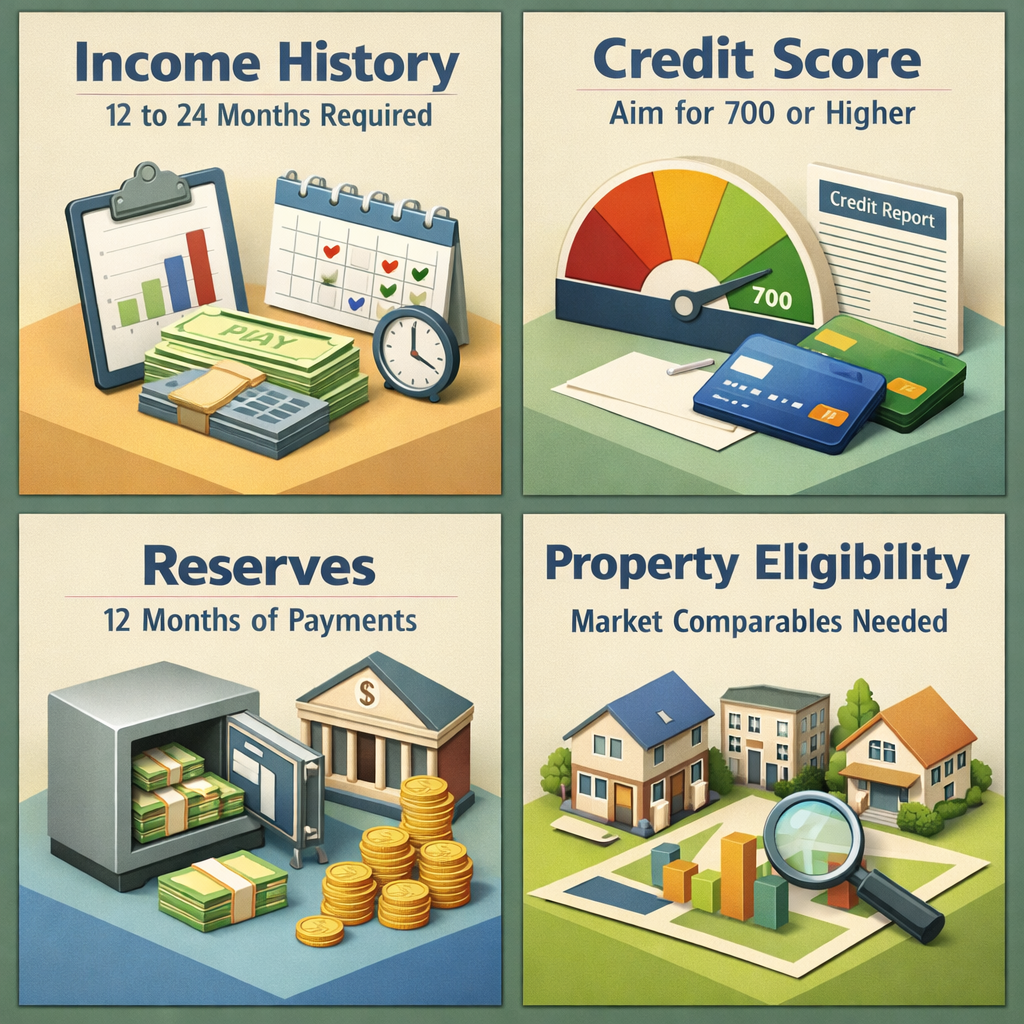
Successfully navigating the jumbo loan process with Airbnb or VRBO earnings starts with understanding what lenders typically want to see. While requirements can vary from one lender to the next, several common standards tend to apply across the board.
A Consistent Income History of at Least 12 to 24 Months
Most lenders will want to see at least one to two years of documented short-term rental income before they'll consider it in your qualification. This gives underwriters enough data to assess seasonality, average monthly earnings, and income trends. If you've only been renting for a few months, you may need to wait — or explore alternative income documentation options.
Strong Credit and Low Debt-to-Income Ratio
For jumbo loans, your credit profile carries extra weight. Aim for a credit score of at least 700, though higher is better. Your debt-to-income (DTI) ratio — the percentage of your gross monthly income going toward debt payments — should generally stay below 43%, and many jumbo lenders prefer it closer to 38% or lower. Keeping your overall debt manageable before applying can make a meaningful difference.
Significant Reserves and Assets
Jumbo lenders often require borrowers to demonstrate substantial financial reserves — sometimes 12 months or more of mortgage payments held in liquid or semi-liquid accounts. This is especially true when rental income makes up a meaningful portion of your qualifying income, as it signals to lenders that you could continue making payments even if bookings slow down.
Property Eligibility and Market Comparables
Not all properties used as short-term rentals will automatically qualify for a jumbo loan. Lenders may require an appraisal that accounts for the property's rental income potential, and they may look at comparable short-term rental properties in the area to validate income projections. If your property is in a market with strong short-term rental demand and supportable income comparables, your case becomes considerably stronger.
Documenting Airbnb Income for a Jumbo Loan: What You'll Need to Gather
One of the most critical steps in the process is assembling airtight documentation. When it comes to documenting Airbnb income for a jumbo loan, lenders need to see a paper trail that clearly shows your earnings history, income trends, and tax reporting. Here's what you'll typically want to prepare:
- Platform earning statements: Airbnb and VRBO both provide annual income summaries and transaction histories through their host dashboards. Download these reports for the past one to two years to show consistent booking revenue.
- IRS Schedule E: If you report rental income on your federal tax return — which most short-term rental hosts should — Schedule E will show the gross rents received along with any deductions. Lenders may use the net figure after expenses, which can sometimes reduce your qualifying income, so understanding how your deductions affect the calculation matters.
- 1099-K forms: Airbnb and VRBO typically issue a 1099-K if your earnings exceed the IRS reporting threshold. These forms offer an additional layer of income verification that lenders find useful.
- Bank statements: Twelve to twenty-four months of personal or business bank statements showing consistent deposits from the rental platform can reinforce the income picture significantly.
- STR-specific income analysis: Some lenders — especially those offering non-QM or bank statement jumbo programs — may use a short-term rental income analysis tool or third-party market data (such as AirDNA reports) to evaluate the property's income potential, particularly for a purchase rather than a refinance.
Being proactive about gathering these documents before you approach a lender can streamline the underwriting process and demonstrate that you're a well-organized, credible borrower.
Choosing the Right Lender for Short-Term Rental Jumbo Financing
Not every lender has developed the infrastructure to evaluate short-term rental income confidently. This is why selecting the right lending partner is arguably as important as having the right documentation. Here are the types of lenders most likely to work with your situation:
Portfolio Lenders
Portfolio lenders hold loans on their own balance sheets rather than selling them to the secondary market. This gives them more flexibility to set their own underwriting criteria. Many portfolio lenders have crafted programs specifically designed to accommodate short-term rental income, making them a strong option for jumbo loan qualifying rental income scenarios.
Non-QM Lenders
Non-qualified mortgage lenders specialize in borrowers whose income doesn't fit neatly into conventional boxes — including self-employed individuals, real estate investors, and short-term rental operators. Non-QM jumbo products often allow for bank statement income verification, DSCR (Debt Service Coverage Ratio) based qualification, or STR-specific income analysis in lieu of traditional tax return documentation.
Mortgage Brokers With Jumbo Expertise
An experienced mortgage broker with access to multiple jumbo lenders can be an invaluable ally. Rather than approaching lenders one at a time, a broker can match your income profile to the lender most likely to approve your file — saving you time and protecting your credit from multiple hard inquiries.
When evaluating lenders, ask directly whether they accept short-term rental income, how they calculate it, and what documentation they require. The answers will quickly tell you whether a lender is the right fit for your situation.
Strategies to Strengthen Your Jumbo Loan Application
If your short-term rental income history is relatively new or your documentation feels thin, there are several strategies that may help bolster your application before you apply.
- Build your rental history: If possible, delay your application until you have at least 12 to 24 months of consistent rental earnings on record. A longer track record gives lenders more confidence in the sustainability of your income.
- Reduce your overall debt: Paying down credit card balances, auto loans, or other debts can meaningfully improve your DTI ratio — one of the most scrutinized factors in jumbo underwriting.
- Increase your cash reserves: Beyond the down payment, demonstrating substantial liquid reserves signals financial stability. Consider consolidating assets into verifiable accounts well before applying.
- Work with a tax professional: Heavy deductions on Schedule E can reduce your taxable income — which is great for taxes but can work against you when qualifying for a mortgage. A tax advisor familiar with real estate investors can help you find the right balance between tax efficiency and mortgage qualification.
- Consider a DSCR loan structure: For investment properties, some jumbo lenders may qualify you based solely on the property's projected or actual rental income relative to its mortgage payment, rather than your personal income. This can be a useful alternative if your personal income documentation is complicated.
●Conclusion
Qualifying for a jumbo loan with short-term rental income is absolutely achievable — but it requires a thoughtful approach, strong documentation, and the right lending partner. The key is understanding that lenders want to see consistency, verifiability, and financial strength. By building a clear income history, organizing your documentation thoroughly, and working with lenders who genuinely understand the short-term rental space, you put yourself in the best possible position to secure the financing you need.
At LoanWise, we work with borrowers at every stage of their real estate journey — including investors and homeowners leveraging short-term rental income for high-balance financing. If you're ready to explore your options, our team can help you identify the right loan program and lender for your unique situation. Reach out today to get started.